ENA - ENA English
Live:


Headlines
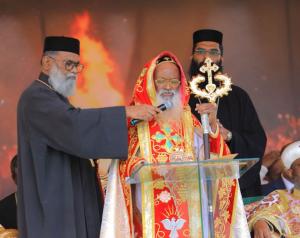
Ethiopia, India Orthodox Churches Spiritually Very Near, Says Patriarch Baselios Marthoma Mathews III
Sep 26, 2026 195
Addis Ababa, September 26, 2026 (ENA) —Ethiopia and India are geographically distant, but our churches are spiritually very near, with their Orthodox churches united by a common apostolic faith, Patriarch of the Malankara Orthodox Syrian Church of India, His Holiness Baselios Marthoma Mathews III, said. Speaking at the Demera celebration in Addis Ababa today, the Patriarch said the Ethiopian Orthodox Tewahedo Church and the Malankara Orthodox Syrian Church belong to the family of Oriental Orthodox Churches and share a spiritual heritage shaped by the Eucharist, fasting, prayer, asceticism, the communion of saints and the cross of Christ. “Our nations are geographically distant, but our churches are spiritually very near,” he noted, emphasizing that the bond between the two churches is rooted not primarily in diplomacy or institutional relations, but in their common apostolic faith. His Holiness Baselios Marthoma Mathews III said the relationship between the two churches has developed through decades of visits, theological cooperation and exchanges, recalling the 1965 gathering of heads of Oriental Orthodox Churches in Addis Ababa as a significant milestone in the history of their fellowship. He also highlighted the contributions of theologians and clergy from the Malankara Orthodox Church to theological education and fellowship in Ethiopia, as well as reciprocal visits by the heads of the two churches. The Patriarch further recalled that a bilateral agreement between the two churches was formally signed during the 2017 Meskel celebration in Ethiopia, describing the occasion as a significant expression of their historic friendship and shared apostolic inheritance. According to him, Meskel’s inscription on UNESCO’s List of the Intangible Cultural Heritage of Humanity appropriately recognizes its role in bringing together people across communities and generations while fostering reconciliation, social cohesion and peaceful coexistence. For Orthodox Christians, the Patriarch said, Meskel represents more than cultural heritage, describing it as “living faith” and worship centered on Christ. This celebration demonstrates the unifying and reconciling message of the cross, which brings people together and directs them toward God and one another, he added. “The cross gathers us. The cross reconciles us.” His Holiness Baselios Marthoma Mathews III concluded: “For us Orthodox Christians, Meskel is still more. Before it is cultural heritage, it is living faith. Before it is spectacle, it is worship. Before it belongs to history, it belongs to Christ.”
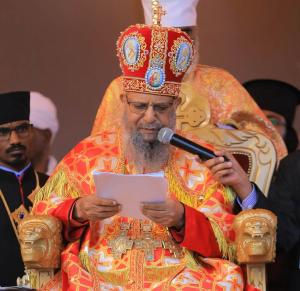
Ethiopian Orthodox Patriarch Calls for National Peace Through Unity, Reconciliation
Sep 26, 2026 638
Addis Ababa, September 26, 2026 (ENA) —Patriarch of the Ethiopian Orthodox Tewahedo Church, His Holiness Abune Mathias, has called on Ethiopians to work earnestly for comprehensive national peace by overcoming obstacles to unity and progress with patience and foresight. In his fatherly message delivered during the Meskel Demera celebration at Meskel Square in Addis Ababa, Abune Mathias stressed the importance of unity, progress and a shared commitment to reconciliation. “The primary message of the Cross is to establish peace and unity, forgiveness and reconciliation, as well as love and harmony among all mankind,” Abune Mathias said. He urged Ethiopians to confront challenges that hinder national unity and progress with patience and farsightedness, stressing the need for sustained efforts to achieve lasting peace and unity across the country. The Patriarch said the message of Meskel and the Cross carries a universal call for peace, forgiveness, reconciliation and harmony, the Patriarch described as essential to Ethiopia’s pursuit of national unity and peaceful coexistence. The Demera ceremony was colorfully celebrated at Meskel Square, bringing together Holy Bishops, senior government officials, foreign ambassadors and diplomats, international visitors, church followers and members of the wider community. The celebration placed Ethiopia’s centuries-old religious and cultural heritage at the center of a powerful message of peace, unity and reconciliation.
.jpg)
Meskel-Demera Festival Serves as Shared Value that Elevates Nat’l image, Cultural Wealth: Mayor Adanech
Sep 26, 2026 456
Addis Ababa, September 26, 2026 (ENA) —Meskel-Demera festival is serving as a shared value that elevates Ethiopia’s national image and cultural wealth across the world, Addis Ababa Mayor Adanech Abiebie said. Addressing the Demera celebration at Meskel Square today, the Mayor stated that the Meskel-Demera festival, one of the most vibrant public celebrations in the city, is a great festival which has been celebrated for centuries while preserving its religious essence and shining brightly in our culture. The holiday, while maintaining its religious and cultural significance, encompasses many cross-generational and holistic benefits, Adanech underscored. Recalling the official registration of Mesquel-Demera by the UNESCO as an intangible cultural heritage of humanity, she said it serves as a shared value that elevates Ethiopia's image and cultural wealth across the world. For Ethiopians, the holiday holds a profound meaning in their daily lives and all joint activities, the Mayor emphasized. “Even though each of us has a distinct culture, language, religion, and identity, we become unbreakable force that overcomes darkness for both the city and country as we stand together like the Demera, walk hand-in-hand, and strengthen our unity.” According to her, the city of Addis Ababa has recently been cited as a center of global attraction, a symbol of cleanliness, and an example of urban transformation achieved in a short period of time. The Mayor also noted that the hosting of many tourists who visit the city warmly showcases the manifestation of Ethiopian hospitality. The ability of hosting such great national and international events as well as holidays underscore the city's capacity to successfully lead and accommodate huge functions. Holding of great events like these show the city's competence, civility and beauty thus creating capacity for even greater attraction—not just because the government worked alone; but because we stood and cooperated together, she stressed.
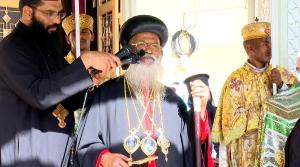
Indian Orthodox Church Eyes Deeper Ties with Ethiopian Church
Sep 26, 2026 830
Addis Ababa, September 26, 2026 (ENA) —The Indian Orthodox Church is seeking to deepen its longstanding relationship with the Ethiopian Orthodox Tewahedo Church through expanded theological dialogue, educational exchanges and greater sharing of faith and traditions. His Holiness Baselios Marthoma Mathews III, Catholicos of the East and Malankara Metropolitan, made the call at Holy Trinity Cathedral in Addis Ababa during an Indian Orthodox delegation’s visit to Ethiopia for this year’s Meskel celebrations. He said the two churches have maintained a longstanding relationship and have already begun dialogue aimed at bringing them closer together as sister churches within the Oriental Orthodox family. “We have already started our dialogues between our churches,” the Patriarch said, adding that the two sides are exploring ways to establish “more intimate relations” and share their traditions, faith and practices. He said the dialogue could also open the way for greater cooperation in theological education, including the exchange of students between seminaries in Malankara and Ethiopia. “We are even thinking of sharing students of the seminary between our seminary in Malankara and also our seminary in Ethiopia in the near future,” he said. The proposed exchange would build on earlier educational links between the two churches, including the involvement of Malankara theologians in theological education in Ethiopia. Speaking to Pulse of Africa, His Grace Dr. Yuhanon Mar Diascoros, a Metropolitan of the Malankara Orthodox Syrian Church and former professor at Holy Trinity Theological College in Addis Ababa from 1994 to 1997, described the relationship between the churches as a longstanding bond rooted in their shared Oriental Orthodox heritage. “It is a very strong ancient connection between the Indian Orthodox Church and the Ethiopian Orthodox Church. We are sister churches. We belong to one family,” he said. Diascoros highlighted the exchange of teachers and students as an important expression of the relationship, saying such cooperation could contribute to promoting peace and harmony in both countries. He noted that both societies face complex challenges and stressed the importance of responding to them through peaceful dialogue and the teachings of Christianity. “We have to work together for promoting peace and harmony in both our countries,” he said, emphasizing the need to “teach the peace given by our Lord Jesus Christ.” The remarks came as the Indian Orthodox delegation joined Ethiopian Orthodox faithful in celebrating Meskel, one of Ethiopia’s most significant religious and cultural observances commemorating the finding of the True Cross. Diascoros said Ethiopia’s distinctive way of marking Meskel, including its character as a major national celebration, gives the feast a special significance.
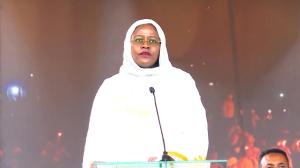
Culture and Sport Minister Calls for Unity at Meskel-Demera Celebration
Sep 26, 2026 691
Addis Ababa, September 26, 2026 (ENA) —Ethiopians should join hands and work together to build a prosperous country and advance national interests, including Ethiopia’s quest for seaport, Culture and Sport Minister Shewit Shanka said. The Minister made the call today while addressing the Meskel-Demera celebration at Meskel Square in Addis Ababa. Shewit said Meskel-Demera is more than a religious celebration, highlighting its importance in preserving Ethiopia’s history, identity, cultural values and national unity. The celebration reflects Ethiopia’s traditional values and indigenous knowledge, while also strengthening social ties and unity among the country’s diverse population. She also commended the Ethiopian Orthodox Tewahedo Church for preserving the celebration across generations, enabling it to be passed on to the current generation and recognized as a cultural treasure of global significance. The Minister noted that Ethiopia has made development gains in various sectors through hard work and the collective efforts and cooperation of its people, calling on Ethiopians to build on the achievements. She likened Ethiopians’ collective effort to the pieces of wood brought together for the Demera bonfire, stressing the importance of standing together to advance the country’s national goals. She concluded by thanking all those who have worked to preserve and sustain the celebration and wished Ethiopians peace, love, health and prosperity on the occasion.
Featured
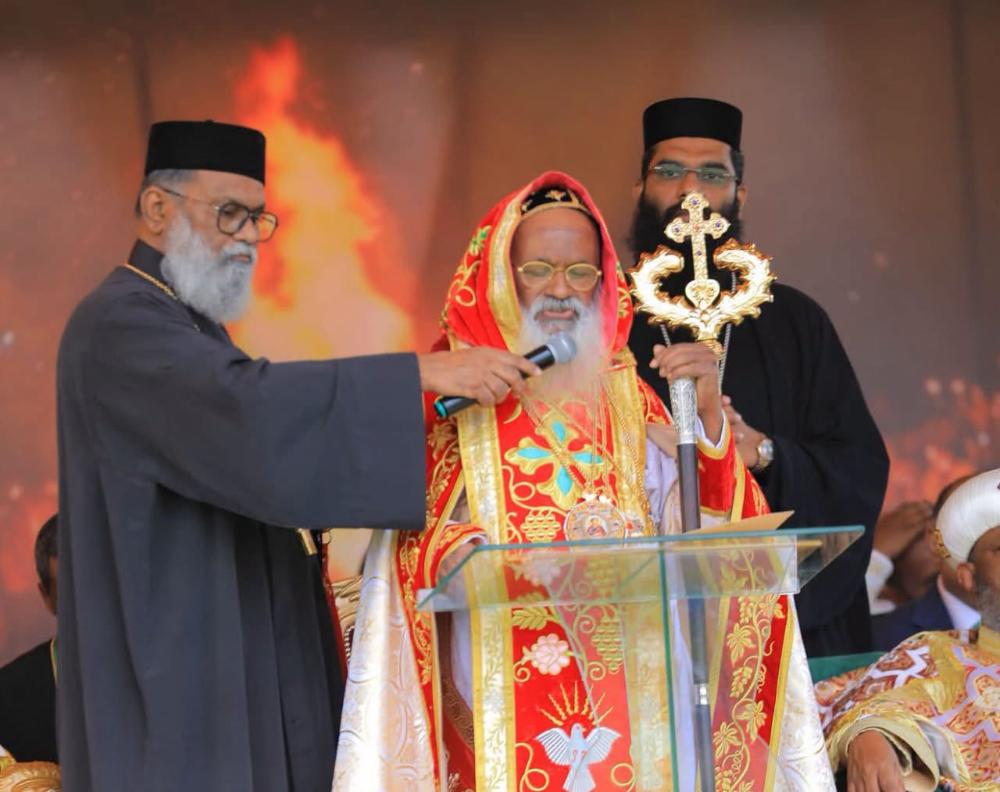
Ethiopia, India Orthodox Churches Spiritually Very Near, Says Patriarch Baselios Marthoma Mathews III
Sep 26, 2026 195
Addis Ababa, September 26, 2026 (ENA) —Ethiopia and India are geographically distant, but our churches are spiritually very near, with their Orthodox churches united by a common apostolic faith, Patriarch of the Malankara Orthodox Syrian Church of India, His Holiness Baselios Marthoma Mathews III, said. Speaking at the Demera celebration in Addis Ababa today, the Patriarch said the Ethiopian Orthodox Tewahedo Church and the Malankara Orthodox Syrian Church belong to the family of Oriental Orthodox Churches and share a spiritual heritage shaped by the Eucharist, fasting, prayer, asceticism, the communion of saints and the cross of Christ. “Our nations are geographically distant, but our churches are spiritually very near,” he noted, emphasizing that the bond between the two churches is rooted not primarily in diplomacy or institutional relations, but in their common apostolic faith. His Holiness Baselios Marthoma Mathews III said the relationship between the two churches has developed through decades of visits, theological cooperation and exchanges, recalling the 1965 gathering of heads of Oriental Orthodox Churches in Addis Ababa as a significant milestone in the history of their fellowship. He also highlighted the contributions of theologians and clergy from the Malankara Orthodox Church to theological education and fellowship in Ethiopia, as well as reciprocal visits by the heads of the two churches. The Patriarch further recalled that a bilateral agreement between the two churches was formally signed during the 2017 Meskel celebration in Ethiopia, describing the occasion as a significant expression of their historic friendship and shared apostolic inheritance. According to him, Meskel’s inscription on UNESCO’s List of the Intangible Cultural Heritage of Humanity appropriately recognizes its role in bringing together people across communities and generations while fostering reconciliation, social cohesion and peaceful coexistence. For Orthodox Christians, the Patriarch said, Meskel represents more than cultural heritage, describing it as “living faith” and worship centered on Christ. This celebration demonstrates the unifying and reconciling message of the cross, which brings people together and directs them toward God and one another, he added. “The cross gathers us. The cross reconciles us.” His Holiness Baselios Marthoma Mathews III concluded: “For us Orthodox Christians, Meskel is still more. Before it is cultural heritage, it is living faith. Before it is spectacle, it is worship. Before it belongs to history, it belongs to Christ.”
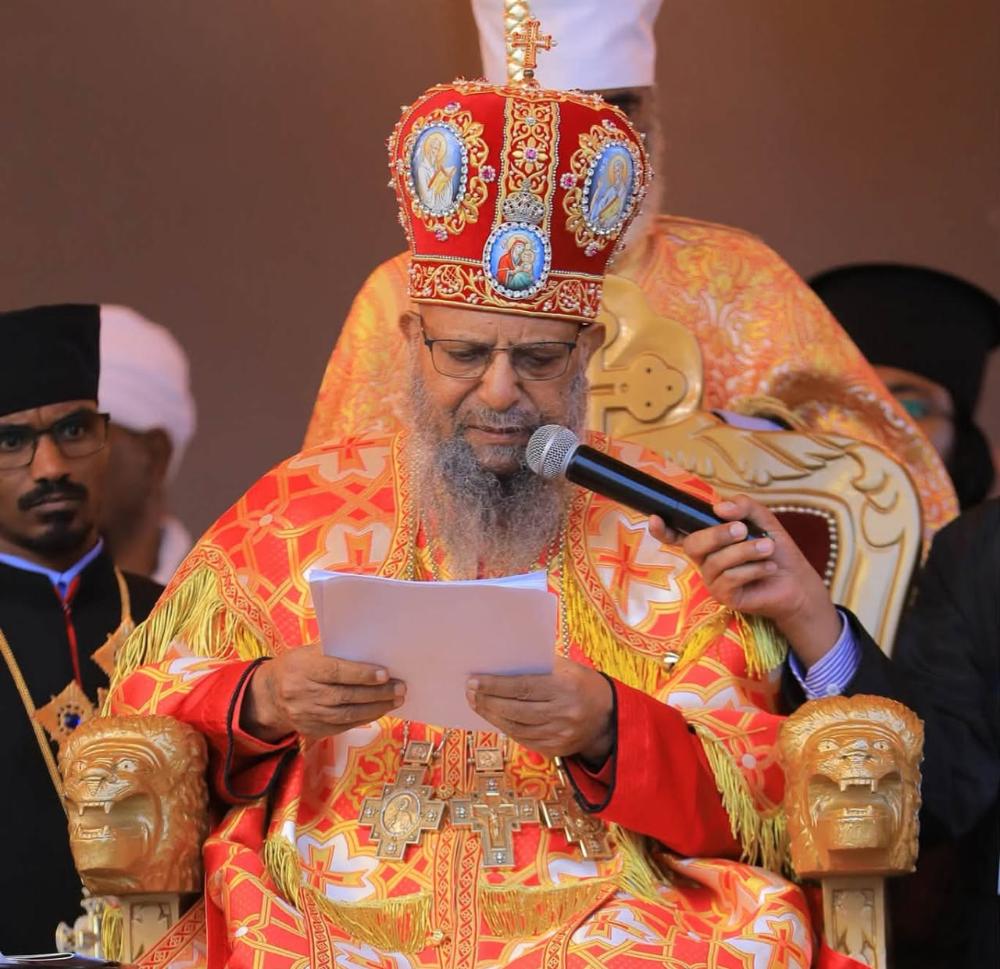
Ethiopian Orthodox Patriarch Calls for National Peace Through Unity, Reconciliation
Sep 26, 2026 638
Addis Ababa, September 26, 2026 (ENA) —Patriarch of the Ethiopian Orthodox Tewahedo Church, His Holiness Abune Mathias, has called on Ethiopians to work earnestly for comprehensive national peace by overcoming obstacles to unity and progress with patience and foresight. In his fatherly message delivered during the Meskel Demera celebration at Meskel Square in Addis Ababa, Abune Mathias stressed the importance of unity, progress and a shared commitment to reconciliation. “The primary message of the Cross is to establish peace and unity, forgiveness and reconciliation, as well as love and harmony among all mankind,” Abune Mathias said. He urged Ethiopians to confront challenges that hinder national unity and progress with patience and farsightedness, stressing the need for sustained efforts to achieve lasting peace and unity across the country. The Patriarch said the message of Meskel and the Cross carries a universal call for peace, forgiveness, reconciliation and harmony, the Patriarch described as essential to Ethiopia’s pursuit of national unity and peaceful coexistence. The Demera ceremony was colorfully celebrated at Meskel Square, bringing together Holy Bishops, senior government officials, foreign ambassadors and diplomats, international visitors, church followers and members of the wider community. The celebration placed Ethiopia’s centuries-old religious and cultural heritage at the center of a powerful message of peace, unity and reconciliation.
.jpg)
Meskel-Demera Festival Serves as Shared Value that Elevates Nat’l image, Cultural Wealth: Mayor Adanech
Sep 26, 2026 456
Addis Ababa, September 26, 2026 (ENA) —Meskel-Demera festival is serving as a shared value that elevates Ethiopia’s national image and cultural wealth across the world, Addis Ababa Mayor Adanech Abiebie said. Addressing the Demera celebration at Meskel Square today, the Mayor stated that the Meskel-Demera festival, one of the most vibrant public celebrations in the city, is a great festival which has been celebrated for centuries while preserving its religious essence and shining brightly in our culture. The holiday, while maintaining its religious and cultural significance, encompasses many cross-generational and holistic benefits, Adanech underscored. Recalling the official registration of Mesquel-Demera by the UNESCO as an intangible cultural heritage of humanity, she said it serves as a shared value that elevates Ethiopia's image and cultural wealth across the world. For Ethiopians, the holiday holds a profound meaning in their daily lives and all joint activities, the Mayor emphasized. “Even though each of us has a distinct culture, language, religion, and identity, we become unbreakable force that overcomes darkness for both the city and country as we stand together like the Demera, walk hand-in-hand, and strengthen our unity.” According to her, the city of Addis Ababa has recently been cited as a center of global attraction, a symbol of cleanliness, and an example of urban transformation achieved in a short period of time. The Mayor also noted that the hosting of many tourists who visit the city warmly showcases the manifestation of Ethiopian hospitality. The ability of hosting such great national and international events as well as holidays underscore the city's capacity to successfully lead and accommodate huge functions. Holding of great events like these show the city's competence, civility and beauty thus creating capacity for even greater attraction—not just because the government worked alone; but because we stood and cooperated together, she stressed.
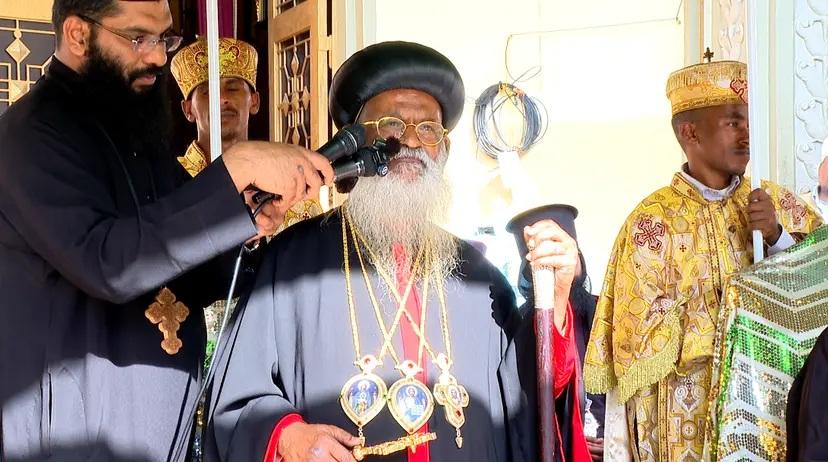
Indian Orthodox Church Eyes Deeper Ties with Ethiopian Church
Sep 26, 2026 830
Addis Ababa, September 26, 2026 (ENA) —The Indian Orthodox Church is seeking to deepen its longstanding relationship with the Ethiopian Orthodox Tewahedo Church through expanded theological dialogue, educational exchanges and greater sharing of faith and traditions. His Holiness Baselios Marthoma Mathews III, Catholicos of the East and Malankara Metropolitan, made the call at Holy Trinity Cathedral in Addis Ababa during an Indian Orthodox delegation’s visit to Ethiopia for this year’s Meskel celebrations. He said the two churches have maintained a longstanding relationship and have already begun dialogue aimed at bringing them closer together as sister churches within the Oriental Orthodox family. “We have already started our dialogues between our churches,” the Patriarch said, adding that the two sides are exploring ways to establish “more intimate relations” and share their traditions, faith and practices. He said the dialogue could also open the way for greater cooperation in theological education, including the exchange of students between seminaries in Malankara and Ethiopia. “We are even thinking of sharing students of the seminary between our seminary in Malankara and also our seminary in Ethiopia in the near future,” he said. The proposed exchange would build on earlier educational links between the two churches, including the involvement of Malankara theologians in theological education in Ethiopia. Speaking to Pulse of Africa, His Grace Dr. Yuhanon Mar Diascoros, a Metropolitan of the Malankara Orthodox Syrian Church and former professor at Holy Trinity Theological College in Addis Ababa from 1994 to 1997, described the relationship between the churches as a longstanding bond rooted in their shared Oriental Orthodox heritage. “It is a very strong ancient connection between the Indian Orthodox Church and the Ethiopian Orthodox Church. We are sister churches. We belong to one family,” he said. Diascoros highlighted the exchange of teachers and students as an important expression of the relationship, saying such cooperation could contribute to promoting peace and harmony in both countries. He noted that both societies face complex challenges and stressed the importance of responding to them through peaceful dialogue and the teachings of Christianity. “We have to work together for promoting peace and harmony in both our countries,” he said, emphasizing the need to “teach the peace given by our Lord Jesus Christ.” The remarks came as the Indian Orthodox delegation joined Ethiopian Orthodox faithful in celebrating Meskel, one of Ethiopia’s most significant religious and cultural observances commemorating the finding of the True Cross. Diascoros said Ethiopia’s distinctive way of marking Meskel, including its character as a major national celebration, gives the feast a special significance.
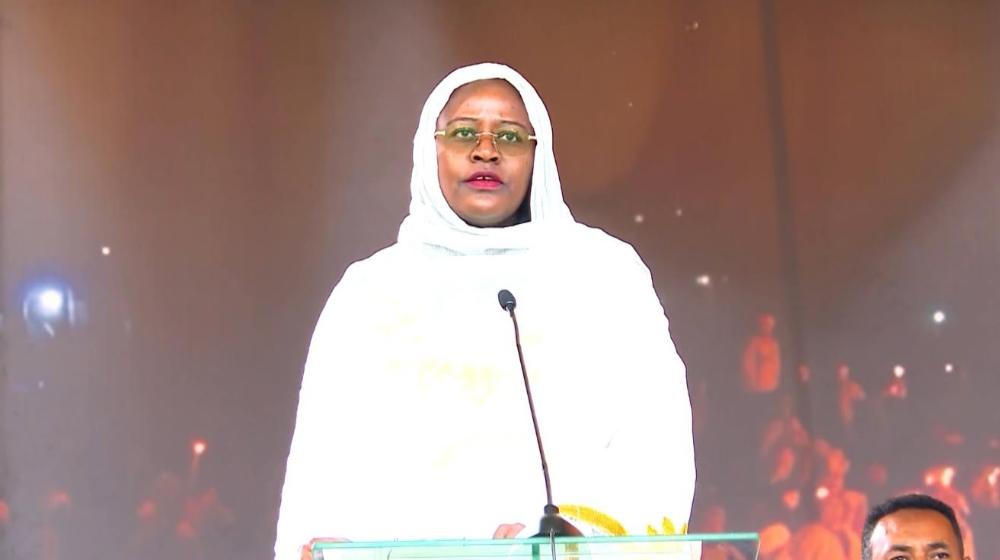
Culture and Sport Minister Calls for Unity at Meskel-Demera Celebration
Sep 26, 2026 691
Addis Ababa, September 26, 2026 (ENA) —Ethiopians should join hands and work together to build a prosperous country and advance national interests, including Ethiopia’s quest for seaport, Culture and Sport Minister Shewit Shanka said. The Minister made the call today while addressing the Meskel-Demera celebration at Meskel Square in Addis Ababa. Shewit said Meskel-Demera is more than a religious celebration, highlighting its importance in preserving Ethiopia’s history, identity, cultural values and national unity. The celebration reflects Ethiopia’s traditional values and indigenous knowledge, while also strengthening social ties and unity among the country’s diverse population. She also commended the Ethiopian Orthodox Tewahedo Church for preserving the celebration across generations, enabling it to be passed on to the current generation and recognized as a cultural treasure of global significance. The Minister noted that Ethiopia has made development gains in various sectors through hard work and the collective efforts and cooperation of its people, calling on Ethiopians to build on the achievements. She likened Ethiopians’ collective effort to the pieces of wood brought together for the Demera bonfire, stressing the importance of standing together to advance the country’s national goals. She concluded by thanking all those who have worked to preserve and sustain the celebration and wished Ethiopians peace, love, health and prosperity on the occasion.

POA English
Pulse Of Africa - English Language
Your news, current affairs and entertainment channel
Join us on
POA Arabic - عربي
Pulse Of Africa - Arabic Language
قناتكم الاخبارية و الترفيهية
Join us on
Politics
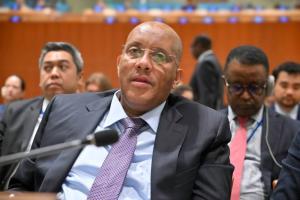
PM Advisor Stresses Need for Revitalization of Global Partnerships
Sep 26, 2026 859
Addis Ababa, September 26, 2026 (ENA) —Stronger partnerships, shared solutions and renewed commitment are essential to accelerate progress toward the 2030 Agenda, East African Affairs Advisor to the Prime Minister, Getachew Reda said. The 2030 Agenda for Sustainable Development is a global development framework adopted by all UN Member States in 2015. At the Global Development Initiative (GDI) High-Level Dialogue held on the sidelines of the 81st United Nations General Assembly, Getachew underscored the critical importance of revitalizing global partnerships for sustainable development, stressing the need to translate shared commitments into tangible development outcomes. The Adviser highlighted that the GDI as a practical, results-oriented partnership that can help accelerate implementation of the SDGs and advance development priorities. He also emphasized the importance of prioritizing key transitions with catalytic and multiplier effects across the SDGs, particularly in poverty eradication, energy, food systems, finance, digital transformation, education and climate action. Getachew further stressed the importance of drawing on the comparative advantages, experiences and successes of country-led initiatives, strengthening cooperation and learning from solutions that are delivering results on the ground.
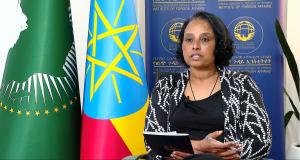
Ethiopia’s BRICS Membership Unlocking New Economic Opportunities, Says FAI Researcher
Sep 26, 2026 3778
Addis Ababa, September 26, 2026 (ENA) —Ethiopia’s BRICS membership is opening new opportunities across various sectors, Senior Researcher at the Foreign Affairs Institute (FAI) Himanot Eshetu told ENA. Himanot emphasized that Ethiopia’s BRICS membership is gaining momentum, creating greater leverage to strengthen economic partnerships, attract investment, diversify development financing, and advance its national interests globally. Ethiopia's active engagement with major emerging economies, coupled with its participation in high-level discussions concerning global economic and geopolitical issues, renders its BRICS membership profoundly strategic, she added. “BRICS is not just an economic grouping. Especially for Ethiopia, it is an additional platform for diplomatic engagement,” she said. The platform also enables Ethiopia to advance its national interests while championing African priorities across critical sectors, including global finance, technology, trade, sustainable development, and security. A major advantage of this membership is access to the BRICS New Development Bank (NDB), which Himanot noted will significantly expand funding for infrastructure and sustainable development. The country can successfully diversify its development finance sources as the bank’s financing goals align closely with Ethiopia's national needs. “If we have more sources of finance, Ethiopia will get an opportunity and flexibility to implement its development priorities,” she said, emphasizing that NDB funding is meant to complement, rather than replace, existing partnerships. Since joining the bloc in 2024, Ethiopia has actively engaged in BRICS initiatives, ranging from heads of state summits and ministerial meetings to expert-level discussions and working groups. Beyond finance, Himanot highlighted the potential to connect with major emerging markets, expanding trade and investment horizons. To capitalize on these prospects, she stressed the importance of promoting competitive domestic sectors, such as agriculture, agro-processing, textile manufacturing, energy, tourism, and mining. Furthermore, the platform offers an avenue to deepen economic cooperation and advocate for the broader interests of the Global South. Ultimately, Himanot concluded, maximizing these benefits will require coordinated institutional engagement, a sharp focus on tangible economic outcomes, and proactive promotion of Ethiopia's trade and investment potential.

Ethiopia’s Rising Strategic Weight in the Horn and Red Sea
Sep 25, 2026 9326
By Staff Writer As geopolitical and politico-military dynamics reshape the Horn of Africa and the Red Sea corridor, Ethiopia’s economic weight, strategic location and expanding regional engagement continue to make it a central actor in the region’s evolving balance. Ethiopia is undergoing a transformation that reaches far beyond economic growth. Across its economy, cities, digital infrastructure, environmental restoration, tourism, investment, energy and regional connectivity, the country is pursuing a broad development agenda aimed at reshaping its domestic foundations while expanding its role in the Horn of Africa and the wider continent. Under the leadership of Prime Minister Abiy Ahmed, the government has placed economic reform, infrastructure development, digitalization, environmental restoration and regional integration at the heart of its development strategy. The transformation is unfolding against a complicated geopolitical backdrop. The Horn of Africa and the Red Sea corridor have become increasingly important arenas for global trade, maritime security, strategic competition and shifting political alignments. Conflicts and political transitions in neighboring countries, competition over strategic ports and shipping routes, and the growing involvement of external powers have further elevated the region's geopolitical importance. In that changing environment, Ethiopia’s sheer demographic and economic weight, geographic position and expanding infrastructure make its trajectory consequential well beyond its borders. The question is therefore not simply how rapidly Ethiopia is growing. It is how the country's economic transformation, technological modernization, environmental agenda and search for deeper regional connectivity could reshape its position in a strategically vital part of Africa. Growth as the Foundation of Transformation Ethiopia’s economic reform program has become one of the central pillars of this transformation. The government has pursued a series of macroeconomic and structural reforms under the Homegrown Economic Reform agenda, seeking to move the economy toward greater private-sector participation, stronger exports, increased investment and a more market-oriented system. The government projects economic growth of around 10.2 percent for the current Ethiopian fiscal year, placing Ethiopia among the world's fastest-growing economies. Behind the headline figure is a broader structural effort. Infrastructure investment, agriculture, manufacturing, services, trade and construction are increasingly interconnected within a development strategy designed to expand productive capacity and create new economic opportunities. The reform process has also sought to address longstanding macroeconomic challenges, including foreign-exchange shortages, inflationary pressures and limited private-sector participation. The significance of the reforms lies not only in short-term growth, but in the attempt to change the underlying architecture of the economy. Ethiopia is seeking to move from a predominantly state-led economic model toward one in which private investment, competition and market mechanisms play a larger role. This represents one of the most consequential economic shifts in the country's recent history. Cities as Engines of a New Ethiopia The transformation is perhaps most visible in Ethiopia’s cities. What began as a major corridor-development program in Addis Ababa has evolved into a broader urban-development drive extending to cities across the country. The initiative combines road and transport infrastructure with pedestrian corridors, public spaces, greenery, recreational facilities and other urban improvements. Addis Ababa has become the most visible expression of this transformation. The capital is simultaneously Ethiopia’s political center, a diplomatic hub hosting the African Union and numerous international institutions, and an increasingly important commercial and investment center. The broader objective is to create cities capable of supporting a rapidly growing population and an expanding economy. Urban development is consequently being treated not simply as beautification, but as an economic and social infrastructure strategy. The Digital Leap Another defining feature of Ethiopia’s transformation is the rapid expansion of its digital economy. For decades, many public and financial services depended heavily on physical documents, face-to-face transactions and cash. That is changing. Digital public services, mobile money, electronic payments and national digital identification are increasingly becoming part of everyday economic and administrative life. The government's Mesob one-stop digital service initiative represents this shift toward integrated public services, bringing multiple services together through digital platforms and expanding access beyond the capital. At the foundation of this emerging ecosystem is Fayda, Ethiopia’s national digital identification system. A reliable digital identity can support access to financial services, social protection, government services and a growing range of digital applications. Meanwhile, mobile-money adoption has expanded rapidly. More than 58 million Ethiopians are reported to be using mobile-money services, while digital payments have recorded significant increases. The importance of this transformation goes beyond convenience. Digitalization can reduce transaction costs, widen financial inclusion, improve access to government services and create new opportunities for businesses and citizens. For a country of Ethiopia’s size, that represents a potentially significant change in the relationship between the state, the economy and its citizens. Investment and Tourism: Unlocking Untapped Potential Ethiopia’s economic transformation is also increasingly linked to investment and tourism. The country combines a large domestic market, a young population, substantial agricultural potential, a strategic geographic location, unique cultural heritage and diverse natural landscapes. Government initiatives have sought to turn those assets into economic opportunities. Projects associated with Dine for Sheger, Dine for Nation and Dine for Generation have contributed to a broader effort to develop urban tourism, hospitality, recreation and cultural destinations. Ethiopia is simultaneously seeking to expand its tourism offering beyond traditional historical routes by developing natural, cultural and urban destinations. The objective is increasingly clear: tourism is being positioned not merely as a source of foreign exchange, but as part of a wider urban-development, employment and investment strategy. The same logic applies to investment. Economic reforms are intended to create greater space for private capital and international investors while infrastructure expansion seeks to improve the conditions for doing business. The challenge is converting Ethiopia’s enormous potential into sustained investment, competitive exports and productive employment. Green Legacy: Development with an Environmental Dimension Perhaps no initiative better captures Ethiopia’s attempt to connect development with environmental restoration than the Green Legacy Initiative. Launched in 2019, the program has mobilized millions of Ethiopians around large-scale tree planting and environmental rehabilitation. More than 56 billion seedlings have been planted since the initiative began. But the significance of Green Legacy extends beyond the number of seedlings. The initiative increasingly encompasses watershed protection, land rehabilitation, climate resilience, biodiversity and efforts to restore degraded landscapes. It has also become an important component of Ethiopia’s international climate diplomacy. For a developing country facing the effects of climate change while seeking rapid economic growth, the underlying proposition is significant: environmental restoration and economic development do not necessarily have to be competing objectives. Ethiopia is attempting to demonstrate that ecological restoration can itself become part of a national development strategy. Energy and Regional Integration Energy is another area where Ethiopia’s domestic transformation intersects directly with regional ambitions. With more than 95 percent of its electricity generated from renewable sources, Ethiopia is seeking to position itself as an important clean-energy producer in East Africa. The Grand Ethiopian Renaissance Dam is central to that strategy. Beyond meeting domestic electricity needs, Ethiopia has increasingly emphasized the potential of cross-border electricity trade to support economic integration. Power interconnections with neighboring countries can create new markets for electricity while providing energy-deficient economies with access to renewable power. The broader vision is therefore regional. Ethiopia is seeking to build infrastructure that connects markets rather than simply serving national consumption. Roads, electricity networks, aviation, telecommunications and trade corridors can collectively create a more integrated regional economy. This is where Ethiopia’s development agenda intersects with its regional diplomacy. The Red Sea Quest Few issues demonstrate this intersection more clearly than Ethiopia’s pursuit of reliable maritime access. As one of Africa’s most populous countries and a major economy in the Horn of Africa, Ethiopia has repeatedly argued that dependable access to maritime trade routes is important for its long-term economic development and regional integration. The issue has acquired greater significance as the Red Sea and Gulf of Aden have become increasingly important to global trade and maritime security. For Ethiopia, maritime access is fundamentally connected to logistics, trade competitiveness and integration into international markets. For the region, Ethiopia’s maritime aspirations intersect with questions of port infrastructure, shipping routes, security and regional economic cooperation. The challenge is therefore not merely geographic. Ethiopia’s approach has increasingly emphasized diplomatic engagement and negotiated arrangements, while presenting maritime connectivity as part of a broader regional integration agenda. A Strategic Actor in a Changing Region The Horn of Africa is experiencing a period of profound geopolitical change. The Red Sea shipping corridor has become increasingly important to global commerce. Competition over ports and maritime infrastructure has intensified. External powers are expanding their diplomatic, economic and security engagement. At the same time, conflicts and political instability continue to affect the region. Against this backdrop, Ethiopia remains one of the region’s central actors. Its large population, expanding economy, strategic location, military and institutional capacity, diplomatic role and infrastructure ambitions give it considerable regional weight. That does not mean Ethiopia is insulated from regional pressures. Far from it. The country continues to confront complex security, economic and diplomatic challenges, while its development ambitions are sometimes unfolding amid competing regional interests. But Ethiopia’s response has increasingly centered on strengthening its own economic foundations while expanding connectivity with its neighbors. Growing with the Region At the heart of Ethiopia’s development strategy is an increasingly visible proposition: national prosperity and regional prosperity are interconnected. Energy corridors can connect power markets. Transport infrastructure can connect economies. Digital networks can connect people and businesses. Tourism can connect cultures. Maritime connectivity can connect landlocked economies to global markets. And regional trade can create opportunities that individual countries may struggle to generate alone. This explains why Ethiopia’s development agenda increasingly extends beyond its national borders. The country is seeking to grow not in isolation, but through deeper economic and infrastructure connections with the Horn of Africa, East Africa and the wider continent. Taken together, these developments point to something larger than a collection of individual projects. They represent an attempt to redefine Ethiopia’s economic foundations and its regional role simultaneously.
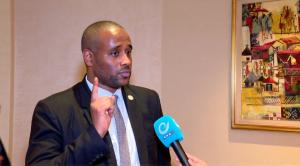
Advisor to Water Minister Rejects Interference in Sovereign Decisions or Restrictions on Right to Dev't
Sep 24, 2026 10964
Addis Ababa, September 24, 2026 (ENA) — Ethiopian Water and Energy Minister’s Advisor, Mohammed Al-Arousi, underscored that Ethiopia will not accept interference in its sovereign decisions or restrictions on its right to development. Strongly condemning the recent remarks of Egypt's Minister of Water Resources and Irrigation concerning the Grand Ethiopian Renaissance Dam (GERD), he told ENA that Ethiopia does not view the issue of dam construction as a confrontation with the Egyptian people. The Advisor and member of the House of People's Representatives called on the Egyptian side to focus on its domestic challenges and work toward mechanisms that strengthen cooperation among Nile Basin countries. Mohammed noted that Ethiopia’s dam development does not end with the Grand Ethiopian Renaissance Dam, pointing out that three new dams are in the pipeline. The projects demonstrate Ethiopia’s continued implementation of its development agenda, despite external criticism and objections. “Some of our brothers in Egypt may think that we are provoking them when we say that we are building dams on the Nile River. However, we affirm that these are Ethiopian rights from which we have been deprived; and Ethiopia is working to reclaim these rights,” the Advisor explained. Mohammed added that Ethiopia does not view water development as a privilege requiring permission from another country, stressing that its natural resources constitute the foundation of its plans to expand electricity access and improve the living standards of its citizens. Ethiopia will continue utilizing its natural resources and dam construction is part of the country’s right to pursue development and provide energy to its people, he underlined. “We categorically reject all these (Egyptian) statements. Our country is a sovereign and independent state, and we absolutely do not accept interference in Ethiopia’s internal affairs.” He elaborated that Ethiopia has long been deprived of exercising its full development rights in the areas of water and energy, and is now working to reclaim these rights through practical projects on the ground. The Grand Ethiopian Renaissance Dam was not constructed to target Egypt, but rather to generate electricity and support Ethiopia’s economic and social development, the Advisor added. Furthermore, the Advisor noted that the Nile Basin countries have become increasingly aware of the importance of protecting their natural resources and preserving their sovereignty, calling for cooperation mechanisms based on shared interests rather than continued disagreements. Mohammed criticized Egyptian statements, including the remarks of the Egyptian minister, as provocative; saying that discourse among countries in the region should contribute to rapprochement and dialogue rather than deepen tensions. He explained that Ethiopia responds to criticisms directed against it through the development projects it implements, rather than engaging in repeated political disputes. Ethiopia’s dam and energy projects represent, according to him, a practical response to the need to expand access to electricity and advance economic and social development as the country continues implementing its plans in the energy sector. The country will continue utilizing its natural resources in the interest of its people, the Advisor said, affirming that the development trajectory will not be halted by statements issued from abroad. In conclusion, Mohammed emphasized that cooperation among Nile Basin countries remains the path toward addressing common challenges.
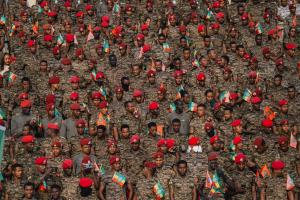
Ethiopian Army's Emergence: A Strategic Insurance for Red Sea and Horn Region Security
Sep 24, 2026 16002
By Guillermo Patria Sept. 24, 2026 (ENA) Ethiopia is undertaking a broad transformation of its national defense system, seeking to build a military that is more professional, technologically advanced, operationally ready and increasingly capable of sustaining itself through domestic production. The transformation reaches across the Ethiopian National Defense Force (ENDF), Air Force, Special Operations Command, defense industries, drone production, military research and education, artificial intelligence and the rebuilding of the country's maritime capability. At its core is a strategic proposition: protecting Ethiopia's sovereignty and national interests requires not only soldiers and weapons, but also strong institutions, technology, industrial capacity and human capital capable of sustaining them. ENDF Chief of General Staff Field Marshal Birhanu Jula has described the reform as a historic transformation aimed at strengthening the force's organizational structure, unity, professionalism, readiness and technological capacity. The objective is therefore not simply to increase military hardware, but to change the character and capabilities of the force. A force adapted to modern warfare The battlefield is changing rapidly. Traditional manpower and conventional weapons remain important, but military effectiveness increasingly depends on information, precision, communications, unmanned systems, artificial intelligence, cyber capabilities, electronic warfare and the ability to make decisions rapidly. Ethiopia's reforms are increasingly responding to this reality. In February 2026, Field Marshal Birhanu described the modernized ENDF in terms of quantity, quality and technology, stressing the need to adapt military capabilities to changing technologies and security threats. The technological shift is also becoming institutional. In August 2026, the ENDF signed an agreement with the Ethiopian Artificial Intelligence Institute to explore AI applications in logistics, military training, cybersecurity, military healthcare, air operations and electronic warfare. Yet technology alone does not create military strength. It must be matched by trained personnel, effective institutions and operational readiness. Ethiopia's reform therefore also emphasizes professional military education, specialized training, engineering and technical expertise. Readiness at the center The ultimate purpose of a defense force is its ability to respond when national interests are threatened. Field Marshal Birhanu has repeatedly emphasized ENDF readiness amid what Ethiopia describes as a complex and changing security environment. In July 2026, he said reforms had strengthened the force's organizational structure and unity while maintaining a high level of readiness and introducing modern military technology. The Special Operations Command represents another dimension of this approach, with military leadership presenting it as a highly capable force designed for rapid response and proactive action against emerging threats. For Ethiopia, the broader objective is clear: national sovereignty must be protected by a force capable of detecting threats, mobilizing rapidly and responding effectively when national interests are at stake. From buying weapons to building them Perhaps the most important part of Ethiopia's defense transformation is taking place away from the battlefield—in factories, laboratories and engineering facilities. Prime Minister Abiy Ahmed has increasingly linked defense manufacturing with economic resilience and technological self-reliance. He has said Ethiopia is developing domestic capabilities to manufacture unmanned aerial vehicles, armored military vehicles, heavy weapons, artillery and ammunition. The significance goes beyond the products themselves. Defense manufacturing requires engineers, technicians, researchers, specialized machinery and reliable industrial systems, creating technological capabilities that can strengthen the wider economy. The Homicho Ammunition Engineering Complex illustrates this trajectory. Its growing production capacity has enabled Ethiopia not only to supply domestic requirements but also to enter foreign markets, with the government reporting ammunition export contracts worth more than 30 million US dollars. The direction is therefore shifting from simply acquiring finished products toward developing the capacity to produce, maintain and improve critical systems domestically. The Air Force and the technology ecosystem The Ethiopian Air Force provides perhaps the clearest example of the transformation. The institution says it has moved from an analog operating environment toward the digital era while expanding aircraft maintenance, upgrading, spare-parts production and unmanned aviation. The significance is that a modern Air Force requires an entire technological ecosystem—pilots, engineers, technicians, maintenance facilities, spare parts, research, communications and digital systems. Ethiopia is increasingly seeking to develop these capabilities locally. The Air Force has reported increased production of components and spare parts while Ethiopian engineers and technicians take greater roles in aircraft maintenance, upgrading and unmanned systems. The objective is therefore not simply to acquire aircraft from abroad, but to develop the knowledge required to operate, maintain, upgrade and eventually develop increasingly sophisticated systems. This also explains the emphasis on human capital. Prime Minister Abiy has stressed that sophisticated aircraft alone cannot create an effective Air Force. Highly trained pilots, engineers, technicians, scientists and commanders are essential to converting technology into military capability. Drones and artificial intelligence Few developments demonstrate the technological shift more clearly than Ethiopia's growing drone industry. The establishment of SkyWin Aeronautics Industries marked an important step in domestic UAV production. Drones bring together aviation, electronics, sensors, communications, software, data processing and increasingly artificial intelligence. In June 2026, the Information Network Security Administration and the Ethiopian Air Force agreed to establish a Drone Technology Center dedicated to research, innovation and development in unmanned aerial systems. The initiative connects defense requirements with research, laboratories, human-capital development and technology transfer—helping create a domestic technological chain from research and engineering to production and deployment. AI represents the next layer of this transformation. The ENDF's cooperation with the Ethiopian Artificial Intelligence Institute is intended to explore AI applications across logistics, training, cybersecurity, military healthcare, air operations and electronic warfare. The broader significance is that Ethiopia's defense modernization is moving beyond hardware toward technologies that can improve how information is collected, processed and used. Fourth-generation capability, fifth-generation ambition Ethiopia's Air Force ambitions extend further. In January 2026, Prime Minister Abiy said the Ethiopian Air Force had developed fourth-generation combat capability and set an objective of moving toward fifth-generation capability by 2030, alongside plans to double the country's combat-aircraft capacity. These are stated government objectives rather than capabilities already fully achieved. Nevertheless, they demonstrate the direction of Ethiopia's military planning: keeping defense capabilities aligned with rapidly evolving technologies while continuing to invest in the human expertise required to operate them. The transformation therefore cannot be measured only by the number of aircraft acquired, but also by the country's ability to operate, maintain, upgrade and increasingly develop sophisticated systems. Land, air and sea Ethiopia's defense transformation also has a maritime dimension. The country lost direct access to the Red Sea following Eritrea's independence, and the Ethiopian Navy was subsequently disbanded. Its reconstruction now forms part of the country's evolving national security architecture. Vice Admiral Kindu Gezu, Commander-in-Chief of the Ethiopian Navy, has highlighted the changing security environment in the Red Sea and Gulf of Aden, including piracy, arms trafficking, irregular migration, insurgent networks and geopolitical competition. For Ethiopia, maritime security has implications beyond naval operations. Trade routes, ports, energy supplies, commercial shipping and regional security are all connected to the wider maritime environment. The Navy consequently adds another dimension to the defense transformation, with land, air, cyber and maritime capabilities increasingly forming part of one national security architecture. Building strategic self-reliance Taken together, these developments reveal the broader direction of Ethiopia's defense reform. The ENDF is being reorganized and professionalized. Specialized forces are being developed around rapid response. The Air Force is expanding its digital, maintenance and engineering capabilities. Domestic drone production is emerging. Defense industries are producing ammunition, armored vehicles and other military equipment. AI is being explored for defense applications, while military universities and laboratories are becoming part of technological research and development. The Navy is rebuilding maritime capabilities. Individually, each represents a military reform. Together, they point toward an effort to build strategic self-reliance. A country cannot guarantee the sustainability of its defense capability if every critical component depends on external suppliers. Domestic production does not eliminate the need for international cooperation or foreign technology, but it can strengthen Ethiopia's ability to maintain essential capabilities, respond to emergencies and develop technologies suited to its own requirements. That is the broader bargain emerging from Ethiopia's defense transformation. The objective is not simply to possess modern weapons. It is to create a defense institution capable of using technology effectively, sustaining its equipment, developing its own technical expertise and responding rapidly when national interests are threatened. The deeper story is therefore being written not only on military grounds, but also in aircraft workshops, drone factories, ammunition plants, laboratories, military academies and technology institutes. The soldier remains at the center. But alongside the soldier stands an increasingly important network of pilots, engineers, scientists, technicians, programmers, researchers and manufacturers. Together, they represent a changing conception of military power. For Ethiopia, the emerging objective is a defense force that is professional in structure, ready in operation, technologically capable and increasingly self-reliant in production. In an era when national security is shaped by technology as much as manpower, the ability to build and sustain that capability may become as important as the weapons themselves. Ethiopia's defense transformation is therefore not simply about building a stronger army. It is about building the technological, industrial and human foundations that enable the country to defend its sovereignty and national interests with greater confidence and readiness.
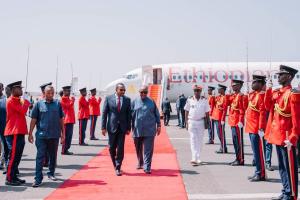
PM Abiy Arrives in Djibouti for Joint Economic Project Announcement
Sep 24, 2026 9192
Addis Ababa, September 24, 2026 (ENA) —Prime Minister Abiy Ahmed arrived in Djibouti, where he was welcomed by Djiboutian President Ismaïl Omar Guelleh. The two leaders are expected to preside over the announcement of a joint project aimed at further strengthening economic ties and cooperation between Ethiopia and Djibouti, according to Office of the Prime Minister. Moreover, the project is anticipated to add momentum to the longstanding economic partnership between the two neighboring countries and deepen cooperation in areas of shared strategic interest.
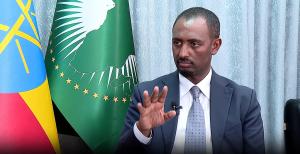
African Affairs DG Asserts Ethiopia’s Sovereign Right to Build Dams for Various Purposes
Sep 24, 2026 9238
Addis Ababa, September 24, 2026 (ENA) — Ethiopia has the sovereign right to develop its water resources and construct dams for various purposes within its territory, Ambassador Zerihun Abebe, Director General for African Affairs at the Ministry of Foreign Affairs, said. Speaking to ENA, Ambassador Zerihun emphasized that Ethiopia rejects Egypt’s attempt to exercise a monopolistic approach to the Nile waters. He stressed that Ethiopia's position is based on the principles of sovereignty and equality among states. "Ethiopia has every right to construct dams, whether for irrigation, hydropower, domestic use, or industrial purposes, anywhere and at any time within its territory," he explained. The Director General argued that Ethiopia is not required to obtain permission from another country to undertake development projects within its territory. He noted that Ethiopia's position is also informed by its interpretation of international law and the historical practice of water development by states along shared river systems. To illustrate his point, Ambassador Zerihun cited examples from other parts of the world. He mentioned China’s development of dams along the Mekong, the United States’ management of rivers such as the Colorado and Rio Grande, and Turkey’s development of the Euphrates and Tigris river systems. "No one can impede Ethiopia’s right to use its water resources for its development purposes," he asserted. Ambassador Zerihun also criticized Egypt’s past unilateral water development activities, including the construction of the High Aswan Dam and diversion projects associated with Toshka. Ethiopia has previously raised similar concerns at the United Nations, arguing that Egypt’s projects were undertaken without consultation with upstream riparian states. Furthermore, Ambassador Zerihun referred to Sudanese dams, including Roseires, Merowe, Jebel Aulia, and projects in the Setit and Atbara river systems, arguing that Ethiopia was not involved in their development. Against this backdrop, he said, Ethiopia rejects the argument that its own water development projects should be subject to approval by downstream countries. Egypt has continued to argue that upstream projects should not be undertaken unilaterally because of their potential effects on downstream water security, while Ethiopia maintains that it has a sovereign right to use its water resources for development. The legal and diplomatic dispute also involves differing interpretations of earlier Nile agreements. The 1959 Nile Waters Agreement is a bilateral accord between Egypt and Sudan, according to United Nations treaty records. Ethiopia has consistently rejected the agreement as a basis for determining its rights over the Nile waters. Condemning calls for Ethiopia to seek permission from Cairo before undertaking water development projects, Ambassador Zerihun described such an approach as rooted in a colonial-era conception of relations among African states. "We are living in a world where all states are equal," he underscored. "Ethiopia will continue to exercise its sovereign rights without interference."
.jpg)
Ethiopia’s Global Horizon: Championing Africa’s Voice and Reliable Sea Access
Sep 24, 2026 10406
Addis Ababa, September 24, 2026 (ENA) —Ethiopia has used the 81st United Nations General Assembly to put a broader strategic question before the international community: can a global system facing profound geopolitical, economic, technological and environmental change remain credible without giving greater weight to Africa and the Global South? For President Taye Atske Selassie, the answer is increasingly tied to how the international system distributes voice, opportunity and responsibility. Addressing the General Debate in New York on September 23, President Taye linked Ethiopia’s national priorities to a wider case for stronger multilateralism, greater African representation in global institutions, peaceful regional integration, reliable maritime connectivity, climate justice, energy transformation, food security and technological inclusion. His message came as the 81st General Assembly meets under the theme “Restoring Trust, Managing Transformation: A United Nations That Delivers for All.” The theme itself reflects an international system under pressure from armed conflicts, widening inequalities, climate emergencies, rapid technological change and declining confidence in multilateral institutions. Against that backdrop, Ethiopia’s intervention was more than a statement of national interests. It was an attempt to place those interests within a larger African and Global South agenda. Africa’s Voice and the Question of Global Legitimacy At the center of Ethiopia’s message is the longstanding question of African representation in global decision-making. President Taye renewed Ethiopia’s call for reform of the United Nations Security Council, arguing that Africa cannot remain structurally underrepresented in an institution whose decisions have profound consequences for international peace and security. Ethiopia has consistently supported the African Common Position, including the call for two permanent African seats with full rights and responsibilities as well as veto power, alongside additional non-permanent representation. President Taye articulated that position explicitly in earlier engagements with UN leadership and has continued to frame Security Council reform as an issue of fairness, representation and institutional credibility. The argument has gained renewed relevance during this year’s General Assembly. The President of the 81st General Assembly, Khalilur Rahman, has himself identified inclusive global governance and UN reform as central pillars of his programme. In his opening remarks, he said reform must make the Organization more representative and responsive, while emphasizing that Africa’s underrepresentation in the Security Council is particularly significant. For Ethiopia, therefore, the issue is not simply about obtaining a larger African presence in New York. It is about whether institutions created in a very different geopolitical era can adequately represent the world as it exists today. Africa’s demographic weight, economic potential and growing strategic importance have expanded considerably, while its formal representation in the UN’s most powerful decision-making body remains limited. That tension lies at the heart of Ethiopia’s diplomatic argument. From Multilateralism as Principle to Multilateralism as Security Ethiopia’s position also draws on its own diplomatic history. The country’s experience with the League of Nations and the failure of the international system to prevent fascist aggression in the 1930s has long shaped Addis Ababa’s view of collective security. That history gives Ethiopia a particular reason to treat multilateralism not simply as diplomatic architecture, but as a mechanism whose effectiveness can have direct consequences for national and regional security. The lesson Ethiopia draws is straightforward: international institutions lose credibility when their principles are applied selectively or when entire regions remain inadequately represented in decisions concerning war, peace and security. This perspective also fits Ethiopia’s longstanding diplomatic identity as an African state with deep multilateral engagement and as host of the African Union headquarters in Addis Ababa. The result is a foreign-policy narrative in which Ethiopia seeks to speak simultaneously as a national actor and as part of a broader African diplomatic constituency. Sea Access: From National Interest to Regional Connectivity Perhaps the most strategically consequential dimension of President Taye’s message is Ethiopia’s renewed emphasis on reliable sea outlet. For Africa’s second-most populous country and one of the continent’s largest economies, dependence on external maritime infrastructure is not simply a logistical matter. It affects trade costs, supply chains, industrial competitiveness and the country’s ability to integrate more deeply into global markets. President Taye has therefore linked Ethiopia’s economic ambitions with the need for dependable maritime connectivity, while emphasizing diplomatic engagement and arrangements that can serve wider regional interests. That framing matters. Ethiopia is increasingly presenting maritime access not merely as a national demand, but as part of a broader regional connectivity equation involving security, trade, infrastructure, ports, logistics and economic integration across the Horn of Africa. This places the issue within the strategic geography of the Red Sea and the Gulf of Aden, one of the world’s most important maritime corridors. The Ethiopian argument is that a large landlocked economy cannot fully realize its economic potential without predictable access to international maritime trade. At the same time, Addis Ababa has sought to frame connectivity as potentially mutually beneficial: coastal states can gain from investment, logistics, infrastructure and expanded trade generated by stronger links with Ethiopia. The question, therefore, is increasingly about how maritime connectivity can be incorporated into a regional economic architecture and a security lens. Energy: Turning Africa’s Resources into African Growth President Taye’s message on energy follows a similar logic. Africa possesses enormous renewable-energy potential, yet millions of people remain without reliable electricity and many countries lack the transmission networks, financing and infrastructure required to convert generation capacity into productive economic activity. Ethiopia has sought to position itself at the center of this debate through its renewable-energy expansion and the Grand Ethiopian Renaissance Dam (GERD). For Addis Ababa, the GERD is not presented simply as a national power project. It is part of a broader development model centered on domestic resource mobilization, renewable energy and regional electricity connectivity. The larger challenge, however, extends beyond generation. Africa needs transmission lines, interconnected grids, storage capacity, investment and industries capable of using electricity productively. This is where Ethiopia’s argument intersects with the wider global debate over energy access: building generation capacity is only one part of an energy transition. The more difficult question is how to finance and connect that capacity so that electricity becomes a foundation for industrialization, digital services, agriculture and employment. In that sense, Ethiopia is attempting to shift the conversation from Africa’s renewable-energy potential to Africa’s ability to convert that potential into economic transformation. Climate Diplomacy and the Politics of Development Climate change provides another bridge between Ethiopia’s domestic priorities and its international diplomacy. President Taye has emphasized the disparity between countries’ historical contributions to global emissions and their exposure to climate-related consequences, placing questions of climate finance, equity and development at the center of Ethiopia’s position. Ethiopia’s selection to host COP32 in 2027 gives Addis Ababa an additional platform from which to pursue that agenda. The country’s Green Legacy Initiative, renewable-energy expansion and environmental restoration efforts form part of the domestic narrative Ethiopia is taking into international climate diplomacy. But the strategic question extends beyond tree planting or emissions. For many African countries, the climate debate is fundamentally connected to development finance. The continent requires resources not only to mitigate emissions but also to adapt infrastructure, strengthen food systems, expand energy access and protect vulnerable communities. Ethiopia’s message therefore seeks to connect climate responsibility with development opportunity. Food Security as Economic and Strategic Resilience Food security occupies a similar position. President Taye’s reference to Ethiopia’s expansion of wheat production reflects a broader effort to portray domestic agricultural production as a pillar of resilience. The lesson Ethiopia is advancing is that food security cannot be separated from economic stability, national resilience and geopolitical vulnerability. The disruptions of recent years—from conflicts and supply-chain shocks to climate-related disasters—have demonstrated how quickly dependence on international food markets can become a strategic concern. For Ethiopia and other African states, increasing domestic agricultural productivity is therefore increasingly framed not simply as an agricultural policy, but as part of a wider strategy to strengthen economic sovereignty and withstand external shocks. Technology and the Battle Over the Future Technology introduces another dimension to Ethiopia’s international message. Artificial intelligence is rapidly changing economies, labor markets, education, security and global competitiveness. Yet access to computing infrastructure, data, skills and investment remains highly unequal. The danger for Africa is not simply being left behind in the next technological revolution. It is becoming permanently dependent on technologies designed, owned and controlled elsewhere. President Taye’s emphasis on initiatives such as Ethiopia’s 5 Million Coders programme and the country’s efforts to expand digital and AI capabilities reflects an attempt to position technology as a development instrument rather than merely a consumer market. The question is increasingly whether African countries can participate in the creation of the next generation of technologies—and whether global AI governance will give developing countries a meaningful voice. That debate is particularly relevant at this year’s UNGA, where AI governance and the digital divide are prominent elements of the wider discussion on transforming multilateral cooperation. The General Assembly presidency has identified “Innovation with Inclusion” as one of its six pillars, emphasizing inclusive governance and investment to close the digital divide. The Horn of Africa: Connectivity Cannot Be Separated from Stability Ethiopia’s global message ultimately returns to its immediate neighborhood. The Horn of Africa is simultaneously a zone of immense economic potential and persistent geopolitical vulnerability. Conflict, maritime insecurity, fragile political settlements and competition over strategic infrastructure continue to shape the region. President Taye’s engagement with UN Secretary-General António Guterres on the margins of UNGA 81 focused on peace and security in the Horn of Africa, regional connectivity and sustainable development. Guterres also reaffirmed UN support for Ethiopia’s preparations to host COP32. That combination is revealing. For Ethiopia, security and development are increasingly presented as interconnected rather than separate policy tracks. A stable Horn facilitates trade and infrastructure. Improved connectivity creates economic incentives for cooperation. Greater economic integration can, in turn, strengthen the foundations for regional stability. This is the broader logic behind Ethiopia’s emphasis on maritime access, regional integration and diplomatic engagement. Ethiopia’s UN Message Is About More Than Ethiopia Taken together, President Taye’s UN message forms a relatively coherent strategic picture. Ethiopia is seeking to connect Africa’s voice in global governance with Africa’s ability to drive its own development. Security Council reform addresses political representation. Maritime access addresses connectivity and trade. Renewable energy addresses industrialization and energy access. Food production addresses resilience. Technology addresses future competitiveness. Climate diplomacy addresses development finance and environmental vulnerability. Regional diplomacy addresses the stability required for these ambitions to advance. The common thread is agency. Ethiopia’s argument is that Africa should have greater influence not only over how global institutions make decisions, but also over how the continent’s resources, markets, technologies and development priorities are integrated into the global economy. That makes the message broader than a conventional foreign-policy statement. It is an argument about the architecture of the international system itself. From New York Rhetoric to Concrete Outcomes The harder question begins after the speeches. Calls for reform, representation, connectivity and equitable development are increasingly common in international diplomacy. Their significance ultimately depends on whether they generate institutional changes, financing, infrastructure, partnerships and durable political agreements. For Ethiopia, that means translating its growing diplomatic engagement into tangible outcomes: expanded trade and investment, stronger regional infrastructure, reliable maritime connectivity, renewable-energy partnerships, climate finance, technological capacity and a greater African role in global decision-making. The challenge is substantial. But so is the opportunity. At a moment when the UN itself is confronting questions about relevance, representation and trust, Ethiopia has chosen to place its national interests inside a much larger African and Global South conversation. The message from New York is therefore not simply that Ethiopia wants a stronger voice. It is that Africa wants a greater role in defining the rules of the international system—and Ethiopia intends to be part of that conversation. The measure of the strategy will now be what follows: whether diplomatic principles can be converted into practical partnerships, regional connectivity, development gains and institutional change. That is where Ethiopia’s UN message moves from rhetoric to strategy.
Politics
PM Advisor Stresses Need for Revitalization of Global Partnerships
Sep 26, 2026 859
Addis Ababa, September 26, 2026 (ENA) —Stronger partnerships, shared solutions and renewed commitment are essential to accelerate progress toward the 2030 Agenda, East African Affairs Advisor to the Prime Minister, Getachew Reda said. The 2030 Agenda for Sustainable Development is a global development framework adopted by all UN Member States in 2015. At the Global Development Initiative (GDI) High-Level Dialogue held on the sidelines of the 81st United Nations General Assembly, Getachew underscored the critical importance of revitalizing global partnerships for sustainable development, stressing the need to translate shared commitments into tangible development outcomes. The Adviser highlighted that the GDI as a practical, results-oriented partnership that can help accelerate implementation of the SDGs and advance development priorities. He also emphasized the importance of prioritizing key transitions with catalytic and multiplier effects across the SDGs, particularly in poverty eradication, energy, food systems, finance, digital transformation, education and climate action. Getachew further stressed the importance of drawing on the comparative advantages, experiences and successes of country-led initiatives, strengthening cooperation and learning from solutions that are delivering results on the ground.
Ethiopia’s BRICS Membership Unlocking New Economic Opportunities, Says FAI Researcher
Sep 26, 2026 3778
Addis Ababa, September 26, 2026 (ENA) —Ethiopia’s BRICS membership is opening new opportunities across various sectors, Senior Researcher at the Foreign Affairs Institute (FAI) Himanot Eshetu told ENA. Himanot emphasized that Ethiopia’s BRICS membership is gaining momentum, creating greater leverage to strengthen economic partnerships, attract investment, diversify development financing, and advance its national interests globally. Ethiopia's active engagement with major emerging economies, coupled with its participation in high-level discussions concerning global economic and geopolitical issues, renders its BRICS membership profoundly strategic, she added. “BRICS is not just an economic grouping. Especially for Ethiopia, it is an additional platform for diplomatic engagement,” she said. The platform also enables Ethiopia to advance its national interests while championing African priorities across critical sectors, including global finance, technology, trade, sustainable development, and security. A major advantage of this membership is access to the BRICS New Development Bank (NDB), which Himanot noted will significantly expand funding for infrastructure and sustainable development. The country can successfully diversify its development finance sources as the bank’s financing goals align closely with Ethiopia's national needs. “If we have more sources of finance, Ethiopia will get an opportunity and flexibility to implement its development priorities,” she said, emphasizing that NDB funding is meant to complement, rather than replace, existing partnerships. Since joining the bloc in 2024, Ethiopia has actively engaged in BRICS initiatives, ranging from heads of state summits and ministerial meetings to expert-level discussions and working groups. Beyond finance, Himanot highlighted the potential to connect with major emerging markets, expanding trade and investment horizons. To capitalize on these prospects, she stressed the importance of promoting competitive domestic sectors, such as agriculture, agro-processing, textile manufacturing, energy, tourism, and mining. Furthermore, the platform offers an avenue to deepen economic cooperation and advocate for the broader interests of the Global South. Ultimately, Himanot concluded, maximizing these benefits will require coordinated institutional engagement, a sharp focus on tangible economic outcomes, and proactive promotion of Ethiopia's trade and investment potential.
Ethiopia’s Rising Strategic Weight in the Horn and Red Sea
Sep 25, 2026 9326
By Staff Writer As geopolitical and politico-military dynamics reshape the Horn of Africa and the Red Sea corridor, Ethiopia’s economic weight, strategic location and expanding regional engagement continue to make it a central actor in the region’s evolving balance. Ethiopia is undergoing a transformation that reaches far beyond economic growth. Across its economy, cities, digital infrastructure, environmental restoration, tourism, investment, energy and regional connectivity, the country is pursuing a broad development agenda aimed at reshaping its domestic foundations while expanding its role in the Horn of Africa and the wider continent. Under the leadership of Prime Minister Abiy Ahmed, the government has placed economic reform, infrastructure development, digitalization, environmental restoration and regional integration at the heart of its development strategy. The transformation is unfolding against a complicated geopolitical backdrop. The Horn of Africa and the Red Sea corridor have become increasingly important arenas for global trade, maritime security, strategic competition and shifting political alignments. Conflicts and political transitions in neighboring countries, competition over strategic ports and shipping routes, and the growing involvement of external powers have further elevated the region's geopolitical importance. In that changing environment, Ethiopia’s sheer demographic and economic weight, geographic position and expanding infrastructure make its trajectory consequential well beyond its borders. The question is therefore not simply how rapidly Ethiopia is growing. It is how the country's economic transformation, technological modernization, environmental agenda and search for deeper regional connectivity could reshape its position in a strategically vital part of Africa. Growth as the Foundation of Transformation Ethiopia’s economic reform program has become one of the central pillars of this transformation. The government has pursued a series of macroeconomic and structural reforms under the Homegrown Economic Reform agenda, seeking to move the economy toward greater private-sector participation, stronger exports, increased investment and a more market-oriented system. The government projects economic growth of around 10.2 percent for the current Ethiopian fiscal year, placing Ethiopia among the world's fastest-growing economies. Behind the headline figure is a broader structural effort. Infrastructure investment, agriculture, manufacturing, services, trade and construction are increasingly interconnected within a development strategy designed to expand productive capacity and create new economic opportunities. The reform process has also sought to address longstanding macroeconomic challenges, including foreign-exchange shortages, inflationary pressures and limited private-sector participation. The significance of the reforms lies not only in short-term growth, but in the attempt to change the underlying architecture of the economy. Ethiopia is seeking to move from a predominantly state-led economic model toward one in which private investment, competition and market mechanisms play a larger role. This represents one of the most consequential economic shifts in the country's recent history. Cities as Engines of a New Ethiopia The transformation is perhaps most visible in Ethiopia’s cities. What began as a major corridor-development program in Addis Ababa has evolved into a broader urban-development drive extending to cities across the country. The initiative combines road and transport infrastructure with pedestrian corridors, public spaces, greenery, recreational facilities and other urban improvements. Addis Ababa has become the most visible expression of this transformation. The capital is simultaneously Ethiopia’s political center, a diplomatic hub hosting the African Union and numerous international institutions, and an increasingly important commercial and investment center. The broader objective is to create cities capable of supporting a rapidly growing population and an expanding economy. Urban development is consequently being treated not simply as beautification, but as an economic and social infrastructure strategy. The Digital Leap Another defining feature of Ethiopia’s transformation is the rapid expansion of its digital economy. For decades, many public and financial services depended heavily on physical documents, face-to-face transactions and cash. That is changing. Digital public services, mobile money, electronic payments and national digital identification are increasingly becoming part of everyday economic and administrative life. The government's Mesob one-stop digital service initiative represents this shift toward integrated public services, bringing multiple services together through digital platforms and expanding access beyond the capital. At the foundation of this emerging ecosystem is Fayda, Ethiopia’s national digital identification system. A reliable digital identity can support access to financial services, social protection, government services and a growing range of digital applications. Meanwhile, mobile-money adoption has expanded rapidly. More than 58 million Ethiopians are reported to be using mobile-money services, while digital payments have recorded significant increases. The importance of this transformation goes beyond convenience. Digitalization can reduce transaction costs, widen financial inclusion, improve access to government services and create new opportunities for businesses and citizens. For a country of Ethiopia’s size, that represents a potentially significant change in the relationship between the state, the economy and its citizens. Investment and Tourism: Unlocking Untapped Potential Ethiopia’s economic transformation is also increasingly linked to investment and tourism. The country combines a large domestic market, a young population, substantial agricultural potential, a strategic geographic location, unique cultural heritage and diverse natural landscapes. Government initiatives have sought to turn those assets into economic opportunities. Projects associated with Dine for Sheger, Dine for Nation and Dine for Generation have contributed to a broader effort to develop urban tourism, hospitality, recreation and cultural destinations. Ethiopia is simultaneously seeking to expand its tourism offering beyond traditional historical routes by developing natural, cultural and urban destinations. The objective is increasingly clear: tourism is being positioned not merely as a source of foreign exchange, but as part of a wider urban-development, employment and investment strategy. The same logic applies to investment. Economic reforms are intended to create greater space for private capital and international investors while infrastructure expansion seeks to improve the conditions for doing business. The challenge is converting Ethiopia’s enormous potential into sustained investment, competitive exports and productive employment. Green Legacy: Development with an Environmental Dimension Perhaps no initiative better captures Ethiopia’s attempt to connect development with environmental restoration than the Green Legacy Initiative. Launched in 2019, the program has mobilized millions of Ethiopians around large-scale tree planting and environmental rehabilitation. More than 56 billion seedlings have been planted since the initiative began. But the significance of Green Legacy extends beyond the number of seedlings. The initiative increasingly encompasses watershed protection, land rehabilitation, climate resilience, biodiversity and efforts to restore degraded landscapes. It has also become an important component of Ethiopia’s international climate diplomacy. For a developing country facing the effects of climate change while seeking rapid economic growth, the underlying proposition is significant: environmental restoration and economic development do not necessarily have to be competing objectives. Ethiopia is attempting to demonstrate that ecological restoration can itself become part of a national development strategy. Energy and Regional Integration Energy is another area where Ethiopia’s domestic transformation intersects directly with regional ambitions. With more than 95 percent of its electricity generated from renewable sources, Ethiopia is seeking to position itself as an important clean-energy producer in East Africa. The Grand Ethiopian Renaissance Dam is central to that strategy. Beyond meeting domestic electricity needs, Ethiopia has increasingly emphasized the potential of cross-border electricity trade to support economic integration. Power interconnections with neighboring countries can create new markets for electricity while providing energy-deficient economies with access to renewable power. The broader vision is therefore regional. Ethiopia is seeking to build infrastructure that connects markets rather than simply serving national consumption. Roads, electricity networks, aviation, telecommunications and trade corridors can collectively create a more integrated regional economy. This is where Ethiopia’s development agenda intersects with its regional diplomacy. The Red Sea Quest Few issues demonstrate this intersection more clearly than Ethiopia’s pursuit of reliable maritime access. As one of Africa’s most populous countries and a major economy in the Horn of Africa, Ethiopia has repeatedly argued that dependable access to maritime trade routes is important for its long-term economic development and regional integration. The issue has acquired greater significance as the Red Sea and Gulf of Aden have become increasingly important to global trade and maritime security. For Ethiopia, maritime access is fundamentally connected to logistics, trade competitiveness and integration into international markets. For the region, Ethiopia’s maritime aspirations intersect with questions of port infrastructure, shipping routes, security and regional economic cooperation. The challenge is therefore not merely geographic. Ethiopia’s approach has increasingly emphasized diplomatic engagement and negotiated arrangements, while presenting maritime connectivity as part of a broader regional integration agenda. A Strategic Actor in a Changing Region The Horn of Africa is experiencing a period of profound geopolitical change. The Red Sea shipping corridor has become increasingly important to global commerce. Competition over ports and maritime infrastructure has intensified. External powers are expanding their diplomatic, economic and security engagement. At the same time, conflicts and political instability continue to affect the region. Against this backdrop, Ethiopia remains one of the region’s central actors. Its large population, expanding economy, strategic location, military and institutional capacity, diplomatic role and infrastructure ambitions give it considerable regional weight. That does not mean Ethiopia is insulated from regional pressures. Far from it. The country continues to confront complex security, economic and diplomatic challenges, while its development ambitions are sometimes unfolding amid competing regional interests. But Ethiopia’s response has increasingly centered on strengthening its own economic foundations while expanding connectivity with its neighbors. Growing with the Region At the heart of Ethiopia’s development strategy is an increasingly visible proposition: national prosperity and regional prosperity are interconnected. Energy corridors can connect power markets. Transport infrastructure can connect economies. Digital networks can connect people and businesses. Tourism can connect cultures. Maritime connectivity can connect landlocked economies to global markets. And regional trade can create opportunities that individual countries may struggle to generate alone. This explains why Ethiopia’s development agenda increasingly extends beyond its national borders. The country is seeking to grow not in isolation, but through deeper economic and infrastructure connections with the Horn of Africa, East Africa and the wider continent. Taken together, these developments point to something larger than a collection of individual projects. They represent an attempt to redefine Ethiopia’s economic foundations and its regional role simultaneously.
Advisor to Water Minister Rejects Interference in Sovereign Decisions or Restrictions on Right to Dev't
Sep 24, 2026 10964
Addis Ababa, September 24, 2026 (ENA) — Ethiopian Water and Energy Minister’s Advisor, Mohammed Al-Arousi, underscored that Ethiopia will not accept interference in its sovereign decisions or restrictions on its right to development. Strongly condemning the recent remarks of Egypt's Minister of Water Resources and Irrigation concerning the Grand Ethiopian Renaissance Dam (GERD), he told ENA that Ethiopia does not view the issue of dam construction as a confrontation with the Egyptian people. The Advisor and member of the House of People's Representatives called on the Egyptian side to focus on its domestic challenges and work toward mechanisms that strengthen cooperation among Nile Basin countries. Mohammed noted that Ethiopia’s dam development does not end with the Grand Ethiopian Renaissance Dam, pointing out that three new dams are in the pipeline. The projects demonstrate Ethiopia’s continued implementation of its development agenda, despite external criticism and objections. “Some of our brothers in Egypt may think that we are provoking them when we say that we are building dams on the Nile River. However, we affirm that these are Ethiopian rights from which we have been deprived; and Ethiopia is working to reclaim these rights,” the Advisor explained. Mohammed added that Ethiopia does not view water development as a privilege requiring permission from another country, stressing that its natural resources constitute the foundation of its plans to expand electricity access and improve the living standards of its citizens. Ethiopia will continue utilizing its natural resources and dam construction is part of the country’s right to pursue development and provide energy to its people, he underlined. “We categorically reject all these (Egyptian) statements. Our country is a sovereign and independent state, and we absolutely do not accept interference in Ethiopia’s internal affairs.” He elaborated that Ethiopia has long been deprived of exercising its full development rights in the areas of water and energy, and is now working to reclaim these rights through practical projects on the ground. The Grand Ethiopian Renaissance Dam was not constructed to target Egypt, but rather to generate electricity and support Ethiopia’s economic and social development, the Advisor added. Furthermore, the Advisor noted that the Nile Basin countries have become increasingly aware of the importance of protecting their natural resources and preserving their sovereignty, calling for cooperation mechanisms based on shared interests rather than continued disagreements. Mohammed criticized Egyptian statements, including the remarks of the Egyptian minister, as provocative; saying that discourse among countries in the region should contribute to rapprochement and dialogue rather than deepen tensions. He explained that Ethiopia responds to criticisms directed against it through the development projects it implements, rather than engaging in repeated political disputes. Ethiopia’s dam and energy projects represent, according to him, a practical response to the need to expand access to electricity and advance economic and social development as the country continues implementing its plans in the energy sector. The country will continue utilizing its natural resources in the interest of its people, the Advisor said, affirming that the development trajectory will not be halted by statements issued from abroad. In conclusion, Mohammed emphasized that cooperation among Nile Basin countries remains the path toward addressing common challenges.
Ethiopian Army's Emergence: A Strategic Insurance for Red Sea and Horn Region Security
Sep 24, 2026 16002
By Guillermo Patria Sept. 24, 2026 (ENA) Ethiopia is undertaking a broad transformation of its national defense system, seeking to build a military that is more professional, technologically advanced, operationally ready and increasingly capable of sustaining itself through domestic production. The transformation reaches across the Ethiopian National Defense Force (ENDF), Air Force, Special Operations Command, defense industries, drone production, military research and education, artificial intelligence and the rebuilding of the country's maritime capability. At its core is a strategic proposition: protecting Ethiopia's sovereignty and national interests requires not only soldiers and weapons, but also strong institutions, technology, industrial capacity and human capital capable of sustaining them. ENDF Chief of General Staff Field Marshal Birhanu Jula has described the reform as a historic transformation aimed at strengthening the force's organizational structure, unity, professionalism, readiness and technological capacity. The objective is therefore not simply to increase military hardware, but to change the character and capabilities of the force. A force adapted to modern warfare The battlefield is changing rapidly. Traditional manpower and conventional weapons remain important, but military effectiveness increasingly depends on information, precision, communications, unmanned systems, artificial intelligence, cyber capabilities, electronic warfare and the ability to make decisions rapidly. Ethiopia's reforms are increasingly responding to this reality. In February 2026, Field Marshal Birhanu described the modernized ENDF in terms of quantity, quality and technology, stressing the need to adapt military capabilities to changing technologies and security threats. The technological shift is also becoming institutional. In August 2026, the ENDF signed an agreement with the Ethiopian Artificial Intelligence Institute to explore AI applications in logistics, military training, cybersecurity, military healthcare, air operations and electronic warfare. Yet technology alone does not create military strength. It must be matched by trained personnel, effective institutions and operational readiness. Ethiopia's reform therefore also emphasizes professional military education, specialized training, engineering and technical expertise. Readiness at the center The ultimate purpose of a defense force is its ability to respond when national interests are threatened. Field Marshal Birhanu has repeatedly emphasized ENDF readiness amid what Ethiopia describes as a complex and changing security environment. In July 2026, he said reforms had strengthened the force's organizational structure and unity while maintaining a high level of readiness and introducing modern military technology. The Special Operations Command represents another dimension of this approach, with military leadership presenting it as a highly capable force designed for rapid response and proactive action against emerging threats. For Ethiopia, the broader objective is clear: national sovereignty must be protected by a force capable of detecting threats, mobilizing rapidly and responding effectively when national interests are at stake. From buying weapons to building them Perhaps the most important part of Ethiopia's defense transformation is taking place away from the battlefield—in factories, laboratories and engineering facilities. Prime Minister Abiy Ahmed has increasingly linked defense manufacturing with economic resilience and technological self-reliance. He has said Ethiopia is developing domestic capabilities to manufacture unmanned aerial vehicles, armored military vehicles, heavy weapons, artillery and ammunition. The significance goes beyond the products themselves. Defense manufacturing requires engineers, technicians, researchers, specialized machinery and reliable industrial systems, creating technological capabilities that can strengthen the wider economy. The Homicho Ammunition Engineering Complex illustrates this trajectory. Its growing production capacity has enabled Ethiopia not only to supply domestic requirements but also to enter foreign markets, with the government reporting ammunition export contracts worth more than 30 million US dollars. The direction is therefore shifting from simply acquiring finished products toward developing the capacity to produce, maintain and improve critical systems domestically. The Air Force and the technology ecosystem The Ethiopian Air Force provides perhaps the clearest example of the transformation. The institution says it has moved from an analog operating environment toward the digital era while expanding aircraft maintenance, upgrading, spare-parts production and unmanned aviation. The significance is that a modern Air Force requires an entire technological ecosystem—pilots, engineers, technicians, maintenance facilities, spare parts, research, communications and digital systems. Ethiopia is increasingly seeking to develop these capabilities locally. The Air Force has reported increased production of components and spare parts while Ethiopian engineers and technicians take greater roles in aircraft maintenance, upgrading and unmanned systems. The objective is therefore not simply to acquire aircraft from abroad, but to develop the knowledge required to operate, maintain, upgrade and eventually develop increasingly sophisticated systems. This also explains the emphasis on human capital. Prime Minister Abiy has stressed that sophisticated aircraft alone cannot create an effective Air Force. Highly trained pilots, engineers, technicians, scientists and commanders are essential to converting technology into military capability. Drones and artificial intelligence Few developments demonstrate the technological shift more clearly than Ethiopia's growing drone industry. The establishment of SkyWin Aeronautics Industries marked an important step in domestic UAV production. Drones bring together aviation, electronics, sensors, communications, software, data processing and increasingly artificial intelligence. In June 2026, the Information Network Security Administration and the Ethiopian Air Force agreed to establish a Drone Technology Center dedicated to research, innovation and development in unmanned aerial systems. The initiative connects defense requirements with research, laboratories, human-capital development and technology transfer—helping create a domestic technological chain from research and engineering to production and deployment. AI represents the next layer of this transformation. The ENDF's cooperation with the Ethiopian Artificial Intelligence Institute is intended to explore AI applications across logistics, training, cybersecurity, military healthcare, air operations and electronic warfare. The broader significance is that Ethiopia's defense modernization is moving beyond hardware toward technologies that can improve how information is collected, processed and used. Fourth-generation capability, fifth-generation ambition Ethiopia's Air Force ambitions extend further. In January 2026, Prime Minister Abiy said the Ethiopian Air Force had developed fourth-generation combat capability and set an objective of moving toward fifth-generation capability by 2030, alongside plans to double the country's combat-aircraft capacity. These are stated government objectives rather than capabilities already fully achieved. Nevertheless, they demonstrate the direction of Ethiopia's military planning: keeping defense capabilities aligned with rapidly evolving technologies while continuing to invest in the human expertise required to operate them. The transformation therefore cannot be measured only by the number of aircraft acquired, but also by the country's ability to operate, maintain, upgrade and increasingly develop sophisticated systems. Land, air and sea Ethiopia's defense transformation also has a maritime dimension. The country lost direct access to the Red Sea following Eritrea's independence, and the Ethiopian Navy was subsequently disbanded. Its reconstruction now forms part of the country's evolving national security architecture. Vice Admiral Kindu Gezu, Commander-in-Chief of the Ethiopian Navy, has highlighted the changing security environment in the Red Sea and Gulf of Aden, including piracy, arms trafficking, irregular migration, insurgent networks and geopolitical competition. For Ethiopia, maritime security has implications beyond naval operations. Trade routes, ports, energy supplies, commercial shipping and regional security are all connected to the wider maritime environment. The Navy consequently adds another dimension to the defense transformation, with land, air, cyber and maritime capabilities increasingly forming part of one national security architecture. Building strategic self-reliance Taken together, these developments reveal the broader direction of Ethiopia's defense reform. The ENDF is being reorganized and professionalized. Specialized forces are being developed around rapid response. The Air Force is expanding its digital, maintenance and engineering capabilities. Domestic drone production is emerging. Defense industries are producing ammunition, armored vehicles and other military equipment. AI is being explored for defense applications, while military universities and laboratories are becoming part of technological research and development. The Navy is rebuilding maritime capabilities. Individually, each represents a military reform. Together, they point toward an effort to build strategic self-reliance. A country cannot guarantee the sustainability of its defense capability if every critical component depends on external suppliers. Domestic production does not eliminate the need for international cooperation or foreign technology, but it can strengthen Ethiopia's ability to maintain essential capabilities, respond to emergencies and develop technologies suited to its own requirements. That is the broader bargain emerging from Ethiopia's defense transformation. The objective is not simply to possess modern weapons. It is to create a defense institution capable of using technology effectively, sustaining its equipment, developing its own technical expertise and responding rapidly when national interests are threatened. The deeper story is therefore being written not only on military grounds, but also in aircraft workshops, drone factories, ammunition plants, laboratories, military academies and technology institutes. The soldier remains at the center. But alongside the soldier stands an increasingly important network of pilots, engineers, scientists, technicians, programmers, researchers and manufacturers. Together, they represent a changing conception of military power. For Ethiopia, the emerging objective is a defense force that is professional in structure, ready in operation, technologically capable and increasingly self-reliant in production. In an era when national security is shaped by technology as much as manpower, the ability to build and sustain that capability may become as important as the weapons themselves. Ethiopia's defense transformation is therefore not simply about building a stronger army. It is about building the technological, industrial and human foundations that enable the country to defend its sovereignty and national interests with greater confidence and readiness.
PM Abiy Arrives in Djibouti for Joint Economic Project Announcement
Sep 24, 2026 9192
Addis Ababa, September 24, 2026 (ENA) —Prime Minister Abiy Ahmed arrived in Djibouti, where he was welcomed by Djiboutian President Ismaïl Omar Guelleh. The two leaders are expected to preside over the announcement of a joint project aimed at further strengthening economic ties and cooperation between Ethiopia and Djibouti, according to Office of the Prime Minister. Moreover, the project is anticipated to add momentum to the longstanding economic partnership between the two neighboring countries and deepen cooperation in areas of shared strategic interest.
African Affairs DG Asserts Ethiopia’s Sovereign Right to Build Dams for Various Purposes
Sep 24, 2026 9238
Addis Ababa, September 24, 2026 (ENA) — Ethiopia has the sovereign right to develop its water resources and construct dams for various purposes within its territory, Ambassador Zerihun Abebe, Director General for African Affairs at the Ministry of Foreign Affairs, said. Speaking to ENA, Ambassador Zerihun emphasized that Ethiopia rejects Egypt’s attempt to exercise a monopolistic approach to the Nile waters. He stressed that Ethiopia's position is based on the principles of sovereignty and equality among states. "Ethiopia has every right to construct dams, whether for irrigation, hydropower, domestic use, or industrial purposes, anywhere and at any time within its territory," he explained. The Director General argued that Ethiopia is not required to obtain permission from another country to undertake development projects within its territory. He noted that Ethiopia's position is also informed by its interpretation of international law and the historical practice of water development by states along shared river systems. To illustrate his point, Ambassador Zerihun cited examples from other parts of the world. He mentioned China’s development of dams along the Mekong, the United States’ management of rivers such as the Colorado and Rio Grande, and Turkey’s development of the Euphrates and Tigris river systems. "No one can impede Ethiopia’s right to use its water resources for its development purposes," he asserted. Ambassador Zerihun also criticized Egypt’s past unilateral water development activities, including the construction of the High Aswan Dam and diversion projects associated with Toshka. Ethiopia has previously raised similar concerns at the United Nations, arguing that Egypt’s projects were undertaken without consultation with upstream riparian states. Furthermore, Ambassador Zerihun referred to Sudanese dams, including Roseires, Merowe, Jebel Aulia, and projects in the Setit and Atbara river systems, arguing that Ethiopia was not involved in their development. Against this backdrop, he said, Ethiopia rejects the argument that its own water development projects should be subject to approval by downstream countries. Egypt has continued to argue that upstream projects should not be undertaken unilaterally because of their potential effects on downstream water security, while Ethiopia maintains that it has a sovereign right to use its water resources for development. The legal and diplomatic dispute also involves differing interpretations of earlier Nile agreements. The 1959 Nile Waters Agreement is a bilateral accord between Egypt and Sudan, according to United Nations treaty records. Ethiopia has consistently rejected the agreement as a basis for determining its rights over the Nile waters. Condemning calls for Ethiopia to seek permission from Cairo before undertaking water development projects, Ambassador Zerihun described such an approach as rooted in a colonial-era conception of relations among African states. "We are living in a world where all states are equal," he underscored. "Ethiopia will continue to exercise its sovereign rights without interference."
Ethiopia’s Global Horizon: Championing Africa’s Voice and Reliable Sea Access
Sep 24, 2026 10406
Addis Ababa, September 24, 2026 (ENA) —Ethiopia has used the 81st United Nations General Assembly to put a broader strategic question before the international community: can a global system facing profound geopolitical, economic, technological and environmental change remain credible without giving greater weight to Africa and the Global South? For President Taye Atske Selassie, the answer is increasingly tied to how the international system distributes voice, opportunity and responsibility. Addressing the General Debate in New York on September 23, President Taye linked Ethiopia’s national priorities to a wider case for stronger multilateralism, greater African representation in global institutions, peaceful regional integration, reliable maritime connectivity, climate justice, energy transformation, food security and technological inclusion. His message came as the 81st General Assembly meets under the theme “Restoring Trust, Managing Transformation: A United Nations That Delivers for All.” The theme itself reflects an international system under pressure from armed conflicts, widening inequalities, climate emergencies, rapid technological change and declining confidence in multilateral institutions. Against that backdrop, Ethiopia’s intervention was more than a statement of national interests. It was an attempt to place those interests within a larger African and Global South agenda. Africa’s Voice and the Question of Global Legitimacy At the center of Ethiopia’s message is the longstanding question of African representation in global decision-making. President Taye renewed Ethiopia’s call for reform of the United Nations Security Council, arguing that Africa cannot remain structurally underrepresented in an institution whose decisions have profound consequences for international peace and security. Ethiopia has consistently supported the African Common Position, including the call for two permanent African seats with full rights and responsibilities as well as veto power, alongside additional non-permanent representation. President Taye articulated that position explicitly in earlier engagements with UN leadership and has continued to frame Security Council reform as an issue of fairness, representation and institutional credibility. The argument has gained renewed relevance during this year’s General Assembly. The President of the 81st General Assembly, Khalilur Rahman, has himself identified inclusive global governance and UN reform as central pillars of his programme. In his opening remarks, he said reform must make the Organization more representative and responsive, while emphasizing that Africa’s underrepresentation in the Security Council is particularly significant. For Ethiopia, therefore, the issue is not simply about obtaining a larger African presence in New York. It is about whether institutions created in a very different geopolitical era can adequately represent the world as it exists today. Africa’s demographic weight, economic potential and growing strategic importance have expanded considerably, while its formal representation in the UN’s most powerful decision-making body remains limited. That tension lies at the heart of Ethiopia’s diplomatic argument. From Multilateralism as Principle to Multilateralism as Security Ethiopia’s position also draws on its own diplomatic history. The country’s experience with the League of Nations and the failure of the international system to prevent fascist aggression in the 1930s has long shaped Addis Ababa’s view of collective security. That history gives Ethiopia a particular reason to treat multilateralism not simply as diplomatic architecture, but as a mechanism whose effectiveness can have direct consequences for national and regional security. The lesson Ethiopia draws is straightforward: international institutions lose credibility when their principles are applied selectively or when entire regions remain inadequately represented in decisions concerning war, peace and security. This perspective also fits Ethiopia’s longstanding diplomatic identity as an African state with deep multilateral engagement and as host of the African Union headquarters in Addis Ababa. The result is a foreign-policy narrative in which Ethiopia seeks to speak simultaneously as a national actor and as part of a broader African diplomatic constituency. Sea Access: From National Interest to Regional Connectivity Perhaps the most strategically consequential dimension of President Taye’s message is Ethiopia’s renewed emphasis on reliable sea outlet. For Africa’s second-most populous country and one of the continent’s largest economies, dependence on external maritime infrastructure is not simply a logistical matter. It affects trade costs, supply chains, industrial competitiveness and the country’s ability to integrate more deeply into global markets. President Taye has therefore linked Ethiopia’s economic ambitions with the need for dependable maritime connectivity, while emphasizing diplomatic engagement and arrangements that can serve wider regional interests. That framing matters. Ethiopia is increasingly presenting maritime access not merely as a national demand, but as part of a broader regional connectivity equation involving security, trade, infrastructure, ports, logistics and economic integration across the Horn of Africa. This places the issue within the strategic geography of the Red Sea and the Gulf of Aden, one of the world’s most important maritime corridors. The Ethiopian argument is that a large landlocked economy cannot fully realize its economic potential without predictable access to international maritime trade. At the same time, Addis Ababa has sought to frame connectivity as potentially mutually beneficial: coastal states can gain from investment, logistics, infrastructure and expanded trade generated by stronger links with Ethiopia. The question, therefore, is increasingly about how maritime connectivity can be incorporated into a regional economic architecture and a security lens. Energy: Turning Africa’s Resources into African Growth President Taye’s message on energy follows a similar logic. Africa possesses enormous renewable-energy potential, yet millions of people remain without reliable electricity and many countries lack the transmission networks, financing and infrastructure required to convert generation capacity into productive economic activity. Ethiopia has sought to position itself at the center of this debate through its renewable-energy expansion and the Grand Ethiopian Renaissance Dam (GERD). For Addis Ababa, the GERD is not presented simply as a national power project. It is part of a broader development model centered on domestic resource mobilization, renewable energy and regional electricity connectivity. The larger challenge, however, extends beyond generation. Africa needs transmission lines, interconnected grids, storage capacity, investment and industries capable of using electricity productively. This is where Ethiopia’s argument intersects with the wider global debate over energy access: building generation capacity is only one part of an energy transition. The more difficult question is how to finance and connect that capacity so that electricity becomes a foundation for industrialization, digital services, agriculture and employment. In that sense, Ethiopia is attempting to shift the conversation from Africa’s renewable-energy potential to Africa’s ability to convert that potential into economic transformation. Climate Diplomacy and the Politics of Development Climate change provides another bridge between Ethiopia’s domestic priorities and its international diplomacy. President Taye has emphasized the disparity between countries’ historical contributions to global emissions and their exposure to climate-related consequences, placing questions of climate finance, equity and development at the center of Ethiopia’s position. Ethiopia’s selection to host COP32 in 2027 gives Addis Ababa an additional platform from which to pursue that agenda. The country’s Green Legacy Initiative, renewable-energy expansion and environmental restoration efforts form part of the domestic narrative Ethiopia is taking into international climate diplomacy. But the strategic question extends beyond tree planting or emissions. For many African countries, the climate debate is fundamentally connected to development finance. The continent requires resources not only to mitigate emissions but also to adapt infrastructure, strengthen food systems, expand energy access and protect vulnerable communities. Ethiopia’s message therefore seeks to connect climate responsibility with development opportunity. Food Security as Economic and Strategic Resilience Food security occupies a similar position. President Taye’s reference to Ethiopia’s expansion of wheat production reflects a broader effort to portray domestic agricultural production as a pillar of resilience. The lesson Ethiopia is advancing is that food security cannot be separated from economic stability, national resilience and geopolitical vulnerability. The disruptions of recent years—from conflicts and supply-chain shocks to climate-related disasters—have demonstrated how quickly dependence on international food markets can become a strategic concern. For Ethiopia and other African states, increasing domestic agricultural productivity is therefore increasingly framed not simply as an agricultural policy, but as part of a wider strategy to strengthen economic sovereignty and withstand external shocks. Technology and the Battle Over the Future Technology introduces another dimension to Ethiopia’s international message. Artificial intelligence is rapidly changing economies, labor markets, education, security and global competitiveness. Yet access to computing infrastructure, data, skills and investment remains highly unequal. The danger for Africa is not simply being left behind in the next technological revolution. It is becoming permanently dependent on technologies designed, owned and controlled elsewhere. President Taye’s emphasis on initiatives such as Ethiopia’s 5 Million Coders programme and the country’s efforts to expand digital and AI capabilities reflects an attempt to position technology as a development instrument rather than merely a consumer market. The question is increasingly whether African countries can participate in the creation of the next generation of technologies—and whether global AI governance will give developing countries a meaningful voice. That debate is particularly relevant at this year’s UNGA, where AI governance and the digital divide are prominent elements of the wider discussion on transforming multilateral cooperation. The General Assembly presidency has identified “Innovation with Inclusion” as one of its six pillars, emphasizing inclusive governance and investment to close the digital divide. The Horn of Africa: Connectivity Cannot Be Separated from Stability Ethiopia’s global message ultimately returns to its immediate neighborhood. The Horn of Africa is simultaneously a zone of immense economic potential and persistent geopolitical vulnerability. Conflict, maritime insecurity, fragile political settlements and competition over strategic infrastructure continue to shape the region. President Taye’s engagement with UN Secretary-General António Guterres on the margins of UNGA 81 focused on peace and security in the Horn of Africa, regional connectivity and sustainable development. Guterres also reaffirmed UN support for Ethiopia’s preparations to host COP32. That combination is revealing. For Ethiopia, security and development are increasingly presented as interconnected rather than separate policy tracks. A stable Horn facilitates trade and infrastructure. Improved connectivity creates economic incentives for cooperation. Greater economic integration can, in turn, strengthen the foundations for regional stability. This is the broader logic behind Ethiopia’s emphasis on maritime access, regional integration and diplomatic engagement. Ethiopia’s UN Message Is About More Than Ethiopia Taken together, President Taye’s UN message forms a relatively coherent strategic picture. Ethiopia is seeking to connect Africa’s voice in global governance with Africa’s ability to drive its own development. Security Council reform addresses political representation. Maritime access addresses connectivity and trade. Renewable energy addresses industrialization and energy access. Food production addresses resilience. Technology addresses future competitiveness. Climate diplomacy addresses development finance and environmental vulnerability. Regional diplomacy addresses the stability required for these ambitions to advance. The common thread is agency. Ethiopia’s argument is that Africa should have greater influence not only over how global institutions make decisions, but also over how the continent’s resources, markets, technologies and development priorities are integrated into the global economy. That makes the message broader than a conventional foreign-policy statement. It is an argument about the architecture of the international system itself. From New York Rhetoric to Concrete Outcomes The harder question begins after the speeches. Calls for reform, representation, connectivity and equitable development are increasingly common in international diplomacy. Their significance ultimately depends on whether they generate institutional changes, financing, infrastructure, partnerships and durable political agreements. For Ethiopia, that means translating its growing diplomatic engagement into tangible outcomes: expanded trade and investment, stronger regional infrastructure, reliable maritime connectivity, renewable-energy partnerships, climate finance, technological capacity and a greater African role in global decision-making. The challenge is substantial. But so is the opportunity. At a moment when the UN itself is confronting questions about relevance, representation and trust, Ethiopia has chosen to place its national interests inside a much larger African and Global South conversation. The message from New York is therefore not simply that Ethiopia wants a stronger voice. It is that Africa wants a greater role in defining the rules of the international system—and Ethiopia intends to be part of that conversation. The measure of the strategy will now be what follows: whether diplomatic principles can be converted into practical partnerships, regional connectivity, development gains and institutional change. That is where Ethiopia’s UN message moves from rhetoric to strategy.
Social
Ethiopia, India Orthodox Churches Spiritually Very Near, Says Patriarch Baselios Marthoma Mathews III
Sep 26, 2026 195
Addis Ababa, September 26, 2026 (ENA) —Ethiopia and India are geographically distant, but our churches are spiritually very near, with their Orthodox churches united by a common apostolic faith, Patriarch of the Malankara Orthodox Syrian Church of India, His Holiness Baselios Marthoma Mathews III, said. Speaking at the Demera celebration in Addis Ababa today, the Patriarch said the Ethiopian Orthodox Tewahedo Church and the Malankara Orthodox Syrian Church belong to the family of Oriental Orthodox Churches and share a spiritual heritage shaped by the Eucharist, fasting, prayer, asceticism, the communion of saints and the cross of Christ. “Our nations are geographically distant, but our churches are spiritually very near,” he noted, emphasizing that the bond between the two churches is rooted not primarily in diplomacy or institutional relations, but in their common apostolic faith. His Holiness Baselios Marthoma Mathews III said the relationship between the two churches has developed through decades of visits, theological cooperation and exchanges, recalling the 1965 gathering of heads of Oriental Orthodox Churches in Addis Ababa as a significant milestone in the history of their fellowship. He also highlighted the contributions of theologians and clergy from the Malankara Orthodox Church to theological education and fellowship in Ethiopia, as well as reciprocal visits by the heads of the two churches. The Patriarch further recalled that a bilateral agreement between the two churches was formally signed during the 2017 Meskel celebration in Ethiopia, describing the occasion as a significant expression of their historic friendship and shared apostolic inheritance. According to him, Meskel’s inscription on UNESCO’s List of the Intangible Cultural Heritage of Humanity appropriately recognizes its role in bringing together people across communities and generations while fostering reconciliation, social cohesion and peaceful coexistence. For Orthodox Christians, the Patriarch said, Meskel represents more than cultural heritage, describing it as “living faith” and worship centered on Christ. This celebration demonstrates the unifying and reconciling message of the cross, which brings people together and directs them toward God and one another, he added. “The cross gathers us. The cross reconciles us.” His Holiness Baselios Marthoma Mathews III concluded: “For us Orthodox Christians, Meskel is still more. Before it is cultural heritage, it is living faith. Before it is spectacle, it is worship. Before it belongs to history, it belongs to Christ.”
Ethiopian Orthodox Patriarch Calls for National Peace Through Unity, Reconciliation
Sep 26, 2026 638
Addis Ababa, September 26, 2026 (ENA) —Patriarch of the Ethiopian Orthodox Tewahedo Church, His Holiness Abune Mathias, has called on Ethiopians to work earnestly for comprehensive national peace by overcoming obstacles to unity and progress with patience and foresight. In his fatherly message delivered during the Meskel Demera celebration at Meskel Square in Addis Ababa, Abune Mathias stressed the importance of unity, progress and a shared commitment to reconciliation. “The primary message of the Cross is to establish peace and unity, forgiveness and reconciliation, as well as love and harmony among all mankind,” Abune Mathias said. He urged Ethiopians to confront challenges that hinder national unity and progress with patience and farsightedness, stressing the need for sustained efforts to achieve lasting peace and unity across the country. The Patriarch said the message of Meskel and the Cross carries a universal call for peace, forgiveness, reconciliation and harmony, the Patriarch described as essential to Ethiopia’s pursuit of national unity and peaceful coexistence. The Demera ceremony was colorfully celebrated at Meskel Square, bringing together Holy Bishops, senior government officials, foreign ambassadors and diplomats, international visitors, church followers and members of the wider community. The celebration placed Ethiopia’s centuries-old religious and cultural heritage at the center of a powerful message of peace, unity and reconciliation.
Meskel-Demera Festival Serves as Shared Value that Elevates Nat’l image, Cultural Wealth: Mayor Adanech
Sep 26, 2026 456
Addis Ababa, September 26, 2026 (ENA) —Meskel-Demera festival is serving as a shared value that elevates Ethiopia’s national image and cultural wealth across the world, Addis Ababa Mayor Adanech Abiebie said. Addressing the Demera celebration at Meskel Square today, the Mayor stated that the Meskel-Demera festival, one of the most vibrant public celebrations in the city, is a great festival which has been celebrated for centuries while preserving its religious essence and shining brightly in our culture. The holiday, while maintaining its religious and cultural significance, encompasses many cross-generational and holistic benefits, Adanech underscored. Recalling the official registration of Mesquel-Demera by the UNESCO as an intangible cultural heritage of humanity, she said it serves as a shared value that elevates Ethiopia's image and cultural wealth across the world. For Ethiopians, the holiday holds a profound meaning in their daily lives and all joint activities, the Mayor emphasized. “Even though each of us has a distinct culture, language, religion, and identity, we become unbreakable force that overcomes darkness for both the city and country as we stand together like the Demera, walk hand-in-hand, and strengthen our unity.” According to her, the city of Addis Ababa has recently been cited as a center of global attraction, a symbol of cleanliness, and an example of urban transformation achieved in a short period of time. The Mayor also noted that the hosting of many tourists who visit the city warmly showcases the manifestation of Ethiopian hospitality. The ability of hosting such great national and international events as well as holidays underscore the city's capacity to successfully lead and accommodate huge functions. Holding of great events like these show the city's competence, civility and beauty thus creating capacity for even greater attraction—not just because the government worked alone; but because we stood and cooperated together, she stressed.
Indian Orthodox Church Eyes Deeper Ties with Ethiopian Church
Sep 26, 2026 830
Addis Ababa, September 26, 2026 (ENA) —The Indian Orthodox Church is seeking to deepen its longstanding relationship with the Ethiopian Orthodox Tewahedo Church through expanded theological dialogue, educational exchanges and greater sharing of faith and traditions. His Holiness Baselios Marthoma Mathews III, Catholicos of the East and Malankara Metropolitan, made the call at Holy Trinity Cathedral in Addis Ababa during an Indian Orthodox delegation’s visit to Ethiopia for this year’s Meskel celebrations. He said the two churches have maintained a longstanding relationship and have already begun dialogue aimed at bringing them closer together as sister churches within the Oriental Orthodox family. “We have already started our dialogues between our churches,” the Patriarch said, adding that the two sides are exploring ways to establish “more intimate relations” and share their traditions, faith and practices. He said the dialogue could also open the way for greater cooperation in theological education, including the exchange of students between seminaries in Malankara and Ethiopia. “We are even thinking of sharing students of the seminary between our seminary in Malankara and also our seminary in Ethiopia in the near future,” he said. The proposed exchange would build on earlier educational links between the two churches, including the involvement of Malankara theologians in theological education in Ethiopia. Speaking to Pulse of Africa, His Grace Dr. Yuhanon Mar Diascoros, a Metropolitan of the Malankara Orthodox Syrian Church and former professor at Holy Trinity Theological College in Addis Ababa from 1994 to 1997, described the relationship between the churches as a longstanding bond rooted in their shared Oriental Orthodox heritage. “It is a very strong ancient connection between the Indian Orthodox Church and the Ethiopian Orthodox Church. We are sister churches. We belong to one family,” he said. Diascoros highlighted the exchange of teachers and students as an important expression of the relationship, saying such cooperation could contribute to promoting peace and harmony in both countries. He noted that both societies face complex challenges and stressed the importance of responding to them through peaceful dialogue and the teachings of Christianity. “We have to work together for promoting peace and harmony in both our countries,” he said, emphasizing the need to “teach the peace given by our Lord Jesus Christ.” The remarks came as the Indian Orthodox delegation joined Ethiopian Orthodox faithful in celebrating Meskel, one of Ethiopia’s most significant religious and cultural observances commemorating the finding of the True Cross. Diascoros said Ethiopia’s distinctive way of marking Meskel, including its character as a major national celebration, gives the feast a special significance.
Economy
Ethiopia’s BRICS Membership Unlocking New Economic Opportunities, Says FAI Researcher
Sep 26, 2026 3778
Addis Ababa, September 26, 2026 (ENA) —Ethiopia’s BRICS membership is opening new opportunities across various sectors, Senior Researcher at the Foreign Affairs Institute (FAI) Himanot Eshetu told ENA. Himanot emphasized that Ethiopia’s BRICS membership is gaining momentum, creating greater leverage to strengthen economic partnerships, attract investment, diversify development financing, and advance its national interests globally. Ethiopia's active engagement with major emerging economies, coupled with its participation in high-level discussions concerning global economic and geopolitical issues, renders its BRICS membership profoundly strategic, she added. “BRICS is not just an economic grouping. Especially for Ethiopia, it is an additional platform for diplomatic engagement,” she said. The platform also enables Ethiopia to advance its national interests while championing African priorities across critical sectors, including global finance, technology, trade, sustainable development, and security. A major advantage of this membership is access to the BRICS New Development Bank (NDB), which Himanot noted will significantly expand funding for infrastructure and sustainable development. The country can successfully diversify its development finance sources as the bank’s financing goals align closely with Ethiopia's national needs. “If we have more sources of finance, Ethiopia will get an opportunity and flexibility to implement its development priorities,” she said, emphasizing that NDB funding is meant to complement, rather than replace, existing partnerships. Since joining the bloc in 2024, Ethiopia has actively engaged in BRICS initiatives, ranging from heads of state summits and ministerial meetings to expert-level discussions and working groups. Beyond finance, Himanot highlighted the potential to connect with major emerging markets, expanding trade and investment horizons. To capitalize on these prospects, she stressed the importance of promoting competitive domestic sectors, such as agriculture, agro-processing, textile manufacturing, energy, tourism, and mining. Furthermore, the platform offers an avenue to deepen economic cooperation and advocate for the broader interests of the Global South. Ultimately, Himanot concluded, maximizing these benefits will require coordinated institutional engagement, a sharp focus on tangible economic outcomes, and proactive promotion of Ethiopia's trade and investment potential.
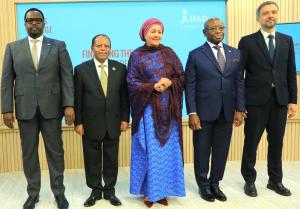
Ethiopia Renews IFAD Partnership, Increases Contribution Tenfold
Sep 26, 2026 3111
Addis Ababa, September 26, 2026 (ENA) —Ethiopia has reaffirmed its longstanding partnership with the International Fund for Agricultural Development (IFAD), increasing its contribution to the Fund’s 14th Replenishment (IFAD14) tenfold. President Taye Atske-Selassie made the commitment during a high-level gathering attended by African Heads of State and Government, United Nations Deputy Secretary-General Amina Mohammed and IFAD President Alvaro Lario. The renewal commitment came as Ethiopia steps up efforts to transform rural livelihoods and strengthen agricultural development. President Taye highlighted Ethiopia’s nearly five-decade partnership with IFAD, which has supported efforts to improve the livelihoods and resilience of millions of people across the country’s rural and pastoralist communities. Through successive programmes, the partnership has reached nearly 10 million people, backed by 227 million USD in national contributions and approximately 1.2 billion USD in total co-financing. Demonstrating Ethiopia’s renewed commitment to the partnership, the government has increased its contribution to IFAD14 from 100,000 USD to 1 million USD, a tenfold increase. The move underscores Ethiopia’s continued focus on rural transformation, agricultural development and strengthening opportunities for rural and pastoralist communities, it was learned.
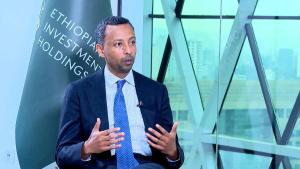
Ethiopia-Djibouti Pipeline to Revolutionize Fuel Logistics, Strengthen Trade Corridor: EIH CEO
Sep 25, 2026 4976
Addis Ababa, September 25, 2026 (ENA) —The newly launched Ethiopia-Djibouti petroleum products pipeline will transform fuel logistics by reducing reliance on tanker trucks, cutting transport costs, easing corridor congestion and accelerating fuel deliveries, Ethiopian Investment Holdings (EIH) CEO Brook Taye said. Ethiopia, Djibouti and the Dangote Group on Thursday announced plans to develop a 120-kilometre refined petroleum products pipeline linking Damerjog in Djibouti to Dewele in Ethiopia, with combined capacity of more than one million cubic metres. The project is being developed through a partnership between Ethiopian Investment Holdings and the Dangote Group. The announcement was made in the presence of Ethiopian Prime Minister Abiy Ahmed, Djibouti President Ismail Omar Guelleh and Dangote Group President Aliko Dangote. Ethiopian Investment Holdings CEO Brook told The Pulse of Africa that the planned 120-km petroleum pipeline will reduce reliance on tanker trucks, cut logistics costs, ease congestion and speed fuel delivery. The project is expected to improve Ethiopia’s competitiveness while strengthening the strategic Ethiopia-Djibouti trade corridor. The project is focused on finding a more efficient way of transporting refined petroleum products from Djibouti to Ethiopia. He said Ethiopia currently imports petroleum products through Djibouti, where vessels unload the products into storage depots before they are transported to Ethiopia by tanker trucks. According to Brook, the current system involves transporting petroleum products by road for about 750 kilometers, which he described as “the most inefficient way” of transporting the products. “The most efficient way of doing it would be pipeline,” Brook said, adding that pipeline transportation is safer, more secure and more competitive in terms of cost. He said the infrastructure would allow Ethiopia to transport what he described as its most expensive import in a more efficient way. Brook also pointed to the costs associated with delays at Djibouti's port under the current system. He said vessels can be delayed when tankers or storage facilities are not available, resulting in significant demurrage costs. “When the vessel arrives in Djibouti right now, the vessel will be stuck and will pay a huge amount of demurrage because the tankers are not there, the depot is not ready, or there are many different issues,” Brook said. He said the new infrastructure would allow vessels to unload their cargo immediately into the depot, after which the petroleum products could be transported through the pipeline toward Ethiopia. Brook said the system would also reduce the time required to move petroleum products from the arrival of a vessel in Djibouti to their delivery in Ethiopia. “This would enable us to be efficient, reduce the amount of time it would take from unloading the vessel all the way to get it to Ethiopia by a significant number of days,” he said. Brook also highlighted the large number of trucks currently used to transport petroleum products along the Djibouti-Ethiopia corridor. He said around 35 percent of the trucks operating on the corridor are transporting petroleum products, amounting to more than 1,000 vehicles a day. According to Brook, this contributes to congestion and high carbon emissions along the corridor and is one of the reasons Ethiopia is seeking to shift petroleum transportation toward pipeline infrastructure. Brook said the project would provide both direct and indirect revenue and economic benefits. “There are two important revenue streams,” he said. “One is the direct income that will generate as a result of using the pipeline and the tank farm.” He said the second benefit would come from efficiency gains across the economy. Brook explained that companies using diesel, benzene and other petroleum products would benefit from lower costs and improved competitiveness as transportation becomes more efficient. He said Ethiopian Investment Holdings will participate in the investment as an equity partner alongside the Dangote Group and will represent the government's interests in the project. The Ethiopian Investment Holdings CEO said the pipeline project is part of a broader effort to ensure that different products are matched with the most appropriate form of transportation. “The fundamental understanding now when it comes to logistics is unless otherwise you build the right type of infrastructure, unless otherwise you develop and match the product type with the right type of logistics and transportation model, your economy will lag and your competitiveness will be reduced,” Brook said.
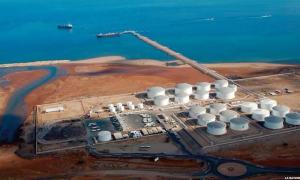
A Pipeline Linking Ports, Markets and the Horn’s Future
Sep 25, 2026 6905
By Henok Tadele Haile Sept. 25, 2026 (ENA) The Horn of Africa is on the cusp of a significant transformation, driven by a new 660 million USD infrastructure project. This project promises to revolutionize the way Ethiopia receives, stores, and distributes petroleum products. At the heart of this project is a 120-kilometer refined petroleum pipeline linking Damerjog in Djibouti with Dewele in Ethiopia. The project is expected to reduce the journey time for fuel from five days to just one day, significantly improving the efficiency of fuel distribution in the region. Prime Minister Abiy Ahmed noted: "Ethiopia, Djibouti and the Dangote Group will develop a 120-kilometer pipeline connecting Demerjog to Dewele with more than 1 million cubic meters of combined storage capacity at the two ends." The storage infrastructure is substantial, with 375,000 cubic meters at Damerjog and 875,000 cubic meters at Dewele. Dr. Brook Taye, CEO of Ethiopian Investment Holdings, explained, "The Dewele depot will play a dual role - first, it gives Ethiopia a major strategic reserve within our borders capable of sustaining the country for months; second, because it connects directly with our railway line, fuel distribution will occur via rail in addition to trucks, significantly cutting transit friction and overall transport costs." The project is a result of a partnership between Ethiopian Investment Holdings and the Dangote Group, with an estimated investment cost of USD 660 million. The partnership reflects a broader approach to using public assets and strategic investment to attract capital, technology, and management expertise. Aliko Dangote, the founder of the Dangote Group, has been a key player in this partnership, bringing his expertise and resources to the table. The economic interdependence between Ethiopia and Djibouti is growing, with Djibouti providing Ethiopia with its principal maritime gateway and strategic access to international trade routes. This partnership is a prime example of how regional integration can create mutually beneficial opportunities for economic growth and development. The two countries are working together to create a more integrated and connected economy, with the pipeline project being a key component of this effort. At the inauguration speech, President Ismail Omar Guelleh of Djibouti emphasized the importance of regional integration, saying, "We are committed to working together with our Ethiopian counterparts to create a more integrated and connected economy. This pipeline project is a key component of this effort, and we believe it will have a significant impact on the regional economy." He also noted: "The development of our infrastructure is crucial to our economic growth, and we are working tirelessly to create a more favorable business environment." President Guelleh also highlighted the potential benefits of the project, saying, "This pipeline will not only reduce the journey time for fuel, but it will also create new opportunities for trade, investment, and economic growth. We believe that this project will be a game-changer for our region, and we are committed to seeing it through to completion." The project will have a significant impact on the regional economy, creating new opportunities for trade, investment, and economic growth. According to Aliko Dangote's vision, infrastructure gaps limit industrial growth and discourage investments. However, he views these gaps as an opportunity to build the foundations for economic transformation. With infrastructure, industry can thrive, jobs are created, and prosperity flows. In conclusion, the 660 million USD petroleum project is a significant development that promises to transform the economic landscape of the Horn of Africa. The project will create a new economic geography, connecting Djibouti's maritime gateway with Ethiopia's inland economy, and demonstrate how infrastructure can turn regional integration into a business reality. Key Benefits of the Project Key Benefits of the Project includes reduced journey time for fuel from five days to one day, improved efficiency of fuel distribution, increased storage capacity, with 1.25 million cubic meters of combined storage, creation of a multimodal supply chain, connecting ports, storage facilities, pipelines, railways, and markets and enhanced economic interdependence between Ethiopia and Djibouti. The project is expected to be completed within two years, and its success will depend on the ability of the partners to deliver on their commitments. As Prime Minister Abiy Ahmed said, "Announcements create expectations; delivery earns trust. We must now turn this commitment into a working pipeline." If delivered as planned, the project will have a lasting impact on the region, driving economic growth, and promoting regional integration. Future Prospects The project has the potential to create a new economic geography in the Horn of Africa, connecting Djibouti's maritime gateway with Ethiopia's inland economy. This will create new opportunities for trade, investment, and economic growth, and demonstrate how infrastructure can turn regional integration into a business reality. The success of the project will also depend on the ability of the partners to attract new investments, and to create a favorable business environment. Regional Integration The project is part of a larger effort to promote regional integration in the Horn of Africa. The region has significant potential for economic growth, with a large and growing market, and abundant natural resources. However, the region also faces significant challenges, including infrastructure gaps, and limited economic diversification. The project will help to address these challenges, by creating a new economic geography, and promoting regional integration.
Videos
.jpg)
.jpg)
.jpg)
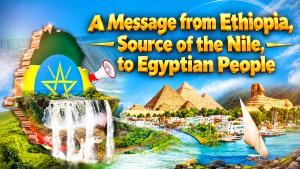
Technology
Ethiopian Army's Emergence: A Strategic Insurance for Red Sea and Horn Region Security
Sep 24, 2026 16002
By Guillermo Patria Sept. 24, 2026 (ENA) Ethiopia is undertaking a broad transformation of its national defense system, seeking to build a military that is more professional, technologically advanced, operationally ready and increasingly capable of sustaining itself through domestic production. The transformation reaches across the Ethiopian National Defense Force (ENDF), Air Force, Special Operations Command, defense industries, drone production, military research and education, artificial intelligence and the rebuilding of the country's maritime capability. At its core is a strategic proposition: protecting Ethiopia's sovereignty and national interests requires not only soldiers and weapons, but also strong institutions, technology, industrial capacity and human capital capable of sustaining them. ENDF Chief of General Staff Field Marshal Birhanu Jula has described the reform as a historic transformation aimed at strengthening the force's organizational structure, unity, professionalism, readiness and technological capacity. The objective is therefore not simply to increase military hardware, but to change the character and capabilities of the force. A force adapted to modern warfare The battlefield is changing rapidly. Traditional manpower and conventional weapons remain important, but military effectiveness increasingly depends on information, precision, communications, unmanned systems, artificial intelligence, cyber capabilities, electronic warfare and the ability to make decisions rapidly. Ethiopia's reforms are increasingly responding to this reality. In February 2026, Field Marshal Birhanu described the modernized ENDF in terms of quantity, quality and technology, stressing the need to adapt military capabilities to changing technologies and security threats. The technological shift is also becoming institutional. In August 2026, the ENDF signed an agreement with the Ethiopian Artificial Intelligence Institute to explore AI applications in logistics, military training, cybersecurity, military healthcare, air operations and electronic warfare. Yet technology alone does not create military strength. It must be matched by trained personnel, effective institutions and operational readiness. Ethiopia's reform therefore also emphasizes professional military education, specialized training, engineering and technical expertise. Readiness at the center The ultimate purpose of a defense force is its ability to respond when national interests are threatened. Field Marshal Birhanu has repeatedly emphasized ENDF readiness amid what Ethiopia describes as a complex and changing security environment. In July 2026, he said reforms had strengthened the force's organizational structure and unity while maintaining a high level of readiness and introducing modern military technology. The Special Operations Command represents another dimension of this approach, with military leadership presenting it as a highly capable force designed for rapid response and proactive action against emerging threats. For Ethiopia, the broader objective is clear: national sovereignty must be protected by a force capable of detecting threats, mobilizing rapidly and responding effectively when national interests are at stake. From buying weapons to building them Perhaps the most important part of Ethiopia's defense transformation is taking place away from the battlefield—in factories, laboratories and engineering facilities. Prime Minister Abiy Ahmed has increasingly linked defense manufacturing with economic resilience and technological self-reliance. He has said Ethiopia is developing domestic capabilities to manufacture unmanned aerial vehicles, armored military vehicles, heavy weapons, artillery and ammunition. The significance goes beyond the products themselves. Defense manufacturing requires engineers, technicians, researchers, specialized machinery and reliable industrial systems, creating technological capabilities that can strengthen the wider economy. The Homicho Ammunition Engineering Complex illustrates this trajectory. Its growing production capacity has enabled Ethiopia not only to supply domestic requirements but also to enter foreign markets, with the government reporting ammunition export contracts worth more than 30 million US dollars. The direction is therefore shifting from simply acquiring finished products toward developing the capacity to produce, maintain and improve critical systems domestically. The Air Force and the technology ecosystem The Ethiopian Air Force provides perhaps the clearest example of the transformation. The institution says it has moved from an analog operating environment toward the digital era while expanding aircraft maintenance, upgrading, spare-parts production and unmanned aviation. The significance is that a modern Air Force requires an entire technological ecosystem—pilots, engineers, technicians, maintenance facilities, spare parts, research, communications and digital systems. Ethiopia is increasingly seeking to develop these capabilities locally. The Air Force has reported increased production of components and spare parts while Ethiopian engineers and technicians take greater roles in aircraft maintenance, upgrading and unmanned systems. The objective is therefore not simply to acquire aircraft from abroad, but to develop the knowledge required to operate, maintain, upgrade and eventually develop increasingly sophisticated systems. This also explains the emphasis on human capital. Prime Minister Abiy has stressed that sophisticated aircraft alone cannot create an effective Air Force. Highly trained pilots, engineers, technicians, scientists and commanders are essential to converting technology into military capability. Drones and artificial intelligence Few developments demonstrate the technological shift more clearly than Ethiopia's growing drone industry. The establishment of SkyWin Aeronautics Industries marked an important step in domestic UAV production. Drones bring together aviation, electronics, sensors, communications, software, data processing and increasingly artificial intelligence. In June 2026, the Information Network Security Administration and the Ethiopian Air Force agreed to establish a Drone Technology Center dedicated to research, innovation and development in unmanned aerial systems. The initiative connects defense requirements with research, laboratories, human-capital development and technology transfer—helping create a domestic technological chain from research and engineering to production and deployment. AI represents the next layer of this transformation. The ENDF's cooperation with the Ethiopian Artificial Intelligence Institute is intended to explore AI applications across logistics, training, cybersecurity, military healthcare, air operations and electronic warfare. The broader significance is that Ethiopia's defense modernization is moving beyond hardware toward technologies that can improve how information is collected, processed and used. Fourth-generation capability, fifth-generation ambition Ethiopia's Air Force ambitions extend further. In January 2026, Prime Minister Abiy said the Ethiopian Air Force had developed fourth-generation combat capability and set an objective of moving toward fifth-generation capability by 2030, alongside plans to double the country's combat-aircraft capacity. These are stated government objectives rather than capabilities already fully achieved. Nevertheless, they demonstrate the direction of Ethiopia's military planning: keeping defense capabilities aligned with rapidly evolving technologies while continuing to invest in the human expertise required to operate them. The transformation therefore cannot be measured only by the number of aircraft acquired, but also by the country's ability to operate, maintain, upgrade and increasingly develop sophisticated systems. Land, air and sea Ethiopia's defense transformation also has a maritime dimension. The country lost direct access to the Red Sea following Eritrea's independence, and the Ethiopian Navy was subsequently disbanded. Its reconstruction now forms part of the country's evolving national security architecture. Vice Admiral Kindu Gezu, Commander-in-Chief of the Ethiopian Navy, has highlighted the changing security environment in the Red Sea and Gulf of Aden, including piracy, arms trafficking, irregular migration, insurgent networks and geopolitical competition. For Ethiopia, maritime security has implications beyond naval operations. Trade routes, ports, energy supplies, commercial shipping and regional security are all connected to the wider maritime environment. The Navy consequently adds another dimension to the defense transformation, with land, air, cyber and maritime capabilities increasingly forming part of one national security architecture. Building strategic self-reliance Taken together, these developments reveal the broader direction of Ethiopia's defense reform. The ENDF is being reorganized and professionalized. Specialized forces are being developed around rapid response. The Air Force is expanding its digital, maintenance and engineering capabilities. Domestic drone production is emerging. Defense industries are producing ammunition, armored vehicles and other military equipment. AI is being explored for defense applications, while military universities and laboratories are becoming part of technological research and development. The Navy is rebuilding maritime capabilities. Individually, each represents a military reform. Together, they point toward an effort to build strategic self-reliance. A country cannot guarantee the sustainability of its defense capability if every critical component depends on external suppliers. Domestic production does not eliminate the need for international cooperation or foreign technology, but it can strengthen Ethiopia's ability to maintain essential capabilities, respond to emergencies and develop technologies suited to its own requirements. That is the broader bargain emerging from Ethiopia's defense transformation. The objective is not simply to possess modern weapons. It is to create a defense institution capable of using technology effectively, sustaining its equipment, developing its own technical expertise and responding rapidly when national interests are threatened. The deeper story is therefore being written not only on military grounds, but also in aircraft workshops, drone factories, ammunition plants, laboratories, military academies and technology institutes. The soldier remains at the center. But alongside the soldier stands an increasingly important network of pilots, engineers, scientists, technicians, programmers, researchers and manufacturers. Together, they represent a changing conception of military power. For Ethiopia, the emerging objective is a defense force that is professional in structure, ready in operation, technologically capable and increasingly self-reliant in production. In an era when national security is shaped by technology as much as manpower, the ability to build and sustain that capability may become as important as the weapons themselves. Ethiopia's defense transformation is therefore not simply about building a stronger army. It is about building the technological, industrial and human foundations that enable the country to defend its sovereignty and national interests with greater confidence and readiness.
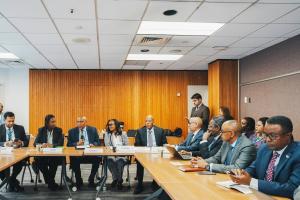
Ethiopia Takes Digital Financial Inclusion to Center Stage at UNGA 81
Sep 24, 2026 7395
Addis Ababa, September 24, 2026 (ENA) —Ethiopia has placed digital financial inclusion at the center of its development strategy, highlighting the country’s rapid expansion of digital payments, national digital identity and digital public infrastructure as key tools for accelerating progress toward the Sustainable Development Goals (SDGs). The message came at a high-level side event held on the margins of the 81st Session of the United Nations General Assembly (UNGA 81) in New York, jointly convened by the Permanent Mission of Ethiopia to the United Nations and the United Nations Capital Development Fund (UNCDF). The event brought together government officials, development partners and private-sector representatives to examine how Ethiopia’s digital transformation is opening new avenues for economic opportunity, enterprise development, productivity and improved livelihoods. At the heart of the discussions was a broader shift in Ethiopia’s approach: digital finance is increasingly being treated not simply as a financial product, but as part of the country’s foundational economic infrastructure. Welcoming participants, Ethiopia’s Permanent Representative to the United Nations, Ambassador Tesfaye Yilma, highlighted the country’s digital transformation journey and the progress made in establishing an ecosystem for digital payments, digital identity and digitally enabled public services. On her part, Minister of Planning and Development Fitsum Assefa, delivering the keynote address, said Ethiopia’s policy frameworks and digital initiatives are positioning financial inclusion as an important catalyst for SDG implementation. She pointed to Digital Ethiopia 2030, the National Financial Inclusion Strategy, Fayda, interoperable payment systems and BRIDGE 2030 as key pillars of the country’s efforts to build an increasingly integrated digital economy. Ethiopia’s national digital identity system, Fayda, has emerged as a particularly important component of this transformation, providing a foundational platform through which citizens can increasingly access financial and public services. Minister and Advisor to the Prime Minister Getachew Reda underscored the wider economic implications of digital financial inclusion, emphasizing its potential to strengthen economic dynamism, broaden participation and raise productivity. For development partners, the challenge now extends beyond simply connecting people to digital financial services. UNCDF Executive Secretary Pradeep Kurukulasuriya stressed the importance of capital in enabling small businesses and emerging enterprises to invest, expand and create jobs, while drawing attention to persistent financing constraints in developing economies. Navid Hanif, Assistant Secretary-General for Economic Development at the UN Department of Economic and Social Affairs (UNDESA), meanwhile, commended Ethiopia’s progress and emphasized the wider role of digital transformation and financial inclusion in advancing inclusive and sustainable development. The discussions pointed to a critical next phase for Ethiopia’s digital transformation: moving from access to productive use. That means ensuring that digital financial tools translate into tangible economic gains — enabling businesses to grow, supporting entrepreneurship, expanding access to capital, improving productivity and creating opportunities for people who have traditionally remained outside formal financial systems. The side event also highlighted the importance of taking successful national innovations beyond domestic applications through greater investment, stronger public-private partnerships, South-South cooperation and regional integration. For Ethiopia, the message at UNGA 81 underscored an emerging development model in which digital identity, payments, financial services and public infrastructure are increasingly interconnected as building blocks of economic transformation and SDG delivery, it was learned.

Ethiopia’s E-Mobility Policies Inspire Africa
Sep 23, 2026 8525
Addis Ababa, September 23, 2026 (ENA) —Ethiopia’s electric-mobility policies are inspiring other African countries to review and develop their own frameworks for accelerating green transportation, according to Nigerian mobility entrepreneur Damilola Odunlade-Akeju. During the Nordic-Africa EV Summit in Ethiopia, Odunlade-Akeju, founder and CEO of DriveMe Mobility in Nigeria, noted that African cities and countries are increasingly looking to Ethiopia’s policy direction as they review measures to accelerate the adoption of electric mobility. Ethiopia’s experience demonstrates the importance of government policy in creating an environment that supports the expansion of green transportation, particularly as other African countries consider how to structure their own e-mobility sectors. “Government policy will drive the adoption and the advancement of e-mobility across Africa,” Odunlade-Akeju said, emphasizing that clear policy direction is crucial for building confidence among private-sector actors. Policy certainty encourages private companies to invest in electric mobility by providing a clearer framework for market development and long-term participation. Ethiopia’s experience is relevant to other African countries because government policy must be accompanied by measures that support standardization, ensuring that different actors can operate within a coherent e-mobility system. While government policy provides the framework, private-sector initiatives are equally contributing to the development of the sector. The combination of government direction and private-sector initiative is important for accelerating the transition, with appropriate policies ensuring that the emerging sector develops in a coordinated manner. Odunlade-Akeju commented on Addis Ababa’s growing use of electric buses as an example of how green mobility can be incorporated into public transportation. Mass transit can help increase the adoption of electric mobility. Having observed Addis Ababa’s electric buses, he noted that the expansion of electric public transport provides a practical dimension to Ethiopia’s broader e-mobility policy approach. Strengthening understanding and awareness of green transportation, alongside supportive policies and mass-transit solutions, can help African countries advance their transition toward electric mobility. Norwegian Founder and E-Mobility Advisor Jan Tore Gjøby highlighted Ethiopia’s emerging experience, stating that the country should develop solutions suited to its needs while considering their relevance to the wider African market. Gjøby stressed the need for clear roadmaps, requirements, and common standards as Ethiopia expands electric mobility. According to Gjøby, coordinated systems are necessary to ensure that electric vehicles, charging infrastructure, and electricity networks work together effectively.
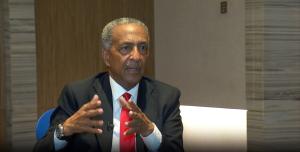
Ethiopia’s Tech, AI Push Drives Global Competitiveness, Says CBE Capital Investment Bank CEO
Sep 18, 2026 22046
Addis Ababa, September 18, 2026 (ENA) —Ethiopia’s strategic focus on technology and artificial intelligence (AI) is carving out a new path toward global economic competitiveness, according to Zemedeneh Negatu, CEO of CBE Capital Investment Bank. Speaking in an interview with ENA, Zemedeneh emphasized that technology and AI are driving the modern global economy, making digital skills and automation critical for rapid economic development. He highlighted the swift shift toward digital ecosystems, particularly among younger demographics, as a primary engine of this ongoing transformation. He said Ethiopia’s young population, combined with expanding access to technological skills, could help the country emerge as what he described as the “Silicon Valley of Africa.” Zemedeneh also highlighted Ethiopia’s initiative to train five million coders, saying a large pool of digitally skilled young people could accelerate technological advancement while creating new opportunities for the country’s growing workforce. He stressed that Ethiopia cannot rely solely on traditional economic approaches to sustain future growth, underscoring the need for greater national ownership and long term commitment to technology and artificial intelligence. “Such efforts will be critical for building the Ethiopia of tomorrow,” he said. As artificial intelligence and technological transformation continue to reshape the global economy, Ethiopia’s growing investment and policy focus on the sector are creating opportunities to boost productivity, develop new industries and strengthen the country’s position in the global digital economy, he added. Science and technology have become increasingly important to Ethiopia’s economic transformation, with digital initiatives contributing to changes in financial services, public service delivery, communications and other areas of economic activity. Ethiopia has also sought to strengthen its role in the development and application of artificial intelligence technologies in Africa while promoting wider access to emerging digital technologies across the continent. In this regard, Prime Minister Abiy Ahmed has been appointed African Union Champion for Artificial Intelligence and Digital Health, reflecting the growing continental focus on AI and digital transformation.
Sport
.jpg)
WHO RC76 Participants “Walk the Talk” in Addis Ababa, Championing Healthier Africa
Aug 23, 2026 84369
Addis Ababa, August 23, 2026 (ENA) —Participants of the 76th Session of the World Health Organization (WHO) Regional Committee for Africa (RC76) joined a symbolic health walk on Sunday from the Adwa Victory Memorial to Meskel Square in Addis Ababa. The participants also turned the message of “Walk the Talk” into action while promoting physical activity and healthier lifestyles across Africa. Ethiopia’s Minister of Health Dr. Mekdes Daba, African health ministers, senior government officials, WHO leaders and prominent athletes, including Ethiopian Athletics Federation President Commander Sileshi Sihine, took part in the event. The initiative sought to translate health policies and commitments into practical action by encouraging people to make regular physical activity part of their daily lives and strengthening public awareness about the prevention of non-communicable diseases. The walk began at the Adwa Victory Memorial, a landmark symbolizing Ethiopia’s historic victory and African resistance to colonialism, and continued through Addis Ababa’s pedestrian routes before concluding at Meskel Square. Organizers emphasized that regular physical activity plays a vital role in reducing the risk of non-communicable diseases, including diabetes, hypertension and cardiovascular diseases, while contributing to healthier and more active communities. The event also highlighted Africa’s collective commitment to improving public health and demonstrated the importance of moving beyond policy discussions toward tangible, everyday health practices. The 76th Session of the WHO Regional Committee for Africa, scheduled to take place in Addis Ababa from August 24 to 28, 2026, will bring together more than 600 delegates, including health ministers and senior officials from the WHO African Region’s 47 member states, global health leaders, development partners, donors and WHO representatives. Over the five-day session, participants will assess progress toward regional health goals, deliberate on new strategies and resolutions. The session is also anticipated to identify collective actions to strengthen health systems, advance universal health coverage, enhance health security and improve emergency preparedness across the continent. The gathering is expected to serve as a major platform for African countries and global health partners to deepen continental health cooperation and advance practical solutions to Africa’s most pressing health challenges.
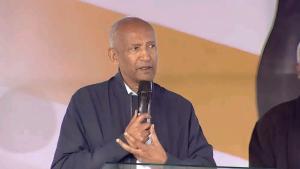
National Dialogue Conference to Address Root Causes of Differences through Consultation, Says ENDC Chief
Jul 12, 2026 106191
Addis Ababa, July 12, 2026 (ENA) —The upcoming National Dialogue Conference will serve as a platform to resolve the issues underlying Ethiopia's longstanding differences through peaceful consultation, Chief Commissioner of the Ethiopian National Dialogue Commission (ENDC) Professor Mesfin Araya, said. Speaking at a five-kilometer public race organized by the Commission at Meskel Square under the theme "Ethiopia is consulting" today, Professor Mesfin said the country has finalized all preparations for the landmark conference, which is scheduled to begin on July 15, 2026 in Addis Ababa. "The main national consultation conference will be a place where issues that are the source of our differences will be resolved through consultation," he said. According to the Chief Commissioner, delegates representing communities from every region, all woredas, Addis Ababa, Dire Dawa, and Ethiopians living abroad have already arrived in the capital to participate in the conference. He said participants are expected to engage in inclusive and constructive discussions and work toward consensus on recommendations that offer lasting solutions to issues that have fueled differences among Ethiopians. Professor Mesfin described the conference as a historic opportunity to address national challenges through dialogue rather than confrontation. He also expressed appreciation to security institutions, federal and regional government bodies, civil society organizations, and other stakeholders for their contributions in preparing for what he described as a significant stage in Ethiopia's national dialogue process. Participants in a five-kilometer race also expressed optimism that the conference would help strengthen national unity and foster lasting peace. "There is no problem that cannot be solved through consultation," participant Sherefa Ali said. "I believe the challenges that have persisted in Ethiopia for generations can be addressed through the main consultation conference." He added that such dialogue platforms help build trust between citizens and the government while creating opportunities to work together toward common national goals. Another participant, Gemechisa Waqgari, said the conference represents an important step toward reinforcing peace, unity, solidarity, and democratic values. Participant Tnisae Abebe also voiced hope that the conference would generate practical ideas to address the country's social and economic challenges. The National Dialogue Conference will deliberate on eight broad thematic areas identified during nationwide consultations. The agenda includes nation building, systems of government and governance, the political and electoral system, the status of the federal cities of Addis Ababa and Dire Dawa, religion and state relations, institution building, the rule of law and human rights, socio economic issues including the concerns of farmers and pastoralists, corruption and good governance, as well as peace building. The five kilometer race was attended by Deputy Chairperson of the House of Peoples' Representatives Standing Committee on Democratic Affairs Azmeraw Andemo, Professor Mesfin Araya, senior government officials, representatives of civil society organizations, and members of the public.

Diplomatic Football Participants Praise Ethiopia’s Heritage and Hospitality
Jun 14, 2026 103836
Addis Ababa, June 14, 2026 (ENA) —Participants in a diplomatic football event held in Addis Ababa have praised Ethiopia’s cultural heritage, historical legacy and warm hospitality. The tournament, organized in anticipation of the 2026 World Cup, brought together diplomatic football teams and invited guests who later toured key historical and cultural sites in the city. The delegation visited the Ethiopian National Museum, the Adwa Victory Memorial and Addis Sport Park, gaining what many described as a deeper appreciation of Ethiopia’s past and present development. Several participants said the experience reshaped their understanding of the country. Gordon Johnson, one of the participants, expressed admiration for what he witnessed during the visit. “The people are so welcoming and friendly. I love the culture,” he said. He further stated that: “We had a tour of the museum, and the guide showed us hominid fossils recovered in the ’60s, ’70s, and ’90s that date back millions of years.” Johnson said the experience reflected Ethiopia’s deeper historical significance beyond modern perceptions. Cameroonian guest Loic Kovamo also said the visit challenged her previous perceptions of the country. “I am speechless because I didn’t picture Ethiopia like this. It’s a very developed country, and the people are so proud of who they are,” she said, noting, “I’m going back with a lot of pride as an African because I discovered the incredible courage and bravery of the Ethiopian people.” Mark Hayes, one of the visitors, said his expectations were changed after arriving in Addis Ababa. “You have a perception before you come, but it’s the complete opposite. It’s an amazing country,” he said, adding, “What we do now is go home and tell stories about how good Ethiopia is. I feel like a proud advocate.” He further noted that he intends to share his experience in the United Kingdom, saying he would “educate others in England about what he had seen in Addis Ababa.” Joseph Kirule, who works with the Food and Agriculture Organization of the United Nations in Addis Ababa, highlighted the importance of the historical sites visited. “Today we saw different milestones in human civilization that originated here,” he said, adding, “Most importantly, we learned about the Adwa victory. That is a massive milestone that raises our prestige as Africans.”
Ethiopian Airlines Rises as Africa’s Leading Carrier After Decades of Expansion, Success, Says CEO
May 17, 2026 110090
Addis Ababa, May 17, 2026 —Ethiopian Airlines has solidified its position as Africa’s largest and leading airline after years of sustained growth and operational success, the airline’s Group Chief Executive Officer, Mesfin Tasew, said on Sunday. The remarks were made during an 8-kilometer street race organized as part of celebrations marking the airline’s 80th anniversary. Speaking at the event, CEO Mesfin reflected on the airline’s humble beginnings in 1946, when it launched operations with only a small fleet of aircraft. Since then, he said, the carrier has expanded significantly and now operates one of the continent’s most modern fleets, including advanced aircraft from Boeing and Airbus. According to Tasew, the airline currently serves more than 145 international destinations worldwide and has achieved strong growth across multiple sectors, including cargo transportation, aviation training through the Ethiopian Aviation Academy, and other aviation-related services. He further said the airline’s operational strength and long-term strategic investments have helped make it one of the most preferred carriers in Africa and a major player in the global aviation industry. As part of commemorating its eight decades of operations, Ethiopian Airlines is holding a series of celebratory events, including the street race, panel discussions, exhibitions, and community outreach programs. The anniversary run attracted senior officials, including Sileshi Sihine, President of the Ethiopian Athletics Federation, alongside airline executives and invited guests. The race began at Pushkin Square, commonly known as Sar Bet, and is set to conclude at Bole International Airport. Athletes, airline employees, members of the sporting community, and participants from various institutions are taking part in the event.
Environment
.jpg)
IGAD Hails Ethiopia’s Environmental Restoration Efforts as Regional Model
Sep 22, 2026 14547
Addis Ababa, September 22, 2026 (ENA) — The Intergovernmental Authority on Development (IGAD) has commended Ethiopia’s environmental restoration efforts, noting that the country’s experience offers valuable lessons for other member states seeking to strengthen environmental resilience and sustain community livelihoods. IGAD Deputy Executive Secretary Mohamed Abdi Ware highlighted watershed protection, tree planting, land restoration, and water harvesting among Ethiopia’s key environmental initiatives that could help address climate-related challenges across the region. Speaking to ENA on the sidelines of the IGAD Regional High-Level Forum on El Niño Preparedness for the Horn of Africa, held in Addis Ababa from September 15 to 17, 2026, Ware described Ethiopia’s environmental restoration efforts as very encouraging. “These things that Ethiopia has shown to be a leader really contribute not only to preventing problems in the short term, but will contribute to the long-term health of our environment,” Ware said. He said restoring degraded land, protecting watersheds, planting trees and harvesting water can improve communities’ access to clean water and productive land while reducing the risks of landslides and other environmental hazards, particularly in hilly and mountainous areas. According to Ware, such measures can also help reduce environmentally driven migration and displacement by strengthening communities’ resilience to climate related pressures. He further emphasized that environmental restoration has benefits that extend beyond ecological protection, noting that healthy ecosystems can support sustainable livelihoods and improve the economic wellbeing of communities. Ware said IGAD’s mandate includes facilitating the exchange of knowledge and experiences among member states, enabling countries to learn from successful initiatives implemented elsewhere in the region. In this regard, he identified Ethiopia’s environmental experience as an example that other IGAD member states could study and adapt to their own circumstances. He also noted that Kenya is undertaking significant environmental restoration initiatives. He said expanding such efforts across the region could strengthen environmental resilience while supporting sustainable livelihoods and reducing communities’ vulnerability to climate related shocks. Ware’s remarks came as the IGAD Regional High-Level Forum on El Niño Preparedness for the Horn of Africa brought together member states and stakeholders to strengthen regional preparedness and anticipatory action against climate related risks.

Ethiopia’s Renewable Energy, EV Transition Attracts Nordic Investment Interest
Sep 22, 2026 8991
Addis Ababa, September 21, 2026 (ENA) —Ethiopia’s vast renewable energy resources and rapid shift toward electric mobility are drawing growing interest from Nordic investors and technology companies, according to industry stakeholders. The remark was made on the sidelines of the Nordic Africa EV Summit, held in Ethiopia from September 14 to 16, which brought together regional and international stakeholders to discuss electric mobility, charging infrastructure, and investment opportunities. Hosaena A. Samuel, CEO and co-founder of Easy Power, a Norwegian firm and Ethiopia’s first private electric vehicle charging operator, noted that Nordic investors are particularly focused on the country’s accelerating EV adoption and high potential for clean energy. According to Hosaena, more than 20 Nordic financiers engaged with Ethiopian officials and industry leaders during the summit to explore potential investments in grid reliability and EV charging infrastructure. The interest also extends to Nordic technology and technical expertise, which could help build resilient charging networks. She noted that Nordic partners were particularly impressed by Ethiopia’s bold policy decision to phase out internal combustion engine vehicles in favor of electric mobility, backed by its rich renewable resources. Nordic countries have extensive experience in developing EV charging infrastructure and reliable electricity systems, Hosaena said, adding that this expertise could offer valuable lessons as Ethiopia expands its national charging grid. She highlighted the Grand Ethiopian Renaissance Dam (GERD) and major wind power projects as key drivers drawing Nordic attention. Beyond infrastructure, she emphasized that Ethiopia’s expanding EV market opens strong avenues for technology transfer and bilateral investment. Echoing this sentiment, Kumeel Alsmail, Nokia’s Head of Industrial Solutions for the Middle East and Africa, noted that Africa’s growing EV ecosystem will unlock further opportunities for digital and technological cooperation between African nations and Nordic firms. Speaking to ENA on the sidelines of the event, Alsmail emphasized that reliable connectivity will be critical to powering EV charging networks, especially as nations work toward regional electric mobility corridors. He highlighted prospective corridors connecting Ethiopia, Djibouti, and Kenya, noting that these routes could support both passenger vehicles and electric heavy-duty transport. Alsmail stated that Nokia sees strong opportunities to supply digital connectivity solutions for charging networks, while stressing that Ethiopia’s growing renewable generation capacity must be paired with robust transmission and distribution systems. The summit highlighted the vital intersection of renewable energy, electric mobility, digital connectivity, and infrastructure, with participants agreeing that cross-border technology partnerships and private investment will be essential to driving Africa’s clean energy transition.
President Taye Urges Global Shift from Renewable Generation to Electricity Delivery
Sep 21, 2026 19407
Addis Ababa, September 21, 2026 (ENA) —Ethiopia’s President Taye Atske Selassie called for a fundamental shift in the global renewable-energy agenda—from simply expanding power generation to building the grids, storage, financing and productive systems needed to turn clean electricity into economic transformation. Addressing the “Delivering Electrify Now” High-Level Leaders Dialogue of the Global Renewables Summit in New York, President Taye said countries endowed with abundant renewable resources need stronger international support to convert their energy potential into reliable electricity access, industrial growth and inclusive prosperity. “Generation without grids, storage and robust utility capacity cannot drive economic transformation,” the President said, stressing that international financing must support the entire electricity value chain—from generation and transmission to distribution, storage and last-mile connections. The Global Renewables Summit, held during Climate Week NYC alongside the UN General Assembly, is bringing together political leaders, businesses, investors and international institutions to accelerate renewable-powered electrification and address the infrastructure and investment barriers slowing the energy transition. President Taye said Ethiopia brings substantial renewable-energy potential to the global discussion, with more than 95 percent of its installed generation capacity coming from renewable sources. He highlighted the Grand Ethiopian Renaissance Dam (GERD) and other renewable-energy investments as key foundations for expanding electricity access and powering the country’s industrialization. He outlined three interconnected priorities for Ethiopia: expanding and diversifying renewable generation, with installed capacity targeted to reach up to 14,000 MW by 2030 and non-hydro renewables accounting for at least 15 percent; using clean and affordable electricity to strengthen industrial competitiveness, including through industrial parks; and pursuing macroeconomic and energy-sector reforms to attract greater private investment, including increased private-sector participation in transmission and distribution. But the President emphasized that finance remains the critical link between renewable-energy potential and actual development. He called for more bankable projects supported by public resources and international partners, including the World Bank, African Development Bank and the European Union through Global Gateway. Particular attention, he said, should go to transmission infrastructure, substations, grid reinforcement, reconductoring and last-mile connections. President Taye cited Ethiopia’s experience financing the GERD through domestic resources and broad public mobilization as an example of the importance of national ownership and commitment. At the same time, he stressed that international financial cooperation remains essential for developing countries seeking to build modern, reliable and interconnected electricity systems. He expressed appreciation for international support to Ethiopia’s power sector, including the European Union’s RISED programme, as well as assistance from the World Bank and African Development Bank in modernizing, rehabilitating and digitalizing electricity infrastructure. The President also warned that the global energy transition cannot deliver its full promise if renewable investment remains concentrated in a limited number of wealthy regions. For developing countries, he said, the ambition must go beyond generating renewable power: from energy potential to electricity access, from access to productive use, and from productive use to industrialization and job creation. As Ethiopia prepares to host COP32 in Addis Ababa in 2027, President Taye said the country will work to help ensure that global climate and renewable-energy commitments translate into concrete implementation across Africa. His message comes as the international renewable-energy agenda increasingly focuses not only on expanding generation but also on scaling grids, storage and electrification to make clean power usable across economies.
Anticipated El Niño Threat Now a Question of Action, Not Prediction: IGAD
Sep 19, 2026 20227
Addis Ababa, September 19, 2026 (ENA) — With forecasts pointing to an El Niño event in December, IGAD says the priority has shifted from prediction to preparedness. El Niño is a climate phenomenon associated with unusual warming of Pacific Ocean waters. Speaking to ENA on the sidelines of the IGAD Regional High-Level Forum on El Niño Preparedness for the Horn of Africa, held in Addis Ababa from September 15 to 17, 2026, IGAD Deputy Executive Secretary Mohamed Abdi Ware stressed the need for urgent action based on scientific forecasts. “We are saying it's not a question of if, it's a question of ‘what do we do now?’” he said, underscoring the importance of timely preparedness. He also expressed confidence in the accuracy of climate information provided by the IGAD Climate Prediction and Applications Centre (ICPAC), noting that the previous May forecast was “almost exactly as predicted.” That confidence, he said, should encourage governments and other stakeholders to act early rather than wait for the impacts to unfold. The consequences, he noted, extend far beyond climate statistics, affecting people, livelihoods and communities across the region. Possible impacts include reduced grazing access for pastoral communities, livestock diseases, crops rotting in fields before harvest, damaged infrastructure and isolated communities. “These are not just figures. These are real people and real communities that will be impacted by this phenomenon,” he said. Presentations from IGAD member states showed that countries are already taking steps to prepare for the anticipated impacts, he said, adding that each state must tailor its measures to the specific risks it faces. ICPAC’s regional climate outlook has forecast wetter-than-normal conditions across much of the Greater Horn of Africa during the October–December 2026 season, with excessive rainfall expected to heighten the risk of flooding, crop losses and damage to critical infrastructure. The response will require financing to ensure that preparedness measures are implemented before the impacts materialize. “These activities will need financing,” he said, calling on development partners and finance ministries in IGAD member states to work with national disaster risk management agencies to mobilize local resources. Such resources would help countries take timely measures to protect vulnerable communities, he added. “After all, it is our people that will be impacted,” he said. Beyond preparedness, IGAD will continue facilitating knowledge and experience sharing among member states to strengthen climate-risk responses. Countries with effective response measures can offer lessons for others in the region and help scale up successful approaches, he said. Coordinated action among member states is essential, he added, because the anticipated impacts will affect countries and communities differently. Reliable scientific forecasts, he said, give the region an opportunity to move from reacting after disasters strike to taking timely action based on early warning. The immediate priority is to translate scientific information into practical preparedness measures capable of protecting people, livelihoods and communities from the anticipated El Niño impacts.
Most viewed
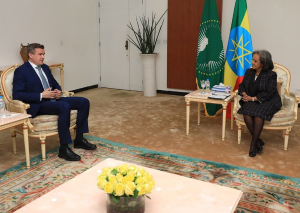
President Sahle-Work Holds Discussion with World Anti-Doping Agency President Bonka
Mar 29, 2023 304082
Addis Ababa March 29/2023/ENA/ President Sahle-Work Zewde has received a delegation led by World Anti-Doping Agency (WADA) President Witold Bonka today, according to the Office of the President. The discussion centered on the conditions under which Ethiopia and the World Anti-Doping Agency can work closely in anti-doping control and investigation, and how the organization can provide technical support, it was learned. During the discussion, Sahle-Work said that Ethiopia has a long history in athletics and is known in the world since athlete Abebe Bikila won marathon in Rome. She finally thanked the World Anti-Doping Agency for its technical support in anti-doping control.
Ethiopian Diaspora Demand Egypt to Change Counterproductive Posture on GERD
Apr 4, 2023 246085
Addis Ababa April 4/2023 (ENA) Ethiopians in the Diaspora have called on Egypt to change its counterproductive posture and find mutually beneficial agreements on the Grand Ethiopian Renaissance Dam (GERD). In a statement the diaspora issued yesterday, they noted that Ethiopia is the main source of the Nile by contributing 86 percent of the water to the Nile basin states while utilizing less than 1 percent of the potential for hydroelectric power. Ethiopians are currently building the GERD on the Blue Nile that is financed entirely by Ethiopians and is a crucial project for the country's development as it will provide clean, renewable energy and lift millions out of poverty. About 65 percent of the 122 million of Ethiopia's population have no access to any form of electricity. The much-needed electricity will facilitate economic growth for Ethiopia and the region, the statement elaborated. The dam will promote regional cooperation and integration while offering opportunity for eleven countries of the Nile Basin to work together to manage the river's resources more efficiently and effectively, it added. The GERD is being built with the highest environmental and technical standards to achieve the objectives of the national electrification program and the execution of Ethiopia’s Climate-Resilient Green Economy Strategy. According to the statement, Ethiopia has provided scientific evidence and expert testimonies that GERD will not significantly affect the flow of water downstream, and provided compelling arguments for the need for equitable use of the Nile's resources by all countries in the region. The diaspora further said they understand that the GERD has raised concerns in Egypt about the downstream effects on the Nile's flow and water availability since Egyptians have been misinformed about the GERD for many years. But on the contrary, the dam will provide several benefits to Egypt and Sudan, including increased water flow during dry seasons and decreased flooding events. “We want to assure Egyptians that Ethiopians are committed to fair and equitable use of the Nile's waters without harming our downstream neighbors. We recognize that the Nile River is a shared resource, and we support finding a mutually beneficial solution.” As Ethiopians in the Diaspora, we reiterate our support for fair and equitable use of the Nile River and call on the Egyptian people and Egyptian Diaspora to question the misinformation about the GERD in Egypt's mainstream media and embrace the spirit of friendship and cooperation by understanding that the GERD is a project of great national importance to Ethiopians that will benefit Egyptians by ensuring a reliable and predictable supply of water, that Ethiopians have the right to use their water resources for the development of its people and economy, in accordance with the principles of equitable and reasonable utilization without causing significant harm. Efforts to destabilize Ethiopia by the regime in Egypt, will indeed affect the historical and diplomatic relations dating back to several thousand years, the long-term interest of the Egyptian people and make Ethiopians less trusting in cooperating on the GERD and future hydropower projects on the Nile, they warned. The diaspora groups urged Egyptian leaders to engage in constructive dialogue with the leaders of Ethiopia regarding the GERD and steer away from their counterproductive posture of calling for a “binding agreement” on the GERD filling and the subsequent operations as an imposing instrument on water sharing that Ethiopians will never accept. The GERD can be a source of cooperation and collaboration between our two countries rather than a source of conflict, they underscored. "Ethiopians believe that, through dialogue and understanding, peaceful and equitable agreements that benefit all parties involved can be realized to build a brighter future for all people in the Nile basin. Belligerent positions by Egyptian leaders stating ‘all options are open’ are contrary to the spirit of the 2015 Declaration of Principles signed by Ethiopia, Sudan and Egypt." According to the statement, such postures will surely harm Egypt's long-term interest and impede trustful cooperation with the Ethiopian people and government. They asked Arab League and its member states to refrain from interfering in the issue of the GERD, which is the sole concern of the three riparian countries (Ethiopia, Sudan and Egypt) and their shared regional organization (the African Union), which is mediating the talks to find ‘African Solutions to African Problems.’ The issues remaining on the table at the trilateral negotiations under the auspices of the African Union are being narrowed to a handful of critical matters on equity and justice, on which the Arab league nations have no business or legal right to be involved.

Ethiopia's Ayana Takes Paris Win on Marathon Debut
Apr 2, 2023 245182
Addis Ababa April 2/ 2023 (ENA) Ethiopia's Abeje Ayana won the men's race at the Paris Marathon on Sunday in his first competitive run over the distance. The 20-year-old Ayana won with a time of two hours, seven minutes and 15 seconds, 20 seconds ahead of compatriot and pre-race favourite Guye Adola with Kenya's Josphat Boit a further five seconds back in third. After clocking 59:39 in a half marathon in Poznan, Poland in 2021, Ayana was one of the men to watch on a grey, windy morning in the French capital, Reuters reported.
Africa’s Sustainable Growth Hinges on Science, Technology and Innovation: Experts
Mar 3, 2023 242994
Addis Ababa March 3/2023/ENA/ Achieving the ambitious targets of the 2030 and 2063 Agendas of Africa requires leveraging the power of science, technology, and innovation (STI), according to experts. A press release issued by the ECA stated experts at the Ninth African Regional Forum on Sustainable Development have emphasized the crucial role of STI as a key driver and enabler for ensuring economic growth, improving well-being, mitigating the effects of climate change, and safeguarding the environment. They also underscored the need to strengthen national and regional STI ecosystems by fostering innovation, promoting entrepreneurship, and investing in research and development. By doing so, the experts said that Africa can harness the potential of STI to accelerate its socio-economic progress and achieve the Sustainable Development Goals (SDGs) by 2030 and the African Union's Agenda by 2063. The session, held on 2 March 2023, builds on the recommendations of the Fifth African Science, Technology, and Innovation Forum, which accentuates the central role of STI and digitalization during the COVID-19 pandemic and the need for the necessary infrastructures for the development of STI, plans, and policies that are action-oriented towards strengthening its full implantation. The experts highlighted that despite advances in STI, significant gaps remain in bridging the scientific and technological divide between developed countries and Africa. The highly uneven global distribution of scientific capacity and access to knowledge threatens to derail the goal of leaving no one behind, which is the central and transformative promise of Agenda 2030. “We need a clear political will from governments to ensure science, technology, and innovation is a reality. By doing so our education systems will be capacitated to deliver knowledge that is vital to solving Africa’s sustainability challenges,” Niger Higher Education and Research Minister Mamoudou Djibo said. The strategy includes the establishment of universities as centers for excellence and investments in education, technical competencies, and training in the fields of science, technology, research, and innovation. These initiatives are crucial in accelerating progress towards achieving global goals. However, in order to fully leverage the potential of STI, significant investments in research and development are required. National systems also need to be strengthened, Namibia Information and Communication Technologies Deputy Minister Emma Theophilus, stated adding that “strengthening our national systems for STI is a key game changer for rapid structural transformation in Africa. Leveraging the digital transformation can achieve a stronger, smarter, and more inclusive recovery.” Emerging evidence suggests that an STI and digital Africa can be a springboard to accelerate the implementation of the SDGs and fulfill the aspirations of Agenda 2063.
Feature Article
.png)
Ethiopia's Meskel-Demera : Where Faith and Heritage Come Alive
Sep 26, 2026 2514
By Yordanos D. Sept. 26, 2026 (ENA) Every year as Ethiopia approaches the festival of Meskel, communities across the country gather around towering bonfire structures known as Demera, carefully constructed from poles, branches, grass, and yellow Meskel flowers. As evening approaches, clergy, Sunday school students, families, and worshippers gather in public squares, church compounds, and local neighbourhoods. Together, they fill the air with prayers, hymns, traditional songs, and ceremonial rites in anticipation of lighting the central fire. The Demera bonfire serves as the primary ceremonial symbol of the Ethiopian Meskel celebration, which commemorates the discovery of the True Holy Cross of Christ. Although deeply anchored in the religious life of Ethiopian Orthodox Christians, the tradition has evolved into a vibrant expression of civic participation, cultural continuity, and social interaction. Beyond its spiritual significance, the sheer scale and distinctiveness of these public gatherings have given Demera growing importance as a driver of cultural tourism and local economic vitality. Recognizing its profound cultural value, UNESCO inscribed the Commemoration Feast of the Finding of the True Holy Cross of Christ on the Representative List of the Intangible Cultural Heritage of Humanity in 2013. Official UNESCO documentation identifies Demera as the central catalyst of the celebration, noting that Meskel is observed across Ethiopia regardless of age, gender, language, or ethnicity, while highlighting the vital role local churches play in coordinating communities and safeguarding this living tradition. Expression of Faith At its core, Demera is a sacred religious observance. Every element, from the physical construction of the pyramid-shaped bonfire to the solemn prayers, liturgical chants, and ritual lighting, connects directly to Christian traditions surrounding Queen Helena's discovery of the Cross. Consequently, Demera is far more than a public spectacle for worshippers; it is a profound expression of faith, devotion, thanksgiving, and spiritual renewal. Gathering around the flame fosters a shared religious experience that binds individuals to their families, congregations, and broader communities. This religious meaning endures largely through active intergenerational transmission. Children and young people observe the preparation of the bonfire, listen to traditional chants, and actively join the festivities alongside their parents, elders, and spiritual leaders. Through this repeated participation, sacred knowledge and ritual practices are seamlessly passed from one generation to the next. This intergenerational dynamic is precisely why UNESCO recognized Meskel as a heritage deeply rooted in Ethiopian life. Because its continuity relies not on static written archives but on the active dedication of communities who build the bonfire, chant the hymns, and maintain the rituals, Demera remains a dynamic, living heritage. Social Unity Beyond its spiritual dimension, Demera provides a vital venue for communal gathering in shared public spaces. The festival brings together clergy, families, youth, elders, and visitors around a unifying cultural heritage. Because it is celebrated simultaneously across the nation, Demera allows local variations to thrive while maintaining a cohesive connection to the broader national tradition. UNESCO's 2013 inscription explicitly highlighted the festival's contribution to social cohesion, integration, and diversity. Furthermore, UNESCO documented the customary practice of resolving personal disputes and social grievances prior to the lighting of the fire, framing Meskel as a powerful ritual for reconciliation and peaceful coexistence. The gathering around Demera creates a recurring opportunity for social interaction and family reunions, particularly as migrant workers return to their hometowns. In this sense, Demera serves as an annual bridge connecting religious devotion, family life, and civic harmony—facilitating the exchange of ideas, resources, and social ties between urban and rural populations. Cultural Tourism The vivid sensory details of Demera, the ceremonial vestments of the clergy, rhythmic chanting, traditional attire, and the dramatic blaze against the evening sky, create a uniquely authentic Ethiopian experience. This distinctiveness gives the festival immense potential for cultural and religious tourism. Celebrations at major venues, such as Addis Ababa's Meskel Square, draw hundreds of thousands of participants, serving as landmark events on the national cultural calendar. Domestic visitors travel across regions to participate in rituals and reconnect with relatives, while international visitors encounter a living, unmanufactured tradition rather than a staged performance. Over the past three years, tourist flow around the festival period has reflected a strong recovery and upward trajectory following post-pandemic and regional stabilization efforts. Nationwide international tourist arrivals rose from approximately 658,000 in 2023 to 725,000 in 2024, followed by a 15 percent increase in 2025 that brought annual arrivals past 830,000. This momentum accelerated further into 2026, with overall annual international visits surpassing 1.6 million. During the Meskel and Demera season each September, key urban centers, most notably Addis Ababa, experience significant seasonal spikes in visitor volume, as tens of thousands of international tourists and hundreds of thousands of domestic travelers gather for the ceremony. This movement of people stimulates demand for transportation, accommodation, food services, and artisanal crafts, generating economic activity that extends beyond the immediate site of the ceremony into the wider regional economy. The relationship between religious heritage and community development is supported by academic research. A 2013 study by Berhanu Esubalew at Addis Ababa University on religious tourism in Lalibela demonstrated that religious heritage can drive sustainable development and community empowerment when local populations are actively involved. Similarly, a 2019 study by Muluemebet Semaw highlighted how religious heritage generates intertwined economic and spiritual value for local residents. While these studies focused on Lalibela, their underlying insights apply directly to Demera: religious traditions yield meaningful economic value only when communities remain the primary stewards and beneficiaries. Economic Contribution, Community Bondage The economic benefits of Demera emerge naturally through the influx and gathering of visitors. Hotels, guesthouses, restaurants, transport providers, street vendors, and local craftspeople all experience heightened demand during the festival season. In alignment with UNESCO's guidelines on intangible cultural heritage, commercial activity can strengthen local economies as long as it does not threaten the authenticity of the tradition. The key is ensuring that economic benefits are not monopolized by large corporate players. Local traders, food providers, artisans, and small accommodation providers must be given opportunities to participate meaningfully in the tourism economy created around the celebration. As visitor interest in Demera expands, safeguarding its sacred identity becomes paramount. In line with UNESCO guidelines, commercial expansion must be carefully managed to prevent decontextualization or the conversion of a holy rite into mere entertainment. To preserve the integrity of Demera, local authorities and tourism organizers should focus on several key management practices. First, they must prioritize the sacred rite by ensuring that liturgical services, prayers, and long-standing community traditions remain the central focus, completely uninhibited by commercial staging. In addition, providing clear cultural context through pre-arrival digital guides and interpretive materials can help educate visitors on the theological and historical significance of the event. Furthermore, managing event infrastructure effectively, by implementing robust crowd control, public safety protocols, sanitation, and waste management, is vital to protecting church grounds and surrounding public spaces during large gatherings. Finally, organizers should actively distribute economic benefits by directing tourism opportunities toward local small businesses, artisans, traditional food vendors, and regional transport operators, ensuring that the community remains the primary beneficiary. Living Heritage The true strength of Demera lies in the fact that it is actively lived and practiced. Its value cannot be measured solely by tourist headcount or economic output; these are secondary benefits that arise naturally from protecting a tradition whose primary value is spiritual and social. As one of the most recognizable public expressions of Ethiopia's living cultural heritage, Demera brings together faith, family, and national identity. UNESCO's recognition reinforces its importance while bestowing a clear responsibility: as the festival becomes more visible globally, preserving its authenticity and keeping local communities at the center of its stewardship remain essential. In conclusion, Ethiopian Demera is far more than a ceremonial bonfire; it is a living testament to faith, communal solidarity, and cultural memory transmitted through generations. While its visual magnificence offers extraordinary potential for responsible tourism and local economic development, its true value remains anchored in its spiritual meaning and community ownership. By balancing heritage preservation with thoughtful management, Ethiopia can foster economic opportunities around Demera without altering its sacred character, ensuring that its flame continues to illuminate faith, unity, and shared identity for generations to come.
.jpg)
Cairo–Asmara Alignment: Fueling Proxy Conflict in the Horn of Africa
Sep 26, 2026 1770
Mahder Nesibu from POA Sept. 26, 2026 (ENA) An alignment between Cairo and Asmara has come to define much of the recent turbulence in the Horn of Africa. The two capitals are now coordinating in ways that deepen division across the region and, more troublingly, that foster rebellion and insurgency aimed at undermining legitimate governments and entrenching instability. The alignment has emerged directly from each capital's posture toward Addis Ababa. For Egypt, the driving factor is Nile basin politics. Unable to halt Ethiopia's construction of the Grand Ethiopian Renaissance Dam, Cairo spent years pursuing other means of resistance, lobbying internationally and cultivating opposition to the dam among basin states. These efforts proved futile. On 9 September 2025, Ethiopia formally inaugurated the dam and presented it as an engine of regional prosperity, one already exporting electricity to neighbouring states with plans to expand that role. To the further detriment of Egyptian hegemony over the Nile, a hegemony Cairo has long asserted through claims of exclusive rights as the lower basin state, Ethiopia has signalled its intent to build additional dams on the Abbay, defying Egyptian objections and ushering in a new order on the river. Eritrea's logic is more conflict-prone. The regime in Asmara, one of the most authoritarian in the world and long defined by a policy of interference and destabilisation, has revived its antagonism toward Ethiopia, a posture it has held since Eritrea's secession in 1991. Framing the Ethiopian government as an adversary, Asmara has returned to a familiar instrument, indirect conflict. Over the decades this has played out across Sudan, Djibouti and Somalia, including support for Al-Shabaab, as well as inside Ethiopia itself, where Asmara has cultivated rebel groups and non-state actors against governments it regarded as hostile to its interests. That policy has been active again in recent years. Eritrea has gradually built-up rebel movements inside Ethiopia, among them the Tigray People's Liberation Front and the Amhara Fano National Movement. Asmara has been providing backing through Ethiopia's Tigray border and through Sudan, whose own instability has made the latter route possible, supplying arms, finance and coordination, and playing a central role in engineering the coalition itself. Cairo's part has largely been played from the rear. As Eritrea cultivated these insurgencies, Egypt built closer ties with Asmara, calculating that a weakened, unstable Ethiopia would strengthen its own hand in the long-running rivalry between the two capitals. The emerging strategic alignment between Cairo and Asmara represents a dangerous shift in the geopolitics of the Horn of Africa, as both regimes increasingly resort to proxy politics and indirect warfare to destabilize the region. Driven by Cairo’s lingering anxieties over the Grand Ethiopian Renaissance Dam and Asmara’s deep-seated doctrine of viewing Ethiopia as a permanent regional rival, this coalition seeks to undermine Addis Ababa’s political stability from within. By cultivating, funding, and arming internal insurgencies—such as non-state actors along Ethiopia’s borders—and exploiting the ongoing civil war in Sudan as a staging ground, the regimes in Egypt and Eritrea are fostering conditions that risk fracturing the fragile security apparatus of the broader Horn. Ethiopia is not the only theatre. In Sudan, Cairo and Asmara have coordinated support for the Sudanese Armed Forces, one of the two belligerents that pushed out the civilian administration in 2021 alongside the Rapid Support Forces before turning on each other in 2023, plunging the country into civil war. Egypt and Eritrea have used their leverage with the Sudanese army to advance their own interests inside Sudan, among them using the country as a staging ground for the anti-Ethiopian elements. Eritrea has funnelled arms through Sudanese territory and established positions there, with TPLF forces operating from inside Sudan. That presence has fed directly into fighting along the Ethiopian border, With TPLF forces launching attacks against Ethiopia from the Sudanese side. The Horn of Africa is a vital global transit corridor and a linchpin of continental security, anchored by the strategic waters of the Red Sea and the Bab-el-Mandeb Strait. Stability in this region is essential not only for surrounding nations, but also for international trade, energy corridors, and counter-terrorism efforts across East Africa and the Middle East. When regional powers actively promote rebellion, weaponize state fragmentation, and fuel cross-border warfare, the fallout extends far beyond diplomatic friction—it threatens to destabilize sea lines of communication, exacerbate severe humanitarian crises, and trigger massive population displacement across fragile borders. Addressing the United Nations General Assembly's high-level debate in New York this week, President Taye Atske-Selassie referred to external actors he described as habitually engaged in fomenting instability in the region. He said Ethiopia had exercised restraint despite continued interference in its internal affairs, and reaffirmed its conviction to becoming one of the continent's most dynamic centres of development. He called on those responsible to respect the right of the people of the Horn of Africa to live in peace and prosperity. For the international community, Ethiopia's stability, and that of the Horn more broadly, ought to be a matter of real concern. The most serious threat to that stability is not the domestic insurgencies and political divisions themselves, which remain amenable to negotiation and political consensus. It is the role played by outside states, Egypt and Eritrea foremost among them, that regard the weakening of Ethiopia and its neighbours as being in their own strategic interest. That conduct deserves to be named and addressed by those with the standing to do so. In the face of these coordinated provocations, Ethiopia's strategic patience has served as a critical bulwark against full-scale regional collapse. Rather than responding with immediate military escalation or matching proxy interventions, Addis Ababa has largely emphasized diplomatic restraint, regional integration, and economic interdependence—positioned around infrastructure projects and energy exports. This restrained posture, reinforced by public calls at international forums such as the UN General Assembly for external actors to respect regional sovereignty, highlights a commitment to peaceful development. However, as proxy pressures intensify along multiple borders, the international community must recognize that regional stability cannot rely indefinitely on Ethiopia's tolerance; holding outside actors accountable for covert interference is essential to securing long-term peace in the Horn.


