Ethiopia Expands Scientific Education, Innovation to Build Skilled Workforce - ENA English


Ethiopia Expands Scientific Education, Innovation to Build Skilled Workforce
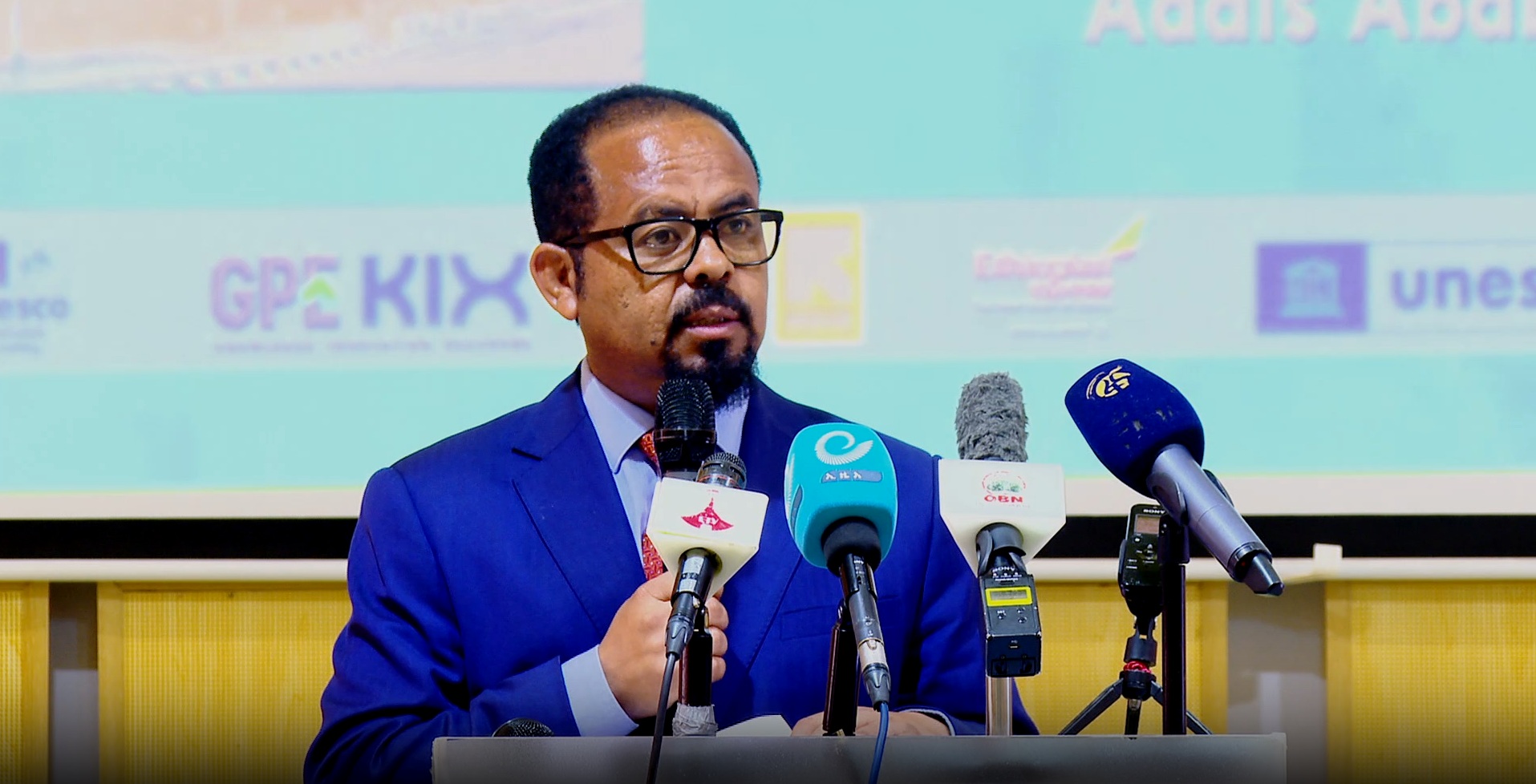
Addis Ababa, November 9, 2026 (ENA)— Ethiopia is accelerating its focus on science, technology, research, and innovation to drive national development and power Africa’s broader economic transformation, according to Solomon Abraha, State Minister for Higher Education Development.
Speaking at the opening of the 23rd Conference on Mathematics, Science and Technology Education in Africa (COMSTEDA 23) in Addis Ababa, State Minister Solomon highlighted the vital role of skilled human capital in securing the continent's future.
The five-day gathering, hosted by the Ministry of Education from November 9 to 13, brings together educators, policymakers, researchers, and development partners from across Africa.
Held under the theme “Empowering Africa through STEAM Education and Innovation for Sustainable Development and Global Competitiveness,” the conference focuses on advancing Science, Technology, Engineering, Arts, and Mathematics (STEAM) learning to foster innovation and prepare learners for a modern global economy.
Speaking at the opening ceremony, Solomon described investing in scientific and technological education as both a national responsibility and a continental priority.
“Embracing science, technology, engineering, arts, mathematics, artificial intelligence, and innovation is the patriotism of our time,” Solomon said. “Our ambition must go beyond consuming knowledge and technology to creating, innovating, solving problems, and competing globally.”
He underscored that education remains the bedrock of Africa's economic transformation, describing COMSTEDA 23 as a vital platform for continental collaboration, educational research, and innovative teaching methods.
Highlighting Ethiopia’s regional leadership as a founding member of Strengthening Mathematics and Science Education in Africa (SMASE-Africa), Solomon pointed to major national reforms, including the Smart Ethiopia initiative, the Mathematics Science Education Empowerment Center, and the Ministry’s dedicated STEM Directorate.
These efforts aim to modernize curricula, expand lab facilities, enhance teacher capacity, and promote digital learning.
Delivering a key address, SMASE-Africa President Professor Benson Banda urged African nations to move past fragmented, isolated efforts in favor of a unified continental approach.
“Our languages, our knowledge, and our priorities must be inside the technologies. Africa must not only realize the future; Africa must build it,” Banda stressed, calling for indigenous knowledge systems and local languages to be integrated into tech advancements.
Invoking the philosophy of Ubuntu, “I am because we are”, Banda emphasized that no single nation has all the answers, citing how countries can pool expertise ranging from robotics and digital learning to specialized pedagogy.
"In education, that means the progress of one African system must become the progress of all," he stated.
Meanwhile, Dr. Rita Bissoonauth, Director of the UNESCO Liaison Office in Addis Ababa and Representative to Ethiopia, emphasized that the continent's future depends on shifting focus toward intellectual capital.
“Africa’s future competitiveness will depend not only on its natural resources, but increasingly on the knowledge it generates and the scientific capacity it nurtures,” Bissoonauth said.
Reaffirming the UN agency's support, she pledged UNESCO’s continued partnership with the Ethiopian government, the African Union Commission, and regional stakeholders to turn shared educational goals into tangible outcomes.
Over the course of the five-day conference, participants will explore concrete strategies to modernize classrooms, expand digital learning, strengthen teacher training, improve science and math instruction, and align regional innovation with Africa’s broader development priorities.


