Ethiopia’s Future Through Young Eyes and Teenagers’s Confidence in a Nation of Growing Possibilities - ENA English


Ethiopia’s Future Through Young Eyes and Teenagers’s Confidence in a Nation of Growing Possibilities
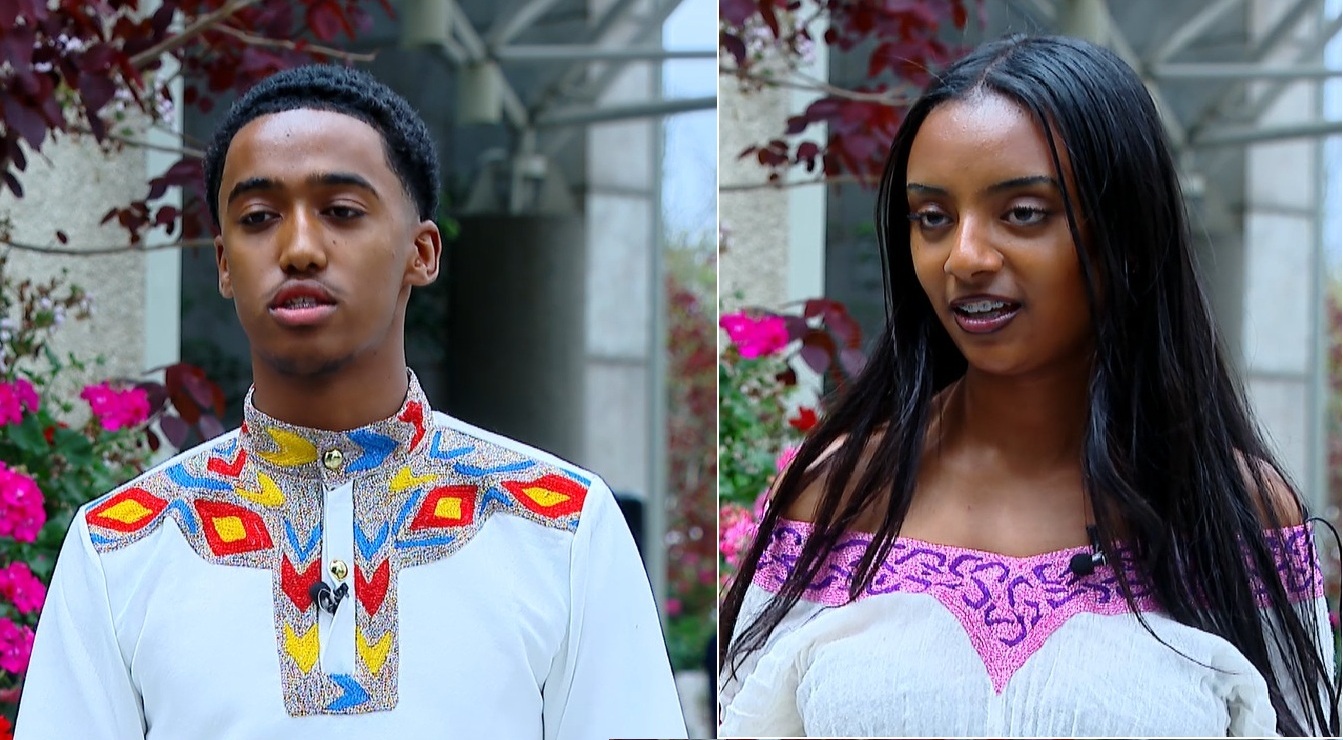
Addis Ababa, November 9, 2026 (ENA)—
From a rapidly transforming capital to renewed cultural pride and entrepreneurial ambition, young Ethiopians envision a stronger, more prosperous and globally respected country, believing their generation will play a defining role in shaping its future.
For a generation growing up amid visible changes in Ethiopia’s urban landscape, expanding development ambitions and evolving national aspirations, the future is increasingly seen not simply as something to anticipate, but as something to build.
Across Addis Ababa, teenagers are developing an increasingly confident outlook on their country's prospects, expressing optimism that sustained development efforts, cultural pride, innovation and greater opportunities for young people could propel Ethiopia toward a more prosperous future and a stronger position on the global stage.
In conversations with the Ethiopian News Agency (ENA), several teenagers painted an ambitious picture of the Ethiopia they hope to see over the next two decades and beyond — a country that combines modern development with its extraordinary cultural heritage, unlocks its economic potential and earns greater international recognition.
Their perspectives, while shaped by their individual experiences and aspirations, converge around a common conviction: Ethiopia's future holds enormous possibilities, and today's young generation has a responsibility to help realize them.
For 16-year-old Nathan Berhanemeskel, Ethiopia's ongoing transformation is an exciting journey, with visible changes creating a sense of momentum and possibility.
"It's an amazing ride," he said, describing a country that is becoming increasingly "modernized, futuristic, and beautiful."
Nathan pointed to the growing range of social and recreational activities, alongside improvements in the urban environment, as signs of a changing society offering young people more opportunities to explore, interact and enjoy their surroundings.
"There is a clear positive trajectory in our country right now," he observed.
Yet, for Nathan, Ethiopia's appeal extends well beyond its changing cities and modern infrastructure. Its people, natural attractions and rich cultural heritage remain central to what makes the country special.
Describing Ethiopia as "an amazing country with beautiful people and great places," he conveyed a sense of national pride rooted in both its identity and its potential.
That connection between national identity and future ambition was equally evident in the reflections of 16-year-old Amen Haimanot, who sees being Ethiopian as an essential part of who she is.
"Being Ethiopian brings me a lot of joy; it makes me who I am today," she said.
For Amen, national pride is not merely an attachment to the country's past. It is also confidence in what Ethiopia can become.
She believes that if the current momentum in social and economic development is sustained, Ethiopia could emerge as "one of the most well-known and respected countries in the world."
Amen cited improvements in the urban environment, including expanding green spaces, cleaner air and more vibrant public parks, as encouraging signs of change.
But she also emphasized that Ethiopia's greatest strengths lie in its people, cultural diversity, historical legacy and resilience — qualities she believes can help the country project a more dynamic and compelling image internationally.
Looking ahead, she placed particular confidence in the capacity of younger generations to accelerate the country's transformation.
"In 10 to 20 years, our generation and the next will place Ethiopia where it truly deserves to be," she said.
This confidence in Ethiopia's future is also reflected in the way 15-year-old Markan Yonas views the transformation of Addis Ababa, a city increasingly associated with the country's development ambitions.
For Markan, the capital's changing skyline and modern infrastructure demonstrate how far the country can go when development aspirations are translated into action.
She envisions an Ethiopia that will become even more remarkable over the coming decades, with stronger international trade, expanded economic opportunities and a more influential presence in global affairs.
"In 20 to 50 years, Ethiopia will be an extraordinary country," she predicted.
However, Markan believes that progress should not come at the expense of the country's identity. As Ethiopia modernizes and strengthens its international engagement, she urged young people to remain connected to the traditions and cultural values that distinguish the nation.
"We should love our country, treasure our culture, and truly appreciate everything we have," she said.
Her message captures an important dimension of the aspirations expressed by the teenagers: the Ethiopia of tomorrow should be modern and globally connected while remaining firmly grounded in its historical and cultural foundations.
For 16-year-old Eyoel Leul, however, optimism about the future is accompanied by a more immediate determination to contribute to the country's economic development.
Feeling fortunate to have been born in Ethiopia, Eyoel encouraged international visitors and investors to discover the country's opportunities and untapped potential.
More importantly, he sees entrepreneurship and the growth of local businesses as practical ways through which young people can participate in nation-building.
Rather than viewing the country's future as the responsibility of government alone, he hopes to contribute through his own family's enterprise.
"My plan is to take over my father's business and use it to help build the country," he said.
His ambition reflects a broader understanding of development in which individual initiative, business expansion and productive engagement can complement national economic priorities.
All in all, the teenagers' reflections reveal more than youthful enthusiasm. They offer a glimpse into how a new generation perceives Ethiopia's evolving national identity and its place in an increasingly interconnected world.
Their optimism is expressed through different lenses: Nathan sees a country undergoing exciting modernization; Amen draws confidence from national identity, environmental improvements and cultural resilience; Markan envisions a future of expanded trade and global influence; while Eyoel sees entrepreneurship as a direct pathway to contributing to national development.
Despite their different perspectives, a common aspiration runs through their accounts — a desire to see Ethiopia become more prosperous, internationally respected and full of opportunities for future generations.
Their vision also points to the importance of ensuring that young people are not merely spectators of national transformation, but active participants in it.
As Ethiopia pursues its development ambitions, investments in education, innovation, entrepreneurship, infrastructure and a greener urban environment will be important in translating such aspirations into tangible opportunities.
Equally important is nurturing a generation that values its cultural heritage while embracing new ideas, technologies and global engagement.
For these teenagers, Ethiopia's story is far from finished. Its next chapter remains unwritten, offering their generation an opportunity to shape the country's economic, social and international trajectory.
Their message is both hopeful and purposeful: a prosperous Ethiopia will not emerge from aspirations alone, but from the determination, creativity and collective efforts of its people.
And for a generation already imagining what their country could become in 10, 20 or even 50 years, the future is not simply a distant horizon. It is a responsibility they are eager to embrace.


