Ethiopia’s Defence Modernization Signals New Era of Strategic Deterrence - ENA English


Ethiopia’s Defence Modernization Signals New Era of Strategic Deterrence
By Staff Writer
November 1, 2026 (ENA)
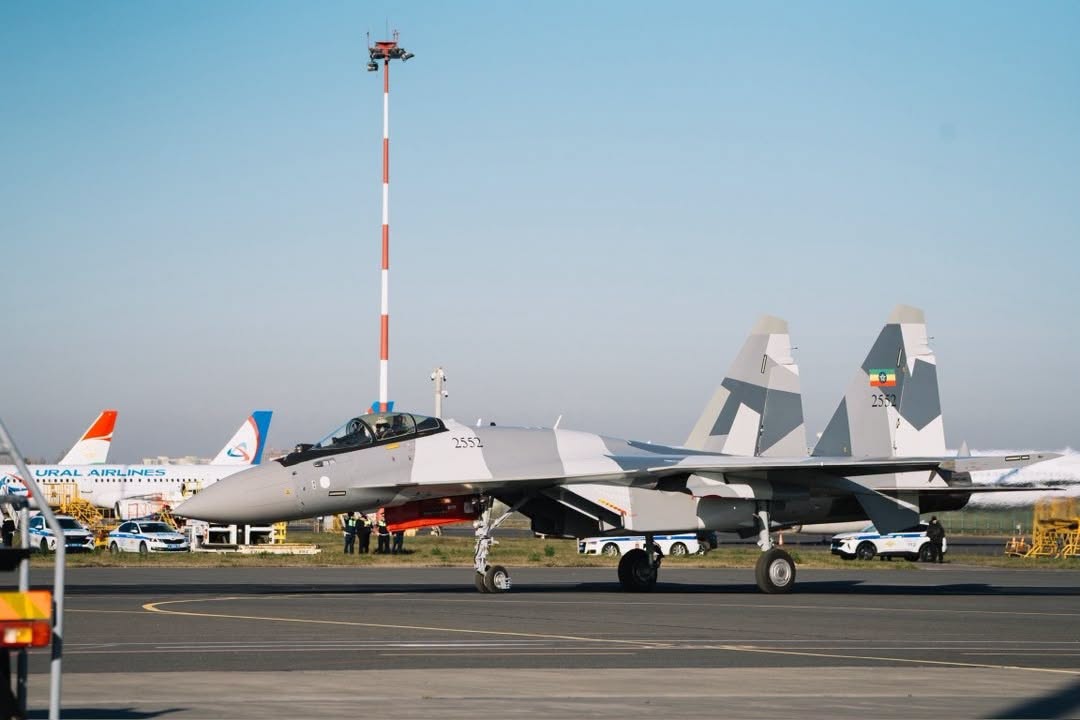
Ethiopia’s announcement of the acquisition of advanced Russian-made Su-35 fighter jets and plans to receive S-400 air defence systems marks a significant development in the country’s efforts to modernize its national defence capabilities, strengthen the protection of its airspace and reinforce its strategic deterrence.
Prime Minister Abiy Ahmed announced on October 28 in Moscow, Russia that Ethiopia had taken delivery of its first batch of Su-35 fighter jets under an agreement with Russia and would also receive four batteries of the S-400 air defence system. He described the development as a major milestone in the country’s efforts to strengthen national security, safeguard sovereignty and contribute to regional stability.
The announcement, made during the Prime Minister’s visit to Moscow for the Third Russia–Africa Summit, also underscored the growing defence cooperation between Ethiopia and Russia.
Beyond Military Acquisition: A Strategic Investment in National Security
The acquisition represents more than the addition of advanced military equipment to Ethiopia’s arsenal. It reflects a broader effort to build a modern defence force capable of responding to evolving security challenges and protecting the country's national interests.
The Su-35, a fourth-generation-plus multirole fighter, is designed to undertake air-superiority and air-to-ground missions. Its advanced radar, manoeuvrability and weapons systems provide capabilities for airspace surveillance, interception and a range of combat operations.
The planned acquisition of the Russian-made S-400 system would add another dimension to Ethiopia’s air defence architecture. Designed to engage aircraft, cruise missiles and other aerial threats, the system is intended to provide long-range air defence capabilities and strengthen the protection of strategic assets.
Together, these platforms could expand Ethiopia’s capacity to monitor and defend its airspace. However, their effectiveness will depend not only on the equipment itself but also on trained personnel, maintenance systems, logistics, command-and-control infrastructure and the ability to integrate different defence capabilities.
Deterrence as an Instrument of Peace
The strategic significance of military modernization extends beyond battlefield capabilities. A credible defence posture can serve as a deterrent by raising the potential costs of aggression and discouraging threats before they escalate into conflict.
Prime Minister Abiy has emphasized this principle, noting that military preparedness is not simply about fighting wars but also about preventing them.
For Ethiopia, strengthening defence readiness is closely connected to protecting its sovereignty, territorial integrity and national development interests. The objective, as articulated by the government, is to build the capacity to safeguard peace and security while reducing vulnerability to external threats.
This approach places deterrence within a broader national security framework in which military preparedness is intended to support stability rather than confrontation.
Regional Security and the Horn of Africa
Ethiopia’s defence modernization carries significance beyond its national borders, particularly given its strategic position in the Horn of Africa and its extensive economic and security interests across the wider Red Sea region.
As a landlocked country with a large population and substantial dependence on regional trade and transport corridors, Ethiopia has important interests in the security of its airspace, critical infrastructure and cross-border economic connections.
The evolving security environment in the Horn of Africa, together with the growing use of drones, precision-guided weapons and other emerging military technologies, has increased the importance of modern surveillance, air defence and rapid-response capabilities.
In this context, Ethiopia’s investment in advanced fighter aircraft and air defence systems reflects an effort to adapt its defence posture to changing regional and technological realities.
At the same time, military modernization alone cannot guarantee regional stability. Sustainable peace also requires diplomatic engagement, confidence-building, respect for national sovereignty and stronger regional cooperation. A credible deterrent is most effective when complemented by constructive relations with neighbouring countries and regional institutions.
Building a Modern and Sustainable Defence Force
The acquisition of advanced platforms also places greater importance on the institutional and technological foundations of national defence.
Operating sophisticated fighter aircraft and integrated air defence systems requires specialized training, reliable maintenance facilities, technical expertise, secure supply chains and sustained investment in personnel development.
The Ethiopian National Defence Force (ENDF) has made significant strides in expanding its military capabilities through the acquisition of modern and sophisticated weaponry, reflecting an ambitious effort to transform its defence posture.
Beyond conventional military capabilities, the ENDF is increasingly moving towards a technology-driven defence model, seeking to integrate artificial intelligence, cyber operations, digital warfare and advanced surveillance technologies into its military operations. This transition reflects the changing nature of modern warfare, where technological superiority, real-time intelligence and integrated command-and-control systems are becoming increasingly important.
However, building a modern and technologically advanced military requires more than acquiring sophisticated weapons systems. It also demands sustained investment in specialized training, technical expertise, maintenance infrastructure, logistics, research and development, and institutional capacity to operate and sustain these capabilities over the long term. Strengthening these foundations will be essential to translating military modernization into lasting operational readiness and strategic self-reliance.
The development also highlights the importance of strengthening domestic technical expertise and reducing dependence on external support wherever possible. Building such capabilities is essential to ensuring that military modernization translates into sustainable national defence readiness.
Sovereignty, Security and the Pursuit of Peace
Ethiopia’s latest defence acquisitions form part of a broader national effort to strengthen its security institutions and respond to an increasingly complex regional environment.
The delivery of the Su-35 fighter jets and the planned arrival of the S-400 systems signal an expansion of the country’s defence ambitions and its military cooperation with Russia.
Ultimately, the significance of this modernization will be measured not simply by the sophistication of the equipment acquired, but by the country's ability to translate those capabilities into effective national defence, strategic resilience and a more secure regional environment.
For Ethiopia, the central objective remains the protection of sovereignty and the preservation of peace. A modern, capable and sustainable defence force, complemented by diplomacy and regional cooperation, can play an important role in safeguarding national interests and creating the security conditions necessary for long-term development.


