ENA - ENA English
Live:


Headlines
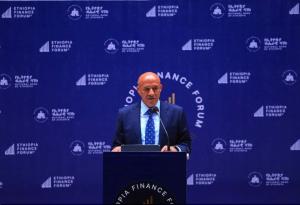
Economic and Financial Reforms Moving Ethiopia from Stabilization to Economic Transformation: DPM Temesgen
Sep 29, 2026 89
Addis Ababa, September 29, 2026 (ENA) — Ethiopia has been pursuing economic and financial reforms that aim at moving the country from stabilization to economic transformation, Deputy Prime Minister Temesgen Tiruneh said. Opening the second Ethiopia Finance Forum, the DPM said the country has undertaken major reforms in the foreign exchange market, monetary policy and financial-sector regulation, while opening sectors to competition and investment. “Nations do not transform themselves by choosing only what is easy. They transform themselves by doing what is necessary, and by sustaining that course long enough for reform to become institutions, for institutions to create confidence, and for confidence to create opportunity,” he elaborated. Deputy Prime Minister Temesgen pointed to improvements in exports, reserves and government revenues as well as easing inflationary pressures. He also noted improved access to foreign exchange and the easing of constraints affecting private investment. The success of reforms should however be ultimately measured by their impact on citizens, he added, stressing that farmers, young people, women entrepreneurs and MSMEs should be able to access finance and expand their businesses. According to the DPM, capital is more than money and all depends on confidence in institutions, laws, markets and policy credibility. “Our response to uncertainty will not be retreat. It will be stronger institutions. Our response to pressure will not be abandonment of reform. It will be deeper reform. And our answer to those who doubt Ethiopia’s future will not be rhetoric alone; it will be results,” he noted. The next phase of reform will focus on moving from stabilization to transformation through expanded financial inclusion, agricultural finance, investment and deeper financial markets, Temesgen announced. The agenda also includes housing finance, insurance, depositor protection and modern financial-market infrastructure. Moreover, he highlighted digital transformation, cybersecurity, consumer protection and financial literacy as key elements of the financial-sector reform agenda. The government cannot deliver the transformation alone, the DPM stated, calling for stronger cooperation among the private sector, financial institutions, investors and development partners. Ethiopia’s growing domestic market, young population and potential in agriculture, manufacturing, energy and services create significant opportunities. Temesgen stressed that economic growth must be inclusive and extended to financing opportunities to women, youth, farmers, MSMEs and communities beyond major cities. “Our task is therefore not merely to make finance larger. It is to make finance work better—more competitive, more innovative, more inclusive, more resilient, and more deeply connected to the productive economy.” The DPM urged forum participants to identify practical solutions and make concrete commitments, stressing that policies deliver results only through implementation. He reaffirmed the government’s commitment to macroeconomic stability, responsible reform and a competitive private sector that expands opportunities for Ethiopians. The three-day Ethiopia Finance Forum, running from September 29 to October 1, has brought together policymakers, financial institutions, investors, development partners and private-sector leaders.
Navigating the 2026 El Niño: Turning Forecasts into Early Action in the Horn of Africa
Sep 29, 2026 470
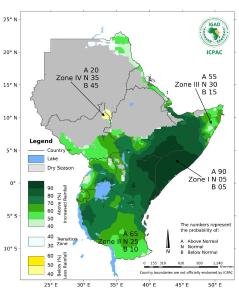
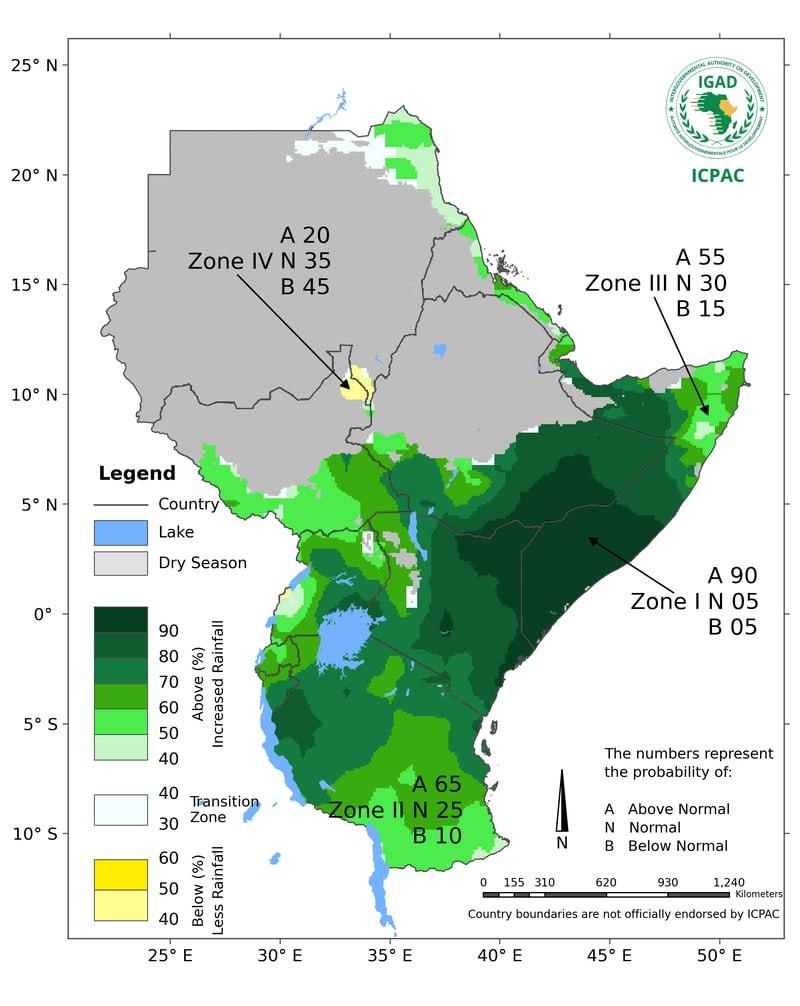
By Gizachew Meku The Horn of Africa is approaching the final months of 2026 with an increasingly important climate signal that is a strengthening El Niño that could bring substantially wetter conditions to parts of the region while increasing the risks of flooding, landslides, crop damage, disease outbreaks and infrastructure disruption. El Niño is a recurring climate phenomenon in which unusually warm sea-surface temperatures in the central and eastern tropical Pacific alter atmospheric circulation, affecting rainfall and temperatures far beyond the Pacific. Its impacts vary by region and season, making it an important factor in seasonal forecasting and preparedness. For the Horn, the latest forecasts show that the region faces neither a uniformly wet nor uniformly hazardous season. Rather, the impacts are likely to vary significantly by location, timing and intensity of rainfall. This makes the ability to translate forecasts into timely, localized decisions more important than simply predicting whether the coming season will be wet or dry. The World Meteorological Organization (WMO) reported in September that El Niño is firmly established and expected to strengthen to a very strong event toward the end of 2026. WMO forecasts indicate an exceptionally high likelihood, nearly 100 percent, that the phenomenon will persist through February 2027. The organization has also warned that the combination of El Niño and other oceanic conditions could produce significant changes in rainfall and temperature patterns, increasing the risk of extreme weather in different parts of the world. For the Greater Horn of Africa, the latest regional outlook provides a more specific picture. The IGAD Climate Prediction and Applications Centre (ICPAC) forecasts a 90 percent likelihood of enhanced October to December rainfall over southern Ethiopia, central and southern Somalia and northeastern Kenya. It also identifies a high likelihood of seasonal rainfall exceeding 400 millimeters in parts of central and southern Somalia, central Kenya, the Lake Victoria Basin, Burundi, western Rwanda and western Tanzania. The October to December season is particularly important for several countries in the region. ICPAC notes that it can account for up to 70 percent of annual rainfall in parts of Ethiopia, Kenya and Somalia and up to 40 percent in parts of Rwanda, Burundi, Tanzania and Uganda. Consequently, the quality and distribution of these rains can have major implications for agriculture, livestock, water availability and food security. The Dual Nature of the Forecast The forecast presents both opportunities and risks. For communities affected by water shortages and poor pasture conditions, increased rainfall could replenish rivers, reservoirs and groundwater, regenerate grazing areas and improve crop and livestock production. In agricultural areas, timely and well distributed rainfall could support planting and crop development while improving household and market food supplies. However, rainfall that arrives too intensely or over a short period can produce the opposite result. Heavy downpours can overwhelm drainage systems, cause flash floods and landslides, erode farmland, damage crops and disrupt roads, bridges, schools, health facilities and markets. Flooding can also contaminate water sources and increase the risk of waterborne diseases. ICPAC's latest outlook therefore emphasizes that seasonal forecasts must not be interpreted as a guarantee of rainfall at a particular location or on a particular day. The centre recommends using the seasonal outlook together with weekly and monthly forecasts, climate monitoring information and forecasts issued by national meteorological and hydrological services. Temperature presents another dimension of the risk. ICPAC expects warmer than average conditions across much of the Greater Horn, while WMO's global outlook also points to widespread above normal temperatures during the September to November period. The combination of heat and heavy rainfall can create complex pressures. High temperatures can increase water demand and stress livestock, while intense rainfall can produce flooding and disease risks. In other words, a wetter season does not automatically eliminate the effects of drought or climate vulnerability. Ethiopia illustrates this complexity. Southern parts of the country are among the areas where enhanced October to December rainfall is anticipated. Such rains could support agricultural and livestock activities, particularly where communities have experienced water and pasture pressures. At the same time, intense rainfall could produce localized flooding, waterlogging, soil erosion and damage to roads and other infrastructure. The same combination of opportunity and risk extends across Somalia, Kenya, Uganda, Rwanda, Burundi and Tanzania. The precise consequences will depend on where rainfall occurs, when it arrives and how rapidly it accumulates. The central question, therefore, is not simply what El Niño will bring. It is whether governments, humanitarian agencies, farmers, pastoralists and communities can act on the available information before forecast risks become humanitarian and economic emergencies. From Forecasts to Decisions The existence of a forecast creates a valuable window for early action. Agricultural authorities can use climate information to adjust planting recommendations, promote appropriate crop varieties and provide farmers with advice on soil and water management. Where flooding is expected, authorities can strengthen drainage systems and identify areas where planting decisions need to account for excessive moisture. Livestock authorities can support pastoralists with information on pasture and water availability, strengthen animal health surveillance, prepare vaccination campaigns and facilitate access to fodder where necessary. Water authorities can monitor reservoirs, rivers and flood prone areas while preparing water management measures in advance. Urban administrations can inspect drainage systems, clear blocked waterways and identify communities and infrastructure exposed to flooding. Infrastructure authorities can assess vulnerable roads, bridges, culverts and water facilities before heavy rains arrive. Where possible, preventive maintenance can be undertaken before access becomes difficult. Health authorities also have an important role. Flooding and standing water can increase the risk of diseases such as cholera and malaria in vulnerable areas. Strengthening surveillance, preparing health facilities and prepositioning medicines and other supplies can allow health systems to respond more rapidly when cases begin to rise. Social protection systems can similarly prepare mechanisms for supporting households whose livelihoods may be affected. Early assistance can help vulnerable families avoid selling livestock, tools, seed stocks or other productive assets to meet immediate food and household needs. These measures are at the heart of anticipatory action: identifying a foreseeable hazard, establishing agreed thresholds and taking predefined measures before the impact becomes severe. Regional Preparedness Is Underway The need to move from forecasting to implementation has already been recognized at regional level. The IGAD High Level Forum on El Niño Preparedness, held in Addis Ababa from September 15 to 17, focused on preparedness, anticipatory action and resilience. The resulting IGAD High Level Call to Action calls for national and local contingency plans to be updated and activated, with clear arrangements for evacuation and humanitarian access. The regional call also emphasizes the prepositioning of food, health, water, sanitation and hygiene supplies, protection of critical infrastructure such as roads, bridges and health facilities, and strengthened surveillance of flood related diseases including cholera and malaria. It further calls for timely agricultural advisories, livestock vaccination and measures to protect pastoral livelihoods. The significance of these measures lies in timing. Food assistance that arrives after roads have been cut off by floods is less effective than supplies positioned before access is disrupted. Veterinary support delivered after livestock disease has spread is more difficult than preventive vaccination and surveillance. Emergency shelter provided after communities have been displaced is more costly and logistically difficult than preparing evacuation sites and access routes beforehand. This is why the next stage of regional preparedness should focus on implementation at community level. Forecast information needs to reach farmers, pastoralists, local administrators, health workers and communities in forms they can understand and use. A seasonal probability expressed in technical language has limited value unless it is translated into practical advice such as when to plant, where to move livestock, which areas to avoid and when to prepare for possible evacuation. Financing Early Action Financing remains one of the most important conditions for successful anticipatory action. In June 2026, the Food and Agriculture Organization (FAO) and the World Food Programme (WFP) launched a joint El Niño anticipatory action appeal seeking USD 202 million to protect 8.8 million people across 22 high risk countries. The proposed measures include cash assistance, climate resilient seeds, livestock protection, water harvesting and storage, flood protection, agricultural advisories and early warning information. The appeal reflects a broader shift in humanitarian policy from responding after disasters occur to acting before predictable shocks cause major losses. The economic argument for this approach is also significant. WFP reports that experience from previous El Niño events indicates that every dollar invested in anticipatory action can save between USD 3 and USD 7 in avoided losses and response costs. FAO has similarly reported that anticipatory action can generate up to USD 7 in benefits and avoided agricultural losses for every dollar invested. These figures do not mean that every intervention will produce the same financial return. Outcomes depend on the hazard, location, intervention, timing and population affected. They nevertheless demonstrate why investing before a predictable climate shock can be economically more efficient than relying exclusively on emergency response after losses have occurred.For the Horn of Africa, financing mechanisms need to be sufficiently flexible to release resources when agreed forecast thresholds are reached. Waiting for visible disaster impacts before mobilizing funds can undermine the very purpose of anticipatory action. The Importance of Local Forecasts One of the most important lessons from the current outlook is that a regional forecast cannot substitute for local information. ICPAC's seasonal forecast provides a broad picture of expected climate conditions across the Greater Horn. National meteorological and hydrological services provide increasingly detailed information that can guide decisions at national and local levels. Weekly and monthly updates can then help authorities determine whether anticipated conditions are materializing and whether planned interventions should be activated or adjusted. This layered approach is particularly important because rainfall can vary substantially over relatively short distances. Two communities in the same district may experience different rainfall amounts and different levels of flood exposure. For that reason, preparedness plans should include clearly defined trigger points. These could relate to rainfall totals, river levels, soil moisture, reservoir conditions, flood forecasts, disease indicators or other locally relevant thresholds. Once a threshold is reached, the corresponding action should already be agreed. This could mean releasing cash assistance, moving livestock, distributing seeds, reinforcing flood protection, opening temporary shelters or deploying health teams. Such systems reduce the gap between receiving information and making decisions. Agriculture and Livelihoods at the Center Agriculture and livestock deserve particular attention because climate shocks can produce consequences that extend well beyond a single season. A flood can destroy standing crops, wash away topsoil, damage irrigation systems and interrupt access to markets. For pastoralists, excessive rainfall can improve pasture in some areas while simultaneously increasing animal disease risks or making movement difficult. The impact on households can therefore depend not only on the amount of rainfall but also on their ability to absorb and recover from shocks. Early action can help protect this productive capacity. Climate informed planting advice, flood tolerant or short cycle seeds, livestock vaccination, fodder support and water management can reduce losses while helping households maintain their livelihoods. This is particularly important in areas where communities have already experienced repeated drought, conflict, displacement or economic pressures. A new climate shock can compound existing vulnerabilities, making early intervention more valuable. Health Risks Require Early Attention Flood preparedness should also be treated as a public health priority. Flooding can contaminate drinking water and sanitation systems, increase exposure to waterborne diseases and create breeding conditions for disease vectors. At the same time, disruption of roads and health facilities can make it more difficult for communities to obtain treatment. The IGAD High Level Call to Action specifically highlights strengthened health surveillance for flood related diseases such as cholera and malaria. Early warning systems can therefore serve more than disaster management agencies. Information about expected rainfall and flooding can allow health authorities to increase surveillance, prepare medical supplies, strengthen community awareness and coordinate with water and sanitation agencies before outbreaks escalate. The Cost of Waiting The consequences of delayed action can extend for years. Flood damaged roads and bridges require expensive reconstruction. Crop losses can reduce household income and food availability. Livestock losses can remove a major source of wealth and livelihood for pastoral families. Damage to water systems can create prolonged public health problems, while repeated shocks can push vulnerable households deeper into poverty. The experience of previous El Niño events demonstrates the scale of these risks. WFP has noted that the 2015 to 2016 El Niño affected the food security of an estimated 60 million to 100 million people globally. For the 2026 to 2027 event, WFP has warned that climate impacts could add substantially to existing food insecurity in countries already facing conflict, displacement and economic pressures. The figures underline an important point: climate forecasting is not an end in itself. Its value is measured by whether information changes decisions early enough to reduce harm. A Narrow Window for Action The Horn of Africa enters the October to December season with an unusual combination of information and uncertainty. The regional climate signal is sufficiently strong to justify preparedness. At the same time, forecasts cannot determine every local outcome months in advance. The timing and intensity of rainfall can change, and conditions can differ considerably between neighboring areas. That uncertainty should encourage flexibility rather than delay. Governments and partners can establish contingency plans based on several possible scenarios, prepare resources in advance and update decisions as new forecasts become available. Communities can be given clear information about what actions to take under different rainfall and flood scenarios. The objective should not be to predict every event perfectly. It should be to reduce the consequences of foreseeable risks. Conclusion The Horn of Africa has three important assets as it approaches the final months of 2026: increasingly clear regional climate information, established early warning systems and growing experience with anticipatory action. The latest ICPAC outlook points to a high likelihood of enhanced rainfall across parts of the southern and equatorial Greater Horn, while WMO expects El Niño to strengthen and persist into early 2027. At the same time, the regional outlook warns of warmer than average temperatures and the possibility of flooding and other climate related hazards. The challenge now is to close the gap between forecast and action. Farmers need timely and usable information. Pastoralists need livestock and water preparedness. Health authorities need surveillance and supplies. Infrastructure agencies need to protect vulnerable assets. Humanitarian organizations need resources before emergencies peak. Most importantly, communities need to be placed at the center of preparedness decisions. El Niño carries uncertainty, but uncertainty does not mean that nothing can be done. Forecasts can identify elevated risks, early warning systems can establish triggers, financing can support timely interventions and local institutions can translate regional information into practical action. For the Horn of Africa, the measure of preparedness will ultimately be whether the region uses the warning it has today to reduce the losses it might otherwise face tomorrow.
Ethiopia Expaning Digital Transformation in Higher Education
Sep 29, 2026 637
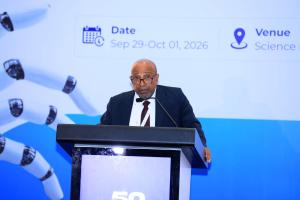
Addis Ababa, September 29, 2026 (ENA) — Ethiopia is expanding digital transformation across higher education institutions, with online, blended and micro-credential learning being introduced as part of the education system, Education Minister Berhanu Nega said. Delivering the key message of the STRIDE Ethiopia 2.0 Summit 2026, Education Minister Berhanu Nega said Ethiopia’s progress in digital infrastructure and legal frameworks must be matched by developing the human capacity needed to translate these advances into economic and social benefits. The digital transformation in higher education is being implemented on a broad scale, enabling university teachers and students to benefit from online, blended and micro-credential learning opportunities, Berhanu said. The expansion of digital learning is helping create opportunities for students to learn beyond traditional campus-based education, he elaborated. Efforts are also underway to strengthen digital literacy among students and teachers, enabling them not only to use digital tools but also to search for, evaluate and create information and apply technology for education and work. Ethiopia has also begun integrating artificial intelligence (AI) technology into the education system, Berhanu said. Teachers are being supported to use AI tools for lesson preparation, content development, student support and assessment. AI is being introduced to strengthen teachers’ capacity rather than replace them, Berhanu said. Significant efforts have been made to digitalize education information systems, including the Education Management Information System (EMIS) and Higher Education Management Information System (HEMIS). The systems are being strengthened to organize and connect data on students, teachers, educational institutions and educational outcomes, supporting a more data-driven education system, he said. Strengthening connectivity and digital infrastructure is another major component of the reform, Berhanu said. This includes connecting universities and schools through networks, strengthening data centers and cloud services, and expanding digital education and research networks, he added. The goal of the reform is to shift the education system from paper-based processes to digital systems, from fragmented information to integrated data, and from traditional learning methods toward digital and AI-supported education. The goal is not to use technology for technology’s sake, but to use technology to improve the quality, accessibility, equity and effectiveness of education, Berhanu said. Berhanu also stressed the need for the education system to adapt to an era in which AI can perform many tasks traditionally associated with memorization. “We cannot continue with an education system that rewards memorization,” he said, emphasizing the need to develop students who can ask questions, think critically, identify problems and work together with machines.

Former U.S. Envoy Nagy Calls Eritrea’s Situation “A Tragedy”
Sep 29, 2026 1900
Addis Ababa, September 29, 2026 (ENA) —Former U.S. Assistant Secretary of State for African Affairs Tibor Nagy sharply criticized Eritrea’s leadership and the conditions facing its population, describing the country as an unstable neighbor in the region. In his recent interview with Pulse of Africa, Nagy said Eritrea has had conflicts with all of its neighbors, including Yemen across the Red Sea. He described President Isaias Afwerki as a dictator, saying, “I have called him a dictator because I believe he is a dictator.” According to Nagy, Eritrea has no constitution, has never held elections, and maintains what he described as “national service for eternity.” He also pointed to the large proportion of the population that has fled the country and the burden placed on those who remain. Nagy said Eritreans face an “unbearable burden” and criticized the country’s quality of life, citing the lack of internet access and other forms of isolation. He recalled visiting Eritrea and finding that people could not use credit cards and that the country was significantly behind in areas he considered essential to modern life. Referring to Isaias Afwerki, he said, “Isaias is now holding Eritrea back instead of taking it forward.” Nagy also criticized what he described as imprisonment without trial or charges and extensive human-rights abuses, calling the situation “a tragedy” and “an absolute tragedy.”
PM Abiy Welcomes Somali President Sheikh Hassan Mohamud
Sep 29, 2026 2010
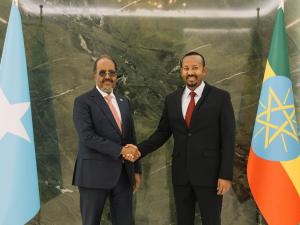
Addis Ababa, September 29, 2026 (ENA) —Prime Minister Abiy Ahmed welcomed Somali President Sheikh Hassan Mohamud at Bole International Airport this morning. The two leaders are expected to discuss on bilateral and regional issues of mutual interest, ENA learned.
Featured
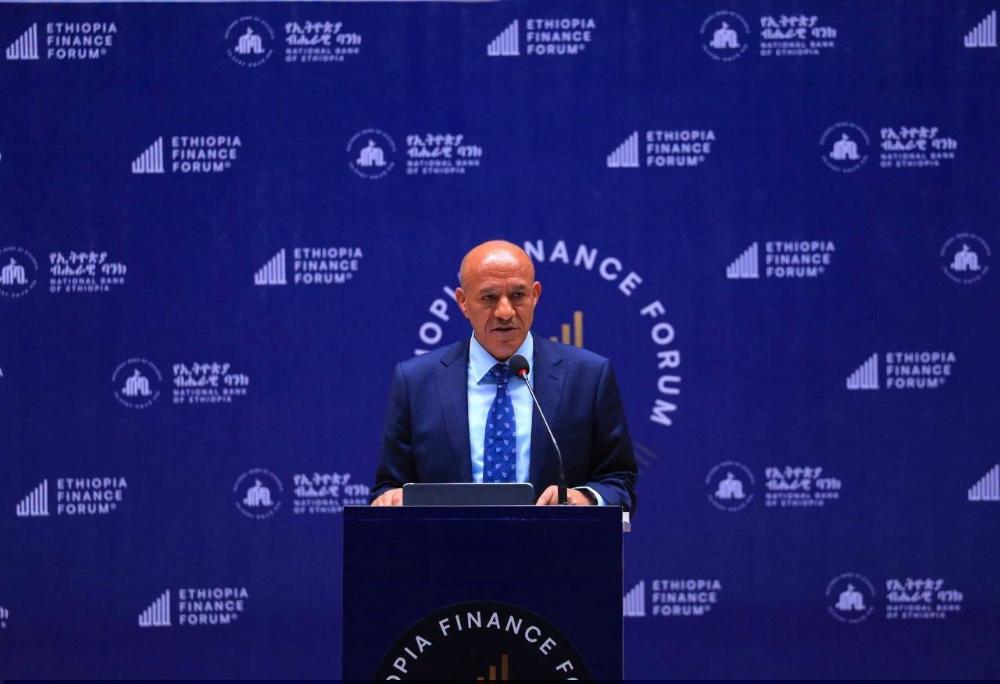
Economic and Financial Reforms Moving Ethiopia from Stabilization to Economic Transformation: DPM Temesgen
Sep 29, 2026 89
Addis Ababa, September 29, 2026 (ENA) — Ethiopia has been pursuing economic and financial reforms that aim at moving the country from stabilization to economic transformation, Deputy Prime Minister Temesgen Tiruneh said. Opening the second Ethiopia Finance Forum, the DPM said the country has undertaken major reforms in the foreign exchange market, monetary policy and financial-sector regulation, while opening sectors to competition and investment. “Nations do not transform themselves by choosing only what is easy. They transform themselves by doing what is necessary, and by sustaining that course long enough for reform to become institutions, for institutions to create confidence, and for confidence to create opportunity,” he elaborated. Deputy Prime Minister Temesgen pointed to improvements in exports, reserves and government revenues as well as easing inflationary pressures. He also noted improved access to foreign exchange and the easing of constraints affecting private investment. The success of reforms should however be ultimately measured by their impact on citizens, he added, stressing that farmers, young people, women entrepreneurs and MSMEs should be able to access finance and expand their businesses. According to the DPM, capital is more than money and all depends on confidence in institutions, laws, markets and policy credibility. “Our response to uncertainty will not be retreat. It will be stronger institutions. Our response to pressure will not be abandonment of reform. It will be deeper reform. And our answer to those who doubt Ethiopia’s future will not be rhetoric alone; it will be results,” he noted. The next phase of reform will focus on moving from stabilization to transformation through expanded financial inclusion, agricultural finance, investment and deeper financial markets, Temesgen announced. The agenda also includes housing finance, insurance, depositor protection and modern financial-market infrastructure. Moreover, he highlighted digital transformation, cybersecurity, consumer protection and financial literacy as key elements of the financial-sector reform agenda. The government cannot deliver the transformation alone, the DPM stated, calling for stronger cooperation among the private sector, financial institutions, investors and development partners. Ethiopia’s growing domestic market, young population and potential in agriculture, manufacturing, energy and services create significant opportunities. Temesgen stressed that economic growth must be inclusive and extended to financing opportunities to women, youth, farmers, MSMEs and communities beyond major cities. “Our task is therefore not merely to make finance larger. It is to make finance work better—more competitive, more innovative, more inclusive, more resilient, and more deeply connected to the productive economy.” The DPM urged forum participants to identify practical solutions and make concrete commitments, stressing that policies deliver results only through implementation. He reaffirmed the government’s commitment to macroeconomic stability, responsible reform and a competitive private sector that expands opportunities for Ethiopians. The three-day Ethiopia Finance Forum, running from September 29 to October 1, has brought together policymakers, financial institutions, investors, development partners and private-sector leaders.
Navigating the 2026 El Niño: Turning Forecasts into Early Action in the Horn of Africa
Sep 29, 2026 470
By Gizachew Meku The Horn of Africa is approaching the final months of 2026 with an increasingly important climate signal that is a strengthening El Niño that could bring substantially wetter conditions to parts of the region while increasing the risks of flooding, landslides, crop damage, disease outbreaks and infrastructure disruption. El Niño is a recurring climate phenomenon in which unusually warm sea-surface temperatures in the central and eastern tropical Pacific alter atmospheric circulation, affecting rainfall and temperatures far beyond the Pacific. Its impacts vary by region and season, making it an important factor in seasonal forecasting and preparedness. For the Horn, the latest forecasts show that the region faces neither a uniformly wet nor uniformly hazardous season. Rather, the impacts are likely to vary significantly by location, timing and intensity of rainfall. This makes the ability to translate forecasts into timely, localized decisions more important than simply predicting whether the coming season will be wet or dry. The World Meteorological Organization (WMO) reported in September that El Niño is firmly established and expected to strengthen to a very strong event toward the end of 2026. WMO forecasts indicate an exceptionally high likelihood, nearly 100 percent, that the phenomenon will persist through February 2027. The organization has also warned that the combination of El Niño and other oceanic conditions could produce significant changes in rainfall and temperature patterns, increasing the risk of extreme weather in different parts of the world. For the Greater Horn of Africa, the latest regional outlook provides a more specific picture. The IGAD Climate Prediction and Applications Centre (ICPAC) forecasts a 90 percent likelihood of enhanced October to December rainfall over southern Ethiopia, central and southern Somalia and northeastern Kenya. It also identifies a high likelihood of seasonal rainfall exceeding 400 millimeters in parts of central and southern Somalia, central Kenya, the Lake Victoria Basin, Burundi, western Rwanda and western Tanzania. The October to December season is particularly important for several countries in the region. ICPAC notes that it can account for up to 70 percent of annual rainfall in parts of Ethiopia, Kenya and Somalia and up to 40 percent in parts of Rwanda, Burundi, Tanzania and Uganda. Consequently, the quality and distribution of these rains can have major implications for agriculture, livestock, water availability and food security. The Dual Nature of the Forecast The forecast presents both opportunities and risks. For communities affected by water shortages and poor pasture conditions, increased rainfall could replenish rivers, reservoirs and groundwater, regenerate grazing areas and improve crop and livestock production. In agricultural areas, timely and well distributed rainfall could support planting and crop development while improving household and market food supplies. However, rainfall that arrives too intensely or over a short period can produce the opposite result. Heavy downpours can overwhelm drainage systems, cause flash floods and landslides, erode farmland, damage crops and disrupt roads, bridges, schools, health facilities and markets. Flooding can also contaminate water sources and increase the risk of waterborne diseases. ICPAC's latest outlook therefore emphasizes that seasonal forecasts must not be interpreted as a guarantee of rainfall at a particular location or on a particular day. The centre recommends using the seasonal outlook together with weekly and monthly forecasts, climate monitoring information and forecasts issued by national meteorological and hydrological services. Temperature presents another dimension of the risk. ICPAC expects warmer than average conditions across much of the Greater Horn, while WMO's global outlook also points to widespread above normal temperatures during the September to November period. The combination of heat and heavy rainfall can create complex pressures. High temperatures can increase water demand and stress livestock, while intense rainfall can produce flooding and disease risks. In other words, a wetter season does not automatically eliminate the effects of drought or climate vulnerability. Ethiopia illustrates this complexity. Southern parts of the country are among the areas where enhanced October to December rainfall is anticipated. Such rains could support agricultural and livestock activities, particularly where communities have experienced water and pasture pressures. At the same time, intense rainfall could produce localized flooding, waterlogging, soil erosion and damage to roads and other infrastructure. The same combination of opportunity and risk extends across Somalia, Kenya, Uganda, Rwanda, Burundi and Tanzania. The precise consequences will depend on where rainfall occurs, when it arrives and how rapidly it accumulates. The central question, therefore, is not simply what El Niño will bring. It is whether governments, humanitarian agencies, farmers, pastoralists and communities can act on the available information before forecast risks become humanitarian and economic emergencies. From Forecasts to Decisions The existence of a forecast creates a valuable window for early action. Agricultural authorities can use climate information to adjust planting recommendations, promote appropriate crop varieties and provide farmers with advice on soil and water management. Where flooding is expected, authorities can strengthen drainage systems and identify areas where planting decisions need to account for excessive moisture. Livestock authorities can support pastoralists with information on pasture and water availability, strengthen animal health surveillance, prepare vaccination campaigns and facilitate access to fodder where necessary. Water authorities can monitor reservoirs, rivers and flood prone areas while preparing water management measures in advance. Urban administrations can inspect drainage systems, clear blocked waterways and identify communities and infrastructure exposed to flooding. Infrastructure authorities can assess vulnerable roads, bridges, culverts and water facilities before heavy rains arrive. Where possible, preventive maintenance can be undertaken before access becomes difficult. Health authorities also have an important role. Flooding and standing water can increase the risk of diseases such as cholera and malaria in vulnerable areas. Strengthening surveillance, preparing health facilities and prepositioning medicines and other supplies can allow health systems to respond more rapidly when cases begin to rise. Social protection systems can similarly prepare mechanisms for supporting households whose livelihoods may be affected. Early assistance can help vulnerable families avoid selling livestock, tools, seed stocks or other productive assets to meet immediate food and household needs. These measures are at the heart of anticipatory action: identifying a foreseeable hazard, establishing agreed thresholds and taking predefined measures before the impact becomes severe. Regional Preparedness Is Underway The need to move from forecasting to implementation has already been recognized at regional level. The IGAD High Level Forum on El Niño Preparedness, held in Addis Ababa from September 15 to 17, focused on preparedness, anticipatory action and resilience. The resulting IGAD High Level Call to Action calls for national and local contingency plans to be updated and activated, with clear arrangements for evacuation and humanitarian access. The regional call also emphasizes the prepositioning of food, health, water, sanitation and hygiene supplies, protection of critical infrastructure such as roads, bridges and health facilities, and strengthened surveillance of flood related diseases including cholera and malaria. It further calls for timely agricultural advisories, livestock vaccination and measures to protect pastoral livelihoods. The significance of these measures lies in timing. Food assistance that arrives after roads have been cut off by floods is less effective than supplies positioned before access is disrupted. Veterinary support delivered after livestock disease has spread is more difficult than preventive vaccination and surveillance. Emergency shelter provided after communities have been displaced is more costly and logistically difficult than preparing evacuation sites and access routes beforehand. This is why the next stage of regional preparedness should focus on implementation at community level. Forecast information needs to reach farmers, pastoralists, local administrators, health workers and communities in forms they can understand and use. A seasonal probability expressed in technical language has limited value unless it is translated into practical advice such as when to plant, where to move livestock, which areas to avoid and when to prepare for possible evacuation. Financing Early Action Financing remains one of the most important conditions for successful anticipatory action. In June 2026, the Food and Agriculture Organization (FAO) and the World Food Programme (WFP) launched a joint El Niño anticipatory action appeal seeking USD 202 million to protect 8.8 million people across 22 high risk countries. The proposed measures include cash assistance, climate resilient seeds, livestock protection, water harvesting and storage, flood protection, agricultural advisories and early warning information. The appeal reflects a broader shift in humanitarian policy from responding after disasters occur to acting before predictable shocks cause major losses. The economic argument for this approach is also significant. WFP reports that experience from previous El Niño events indicates that every dollar invested in anticipatory action can save between USD 3 and USD 7 in avoided losses and response costs. FAO has similarly reported that anticipatory action can generate up to USD 7 in benefits and avoided agricultural losses for every dollar invested. These figures do not mean that every intervention will produce the same financial return. Outcomes depend on the hazard, location, intervention, timing and population affected. They nevertheless demonstrate why investing before a predictable climate shock can be economically more efficient than relying exclusively on emergency response after losses have occurred.For the Horn of Africa, financing mechanisms need to be sufficiently flexible to release resources when agreed forecast thresholds are reached. Waiting for visible disaster impacts before mobilizing funds can undermine the very purpose of anticipatory action. The Importance of Local Forecasts One of the most important lessons from the current outlook is that a regional forecast cannot substitute for local information. ICPAC's seasonal forecast provides a broad picture of expected climate conditions across the Greater Horn. National meteorological and hydrological services provide increasingly detailed information that can guide decisions at national and local levels. Weekly and monthly updates can then help authorities determine whether anticipated conditions are materializing and whether planned interventions should be activated or adjusted. This layered approach is particularly important because rainfall can vary substantially over relatively short distances. Two communities in the same district may experience different rainfall amounts and different levels of flood exposure. For that reason, preparedness plans should include clearly defined trigger points. These could relate to rainfall totals, river levels, soil moisture, reservoir conditions, flood forecasts, disease indicators or other locally relevant thresholds. Once a threshold is reached, the corresponding action should already be agreed. This could mean releasing cash assistance, moving livestock, distributing seeds, reinforcing flood protection, opening temporary shelters or deploying health teams. Such systems reduce the gap between receiving information and making decisions. Agriculture and Livelihoods at the Center Agriculture and livestock deserve particular attention because climate shocks can produce consequences that extend well beyond a single season. A flood can destroy standing crops, wash away topsoil, damage irrigation systems and interrupt access to markets. For pastoralists, excessive rainfall can improve pasture in some areas while simultaneously increasing animal disease risks or making movement difficult. The impact on households can therefore depend not only on the amount of rainfall but also on their ability to absorb and recover from shocks. Early action can help protect this productive capacity. Climate informed planting advice, flood tolerant or short cycle seeds, livestock vaccination, fodder support and water management can reduce losses while helping households maintain their livelihoods. This is particularly important in areas where communities have already experienced repeated drought, conflict, displacement or economic pressures. A new climate shock can compound existing vulnerabilities, making early intervention more valuable. Health Risks Require Early Attention Flood preparedness should also be treated as a public health priority. Flooding can contaminate drinking water and sanitation systems, increase exposure to waterborne diseases and create breeding conditions for disease vectors. At the same time, disruption of roads and health facilities can make it more difficult for communities to obtain treatment. The IGAD High Level Call to Action specifically highlights strengthened health surveillance for flood related diseases such as cholera and malaria. Early warning systems can therefore serve more than disaster management agencies. Information about expected rainfall and flooding can allow health authorities to increase surveillance, prepare medical supplies, strengthen community awareness and coordinate with water and sanitation agencies before outbreaks escalate. The Cost of Waiting The consequences of delayed action can extend for years. Flood damaged roads and bridges require expensive reconstruction. Crop losses can reduce household income and food availability. Livestock losses can remove a major source of wealth and livelihood for pastoral families. Damage to water systems can create prolonged public health problems, while repeated shocks can push vulnerable households deeper into poverty. The experience of previous El Niño events demonstrates the scale of these risks. WFP has noted that the 2015 to 2016 El Niño affected the food security of an estimated 60 million to 100 million people globally. For the 2026 to 2027 event, WFP has warned that climate impacts could add substantially to existing food insecurity in countries already facing conflict, displacement and economic pressures. The figures underline an important point: climate forecasting is not an end in itself. Its value is measured by whether information changes decisions early enough to reduce harm. A Narrow Window for Action The Horn of Africa enters the October to December season with an unusual combination of information and uncertainty. The regional climate signal is sufficiently strong to justify preparedness. At the same time, forecasts cannot determine every local outcome months in advance. The timing and intensity of rainfall can change, and conditions can differ considerably between neighboring areas. That uncertainty should encourage flexibility rather than delay. Governments and partners can establish contingency plans based on several possible scenarios, prepare resources in advance and update decisions as new forecasts become available. Communities can be given clear information about what actions to take under different rainfall and flood scenarios. The objective should not be to predict every event perfectly. It should be to reduce the consequences of foreseeable risks. Conclusion The Horn of Africa has three important assets as it approaches the final months of 2026: increasingly clear regional climate information, established early warning systems and growing experience with anticipatory action. The latest ICPAC outlook points to a high likelihood of enhanced rainfall across parts of the southern and equatorial Greater Horn, while WMO expects El Niño to strengthen and persist into early 2027. At the same time, the regional outlook warns of warmer than average temperatures and the possibility of flooding and other climate related hazards. The challenge now is to close the gap between forecast and action. Farmers need timely and usable information. Pastoralists need livestock and water preparedness. Health authorities need surveillance and supplies. Infrastructure agencies need to protect vulnerable assets. Humanitarian organizations need resources before emergencies peak. Most importantly, communities need to be placed at the center of preparedness decisions. El Niño carries uncertainty, but uncertainty does not mean that nothing can be done. Forecasts can identify elevated risks, early warning systems can establish triggers, financing can support timely interventions and local institutions can translate regional information into practical action. For the Horn of Africa, the measure of preparedness will ultimately be whether the region uses the warning it has today to reduce the losses it might otherwise face tomorrow.
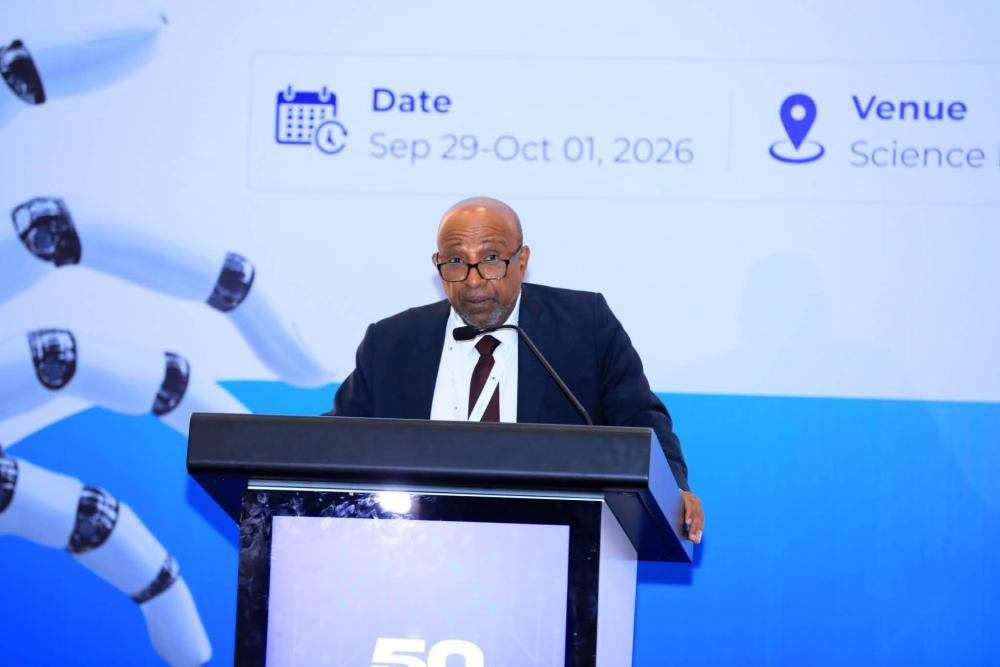
Ethiopia Expaning Digital Transformation in Higher Education
Sep 29, 2026 637
Addis Ababa, September 29, 2026 (ENA) — Ethiopia is expanding digital transformation across higher education institutions, with online, blended and micro-credential learning being introduced as part of the education system, Education Minister Berhanu Nega said. Delivering the key message of the STRIDE Ethiopia 2.0 Summit 2026, Education Minister Berhanu Nega said Ethiopia’s progress in digital infrastructure and legal frameworks must be matched by developing the human capacity needed to translate these advances into economic and social benefits. The digital transformation in higher education is being implemented on a broad scale, enabling university teachers and students to benefit from online, blended and micro-credential learning opportunities, Berhanu said. The expansion of digital learning is helping create opportunities for students to learn beyond traditional campus-based education, he elaborated. Efforts are also underway to strengthen digital literacy among students and teachers, enabling them not only to use digital tools but also to search for, evaluate and create information and apply technology for education and work. Ethiopia has also begun integrating artificial intelligence (AI) technology into the education system, Berhanu said. Teachers are being supported to use AI tools for lesson preparation, content development, student support and assessment. AI is being introduced to strengthen teachers’ capacity rather than replace them, Berhanu said. Significant efforts have been made to digitalize education information systems, including the Education Management Information System (EMIS) and Higher Education Management Information System (HEMIS). The systems are being strengthened to organize and connect data on students, teachers, educational institutions and educational outcomes, supporting a more data-driven education system, he said. Strengthening connectivity and digital infrastructure is another major component of the reform, Berhanu said. This includes connecting universities and schools through networks, strengthening data centers and cloud services, and expanding digital education and research networks, he added. The goal of the reform is to shift the education system from paper-based processes to digital systems, from fragmented information to integrated data, and from traditional learning methods toward digital and AI-supported education. The goal is not to use technology for technology’s sake, but to use technology to improve the quality, accessibility, equity and effectiveness of education, Berhanu said. Berhanu also stressed the need for the education system to adapt to an era in which AI can perform many tasks traditionally associated with memorization. “We cannot continue with an education system that rewards memorization,” he said, emphasizing the need to develop students who can ask questions, think critically, identify problems and work together with machines.

Former U.S. Envoy Nagy Calls Eritrea’s Situation “A Tragedy”
Sep 29, 2026 1900
Addis Ababa, September 29, 2026 (ENA) —Former U.S. Assistant Secretary of State for African Affairs Tibor Nagy sharply criticized Eritrea’s leadership and the conditions facing its population, describing the country as an unstable neighbor in the region. In his recent interview with Pulse of Africa, Nagy said Eritrea has had conflicts with all of its neighbors, including Yemen across the Red Sea. He described President Isaias Afwerki as a dictator, saying, “I have called him a dictator because I believe he is a dictator.” According to Nagy, Eritrea has no constitution, has never held elections, and maintains what he described as “national service for eternity.” He also pointed to the large proportion of the population that has fled the country and the burden placed on those who remain. Nagy said Eritreans face an “unbearable burden” and criticized the country’s quality of life, citing the lack of internet access and other forms of isolation. He recalled visiting Eritrea and finding that people could not use credit cards and that the country was significantly behind in areas he considered essential to modern life. Referring to Isaias Afwerki, he said, “Isaias is now holding Eritrea back instead of taking it forward.” Nagy also criticized what he described as imprisonment without trial or charges and extensive human-rights abuses, calling the situation “a tragedy” and “an absolute tragedy.”
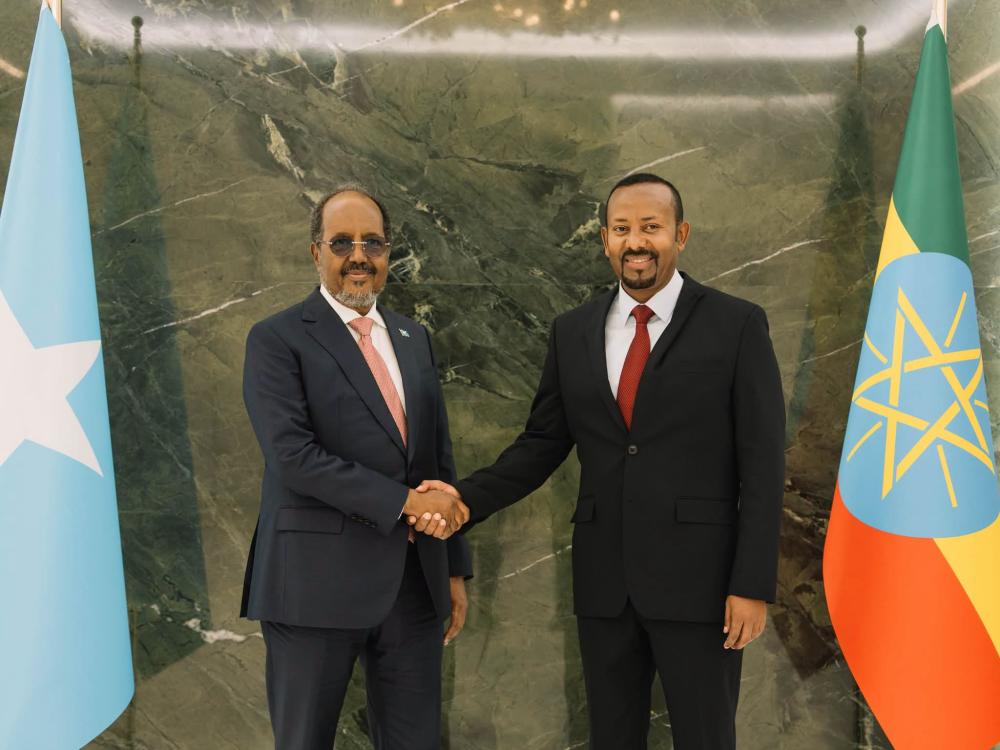
PM Abiy Welcomes Somali President Sheikh Hassan Mohamud
Sep 29, 2026 2010
Addis Ababa, September 29, 2026 (ENA) —Prime Minister Abiy Ahmed welcomed Somali President Sheikh Hassan Mohamud at Bole International Airport this morning. The two leaders are expected to discuss on bilateral and regional issues of mutual interest, ENA learned.

POA English
Pulse Of Africa - English Language
Your news, current affairs and entertainment channel
Join us on
POA Arabic - عربي
Pulse Of Africa - Arabic Language
قناتكم الاخبارية و الترفيهية
Join us on
Politics
Former U.S. Envoy Nagy Calls Eritrea’s Situation “A Tragedy”
Sep 29, 2026 1900
Addis Ababa, September 29, 2026 (ENA) —Former U.S. Assistant Secretary of State for African Affairs Tibor Nagy sharply criticized Eritrea’s leadership and the conditions facing its population, describing the country as an unstable neighbor in the region. In his recent interview with Pulse of Africa, Nagy said Eritrea has had conflicts with all of its neighbors, including Yemen across the Red Sea. He described President Isaias Afwerki as a dictator, saying, “I have called him a dictator because I believe he is a dictator.” According to Nagy, Eritrea has no constitution, has never held elections, and maintains what he described as “national service for eternity.” He also pointed to the large proportion of the population that has fled the country and the burden placed on those who remain. Nagy said Eritreans face an “unbearable burden” and criticized the country’s quality of life, citing the lack of internet access and other forms of isolation. He recalled visiting Eritrea and finding that people could not use credit cards and that the country was significantly behind in areas he considered essential to modern life. Referring to Isaias Afwerki, he said, “Isaias is now holding Eritrea back instead of taking it forward.” Nagy also criticized what he described as imprisonment without trial or charges and extensive human-rights abuses, calling the situation “a tragedy” and “an absolute tragedy.”
PM Abiy Welcomes Somali President Sheikh Hassan Mohamud
Sep 29, 2026 2010
Addis Ababa, September 29, 2026 (ENA) —Prime Minister Abiy Ahmed welcomed Somali President Sheikh Hassan Mohamud at Bole International Airport this morning. The two leaders are expected to discuss on bilateral and regional issues of mutual interest, ENA learned.

President Taye Holds Talks with EU Officials on Regional Peace, Security and Economic Dev’t
Sep 28, 2026 5656
Addis Ababa, September 28, 2026 (ENA) —President Taye Atske Selassie held talks with Ambassador Olof Skoog, Deputy Secretary-General for Political Affairs of the European Union, and Annette Weber, EU Special Representative for the Horn of Africa, on a wide range of regional issues, with a focus on peace and security and economic development. The discussions addressed key regional developments and opportunities for strengthening cooperation in support of peace, stability and sustainable economic development in the Horn of Africa. The talks underscore the importance of continued Ethiopia-EU engagement on regional and economic priorities, as both sides seek to deepen cooperation on issues of mutual interest, the President posted on X.
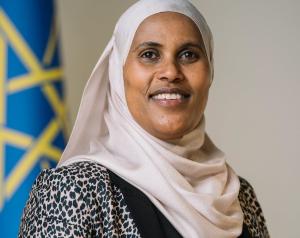
PM Abiy Appoints Chaltu Sani as CEO of Federal Housing Corporation
Sep 28, 2026 4656
Addis Ababa, September 28, 2026 (ENA) —Prime Minister Abiy Ahmed has appointed Chaltu Sani as the Chief Executive Officer of the Federal Housing Corporation, effective September 28, 2026. Prior to this appointment, Chaltu served as the Minister of Urban and Infrastructure from October 2021 until September 2026.

Egypt's Escalated Nile Rhetoric to Domestic Economic Pressures, Journalist Zahid says
Sep 28, 2026 5471
Addis Ababa, September 28, 2026 (ENA) —Egypt’s escalating media and political rhetoric over the Nile is partly aimed at diverting public attention from mounting economic and livelihood pressures, journalist and writer Zahid Zidan said. In an exclusive interview with POA, Zahid pointed to rising living costs and economic difficulties in Egypt, saying the Grand Ethiopian Renaissance Dam (GERD) and Nile water issues have increasingly featured in the country’s political and media discourse. His comments come amid continued economic challenges identified by international financial institutions. In a September 21, 2026 assessment, the International Monetary Fund (IMF) said Egypt had shown resilience to recent external shocks but that significant vulnerabilities remained, including high public debt and large financing needs. The IMF has also projected inflation to rise to about 16.7 percent in the second half of 2026, citing higher energy prices, exchange rate pressures and other factors “They want to manufacture anything, any kind of material, a dark weapon to distract the Egyptian public,” Zahid said, arguing that heightened rhetoric over the Nile is being used to shift attention from domestic challenges. He cited what he described as claims in some Egyptian media outlets concerning the potential effects of GERD, as well as allegations that Ethiopia intends to transfer water to Israel. According to Zahid, such narratives contribute to keeping the dam at the center of public debate. He stressed that his criticism was directed at Egyptian media platforms and political figures whom he accused of exploiting external disputes, rather than at the Egyptian people. He said ordinary Egyptians are primarily concerned with everyday challenges, including meeting basic needs, earning livelihoods and supporting their families. The remarks come amid renewed exchanges between Ethiopia and Egypt over Nile water development. Ethiopia has consistently maintained that it has a sovereign right to develop its natural resources, including the Abay River, while advocating cooperation and shared development among Nile Basin countries. In a September 22 statement responding to remarks by Egyptian Minister of Water Resources and Irrigation Hani Sewilam, Ethiopia’s Ministry of Water and Energy reaffirmed the country’s right to utilize its natural resources and said transboundary rivers should promote “cooperation, shared prosperity, and regional integration.” The completion of GERD has also strengthened calls within Ethiopia for further investment in hydropower and irrigation projects along the Abay River. Supporters of additional development argue that the experience gained from GERD can help expand renewable electricity generation, strengthen energy security, support agricultural development and increase cross-border power connectivity.
.jpg)
Negatively Perceiving Ethiopia’s Pursuit of Legitimate Sea Access Problematic: African Affairs DG
Sep 28, 2026 4235
Addis Ababa, September 28, 2026 (ENA) — Negatively perceiving Ethiopia’s legitimate pursuit of dependable access to the sea is problematic and reflects malicious concerns against the country, Director General for African Affairs at the Ministry of Foreign Affairs, Ambassador Zerihun Abebe, said. In an exclusive interview with ENA, Ambassador Zerihun emphasized that Ethiopia’s peace, development, prosperity, resilience, and renaissance are a blessing to the Red Sea region, rather than a threat. Historically, Ethiopia has consistently contributed to efforts to counter terrorism and piracy, while working with neighboring countries to build their capacities and strengthen regional cooperation. "Our track record clearly shows we have been a force for peace, a force for development in the region," Ambassador Zerihun stated, highlighting Ethiopia's significant sacrifices in support of regional peace and stability, including in Sudan and Somalia. The director-general pointed out that Ethiopia has legitimate maritime, security, demographic, political, and economic interests that underpin its pursuit of reliable access to the sea. These interests are not exclusive to Ethiopia and can complement the interests of neighboring countries, contributing to broader regional stability. Ambassador Zerihun noted, "When we stand together in a region which is volatile, with various contending powers, it will help us come together and address our common challenges." The ambassador also noted the shared security challenges facing countries around the Red Sea and its basin, including piracy, terrorism, and other security threats. Such common challenges should encourage countries in the region to strengthen cooperation. "For us, we are together, and we are destined to live together, and we share common interests", Ambassador Zerihun emphasized. He added that perceiving Ethiopia's legitimate interest in a distorted manner is very problematic and clearly shows malicious interest against Ethiopia. The director-general elaborated that Ethiopia’s quest for dependable, secure, and reliable access to the sea is based on economic, political, and security considerations. "So, perceiving Ethiopia's legitimate interest in a different way is very problematic, and it clearly shows the malicious interest against Ethiopia. But for Ethiopia, its quest for access to the sea is legitimate; and it has economic foundations, political foundations, security foundations."

Council of Ministers Refers Key Bills to HPR on Governance, Data, Power and Defense
Sep 28, 2026 6001
Addis Ababa, September 28, 2026 (ENA) — Ethiopia’s Council of Ministers has approved a series of legislative and regulatory measures aimed at reshaping federal institutions, strengthening data governance, modernizing the power sector, improving tax administration and reinforcing the legal framework governing the national defense forces. The Council first deliberated on a draft proclamation determining the powers and responsibilities of executive organs. Formulated pursuant to Article 56 of the FDRE Constitution following the 2026 national elections, the legislation establishes the institutional structure for federal executive entities to effectively execute their mandates during the upcoming term. Following extensive discussions, the Council incorporated key inputs and unanimously referred the draft to the House of Peoples’ Representatives. Addressing digital transformation priorities, the session evaluated the National Data Governance Draft Proclamation. Designed to secure data sovereignty, streamline government service delivery through system interoperability, expand artificial intelligence research, and drive data-led economic growth, the Council unanimously referred the enhanced bill to the parliamentary body. On development financing, the Council approved a draft proclamation ratifying a 145.8 million SDR loan agreement signed with the International Development Association. Allocating funds toward Phase One of the Power Sector Reform, Investment, and Modernization Project, the Council verified the agreement’s full alignment with the national debt policy before referring it to the House of People’s Representatives for final enactment. In tax governance, the Council passed amendments to the Federal Income Tax Regulation and the Federal Value Added Tax Regulation. The income tax revision aligns administrative procedures with Federal Income Tax Proclamation No. 979/2016 to enhance operational transparency. The value added tax adjustment addresses tax structures for former turnover tax collectors while exempting essential consumer items to safeguard household purchasing power and boost local industrial competitiveness. Following an extensive discussion on the draft regulations, the Council unanimously decided to implement it right after its publication in the Negarit Newspaper. Finally, the Council reviewed proposed amendments to Defense Forces Proclamation No. 1286/2023. Intended to strengthen the legal framework enabling the national armed forces to execute their constitutional mandates outlined under Article 87, the Council unanimously resolved to send the draft bill to the House of Peoples’ Representatives.

Ethiopia, UAE Pledge to Deepen Bilateral Ties, Expand Joint Dev’t Cooperation
Sep 27, 2026 8239
Addis Ababa, September 27, 2026 (ENA) —Ethiopian President Taye Atske-Selassie held talks with UAE Minister of State for Foreign Affairs Sheikh Shakhboot bin Nahyan Al Nahyan on the margins of the 81st United Nations General Assembly (UNGA81) High-Level Week in New York. The two sides exchanged views on strengthening the longstanding Ethiopia-UAE partnership, expanding joint development initiatives and enhancing cooperation on regional and multilateral issues of mutual interest. “On the sidelines of the 81st UNGA, I met with Sheikh Shakhbout bin Nahyan, Minister of State of the UAE. We exchanged views on further deepening our bilateral ties, expanding joint development initiatives, strengthening cooperation in regional and multilateral issues of importance,” President Taye said in a post on X. The meeting came as Ethiopia intensifies high-level diplomatic engagements during UNGA81, using the global gathering to advance bilateral partnerships and strengthen cooperation on shared regional and international priorities. Ethiopia and the UAE have developed broad relations spanning development, investment and other areas of mutual interest, with both countries continuing to explore opportunities to expand their cooperation.
Politics
Former U.S. Envoy Nagy Calls Eritrea’s Situation “A Tragedy”
Sep 29, 2026 1900
Addis Ababa, September 29, 2026 (ENA) —Former U.S. Assistant Secretary of State for African Affairs Tibor Nagy sharply criticized Eritrea’s leadership and the conditions facing its population, describing the country as an unstable neighbor in the region. In his recent interview with Pulse of Africa, Nagy said Eritrea has had conflicts with all of its neighbors, including Yemen across the Red Sea. He described President Isaias Afwerki as a dictator, saying, “I have called him a dictator because I believe he is a dictator.” According to Nagy, Eritrea has no constitution, has never held elections, and maintains what he described as “national service for eternity.” He also pointed to the large proportion of the population that has fled the country and the burden placed on those who remain. Nagy said Eritreans face an “unbearable burden” and criticized the country’s quality of life, citing the lack of internet access and other forms of isolation. He recalled visiting Eritrea and finding that people could not use credit cards and that the country was significantly behind in areas he considered essential to modern life. Referring to Isaias Afwerki, he said, “Isaias is now holding Eritrea back instead of taking it forward.” Nagy also criticized what he described as imprisonment without trial or charges and extensive human-rights abuses, calling the situation “a tragedy” and “an absolute tragedy.”
PM Abiy Welcomes Somali President Sheikh Hassan Mohamud
Sep 29, 2026 2010
Addis Ababa, September 29, 2026 (ENA) —Prime Minister Abiy Ahmed welcomed Somali President Sheikh Hassan Mohamud at Bole International Airport this morning. The two leaders are expected to discuss on bilateral and regional issues of mutual interest, ENA learned.
President Taye Holds Talks with EU Officials on Regional Peace, Security and Economic Dev’t
Sep 28, 2026 5656
Addis Ababa, September 28, 2026 (ENA) —President Taye Atske Selassie held talks with Ambassador Olof Skoog, Deputy Secretary-General for Political Affairs of the European Union, and Annette Weber, EU Special Representative for the Horn of Africa, on a wide range of regional issues, with a focus on peace and security and economic development. The discussions addressed key regional developments and opportunities for strengthening cooperation in support of peace, stability and sustainable economic development in the Horn of Africa. The talks underscore the importance of continued Ethiopia-EU engagement on regional and economic priorities, as both sides seek to deepen cooperation on issues of mutual interest, the President posted on X.
PM Abiy Appoints Chaltu Sani as CEO of Federal Housing Corporation
Sep 28, 2026 4656
Addis Ababa, September 28, 2026 (ENA) —Prime Minister Abiy Ahmed has appointed Chaltu Sani as the Chief Executive Officer of the Federal Housing Corporation, effective September 28, 2026. Prior to this appointment, Chaltu served as the Minister of Urban and Infrastructure from October 2021 until September 2026.
Egypt's Escalated Nile Rhetoric to Domestic Economic Pressures, Journalist Zahid says
Sep 28, 2026 5471
Addis Ababa, September 28, 2026 (ENA) —Egypt’s escalating media and political rhetoric over the Nile is partly aimed at diverting public attention from mounting economic and livelihood pressures, journalist and writer Zahid Zidan said. In an exclusive interview with POA, Zahid pointed to rising living costs and economic difficulties in Egypt, saying the Grand Ethiopian Renaissance Dam (GERD) and Nile water issues have increasingly featured in the country’s political and media discourse. His comments come amid continued economic challenges identified by international financial institutions. In a September 21, 2026 assessment, the International Monetary Fund (IMF) said Egypt had shown resilience to recent external shocks but that significant vulnerabilities remained, including high public debt and large financing needs. The IMF has also projected inflation to rise to about 16.7 percent in the second half of 2026, citing higher energy prices, exchange rate pressures and other factors “They want to manufacture anything, any kind of material, a dark weapon to distract the Egyptian public,” Zahid said, arguing that heightened rhetoric over the Nile is being used to shift attention from domestic challenges. He cited what he described as claims in some Egyptian media outlets concerning the potential effects of GERD, as well as allegations that Ethiopia intends to transfer water to Israel. According to Zahid, such narratives contribute to keeping the dam at the center of public debate. He stressed that his criticism was directed at Egyptian media platforms and political figures whom he accused of exploiting external disputes, rather than at the Egyptian people. He said ordinary Egyptians are primarily concerned with everyday challenges, including meeting basic needs, earning livelihoods and supporting their families. The remarks come amid renewed exchanges between Ethiopia and Egypt over Nile water development. Ethiopia has consistently maintained that it has a sovereign right to develop its natural resources, including the Abay River, while advocating cooperation and shared development among Nile Basin countries. In a September 22 statement responding to remarks by Egyptian Minister of Water Resources and Irrigation Hani Sewilam, Ethiopia’s Ministry of Water and Energy reaffirmed the country’s right to utilize its natural resources and said transboundary rivers should promote “cooperation, shared prosperity, and regional integration.” The completion of GERD has also strengthened calls within Ethiopia for further investment in hydropower and irrigation projects along the Abay River. Supporters of additional development argue that the experience gained from GERD can help expand renewable electricity generation, strengthen energy security, support agricultural development and increase cross-border power connectivity.
Negatively Perceiving Ethiopia’s Pursuit of Legitimate Sea Access Problematic: African Affairs DG
Sep 28, 2026 4235
Addis Ababa, September 28, 2026 (ENA) — Negatively perceiving Ethiopia’s legitimate pursuit of dependable access to the sea is problematic and reflects malicious concerns against the country, Director General for African Affairs at the Ministry of Foreign Affairs, Ambassador Zerihun Abebe, said. In an exclusive interview with ENA, Ambassador Zerihun emphasized that Ethiopia’s peace, development, prosperity, resilience, and renaissance are a blessing to the Red Sea region, rather than a threat. Historically, Ethiopia has consistently contributed to efforts to counter terrorism and piracy, while working with neighboring countries to build their capacities and strengthen regional cooperation. "Our track record clearly shows we have been a force for peace, a force for development in the region," Ambassador Zerihun stated, highlighting Ethiopia's significant sacrifices in support of regional peace and stability, including in Sudan and Somalia. The director-general pointed out that Ethiopia has legitimate maritime, security, demographic, political, and economic interests that underpin its pursuit of reliable access to the sea. These interests are not exclusive to Ethiopia and can complement the interests of neighboring countries, contributing to broader regional stability. Ambassador Zerihun noted, "When we stand together in a region which is volatile, with various contending powers, it will help us come together and address our common challenges." The ambassador also noted the shared security challenges facing countries around the Red Sea and its basin, including piracy, terrorism, and other security threats. Such common challenges should encourage countries in the region to strengthen cooperation. "For us, we are together, and we are destined to live together, and we share common interests", Ambassador Zerihun emphasized. He added that perceiving Ethiopia's legitimate interest in a distorted manner is very problematic and clearly shows malicious interest against Ethiopia. The director-general elaborated that Ethiopia’s quest for dependable, secure, and reliable access to the sea is based on economic, political, and security considerations. "So, perceiving Ethiopia's legitimate interest in a different way is very problematic, and it clearly shows the malicious interest against Ethiopia. But for Ethiopia, its quest for access to the sea is legitimate; and it has economic foundations, political foundations, security foundations."
Council of Ministers Refers Key Bills to HPR on Governance, Data, Power and Defense
Sep 28, 2026 6001
Addis Ababa, September 28, 2026 (ENA) — Ethiopia’s Council of Ministers has approved a series of legislative and regulatory measures aimed at reshaping federal institutions, strengthening data governance, modernizing the power sector, improving tax administration and reinforcing the legal framework governing the national defense forces. The Council first deliberated on a draft proclamation determining the powers and responsibilities of executive organs. Formulated pursuant to Article 56 of the FDRE Constitution following the 2026 national elections, the legislation establishes the institutional structure for federal executive entities to effectively execute their mandates during the upcoming term. Following extensive discussions, the Council incorporated key inputs and unanimously referred the draft to the House of Peoples’ Representatives. Addressing digital transformation priorities, the session evaluated the National Data Governance Draft Proclamation. Designed to secure data sovereignty, streamline government service delivery through system interoperability, expand artificial intelligence research, and drive data-led economic growth, the Council unanimously referred the enhanced bill to the parliamentary body. On development financing, the Council approved a draft proclamation ratifying a 145.8 million SDR loan agreement signed with the International Development Association. Allocating funds toward Phase One of the Power Sector Reform, Investment, and Modernization Project, the Council verified the agreement’s full alignment with the national debt policy before referring it to the House of People’s Representatives for final enactment. In tax governance, the Council passed amendments to the Federal Income Tax Regulation and the Federal Value Added Tax Regulation. The income tax revision aligns administrative procedures with Federal Income Tax Proclamation No. 979/2016 to enhance operational transparency. The value added tax adjustment addresses tax structures for former turnover tax collectors while exempting essential consumer items to safeguard household purchasing power and boost local industrial competitiveness. Following an extensive discussion on the draft regulations, the Council unanimously decided to implement it right after its publication in the Negarit Newspaper. Finally, the Council reviewed proposed amendments to Defense Forces Proclamation No. 1286/2023. Intended to strengthen the legal framework enabling the national armed forces to execute their constitutional mandates outlined under Article 87, the Council unanimously resolved to send the draft bill to the House of Peoples’ Representatives.
Ethiopia, UAE Pledge to Deepen Bilateral Ties, Expand Joint Dev’t Cooperation
Sep 27, 2026 8239
Addis Ababa, September 27, 2026 (ENA) —Ethiopian President Taye Atske-Selassie held talks with UAE Minister of State for Foreign Affairs Sheikh Shakhboot bin Nahyan Al Nahyan on the margins of the 81st United Nations General Assembly (UNGA81) High-Level Week in New York. The two sides exchanged views on strengthening the longstanding Ethiopia-UAE partnership, expanding joint development initiatives and enhancing cooperation on regional and multilateral issues of mutual interest. “On the sidelines of the 81st UNGA, I met with Sheikh Shakhbout bin Nahyan, Minister of State of the UAE. We exchanged views on further deepening our bilateral ties, expanding joint development initiatives, strengthening cooperation in regional and multilateral issues of importance,” President Taye said in a post on X. The meeting came as Ethiopia intensifies high-level diplomatic engagements during UNGA81, using the global gathering to advance bilateral partnerships and strengthen cooperation on shared regional and international priorities. Ethiopia and the UAE have developed broad relations spanning development, investment and other areas of mutual interest, with both countries continuing to explore opportunities to expand their cooperation.
Social
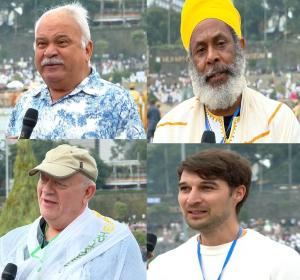
Meskel-Demera Captivates Global Visitors with Ethiopia’s Living Heritage
Sep 27, 2026 10541
Addis Ababa, September 27, 2026 (ENA) —Ethiopia’s Meskel-Demera, the discovery of the ‘True Cross’, celebration has captivated international visitors with its striking blend of faith, culture, history and community. The celebration gives visitors from around the world a rare firsthand glimpse into one of Ethiopia’s most distinctive and enduring religious traditions. For them who gathered in Addis Ababa to witness the festival, Meskel was more than a colorful public celebration. It was an opportunity to experience a centuries-old Christian tradition that remains deeply embedded in Ethiopian society. Approached by ENA, visitors from Jordan, Jamaica, Norway, Germany and Croatia described Meskel as a unique and memorable experience, highlighting the vibrant ceremonies, spiritual atmosphere, warm hospitality and the remarkable participation of people from across society. Michelle Akasheu, a visitor from Jordan, said he was immediately impressed by the warmth of the Ethiopian people and the spiritual atmosphere surrounding the celebration. “I’m Christian, so I’m Catholic. A friend asked me to join him today to see this beautiful festival, which I really love,” Akasheu said. He said attending Meskel gave him a rare opportunity to witness Ethiopia’s longstanding Christian tradition in a deeply communal setting. “Christianity is very, very old in this country, and it is embedded in the spirit of the people here,” he said. The participation of priests and the wider community, he added, made the celebration particularly distinctive. Having previously visited the Vatican and attended other religious events, Akasheu said Meskel offered an experience closely connected to Ethiopia’s unique Christian heritage. He also expressed interest in exploring the country beyond Addis Ababa, particularly its rock-hewn churches, monasteries and other historic sites. “There is a lot to be seen here,” he said, encouraging greater international promotion of Ethiopia’s cultural and religious heritage. For Jamaican visitor Njkita Nkruma Lindsay, who has lived in Ethiopia for about 19 years, Meskel carries a particularly deep spiritual and cultural meaning. Lindsay, who described herself as an Orthodox Christian, said Ethiopia represents freedom and a sense of belonging for people of African descent whose ancestors were taken away during the transatlantic slave trade. “For us, Ethiopia is the land of freedom — freedom in every way, religious freedom and physical freedom,” she said. He said Meskel vividly reflects the enduring place of Christianity in Ethiopian cultural life and brings large numbers of people together in a shared celebration. “Meskel is representing Christianity. It’s the finding of the True Cross,” Lindsay said. What makes the festival especially distinctive, she added, is its nationwide character and the way it brings communities together through both faith and cultural tradition. “In Ethiopia, celebrating Meskel is for every Christian,” she said. Lindsay encouraged people from around the world to visit Ethiopia and experience the festival themselves. For Norwegian tourist Jorulf Husbyn, Meskel was an unexpected highlight of his first visit to Ethiopia. “We didn’t know it was a festival, so we wanted to stop in Ethiopia on our way to Southern Africa and explore the culture, geography and history. So this is our lucky day to come by this festival,” Husbyn said. The unexpected encounter gave him a memorable introduction to Ethiopia’s cultural and religious traditions. Husbyn said he was impressed by the colorful celebration, the people and the atmosphere surrounding the event, describing it as an opportunity to discover another dimension of Ethiopia’s history and culture. As a Christian and Lutheran, he said witnessing Meskel was particularly meaningful. “I’m very excited to be here, to see and explore the culture and this part of Christianity,” he said. He also praised Ethiopia’s natural landscapes, history and hospitality, saying the country offers rich experiences for travelers interested in culture and heritage. German visitor Andreas Schaible, who was in Ethiopia for the second time, said Meskel was his first experience of the festival and offered him another perspective on Ethiopian culture. “It’s very interesting to see the differences between the culture in Germany and in Ethiopia,” Schaible said. Having lived and worked in Addis Ababa, he said he had become increasingly interested in the country’s traditions and public celebrations. “It’s very good for me to learn about the culture here in Ethiopia,” he said, emphasizing the value of understanding both cultural differences and similarities. Schaible also pointed to Ethiopia’s traditions, food and coffee as some of the experiences that make the country distinctive as a tourist destination. His family, he added, plans to visit Ethiopia in the future. For Croatian visitor Zvonimir Rakigjija, Meskel was not simply a new cultural experience but a return to a country with which he has a decades-long connection. Rakigjija lived in Ethiopia from 1966 to 1973 and attended St. Joseph’s School. He returned to the country with his wife to revisit its festivals, traditions and places that had remained important to him. He praised Ethiopia’s people, landscapes and cultural heritage and encouraged visitors to venture beyond Addis Ababa to experience the country’s diverse communities and scenery. From first-time visitors unexpectedly encountering the festival to those returning after decades, the international guests shared a common impression: Meskel offers an experience that goes beyond watching a religious ceremony. It brings Ethiopia’s living heritage into the public space—where faith, history, culture and community converge around the Demera, creating a celebration that visitors can witness, experience and remember. For international tourists, Meskel is therefore not simply a festival on Ethiopia’s calendar. It is a vivid gateway into the country’s enduring cultural and spiritual identity.

Ethiopia, India Orthodox Churches Spiritually Very Near, Says Patriarch Baselios Marthoma Mathews III
Sep 26, 2026 7903
Addis Ababa, September 26, 2026 (ENA) —Ethiopia and India are geographically distant, but our churches are spiritually very near, with their Orthodox churches united by a common apostolic faith, Patriarch of the Malankara Orthodox Syrian Church of India, His Holiness Baselios Marthoma Mathews III, said. Speaking at the Demera celebration in Addis Ababa today, the Patriarch said the Ethiopian Orthodox Tewahedo Church and the Malankara Orthodox Syrian Church belong to the family of Oriental Orthodox Churches and share a spiritual heritage shaped by the Eucharist, fasting, prayer, asceticism, the communion of saints and the cross of Christ. “Our nations are geographically distant, but our churches are spiritually very near,” he noted, emphasizing that the bond between the two churches is rooted not primarily in diplomacy or institutional relations, but in their common apostolic faith. His Holiness Baselios Marthoma Mathews III said the relationship between the two churches has developed through decades of visits, theological cooperation and exchanges, recalling the 1965 gathering of heads of Oriental Orthodox Churches in Addis Ababa as a significant milestone in the history of their fellowship. He also highlighted the contributions of theologians and clergy from the Malankara Orthodox Church to theological education and fellowship in Ethiopia, as well as reciprocal visits by the heads of the two churches. The Patriarch further recalled that a bilateral agreement between the two churches was formally signed during the 2017 Meskel celebration in Ethiopia, describing the occasion as a significant expression of their historic friendship and shared apostolic inheritance. According to him, Meskel’s inscription on UNESCO’s List of the Intangible Cultural Heritage of Humanity appropriately recognizes its role in bringing together people across communities and generations while fostering reconciliation, social cohesion and peaceful coexistence. For Orthodox Christians, the Patriarch said, Meskel represents more than cultural heritage, describing it as “living faith” and worship centered on Christ. This celebration demonstrates the unifying and reconciling message of the cross, which brings people together and directs them toward God and one another, he added. “The cross gathers us. The cross reconciles us.” His Holiness Baselios Marthoma Mathews III concluded: “For us Orthodox Christians, Meskel is still more. Before it is cultural heritage, it is living faith. Before it is spectacle, it is worship. Before it belongs to history, it belongs to Christ.”

Ethiopian Orthodox Patriarch Calls for National Peace Through Unity, Reconciliation
Sep 26, 2026 6802
Addis Ababa, September 26, 2026 (ENA) —Patriarch of the Ethiopian Orthodox Tewahedo Church, His Holiness Abune Mathias, has called on Ethiopians to work earnestly for comprehensive national peace by overcoming obstacles to unity and progress with patience and foresight. In his fatherly message delivered during the Meskel Demera celebration at Meskel Square in Addis Ababa, Abune Mathias stressed the importance of unity, progress and a shared commitment to reconciliation. “The primary message of the Cross is to establish peace and unity, forgiveness and reconciliation, as well as love and harmony among all mankind,” Abune Mathias said. He urged Ethiopians to confront challenges that hinder national unity and progress with patience and farsightedness, stressing the need for sustained efforts to achieve lasting peace and unity across the country. The Patriarch said the message of Meskel and the Cross carries a universal call for peace, forgiveness, reconciliation and harmony, the Patriarch described as essential to Ethiopia’s pursuit of national unity and peaceful coexistence. The Demera ceremony was colorfully celebrated at Meskel Square, bringing together Holy Bishops, senior government officials, foreign ambassadors and diplomats, international visitors, church followers and members of the wider community. The celebration placed Ethiopia’s centuries-old religious and cultural heritage at the center of a powerful message of peace, unity and reconciliation.
.jpg)
Meskel-Demera Festival Serves as Shared Value that Elevates Nat’l image, Cultural Wealth: Mayor Adanech
Sep 26, 2026 6168
Addis Ababa, September 26, 2026 (ENA) —Meskel-Demera festival is serving as a shared value that elevates Ethiopia’s national image and cultural wealth across the world, Addis Ababa Mayor Adanech Abiebie said. Addressing the Demera celebration at Meskel Square today, the Mayor stated that the Meskel-Demera festival, one of the most vibrant public celebrations in the city, is a great festival which has been celebrated for centuries while preserving its religious essence and shining brightly in our culture. The holiday, while maintaining its religious and cultural significance, encompasses many cross-generational and holistic benefits, Adanech underscored. Recalling the official registration of Mesquel-Demera by the UNESCO as an intangible cultural heritage of humanity, she said it serves as a shared value that elevates Ethiopia's image and cultural wealth across the world. For Ethiopians, the holiday holds a profound meaning in their daily lives and all joint activities, the Mayor emphasized. “Even though each of us has a distinct culture, language, religion, and identity, we become unbreakable force that overcomes darkness for both the city and country as we stand together like the Demera, walk hand-in-hand, and strengthen our unity.” According to her, the city of Addis Ababa has recently been cited as a center of global attraction, a symbol of cleanliness, and an example of urban transformation achieved in a short period of time. The Mayor also noted that the hosting of many tourists who visit the city warmly showcases the manifestation of Ethiopian hospitality. The ability of hosting such great national and international events as well as holidays underscore the city's capacity to successfully lead and accommodate huge functions. Holding of great events like these show the city's competence, civility and beauty thus creating capacity for even greater attraction—not just because the government worked alone; but because we stood and cooperated together, she stressed.
Economy
Economic and Financial Reforms Moving Ethiopia from Stabilization to Economic Transformation: DPM Temesgen
Sep 29, 2026 89
Addis Ababa, September 29, 2026 (ENA) — Ethiopia has been pursuing economic and financial reforms that aim at moving the country from stabilization to economic transformation, Deputy Prime Minister Temesgen Tiruneh said. Opening the second Ethiopia Finance Forum, the DPM said the country has undertaken major reforms in the foreign exchange market, monetary policy and financial-sector regulation, while opening sectors to competition and investment. “Nations do not transform themselves by choosing only what is easy. They transform themselves by doing what is necessary, and by sustaining that course long enough for reform to become institutions, for institutions to create confidence, and for confidence to create opportunity,” he elaborated. Deputy Prime Minister Temesgen pointed to improvements in exports, reserves and government revenues as well as easing inflationary pressures. He also noted improved access to foreign exchange and the easing of constraints affecting private investment. The success of reforms should however be ultimately measured by their impact on citizens, he added, stressing that farmers, young people, women entrepreneurs and MSMEs should be able to access finance and expand their businesses. According to the DPM, capital is more than money and all depends on confidence in institutions, laws, markets and policy credibility. “Our response to uncertainty will not be retreat. It will be stronger institutions. Our response to pressure will not be abandonment of reform. It will be deeper reform. And our answer to those who doubt Ethiopia’s future will not be rhetoric alone; it will be results,” he noted. The next phase of reform will focus on moving from stabilization to transformation through expanded financial inclusion, agricultural finance, investment and deeper financial markets, Temesgen announced. The agenda also includes housing finance, insurance, depositor protection and modern financial-market infrastructure. Moreover, he highlighted digital transformation, cybersecurity, consumer protection and financial literacy as key elements of the financial-sector reform agenda. The government cannot deliver the transformation alone, the DPM stated, calling for stronger cooperation among the private sector, financial institutions, investors and development partners. Ethiopia’s growing domestic market, young population and potential in agriculture, manufacturing, energy and services create significant opportunities. Temesgen stressed that economic growth must be inclusive and extended to financing opportunities to women, youth, farmers, MSMEs and communities beyond major cities. “Our task is therefore not merely to make finance larger. It is to make finance work better—more competitive, more innovative, more inclusive, more resilient, and more deeply connected to the productive economy.” The DPM urged forum participants to identify practical solutions and make concrete commitments, stressing that policies deliver results only through implementation. He reaffirmed the government’s commitment to macroeconomic stability, responsible reform and a competitive private sector that expands opportunities for Ethiopians. The three-day Ethiopia Finance Forum, running from September 29 to October 1, has brought together policymakers, financial institutions, investors, development partners and private-sector leaders.

Toronto Expo Opens New Path for Ethiopia–Canada Coffee Trade
Sep 29, 2026 1919
Addis Ababa, September 29, 2026 (ENA) —An international coffee expo in Toronto has brought together Ethiopian coffee exporters and Canadian buyers in a bid to expand bilateral coffee trade and unlock new market opportunities. Organized by the Embassy of Ethiopia in Canada, the expo brought together Ethiopian coffee exporters, Canadian coffee importers, business leaders, industry experts, diplomats and other key stakeholders to promote Ethiopia’s coffee sector and forge stronger business-to-business (B2B) partnerships. Opening the event, Ethiopian Ambassador to Canada Tewodros Girma said that despite Ethiopia’s immense coffee potential, direct coffee trade with Canada remains limited compared with the size and capacity of the Canadian market. He underscored the strong demand for coffee in Canada and the global reputation of Ethiopian coffee. Ambassador Tewodros further stressed the need to establish stronger and more direct connections between Ethiopian exporters and Canadian buyers. Representing the Coffee Association of Canada, Anna Mancini highlighted the significant potential of the Canadian coffee market and expressed the association’s readiness to work with Ethiopian coffee exporters to deepen collaboration and open new opportunities. The expo provided a platform for direct trade networking, allowing Ethiopian exporters to engage with Canadian importers and industry stakeholders and explore opportunities to expand Ethiopia’s coffee presence in the Canadian market. In its press release sent to ENA, Ethiopian Embassy in Canada noted that the initiative highlights growing efforts to translate Ethiopia’s globally recognized coffee heritage into stronger direct trade links and expanded access to international markets.
Egypt's Escalated Nile Rhetoric to Domestic Economic Pressures, Journalist Zahid says
Sep 28, 2026 5471
Addis Ababa, September 28, 2026 (ENA) —Egypt’s escalating media and political rhetoric over the Nile is partly aimed at diverting public attention from mounting economic and livelihood pressures, journalist and writer Zahid Zidan said. In an exclusive interview with POA, Zahid pointed to rising living costs and economic difficulties in Egypt, saying the Grand Ethiopian Renaissance Dam (GERD) and Nile water issues have increasingly featured in the country’s political and media discourse. His comments come amid continued economic challenges identified by international financial institutions. In a September 21, 2026 assessment, the International Monetary Fund (IMF) said Egypt had shown resilience to recent external shocks but that significant vulnerabilities remained, including high public debt and large financing needs. The IMF has also projected inflation to rise to about 16.7 percent in the second half of 2026, citing higher energy prices, exchange rate pressures and other factors “They want to manufacture anything, any kind of material, a dark weapon to distract the Egyptian public,” Zahid said, arguing that heightened rhetoric over the Nile is being used to shift attention from domestic challenges. He cited what he described as claims in some Egyptian media outlets concerning the potential effects of GERD, as well as allegations that Ethiopia intends to transfer water to Israel. According to Zahid, such narratives contribute to keeping the dam at the center of public debate. He stressed that his criticism was directed at Egyptian media platforms and political figures whom he accused of exploiting external disputes, rather than at the Egyptian people. He said ordinary Egyptians are primarily concerned with everyday challenges, including meeting basic needs, earning livelihoods and supporting their families. The remarks come amid renewed exchanges between Ethiopia and Egypt over Nile water development. Ethiopia has consistently maintained that it has a sovereign right to develop its natural resources, including the Abay River, while advocating cooperation and shared development among Nile Basin countries. In a September 22 statement responding to remarks by Egyptian Minister of Water Resources and Irrigation Hani Sewilam, Ethiopia’s Ministry of Water and Energy reaffirmed the country’s right to utilize its natural resources and said transboundary rivers should promote “cooperation, shared prosperity, and regional integration.” The completion of GERD has also strengthened calls within Ethiopia for further investment in hydropower and irrigation projects along the Abay River. Supporters of additional development argue that the experience gained from GERD can help expand renewable electricity generation, strengthen energy security, support agricultural development and increase cross-border power connectivity.
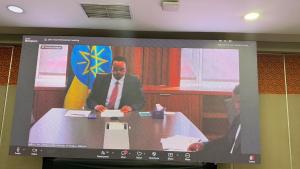
Ethiopia Reaffirms Commitment to Regional Integration at HoAI Ministerial Meeting
Sep 28, 2026 3027
Addis Ababa, September 28, 2026 (ENA) —Ethiopia has reinforced its dedication to deepening regional integration, trade facilitation, and energy cooperation through the Horn of Africa Initiative (HoAI) during a high-level ministerial meeting in Nairobi. Gathering finance ministers from across the region alongside senior development partners, Monday's HoAI Ministerial Meeting served as a platform to advance joint economic cooperation and align on shared development priorities. Addressing the meeting virtually, Ethiopia’s Minister of Finance, Ahmed Shide, spotlighted the nation's key milestones in advancing regional integration. He pointed to the Ethio-Djibouti Refined Petroleum Products Pipeline as a vital project set to bolster energy security and significantly cut logistics costs. According to a press release sent to ENA, the minister also underscored Ethiopia’s leadership through its chairmanship of the Eastern Africa Power Pool Council of Ministers, alongside the full operationalization of the Grand Ethiopian Renaissance Dam (GERD). He also noted that developments will substantially strengthen the country's contribution to clean energy across the region. According to him, the meeting placed particular emphasis on trade facilitation and regional energy integration. He expressed Ethiopia’s support for the outcomes of the Trade Ministers’ Meeting held in Addis Ababa on September 3, including the establishment of a Regional Trade Facilitation Committee. The minister also welcomed findings from a regional energy study and monitoring exercise that identified key barriers to regional integration and indicated that Ethiopia is largely on track in advancing its commitments. As climate related shocks intensify across the region, Ahmed underscored the importance of strengthening resilience. He noted that projects under HoAI Pillar 3 are helping countries shift from emergency responses towards longer term approaches to resilience and development. The minister also welcomed the Arab Bank for Economic Development in Africa (BADEA) as a new HoAI partner, recognizing its longstanding support for infrastructure development in Ethiopia. The participating ministers concluded the meeting by reaffirming trade as a regional priority and emphasizing the need for continued technical discussions among member countries to advance integration initiatives. Launched in 2019, the Horn of Africa Initiative provides a platform for countries in the region and development partners to promote regional integration, economic cooperation and joint responses to shared development challenges.
Videos
.jpg)
.jpg)
.jpg)

Technology
Ethiopia Expaning Digital Transformation in Higher Education
Sep 29, 2026 637
Addis Ababa, September 29, 2026 (ENA) — Ethiopia is expanding digital transformation across higher education institutions, with online, blended and micro-credential learning being introduced as part of the education system, Education Minister Berhanu Nega said. Delivering the key message of the STRIDE Ethiopia 2.0 Summit 2026, Education Minister Berhanu Nega said Ethiopia’s progress in digital infrastructure and legal frameworks must be matched by developing the human capacity needed to translate these advances into economic and social benefits. The digital transformation in higher education is being implemented on a broad scale, enabling university teachers and students to benefit from online, blended and micro-credential learning opportunities, Berhanu said. The expansion of digital learning is helping create opportunities for students to learn beyond traditional campus-based education, he elaborated. Efforts are also underway to strengthen digital literacy among students and teachers, enabling them not only to use digital tools but also to search for, evaluate and create information and apply technology for education and work. Ethiopia has also begun integrating artificial intelligence (AI) technology into the education system, Berhanu said. Teachers are being supported to use AI tools for lesson preparation, content development, student support and assessment. AI is being introduced to strengthen teachers’ capacity rather than replace them, Berhanu said. Significant efforts have been made to digitalize education information systems, including the Education Management Information System (EMIS) and Higher Education Management Information System (HEMIS). The systems are being strengthened to organize and connect data on students, teachers, educational institutions and educational outcomes, supporting a more data-driven education system, he said. Strengthening connectivity and digital infrastructure is another major component of the reform, Berhanu said. This includes connecting universities and schools through networks, strengthening data centers and cloud services, and expanding digital education and research networks, he added. The goal of the reform is to shift the education system from paper-based processes to digital systems, from fragmented information to integrated data, and from traditional learning methods toward digital and AI-supported education. The goal is not to use technology for technology’s sake, but to use technology to improve the quality, accessibility, equity and effectiveness of education, Berhanu said. Berhanu also stressed the need for the education system to adapt to an era in which AI can perform many tasks traditionally associated with memorization. “We cannot continue with an education system that rewards memorization,” he said, emphasizing the need to develop students who can ask questions, think critically, identify problems and work together with machines.
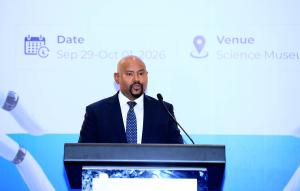
Ethiopia Targets Technological Sovereignty, Digital Transformation
Sep 29, 2026 1267
Addis Ababa, September 29, 2026 (ENA) — Ethiopia is seeking to build national technological capacity by moving from using and adopting foreign technologies toward developing, manufacturing and exporting homegrown solutions, Minister of Innovation and Technology Belete Molla said. Speaking at the opening of the STRIDE Ethiopia 2.0 Summit 2026, Belete said the country must strengthen its capacity to understand, adapt and create technologies as artificial intelligence, biotechnology and space science reshape global competition. “Using foreign technology is no shame; the shame is failing to adapt anything from the technology we use,” Belete said. He said technological sovereignty does not mean isolation, but the ability to choose, adapt, develop and use technology according to the country’s needs while maintaining the capacity to make independent decisions. Belete said technology is also increasingly important for economic competitiveness, national security and data sovereignty, stressing that Ethiopia should maintain the ability to make strategic technological choices while continuing to collaborate with the international community. He also highlighted the government’s efforts to strengthen the startup and innovation ecosystem, noting that the Startup Proclamation provides mechanisms such as a National Startup Fund, regulatory sandbox and special incentives to support emerging businesses and innovation. Belete said Ethiopia has made significant progress in digital transformation over the past five years, moving from analog systems to digital platforms and from isolated government services toward connected digital public infrastructure. He said Digital Ethiopia 2030 will focus on expanding and integrating digital services and delivering measurable improvements in people’s lives, including wider digital identification, digital payments and secure information exchange, while digitally empowering key sectors including agriculture, health, education and manufacturing. “We must digitally empower agriculture, health, education, and manufacturing. The measure of our success will be how much our people’s lives have improved,” he said. The minister also stressed the need for research and innovation to address practical national challenges, including increasing agricultural productivity, saving lives and improving industrial productivity. He said research should move from paper to society, from laboratories to factories and from writing to the market, while Ethiopia should move from purchasing technology to adapting, manufacturing and eventually exporting it. He further emphasized the growing importance of artificial intelligence, biotechnology and space science, urging Ethiopia to develop its own capabilities and ensure that emerging technologies are human-centered, responsible, transparent and inclusive. “Ethiopia has no option to remain a mere spectator in the age of artificial intelligence. No one will build artificial intelligence for us that understands our languages and solves our problems,” he said. Belete said young people are Ethiopia’s greatest wealth in the new technological era and should be developed as programmers, researchers, engineers and entrepreneurs who can build the country’s future. He said Ethiopia’s 50-year journey in science, technology and innovation has laid the foundation for the next phase of national technological development, while the past five years have created momentum for change and the next five years should turn that change into national capacity. The summit is being held from September 29 to October 1 under the theme “Fifty Years Journey, Five Years of Delivery, Fifty Years Ahead,” bringing together government officials, former leaders of the sector, researchers, innovators, entrepreneurs, development partners, technology communities and youth to reflect on Ethiopia’s science, technology and innovation journey and discuss its future direction.
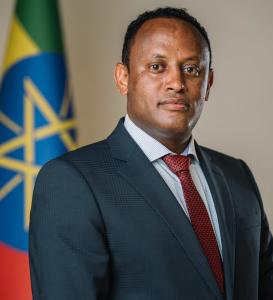
PM Abiy Appoints Abraham Belay as Ethiopian Nuclear Energy Commission Commissioner
Sep 27, 2026 10535
Addis Ababa, September 27, 2026 (ENA) —Prime Minister Abiy Ahmed has appointed Abraham Belay (PhD) as Commissioner of the Ethiopian Nuclear Energy Commission, effective September 14, 2026. Abraham, who has served in several senior government positions, most recently served as Minister of Irrigation and Lowland Areas. His appointment comes as Ethiopia advances its efforts to develop the peaceful use of nuclear energy as part of its broader strategy to expand clean, reliable and sustainable energy sources, it was learned.
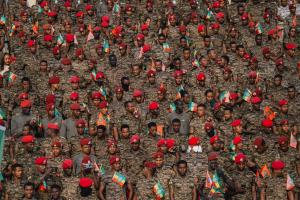
Ethiopian Army's Emergence: A Strategic Insurance for Red Sea and Horn Region Security
Sep 24, 2026 23436
By Guillermo Patria Sept. 24, 2026 (ENA) Ethiopia is undertaking a broad transformation of its national defense system, seeking to build a military that is more professional, technologically advanced, operationally ready and increasingly capable of sustaining itself through domestic production. The transformation reaches across the Ethiopian National Defense Force (ENDF), Air Force, Special Operations Command, defense industries, drone production, military research and education, artificial intelligence and the rebuilding of the country's maritime capability. At its core is a strategic proposition: protecting Ethiopia's sovereignty and national interests requires not only soldiers and weapons, but also strong institutions, technology, industrial capacity and human capital capable of sustaining them. ENDF Chief of General Staff Field Marshal Birhanu Jula has described the reform as a historic transformation aimed at strengthening the force's organizational structure, unity, professionalism, readiness and technological capacity. The objective is therefore not simply to increase military hardware, but to change the character and capabilities of the force. A force adapted to modern warfare The battlefield is changing rapidly. Traditional manpower and conventional weapons remain important, but military effectiveness increasingly depends on information, precision, communications, unmanned systems, artificial intelligence, cyber capabilities, electronic warfare and the ability to make decisions rapidly. Ethiopia's reforms are increasingly responding to this reality. In February 2026, Field Marshal Birhanu described the modernized ENDF in terms of quantity, quality and technology, stressing the need to adapt military capabilities to changing technologies and security threats. The technological shift is also becoming institutional. In August 2026, the ENDF signed an agreement with the Ethiopian Artificial Intelligence Institute to explore AI applications in logistics, military training, cybersecurity, military healthcare, air operations and electronic warfare. Yet technology alone does not create military strength. It must be matched by trained personnel, effective institutions and operational readiness. Ethiopia's reform therefore also emphasizes professional military education, specialized training, engineering and technical expertise. Readiness at the center The ultimate purpose of a defense force is its ability to respond when national interests are threatened. Field Marshal Birhanu has repeatedly emphasized ENDF readiness amid what Ethiopia describes as a complex and changing security environment. In July 2026, he said reforms had strengthened the force's organizational structure and unity while maintaining a high level of readiness and introducing modern military technology. The Special Operations Command represents another dimension of this approach, with military leadership presenting it as a highly capable force designed for rapid response and proactive action against emerging threats. For Ethiopia, the broader objective is clear: national sovereignty must be protected by a force capable of detecting threats, mobilizing rapidly and responding effectively when national interests are at stake. From buying weapons to building them Perhaps the most important part of Ethiopia's defense transformation is taking place away from the battlefield—in factories, laboratories and engineering facilities. Prime Minister Abiy Ahmed has increasingly linked defense manufacturing with economic resilience and technological self-reliance. He has said Ethiopia is developing domestic capabilities to manufacture unmanned aerial vehicles, armored military vehicles, heavy weapons, artillery and ammunition. The significance goes beyond the products themselves. Defense manufacturing requires engineers, technicians, researchers, specialized machinery and reliable industrial systems, creating technological capabilities that can strengthen the wider economy. The Homicho Ammunition Engineering Complex illustrates this trajectory. Its growing production capacity has enabled Ethiopia not only to supply domestic requirements but also to enter foreign markets, with the government reporting ammunition export contracts worth more than 30 million US dollars. The direction is therefore shifting from simply acquiring finished products toward developing the capacity to produce, maintain and improve critical systems domestically. The Air Force and the technology ecosystem The Ethiopian Air Force provides perhaps the clearest example of the transformation. The institution says it has moved from an analog operating environment toward the digital era while expanding aircraft maintenance, upgrading, spare-parts production and unmanned aviation. The significance is that a modern Air Force requires an entire technological ecosystem—pilots, engineers, technicians, maintenance facilities, spare parts, research, communications and digital systems. Ethiopia is increasingly seeking to develop these capabilities locally. The Air Force has reported increased production of components and spare parts while Ethiopian engineers and technicians take greater roles in aircraft maintenance, upgrading and unmanned systems. The objective is therefore not simply to acquire aircraft from abroad, but to develop the knowledge required to operate, maintain, upgrade and eventually develop increasingly sophisticated systems. This also explains the emphasis on human capital. Prime Minister Abiy has stressed that sophisticated aircraft alone cannot create an effective Air Force. Highly trained pilots, engineers, technicians, scientists and commanders are essential to converting technology into military capability. Drones and artificial intelligence Few developments demonstrate the technological shift more clearly than Ethiopia's growing drone industry. The establishment of SkyWin Aeronautics Industries marked an important step in domestic UAV production. Drones bring together aviation, electronics, sensors, communications, software, data processing and increasingly artificial intelligence. In June 2026, the Information Network Security Administration and the Ethiopian Air Force agreed to establish a Drone Technology Center dedicated to research, innovation and development in unmanned aerial systems. The initiative connects defense requirements with research, laboratories, human-capital development and technology transfer—helping create a domestic technological chain from research and engineering to production and deployment. AI represents the next layer of this transformation. The ENDF's cooperation with the Ethiopian Artificial Intelligence Institute is intended to explore AI applications across logistics, training, cybersecurity, military healthcare, air operations and electronic warfare. The broader significance is that Ethiopia's defense modernization is moving beyond hardware toward technologies that can improve how information is collected, processed and used. Fourth-generation capability, fifth-generation ambition Ethiopia's Air Force ambitions extend further. In January 2026, Prime Minister Abiy said the Ethiopian Air Force had developed fourth-generation combat capability and set an objective of moving toward fifth-generation capability by 2030, alongside plans to double the country's combat-aircraft capacity. These are stated government objectives rather than capabilities already fully achieved. Nevertheless, they demonstrate the direction of Ethiopia's military planning: keeping defense capabilities aligned with rapidly evolving technologies while continuing to invest in the human expertise required to operate them. The transformation therefore cannot be measured only by the number of aircraft acquired, but also by the country's ability to operate, maintain, upgrade and increasingly develop sophisticated systems. Land, air and sea Ethiopia's defense transformation also has a maritime dimension. The country lost direct access to the Red Sea following Eritrea's independence, and the Ethiopian Navy was subsequently disbanded. Its reconstruction now forms part of the country's evolving national security architecture. Vice Admiral Kindu Gezu, Commander-in-Chief of the Ethiopian Navy, has highlighted the changing security environment in the Red Sea and Gulf of Aden, including piracy, arms trafficking, irregular migration, insurgent networks and geopolitical competition. For Ethiopia, maritime security has implications beyond naval operations. Trade routes, ports, energy supplies, commercial shipping and regional security are all connected to the wider maritime environment. The Navy consequently adds another dimension to the defense transformation, with land, air, cyber and maritime capabilities increasingly forming part of one national security architecture. Building strategic self-reliance Taken together, these developments reveal the broader direction of Ethiopia's defense reform. The ENDF is being reorganized and professionalized. Specialized forces are being developed around rapid response. The Air Force is expanding its digital, maintenance and engineering capabilities. Domestic drone production is emerging. Defense industries are producing ammunition, armored vehicles and other military equipment. AI is being explored for defense applications, while military universities and laboratories are becoming part of technological research and development. The Navy is rebuilding maritime capabilities. Individually, each represents a military reform. Together, they point toward an effort to build strategic self-reliance. A country cannot guarantee the sustainability of its defense capability if every critical component depends on external suppliers. Domestic production does not eliminate the need for international cooperation or foreign technology, but it can strengthen Ethiopia's ability to maintain essential capabilities, respond to emergencies and develop technologies suited to its own requirements. That is the broader bargain emerging from Ethiopia's defense transformation. The objective is not simply to possess modern weapons. It is to create a defense institution capable of using technology effectively, sustaining its equipment, developing its own technical expertise and responding rapidly when national interests are threatened. The deeper story is therefore being written not only on military grounds, but also in aircraft workshops, drone factories, ammunition plants, laboratories, military academies and technology institutes. The soldier remains at the center. But alongside the soldier stands an increasingly important network of pilots, engineers, scientists, technicians, programmers, researchers and manufacturers. Together, they represent a changing conception of military power. For Ethiopia, the emerging objective is a defense force that is professional in structure, ready in operation, technologically capable and increasingly self-reliant in production. In an era when national security is shaped by technology as much as manpower, the ability to build and sustain that capability may become as important as the weapons themselves. Ethiopia's defense transformation is therefore not simply about building a stronger army. It is about building the technological, industrial and human foundations that enable the country to defend its sovereignty and national interests with greater confidence and readiness.
Sport
.jpg)
WHO RC76 Participants “Walk the Talk” in Addis Ababa, Championing Healthier Africa
Aug 23, 2026 90314
Addis Ababa, August 23, 2026 (ENA) —Participants of the 76th Session of the World Health Organization (WHO) Regional Committee for Africa (RC76) joined a symbolic health walk on Sunday from the Adwa Victory Memorial to Meskel Square in Addis Ababa. The participants also turned the message of “Walk the Talk” into action while promoting physical activity and healthier lifestyles across Africa. Ethiopia’s Minister of Health Dr. Mekdes Daba, African health ministers, senior government officials, WHO leaders and prominent athletes, including Ethiopian Athletics Federation President Commander Sileshi Sihine, took part in the event. The initiative sought to translate health policies and commitments into practical action by encouraging people to make regular physical activity part of their daily lives and strengthening public awareness about the prevention of non-communicable diseases. The walk began at the Adwa Victory Memorial, a landmark symbolizing Ethiopia’s historic victory and African resistance to colonialism, and continued through Addis Ababa’s pedestrian routes before concluding at Meskel Square. Organizers emphasized that regular physical activity plays a vital role in reducing the risk of non-communicable diseases, including diabetes, hypertension and cardiovascular diseases, while contributing to healthier and more active communities. The event also highlighted Africa’s collective commitment to improving public health and demonstrated the importance of moving beyond policy discussions toward tangible, everyday health practices. The 76th Session of the WHO Regional Committee for Africa, scheduled to take place in Addis Ababa from August 24 to 28, 2026, will bring together more than 600 delegates, including health ministers and senior officials from the WHO African Region’s 47 member states, global health leaders, development partners, donors and WHO representatives. Over the five-day session, participants will assess progress toward regional health goals, deliberate on new strategies and resolutions. The session is also anticipated to identify collective actions to strengthen health systems, advance universal health coverage, enhance health security and improve emergency preparedness across the continent. The gathering is expected to serve as a major platform for African countries and global health partners to deepen continental health cooperation and advance practical solutions to Africa’s most pressing health challenges.
National Dialogue Conference to Address Root Causes of Differences through Consultation, Says ENDC Chief
Jul 12, 2026 110224
Addis Ababa, July 12, 2026 (ENA) —The upcoming National Dialogue Conference will serve as a platform to resolve the issues underlying Ethiopia's longstanding differences through peaceful consultation, Chief Commissioner of the Ethiopian National Dialogue Commission (ENDC) Professor Mesfin Araya, said. Speaking at a five-kilometer public race organized by the Commission at Meskel Square under the theme "Ethiopia is consulting" today, Professor Mesfin said the country has finalized all preparations for the landmark conference, which is scheduled to begin on July 15, 2026 in Addis Ababa. "The main national consultation conference will be a place where issues that are the source of our differences will be resolved through consultation," he said. According to the Chief Commissioner, delegates representing communities from every region, all woredas, Addis Ababa, Dire Dawa, and Ethiopians living abroad have already arrived in the capital to participate in the conference. He said participants are expected to engage in inclusive and constructive discussions and work toward consensus on recommendations that offer lasting solutions to issues that have fueled differences among Ethiopians. Professor Mesfin described the conference as a historic opportunity to address national challenges through dialogue rather than confrontation. He also expressed appreciation to security institutions, federal and regional government bodies, civil society organizations, and other stakeholders for their contributions in preparing for what he described as a significant stage in Ethiopia's national dialogue process. Participants in a five-kilometer race also expressed optimism that the conference would help strengthen national unity and foster lasting peace. "There is no problem that cannot be solved through consultation," participant Sherefa Ali said. "I believe the challenges that have persisted in Ethiopia for generations can be addressed through the main consultation conference." He added that such dialogue platforms help build trust between citizens and the government while creating opportunities to work together toward common national goals. Another participant, Gemechisa Waqgari, said the conference represents an important step toward reinforcing peace, unity, solidarity, and democratic values. Participant Tnisae Abebe also voiced hope that the conference would generate practical ideas to address the country's social and economic challenges. The National Dialogue Conference will deliberate on eight broad thematic areas identified during nationwide consultations. The agenda includes nation building, systems of government and governance, the political and electoral system, the status of the federal cities of Addis Ababa and Dire Dawa, religion and state relations, institution building, the rule of law and human rights, socio economic issues including the concerns of farmers and pastoralists, corruption and good governance, as well as peace building. The five kilometer race was attended by Deputy Chairperson of the House of Peoples' Representatives Standing Committee on Democratic Affairs Azmeraw Andemo, Professor Mesfin Araya, senior government officials, representatives of civil society organizations, and members of the public.

Diplomatic Football Participants Praise Ethiopia’s Heritage and Hospitality
Jun 14, 2026 107879
Addis Ababa, June 14, 2026 (ENA) —Participants in a diplomatic football event held in Addis Ababa have praised Ethiopia’s cultural heritage, historical legacy and warm hospitality. The tournament, organized in anticipation of the 2026 World Cup, brought together diplomatic football teams and invited guests who later toured key historical and cultural sites in the city. The delegation visited the Ethiopian National Museum, the Adwa Victory Memorial and Addis Sport Park, gaining what many described as a deeper appreciation of Ethiopia’s past and present development. Several participants said the experience reshaped their understanding of the country. Gordon Johnson, one of the participants, expressed admiration for what he witnessed during the visit. “The people are so welcoming and friendly. I love the culture,” he said. He further stated that: “We had a tour of the museum, and the guide showed us hominid fossils recovered in the ’60s, ’70s, and ’90s that date back millions of years.” Johnson said the experience reflected Ethiopia’s deeper historical significance beyond modern perceptions. Cameroonian guest Loic Kovamo also said the visit challenged her previous perceptions of the country. “I am speechless because I didn’t picture Ethiopia like this. It’s a very developed country, and the people are so proud of who they are,” she said, noting, “I’m going back with a lot of pride as an African because I discovered the incredible courage and bravery of the Ethiopian people.” Mark Hayes, one of the visitors, said his expectations were changed after arriving in Addis Ababa. “You have a perception before you come, but it’s the complete opposite. It’s an amazing country,” he said, adding, “What we do now is go home and tell stories about how good Ethiopia is. I feel like a proud advocate.” He further noted that he intends to share his experience in the United Kingdom, saying he would “educate others in England about what he had seen in Addis Ababa.” Joseph Kirule, who works with the Food and Agriculture Organization of the United Nations in Addis Ababa, highlighted the importance of the historical sites visited. “Today we saw different milestones in human civilization that originated here,” he said, adding, “Most importantly, we learned about the Adwa victory. That is a massive milestone that raises our prestige as Africans.”

Ethiopian Airlines Rises as Africa’s Leading Carrier After Decades of Expansion, Success, Says CEO
May 17, 2026 114123
Addis Ababa, May 17, 2026 —Ethiopian Airlines has solidified its position as Africa’s largest and leading airline after years of sustained growth and operational success, the airline’s Group Chief Executive Officer, Mesfin Tasew, said on Sunday. The remarks were made during an 8-kilometer street race organized as part of celebrations marking the airline’s 80th anniversary. Speaking at the event, CEO Mesfin reflected on the airline’s humble beginnings in 1946, when it launched operations with only a small fleet of aircraft. Since then, he said, the carrier has expanded significantly and now operates one of the continent’s most modern fleets, including advanced aircraft from Boeing and Airbus. According to Tasew, the airline currently serves more than 145 international destinations worldwide and has achieved strong growth across multiple sectors, including cargo transportation, aviation training through the Ethiopian Aviation Academy, and other aviation-related services. He further said the airline’s operational strength and long-term strategic investments have helped make it one of the most preferred carriers in Africa and a major player in the global aviation industry. As part of commemorating its eight decades of operations, Ethiopian Airlines is holding a series of celebratory events, including the street race, panel discussions, exhibitions, and community outreach programs. The anniversary run attracted senior officials, including Sileshi Sihine, President of the Ethiopian Athletics Federation, alongside airline executives and invited guests. The race began at Pushkin Square, commonly known as Sar Bet, and is set to conclude at Bole International Airport. Athletes, airline employees, members of the sporting community, and participants from various institutions are taking part in the event.
Environment
.jpg)
IGAD Hails Ethiopia’s Environmental Restoration Efforts as Regional Model
Sep 22, 2026 20442
Addis Ababa, September 22, 2026 (ENA) — The Intergovernmental Authority on Development (IGAD) has commended Ethiopia’s environmental restoration efforts, noting that the country’s experience offers valuable lessons for other member states seeking to strengthen environmental resilience and sustain community livelihoods. IGAD Deputy Executive Secretary Mohamed Abdi Ware highlighted watershed protection, tree planting, land restoration, and water harvesting among Ethiopia’s key environmental initiatives that could help address climate-related challenges across the region. Speaking to ENA on the sidelines of the IGAD Regional High-Level Forum on El Niño Preparedness for the Horn of Africa, held in Addis Ababa from September 15 to 17, 2026, Ware described Ethiopia’s environmental restoration efforts as very encouraging. “These things that Ethiopia has shown to be a leader really contribute not only to preventing problems in the short term, but will contribute to the long-term health of our environment,” Ware said. He said restoring degraded land, protecting watersheds, planting trees and harvesting water can improve communities’ access to clean water and productive land while reducing the risks of landslides and other environmental hazards, particularly in hilly and mountainous areas. According to Ware, such measures can also help reduce environmentally driven migration and displacement by strengthening communities’ resilience to climate related pressures. He further emphasized that environmental restoration has benefits that extend beyond ecological protection, noting that healthy ecosystems can support sustainable livelihoods and improve the economic wellbeing of communities. Ware said IGAD’s mandate includes facilitating the exchange of knowledge and experiences among member states, enabling countries to learn from successful initiatives implemented elsewhere in the region. In this regard, he identified Ethiopia’s environmental experience as an example that other IGAD member states could study and adapt to their own circumstances. He also noted that Kenya is undertaking significant environmental restoration initiatives. He said expanding such efforts across the region could strengthen environmental resilience while supporting sustainable livelihoods and reducing communities’ vulnerability to climate related shocks. Ware’s remarks came as the IGAD Regional High-Level Forum on El Niño Preparedness for the Horn of Africa brought together member states and stakeholders to strengthen regional preparedness and anticipatory action against climate related risks.

Ethiopia’s Renewable Energy, EV Transition Attracts Nordic Investment Interest
Sep 22, 2026 12448
Addis Ababa, September 21, 2026 (ENA) —Ethiopia’s vast renewable energy resources and rapid shift toward electric mobility are drawing growing interest from Nordic investors and technology companies, according to industry stakeholders. The remark was made on the sidelines of the Nordic Africa EV Summit, held in Ethiopia from September 14 to 16, which brought together regional and international stakeholders to discuss electric mobility, charging infrastructure, and investment opportunities. Hosaena A. Samuel, CEO and co-founder of Easy Power, a Norwegian firm and Ethiopia’s first private electric vehicle charging operator, noted that Nordic investors are particularly focused on the country’s accelerating EV adoption and high potential for clean energy. According to Hosaena, more than 20 Nordic financiers engaged with Ethiopian officials and industry leaders during the summit to explore potential investments in grid reliability and EV charging infrastructure. The interest also extends to Nordic technology and technical expertise, which could help build resilient charging networks. She noted that Nordic partners were particularly impressed by Ethiopia’s bold policy decision to phase out internal combustion engine vehicles in favor of electric mobility, backed by its rich renewable resources. Nordic countries have extensive experience in developing EV charging infrastructure and reliable electricity systems, Hosaena said, adding that this expertise could offer valuable lessons as Ethiopia expands its national charging grid. She highlighted the Grand Ethiopian Renaissance Dam (GERD) and major wind power projects as key drivers drawing Nordic attention. Beyond infrastructure, she emphasized that Ethiopia’s expanding EV market opens strong avenues for technology transfer and bilateral investment. Echoing this sentiment, Kumeel Alsmail, Nokia’s Head of Industrial Solutions for the Middle East and Africa, noted that Africa’s growing EV ecosystem will unlock further opportunities for digital and technological cooperation between African nations and Nordic firms. Speaking to ENA on the sidelines of the event, Alsmail emphasized that reliable connectivity will be critical to powering EV charging networks, especially as nations work toward regional electric mobility corridors. He highlighted prospective corridors connecting Ethiopia, Djibouti, and Kenya, noting that these routes could support both passenger vehicles and electric heavy-duty transport. Alsmail stated that Nokia sees strong opportunities to supply digital connectivity solutions for charging networks, while stressing that Ethiopia’s growing renewable generation capacity must be paired with robust transmission and distribution systems. The summit highlighted the vital intersection of renewable energy, electric mobility, digital connectivity, and infrastructure, with participants agreeing that cross-border technology partnerships and private investment will be essential to driving Africa’s clean energy transition.
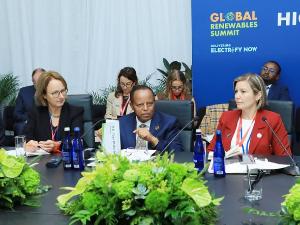
President Taye Urges Global Shift from Renewable Generation to Electricity Delivery
Sep 21, 2026 22876
Addis Ababa, September 21, 2026 (ENA) —Ethiopia’s President Taye Atske Selassie called for a fundamental shift in the global renewable-energy agenda—from simply expanding power generation to building the grids, storage, financing and productive systems needed to turn clean electricity into economic transformation. Addressing the “Delivering Electrify Now” High-Level Leaders Dialogue of the Global Renewables Summit in New York, President Taye said countries endowed with abundant renewable resources need stronger international support to convert their energy potential into reliable electricity access, industrial growth and inclusive prosperity. “Generation without grids, storage and robust utility capacity cannot drive economic transformation,” the President said, stressing that international financing must support the entire electricity value chain—from generation and transmission to distribution, storage and last-mile connections. The Global Renewables Summit, held during Climate Week NYC alongside the UN General Assembly, is bringing together political leaders, businesses, investors and international institutions to accelerate renewable-powered electrification and address the infrastructure and investment barriers slowing the energy transition. President Taye said Ethiopia brings substantial renewable-energy potential to the global discussion, with more than 95 percent of its installed generation capacity coming from renewable sources. He highlighted the Grand Ethiopian Renaissance Dam (GERD) and other renewable-energy investments as key foundations for expanding electricity access and powering the country’s industrialization. He outlined three interconnected priorities for Ethiopia: expanding and diversifying renewable generation, with installed capacity targeted to reach up to 14,000 MW by 2030 and non-hydro renewables accounting for at least 15 percent; using clean and affordable electricity to strengthen industrial competitiveness, including through industrial parks; and pursuing macroeconomic and energy-sector reforms to attract greater private investment, including increased private-sector participation in transmission and distribution. But the President emphasized that finance remains the critical link between renewable-energy potential and actual development. He called for more bankable projects supported by public resources and international partners, including the World Bank, African Development Bank and the European Union through Global Gateway. Particular attention, he said, should go to transmission infrastructure, substations, grid reinforcement, reconductoring and last-mile connections. President Taye cited Ethiopia’s experience financing the GERD through domestic resources and broad public mobilization as an example of the importance of national ownership and commitment. At the same time, he stressed that international financial cooperation remains essential for developing countries seeking to build modern, reliable and interconnected electricity systems. He expressed appreciation for international support to Ethiopia’s power sector, including the European Union’s RISED programme, as well as assistance from the World Bank and African Development Bank in modernizing, rehabilitating and digitalizing electricity infrastructure. The President also warned that the global energy transition cannot deliver its full promise if renewable investment remains concentrated in a limited number of wealthy regions. For developing countries, he said, the ambition must go beyond generating renewable power: from energy potential to electricity access, from access to productive use, and from productive use to industrialization and job creation. As Ethiopia prepares to host COP32 in Addis Ababa in 2027, President Taye said the country will work to help ensure that global climate and renewable-energy commitments translate into concrete implementation across Africa. His message comes as the international renewable-energy agenda increasingly focuses not only on expanding generation but also on scaling grids, storage and electrification to make clean power usable across economies.
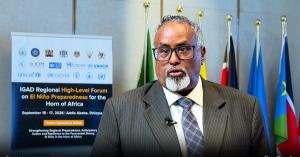
Anticipated El Niño Threat Now a Question of Action, Not Prediction: IGAD
Sep 19, 2026 23697
Addis Ababa, September 19, 2026 (ENA) — With forecasts pointing to an El Niño event in December, IGAD says the priority has shifted from prediction to preparedness. El Niño is a climate phenomenon associated with unusual warming of Pacific Ocean waters. Speaking to ENA on the sidelines of the IGAD Regional High-Level Forum on El Niño Preparedness for the Horn of Africa, held in Addis Ababa from September 15 to 17, 2026, IGAD Deputy Executive Secretary Mohamed Abdi Ware stressed the need for urgent action based on scientific forecasts. “We are saying it's not a question of if, it's a question of ‘what do we do now?’” he said, underscoring the importance of timely preparedness. He also expressed confidence in the accuracy of climate information provided by the IGAD Climate Prediction and Applications Centre (ICPAC), noting that the previous May forecast was “almost exactly as predicted.” That confidence, he said, should encourage governments and other stakeholders to act early rather than wait for the impacts to unfold. The consequences, he noted, extend far beyond climate statistics, affecting people, livelihoods and communities across the region. Possible impacts include reduced grazing access for pastoral communities, livestock diseases, crops rotting in fields before harvest, damaged infrastructure and isolated communities. “These are not just figures. These are real people and real communities that will be impacted by this phenomenon,” he said. Presentations from IGAD member states showed that countries are already taking steps to prepare for the anticipated impacts, he said, adding that each state must tailor its measures to the specific risks it faces. ICPAC’s regional climate outlook has forecast wetter-than-normal conditions across much of the Greater Horn of Africa during the October–December 2026 season, with excessive rainfall expected to heighten the risk of flooding, crop losses and damage to critical infrastructure. The response will require financing to ensure that preparedness measures are implemented before the impacts materialize. “These activities will need financing,” he said, calling on development partners and finance ministries in IGAD member states to work with national disaster risk management agencies to mobilize local resources. Such resources would help countries take timely measures to protect vulnerable communities, he added. “After all, it is our people that will be impacted,” he said. Beyond preparedness, IGAD will continue facilitating knowledge and experience sharing among member states to strengthen climate-risk responses. Countries with effective response measures can offer lessons for others in the region and help scale up successful approaches, he said. Coordinated action among member states is essential, he added, because the anticipated impacts will affect countries and communities differently. Reliable scientific forecasts, he said, give the region an opportunity to move from reacting after disasters strike to taking timely action based on early warning. The immediate priority is to translate scientific information into practical preparedness measures capable of protecting people, livelihoods and communities from the anticipated El Niño impacts.
Most viewed
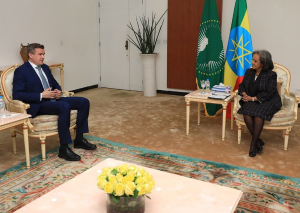
President Sahle-Work Holds Discussion with World Anti-Doping Agency President Bonka
Mar 29, 2023 310490
Addis Ababa March 29/2023/ENA/ President Sahle-Work Zewde has received a delegation led by World Anti-Doping Agency (WADA) President Witold Bonka today, according to the Office of the President. The discussion centered on the conditions under which Ethiopia and the World Anti-Doping Agency can work closely in anti-doping control and investigation, and how the organization can provide technical support, it was learned. During the discussion, Sahle-Work said that Ethiopia has a long history in athletics and is known in the world since athlete Abebe Bikila won marathon in Rome. She finally thanked the World Anti-Doping Agency for its technical support in anti-doping control.
Ethiopian Diaspora Demand Egypt to Change Counterproductive Posture on GERD
Apr 4, 2023 250069
Addis Ababa April 4/2023 (ENA) Ethiopians in the Diaspora have called on Egypt to change its counterproductive posture and find mutually beneficial agreements on the Grand Ethiopian Renaissance Dam (GERD). In a statement the diaspora issued yesterday, they noted that Ethiopia is the main source of the Nile by contributing 86 percent of the water to the Nile basin states while utilizing less than 1 percent of the potential for hydroelectric power. Ethiopians are currently building the GERD on the Blue Nile that is financed entirely by Ethiopians and is a crucial project for the country's development as it will provide clean, renewable energy and lift millions out of poverty. About 65 percent of the 122 million of Ethiopia's population have no access to any form of electricity. The much-needed electricity will facilitate economic growth for Ethiopia and the region, the statement elaborated. The dam will promote regional cooperation and integration while offering opportunity for eleven countries of the Nile Basin to work together to manage the river's resources more efficiently and effectively, it added. The GERD is being built with the highest environmental and technical standards to achieve the objectives of the national electrification program and the execution of Ethiopia’s Climate-Resilient Green Economy Strategy. According to the statement, Ethiopia has provided scientific evidence and expert testimonies that GERD will not significantly affect the flow of water downstream, and provided compelling arguments for the need for equitable use of the Nile's resources by all countries in the region. The diaspora further said they understand that the GERD has raised concerns in Egypt about the downstream effects on the Nile's flow and water availability since Egyptians have been misinformed about the GERD for many years. But on the contrary, the dam will provide several benefits to Egypt and Sudan, including increased water flow during dry seasons and decreased flooding events. “We want to assure Egyptians that Ethiopians are committed to fair and equitable use of the Nile's waters without harming our downstream neighbors. We recognize that the Nile River is a shared resource, and we support finding a mutually beneficial solution.” As Ethiopians in the Diaspora, we reiterate our support for fair and equitable use of the Nile River and call on the Egyptian people and Egyptian Diaspora to question the misinformation about the GERD in Egypt's mainstream media and embrace the spirit of friendship and cooperation by understanding that the GERD is a project of great national importance to Ethiopians that will benefit Egyptians by ensuring a reliable and predictable supply of water, that Ethiopians have the right to use their water resources for the development of its people and economy, in accordance with the principles of equitable and reasonable utilization without causing significant harm. Efforts to destabilize Ethiopia by the regime in Egypt, will indeed affect the historical and diplomatic relations dating back to several thousand years, the long-term interest of the Egyptian people and make Ethiopians less trusting in cooperating on the GERD and future hydropower projects on the Nile, they warned. The diaspora groups urged Egyptian leaders to engage in constructive dialogue with the leaders of Ethiopia regarding the GERD and steer away from their counterproductive posture of calling for a “binding agreement” on the GERD filling and the subsequent operations as an imposing instrument on water sharing that Ethiopians will never accept. The GERD can be a source of cooperation and collaboration between our two countries rather than a source of conflict, they underscored. "Ethiopians believe that, through dialogue and understanding, peaceful and equitable agreements that benefit all parties involved can be realized to build a brighter future for all people in the Nile basin. Belligerent positions by Egyptian leaders stating ‘all options are open’ are contrary to the spirit of the 2015 Declaration of Principles signed by Ethiopia, Sudan and Egypt." According to the statement, such postures will surely harm Egypt's long-term interest and impede trustful cooperation with the Ethiopian people and government. They asked Arab League and its member states to refrain from interfering in the issue of the GERD, which is the sole concern of the three riparian countries (Ethiopia, Sudan and Egypt) and their shared regional organization (the African Union), which is mediating the talks to find ‘African Solutions to African Problems.’ The issues remaining on the table at the trilateral negotiations under the auspices of the African Union are being narrowed to a handful of critical matters on equity and justice, on which the Arab league nations have no business or legal right to be involved.

Ethiopia's Ayana Takes Paris Win on Marathon Debut
Apr 2, 2023 249161
Addis Ababa April 2/ 2023 (ENA) Ethiopia's Abeje Ayana won the men's race at the Paris Marathon on Sunday in his first competitive run over the distance. The 20-year-old Ayana won with a time of two hours, seven minutes and 15 seconds, 20 seconds ahead of compatriot and pre-race favourite Guye Adola with Kenya's Josphat Boit a further five seconds back in third. After clocking 59:39 in a half marathon in Poznan, Poland in 2021, Ayana was one of the men to watch on a grey, windy morning in the French capital, Reuters reported.
Africa’s Sustainable Growth Hinges on Science, Technology and Innovation: Experts
Mar 3, 2023 246387
Addis Ababa March 3/2023/ENA/ Achieving the ambitious targets of the 2030 and 2063 Agendas of Africa requires leveraging the power of science, technology, and innovation (STI), according to experts. A press release issued by the ECA stated experts at the Ninth African Regional Forum on Sustainable Development have emphasized the crucial role of STI as a key driver and enabler for ensuring economic growth, improving well-being, mitigating the effects of climate change, and safeguarding the environment. They also underscored the need to strengthen national and regional STI ecosystems by fostering innovation, promoting entrepreneurship, and investing in research and development. By doing so, the experts said that Africa can harness the potential of STI to accelerate its socio-economic progress and achieve the Sustainable Development Goals (SDGs) by 2030 and the African Union's Agenda by 2063. The session, held on 2 March 2023, builds on the recommendations of the Fifth African Science, Technology, and Innovation Forum, which accentuates the central role of STI and digitalization during the COVID-19 pandemic and the need for the necessary infrastructures for the development of STI, plans, and policies that are action-oriented towards strengthening its full implantation. The experts highlighted that despite advances in STI, significant gaps remain in bridging the scientific and technological divide between developed countries and Africa. The highly uneven global distribution of scientific capacity and access to knowledge threatens to derail the goal of leaving no one behind, which is the central and transformative promise of Agenda 2030. “We need a clear political will from governments to ensure science, technology, and innovation is a reality. By doing so our education systems will be capacitated to deliver knowledge that is vital to solving Africa’s sustainability challenges,” Niger Higher Education and Research Minister Mamoudou Djibo said. The strategy includes the establishment of universities as centers for excellence and investments in education, technical competencies, and training in the fields of science, technology, research, and innovation. These initiatives are crucial in accelerating progress towards achieving global goals. However, in order to fully leverage the potential of STI, significant investments in research and development are required. National systems also need to be strengthened, Namibia Information and Communication Technologies Deputy Minister Emma Theophilus, stated adding that “strengthening our national systems for STI is a key game changer for rapid structural transformation in Africa. Leveraging the digital transformation can achieve a stronger, smarter, and more inclusive recovery.” Emerging evidence suggests that an STI and digital Africa can be a springboard to accelerate the implementation of the SDGs and fulfill the aspirations of Agenda 2063.
Feature Article
Navigating the 2026 El Niño: Turning Forecasts into Early Action in the Horn of Africa
Sep 29, 2026 470
By Gizachew Meku The Horn of Africa is approaching the final months of 2026 with an increasingly important climate signal that is a strengthening El Niño that could bring substantially wetter conditions to parts of the region while increasing the risks of flooding, landslides, crop damage, disease outbreaks and infrastructure disruption. El Niño is a recurring climate phenomenon in which unusually warm sea-surface temperatures in the central and eastern tropical Pacific alter atmospheric circulation, affecting rainfall and temperatures far beyond the Pacific. Its impacts vary by region and season, making it an important factor in seasonal forecasting and preparedness. For the Horn, the latest forecasts show that the region faces neither a uniformly wet nor uniformly hazardous season. Rather, the impacts are likely to vary significantly by location, timing and intensity of rainfall. This makes the ability to translate forecasts into timely, localized decisions more important than simply predicting whether the coming season will be wet or dry. The World Meteorological Organization (WMO) reported in September that El Niño is firmly established and expected to strengthen to a very strong event toward the end of 2026. WMO forecasts indicate an exceptionally high likelihood, nearly 100 percent, that the phenomenon will persist through February 2027. The organization has also warned that the combination of El Niño and other oceanic conditions could produce significant changes in rainfall and temperature patterns, increasing the risk of extreme weather in different parts of the world. For the Greater Horn of Africa, the latest regional outlook provides a more specific picture. The IGAD Climate Prediction and Applications Centre (ICPAC) forecasts a 90 percent likelihood of enhanced October to December rainfall over southern Ethiopia, central and southern Somalia and northeastern Kenya. It also identifies a high likelihood of seasonal rainfall exceeding 400 millimeters in parts of central and southern Somalia, central Kenya, the Lake Victoria Basin, Burundi, western Rwanda and western Tanzania. The October to December season is particularly important for several countries in the region. ICPAC notes that it can account for up to 70 percent of annual rainfall in parts of Ethiopia, Kenya and Somalia and up to 40 percent in parts of Rwanda, Burundi, Tanzania and Uganda. Consequently, the quality and distribution of these rains can have major implications for agriculture, livestock, water availability and food security. The Dual Nature of the Forecast The forecast presents both opportunities and risks. For communities affected by water shortages and poor pasture conditions, increased rainfall could replenish rivers, reservoirs and groundwater, regenerate grazing areas and improve crop and livestock production. In agricultural areas, timely and well distributed rainfall could support planting and crop development while improving household and market food supplies. However, rainfall that arrives too intensely or over a short period can produce the opposite result. Heavy downpours can overwhelm drainage systems, cause flash floods and landslides, erode farmland, damage crops and disrupt roads, bridges, schools, health facilities and markets. Flooding can also contaminate water sources and increase the risk of waterborne diseases. ICPAC's latest outlook therefore emphasizes that seasonal forecasts must not be interpreted as a guarantee of rainfall at a particular location or on a particular day. The centre recommends using the seasonal outlook together with weekly and monthly forecasts, climate monitoring information and forecasts issued by national meteorological and hydrological services. Temperature presents another dimension of the risk. ICPAC expects warmer than average conditions across much of the Greater Horn, while WMO's global outlook also points to widespread above normal temperatures during the September to November period. The combination of heat and heavy rainfall can create complex pressures. High temperatures can increase water demand and stress livestock, while intense rainfall can produce flooding and disease risks. In other words, a wetter season does not automatically eliminate the effects of drought or climate vulnerability. Ethiopia illustrates this complexity. Southern parts of the country are among the areas where enhanced October to December rainfall is anticipated. Such rains could support agricultural and livestock activities, particularly where communities have experienced water and pasture pressures. At the same time, intense rainfall could produce localized flooding, waterlogging, soil erosion and damage to roads and other infrastructure. The same combination of opportunity and risk extends across Somalia, Kenya, Uganda, Rwanda, Burundi and Tanzania. The precise consequences will depend on where rainfall occurs, when it arrives and how rapidly it accumulates. The central question, therefore, is not simply what El Niño will bring. It is whether governments, humanitarian agencies, farmers, pastoralists and communities can act on the available information before forecast risks become humanitarian and economic emergencies. From Forecasts to Decisions The existence of a forecast creates a valuable window for early action. Agricultural authorities can use climate information to adjust planting recommendations, promote appropriate crop varieties and provide farmers with advice on soil and water management. Where flooding is expected, authorities can strengthen drainage systems and identify areas where planting decisions need to account for excessive moisture. Livestock authorities can support pastoralists with information on pasture and water availability, strengthen animal health surveillance, prepare vaccination campaigns and facilitate access to fodder where necessary. Water authorities can monitor reservoirs, rivers and flood prone areas while preparing water management measures in advance. Urban administrations can inspect drainage systems, clear blocked waterways and identify communities and infrastructure exposed to flooding. Infrastructure authorities can assess vulnerable roads, bridges, culverts and water facilities before heavy rains arrive. Where possible, preventive maintenance can be undertaken before access becomes difficult. Health authorities also have an important role. Flooding and standing water can increase the risk of diseases such as cholera and malaria in vulnerable areas. Strengthening surveillance, preparing health facilities and prepositioning medicines and other supplies can allow health systems to respond more rapidly when cases begin to rise. Social protection systems can similarly prepare mechanisms for supporting households whose livelihoods may be affected. Early assistance can help vulnerable families avoid selling livestock, tools, seed stocks or other productive assets to meet immediate food and household needs. These measures are at the heart of anticipatory action: identifying a foreseeable hazard, establishing agreed thresholds and taking predefined measures before the impact becomes severe. Regional Preparedness Is Underway The need to move from forecasting to implementation has already been recognized at regional level. The IGAD High Level Forum on El Niño Preparedness, held in Addis Ababa from September 15 to 17, focused on preparedness, anticipatory action and resilience. The resulting IGAD High Level Call to Action calls for national and local contingency plans to be updated and activated, with clear arrangements for evacuation and humanitarian access. The regional call also emphasizes the prepositioning of food, health, water, sanitation and hygiene supplies, protection of critical infrastructure such as roads, bridges and health facilities, and strengthened surveillance of flood related diseases including cholera and malaria. It further calls for timely agricultural advisories, livestock vaccination and measures to protect pastoral livelihoods. The significance of these measures lies in timing. Food assistance that arrives after roads have been cut off by floods is less effective than supplies positioned before access is disrupted. Veterinary support delivered after livestock disease has spread is more difficult than preventive vaccination and surveillance. Emergency shelter provided after communities have been displaced is more costly and logistically difficult than preparing evacuation sites and access routes beforehand. This is why the next stage of regional preparedness should focus on implementation at community level. Forecast information needs to reach farmers, pastoralists, local administrators, health workers and communities in forms they can understand and use. A seasonal probability expressed in technical language has limited value unless it is translated into practical advice such as when to plant, where to move livestock, which areas to avoid and when to prepare for possible evacuation. Financing Early Action Financing remains one of the most important conditions for successful anticipatory action. In June 2026, the Food and Agriculture Organization (FAO) and the World Food Programme (WFP) launched a joint El Niño anticipatory action appeal seeking USD 202 million to protect 8.8 million people across 22 high risk countries. The proposed measures include cash assistance, climate resilient seeds, livestock protection, water harvesting and storage, flood protection, agricultural advisories and early warning information. The appeal reflects a broader shift in humanitarian policy from responding after disasters occur to acting before predictable shocks cause major losses. The economic argument for this approach is also significant. WFP reports that experience from previous El Niño events indicates that every dollar invested in anticipatory action can save between USD 3 and USD 7 in avoided losses and response costs. FAO has similarly reported that anticipatory action can generate up to USD 7 in benefits and avoided agricultural losses for every dollar invested. These figures do not mean that every intervention will produce the same financial return. Outcomes depend on the hazard, location, intervention, timing and population affected. They nevertheless demonstrate why investing before a predictable climate shock can be economically more efficient than relying exclusively on emergency response after losses have occurred.For the Horn of Africa, financing mechanisms need to be sufficiently flexible to release resources when agreed forecast thresholds are reached. Waiting for visible disaster impacts before mobilizing funds can undermine the very purpose of anticipatory action. The Importance of Local Forecasts One of the most important lessons from the current outlook is that a regional forecast cannot substitute for local information. ICPAC's seasonal forecast provides a broad picture of expected climate conditions across the Greater Horn. National meteorological and hydrological services provide increasingly detailed information that can guide decisions at national and local levels. Weekly and monthly updates can then help authorities determine whether anticipated conditions are materializing and whether planned interventions should be activated or adjusted. This layered approach is particularly important because rainfall can vary substantially over relatively short distances. Two communities in the same district may experience different rainfall amounts and different levels of flood exposure. For that reason, preparedness plans should include clearly defined trigger points. These could relate to rainfall totals, river levels, soil moisture, reservoir conditions, flood forecasts, disease indicators or other locally relevant thresholds. Once a threshold is reached, the corresponding action should already be agreed. This could mean releasing cash assistance, moving livestock, distributing seeds, reinforcing flood protection, opening temporary shelters or deploying health teams. Such systems reduce the gap between receiving information and making decisions. Agriculture and Livelihoods at the Center Agriculture and livestock deserve particular attention because climate shocks can produce consequences that extend well beyond a single season. A flood can destroy standing crops, wash away topsoil, damage irrigation systems and interrupt access to markets. For pastoralists, excessive rainfall can improve pasture in some areas while simultaneously increasing animal disease risks or making movement difficult. The impact on households can therefore depend not only on the amount of rainfall but also on their ability to absorb and recover from shocks. Early action can help protect this productive capacity. Climate informed planting advice, flood tolerant or short cycle seeds, livestock vaccination, fodder support and water management can reduce losses while helping households maintain their livelihoods. This is particularly important in areas where communities have already experienced repeated drought, conflict, displacement or economic pressures. A new climate shock can compound existing vulnerabilities, making early intervention more valuable. Health Risks Require Early Attention Flood preparedness should also be treated as a public health priority. Flooding can contaminate drinking water and sanitation systems, increase exposure to waterborne diseases and create breeding conditions for disease vectors. At the same time, disruption of roads and health facilities can make it more difficult for communities to obtain treatment. The IGAD High Level Call to Action specifically highlights strengthened health surveillance for flood related diseases such as cholera and malaria. Early warning systems can therefore serve more than disaster management agencies. Information about expected rainfall and flooding can allow health authorities to increase surveillance, prepare medical supplies, strengthen community awareness and coordinate with water and sanitation agencies before outbreaks escalate. The Cost of Waiting The consequences of delayed action can extend for years. Flood damaged roads and bridges require expensive reconstruction. Crop losses can reduce household income and food availability. Livestock losses can remove a major source of wealth and livelihood for pastoral families. Damage to water systems can create prolonged public health problems, while repeated shocks can push vulnerable households deeper into poverty. The experience of previous El Niño events demonstrates the scale of these risks. WFP has noted that the 2015 to 2016 El Niño affected the food security of an estimated 60 million to 100 million people globally. For the 2026 to 2027 event, WFP has warned that climate impacts could add substantially to existing food insecurity in countries already facing conflict, displacement and economic pressures. The figures underline an important point: climate forecasting is not an end in itself. Its value is measured by whether information changes decisions early enough to reduce harm. A Narrow Window for Action The Horn of Africa enters the October to December season with an unusual combination of information and uncertainty. The regional climate signal is sufficiently strong to justify preparedness. At the same time, forecasts cannot determine every local outcome months in advance. The timing and intensity of rainfall can change, and conditions can differ considerably between neighboring areas. That uncertainty should encourage flexibility rather than delay. Governments and partners can establish contingency plans based on several possible scenarios, prepare resources in advance and update decisions as new forecasts become available. Communities can be given clear information about what actions to take under different rainfall and flood scenarios. The objective should not be to predict every event perfectly. It should be to reduce the consequences of foreseeable risks. Conclusion The Horn of Africa has three important assets as it approaches the final months of 2026: increasingly clear regional climate information, established early warning systems and growing experience with anticipatory action. The latest ICPAC outlook points to a high likelihood of enhanced rainfall across parts of the southern and equatorial Greater Horn, while WMO expects El Niño to strengthen and persist into early 2027. At the same time, the regional outlook warns of warmer than average temperatures and the possibility of flooding and other climate related hazards. The challenge now is to close the gap between forecast and action. Farmers need timely and usable information. Pastoralists need livestock and water preparedness. Health authorities need surveillance and supplies. Infrastructure agencies need to protect vulnerable assets. Humanitarian organizations need resources before emergencies peak. Most importantly, communities need to be placed at the center of preparedness decisions. El Niño carries uncertainty, but uncertainty does not mean that nothing can be done. Forecasts can identify elevated risks, early warning systems can establish triggers, financing can support timely interventions and local institutions can translate regional information into practical action. For the Horn of Africa, the measure of preparedness will ultimately be whether the region uses the warning it has today to reduce the losses it might otherwise face tomorrow.

The Long Record of TPLF’s Belligerence
Sep 29, 2026 1876
Addis Ababa, September 29, 2026 (ENA) —The northern Ethiopia conflict has been a complex issue that has plagued the country for years. At the heart of this conflict is the belligerent TPLF, which has consistently shown a disregard for human life and a desire to destabilize the region. Despite the Ethiopian government’s efforts to promote peace and stability, the defunct TPLF, through a prescription of destructive alliance, has continued to pursue a path of violence. The TPLF's History of Aggression The banned TPLF has a long history of aggression and violence. From its early days as a rebel group to its current status as a rogue organization, the illegal TPLF has consistently shown a disregard for human life and a desire to destabilize the region. The alliance's attack on the Northern Command in November 2020 was a blatant act of aggression that sparked the conflict in Tigray region. Since then, the defunct TPLF has continued to launch attacks on civilians, including women and children, and has been responsible for the destruction of property and infrastructure. The Humanitarian Crisis The TPLF's actions have resulted in a devastating humanitarian crisis in Tigray. Thousands of people have been displaced, and many more have been killed or injured. The group's blockade of humanitarian aid has exacerbated the crisis, leaving many people without access to food, water, or medical care. The Ethiopian government has worked tirelessly to address the humanitarian crisis, but the defunct TPLF continued aggression has made it difficult to provide aid to those in need. The Ethiopian Government's Efforts to Promote Peace Despite the defunct TPLF, the Ethiopian government has continued to work towards promoting peace and stability in the region. The government has launched several initiatives aimed at promoting dialogue and reconciliation, including the establishment of a negotiation team and the offer of amnesty to TPLF leaders. The government has also taken steps to address the humanitarian crisis, including the provision of food, shelter, and medical aid to those affected by the conflict. The International Community's Role The international community has a critical role to play in promoting peace and stability in Ethiopia. The community must condemn the anti-peace TPLF and its supporters, particularly the regime in Eritrea. And the global community should support the Ethiopian government's efforts to promote peace and stability. The global community must also provide humanitarian aid to those affected by the conflict and work towards finding a lasting solution to the crisis. In conclusion, the TPLF is a belligerent organization that has consistently shown a disregard for human life and a desire to destabilize the region. The alliance's actions have resulted in a devastating humanitarian crisis, and its continued aggression has made it difficult to provide aid to those in need. The Ethiopian government has worked tirelessly to promote peace and stability, and the international community must support these efforts. The illegal TPLF must be held accountable for its actions, and the international community must work towards finding a lasting solution to the crisis. A Threat to Regional Stability TPLF’s belligerence is not only a threat to peace and stability in Ethiopia but also a threat to regional stability. Its actions togther with other anti-peace forces have the potential to destabilize the entire region, and its aggression has already had a significant impact on neighboring countries. The international community must take action to prevent the TPLF and unholy marriages of the destructive forces from spreading and to promote peace and stability in the region. A Call to Action The international community should continue to condemn the TPLF’s aggression and support the Ethiopian government’s efforts to promote peace and stability. Most importantly, the international community should support the federal government’s efforts to bring the TPLF’s terror to an end.


