Ethiopia, Republic of Korea Review Progress of Development Cooperation and Set Future Priorities - ENA English
Ethiopia, Republic of Korea Review Progress of Development Cooperation and Set Future Priorities
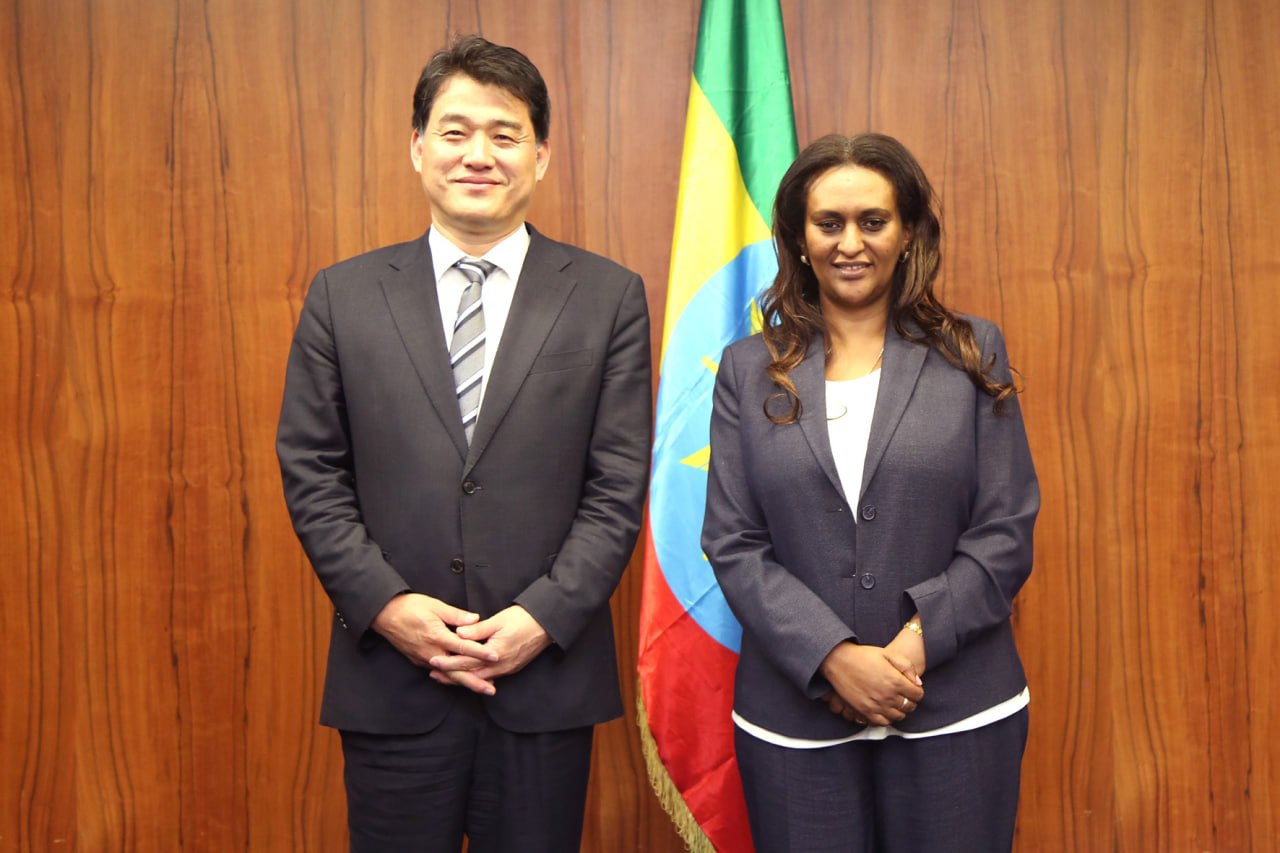
Addis Ababa, May 15, 2026 — The Ministry of Finance of hosted the Ethiopia–Republic of Korea Official Development Assistance (ODA) Portfolio Review today to evaluate the progress of ongoing development cooperation initiatives and discuss shared priorities for future engagement.
The meeting brought together senior Ethiopian government officials and representatives of the Republic of Korea’s major development cooperation agencies.
These include Export-Import Bank of Korea, Korea International Cooperation Agency, Korea Foundation for International Healthcare, and Korea Program on International Agriculture.
According to its social media post, ministry of finance noted that discussions focused on the implementation status of Korean-supported projects in key sectors and explored ways to further strengthen coordination, implementation efficiency, and alignment with Ethiopia’s national reform and development agenda.
Korea’s active development cooperation portfolio in Ethiopia currently exceeds 1.2 billion USD.
State Minister of Finance Semereta Sewasew described the relationship between Ethiopia and the Republic of Korea as a strong and evolving partnership founded on mutual respect, shared priorities, and practical cooperation.
She noted that Korean support continues to contribute to strategic sectors such as infrastructure, health, agriculture, human capital development, and climate resilience, while also enhancing institutional capacity building and knowledge transfer.
“Our partnership has continued to grow through shared priorities and practical cooperation,” Semereta said.
“Today’s discussion provides an opportunity not only to review progress, but also to reflect on how we can further strengthen the effectiveness, responsiveness, and impact of our cooperation,” she added.
The state minister further underscored the importance of maintaining strong implementation performance, effective coordination, and mutual accountability to ensure that development cooperation delivers sustainable and tangible results.
Ambassador of the Republic of Korea to Ethiopia, Jung Kang, said the latest meeting marked the fourth consecutive year of the joint portfolio review process, reflecting the continued commitment of both countries to structured dialogue and effective partnership.
The ambassador also commended Ethiopia’s ongoing reform efforts under the Homegrown Economic Reform agenda and stressed the importance of continued collaboration to advance sustainable development outcomes.
The revised Economic Development Cooperation Fund (EDCF) framework agreement signed in June 2024 raised the financing ceiling to 1 billion USD for the 2024–2028 period, the ambassador stated.
The review covered a broad range of initiatives implemented through various Korean development cooperation agencies.
The Export-Import Bank of Korea, through its EDCF program, currently manages an active portfolio valued at about 961 million USD across 13 projects in sectors including energy, transport, health, and water.
The Korea International Cooperation Agency (KICA), which has partnered with Ethiopia since 1995, is implementing 18 active projects with investments exceeding 200 million USD, focusing on industry, health, and urban resilience.
The Korea Foundation for International Healthcare has supported Ethiopia’s health sector since 2014 with investments totaling around 45 million USD.
The support includes the Lee Jong-Wook Fellowship program, through which 197 Ethiopian health professionals have received training.
The Korea Program on International Agriculture also continues to support agricultural development and innovation, including a recently launched soil health initiative in the Becho and Ada’a Plains.
The meeting concluded with a shared commitment to continue regular portfolio review engagements and strengthen joint follow-up mechanisms aimed at addressing implementation challenges and ensuring the effective delivery of ongoing projects and future cooperation priorities.