ENA - ENA English
Live:


Headlines
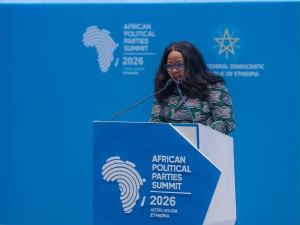
Africa Governance Centre Chair Hails Ethiopia’s Investments in Infrastructure and Energy
Nov 6, 2026 1067
Addis Ababa, November 6, 2026 (ENA)— Ethiopia’s continued investments in infrastructure, energy, industry, and productive activities demonstrate the country's commitment to economic transformation, Africa Governance Centre Executive Chair Benedicta Lasi said. Addressing the Second African Political Parties Summit on its second day, Lasi praised Ethiopia’s development efforts, congratulating Prime Minister Abiy Ahmed, his government, and the Ethiopian people for their commitment to transforming the country. Ethiopia’s Medemer-led economic policies have gained traction over the last few years in driving sustainable transformation and bringing forward young leaders, she noted. Stresssing the role of political organizations, the Executive Chair stated that long-term development priorities such as industrialization, energy systems, and agricultural productivity require sustained commitment beyond electoral cycles. Lasi stressed that political parties must prepare capable leaders, develop sound policies, and strengthen institutional capacity before assuming government responsibilities. “An election can place a party in government overnight, but it cannot supply overnight knowledge required to run a ministry, negotiate a major contract, or manage the national economy,” she added. The Executive Chair emphasized that party schools, research institutions, and policy structures are essential to test proposals, develop sector-specific knowledge, and prepare people for public office. Political parties, she added, should help maintain development priorities across changes in government to ensure that national programmes continue over time. Lasi also emphasized the need for closer cooperation between the African Union and political parties to advance Agenda 2063 and the African Continental Free Trade Area (AfCFTA). She expressed hope that this cooperation would support the proposed African Political Parties Agenda 2040, which aims to establish standards for internal democracy, national development visions, and leadership development, while promoting women’s participation and young people’s contribution. Highlighting the Africa Governance Centre’s work, the Executive Chairperson said its African Political Parties Initiative (APPI), launched in 2025, provides a platform for political parties to exchange experiences and strengthen their capacity to govern. She noted that the initiative has expanded international cooperation through partnerships in Latin America and Asia, leading to the launch of the Intercontinental Dialogue among Political Parties in Seoul, South Korea, in September 2026. Lasi also highlighted the Centre’s collaboration with African legislative institutions to strengthen parliamentarians’ capacity to shape national development policies and support economic transformation.
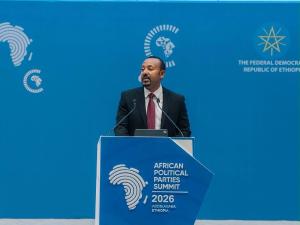
Ethiopia Pledges Training Support for African Political Parties
Nov 6, 2026 1529
Addis Ababa, November 6, 2026 (ENA)— Prime Minister Abiy Ahmed said Ethiopia is committed to supporting leadership development in African political parties by extending training opportunities at the African Leadership Excellence Academy to political parties across the continent. PM Abiy made the commitment while addressing the Second African Political Parties Summit in Addis Ababa, underscoring the importance of preparing a new generation of leaders capable of sustaining development and ensuring continuity in governance. "The …. proposal that I am bringing to attention today is developing new leaders. We have seen countries lose momentum when strong leaders fail to prepare successors. We must give younger members real responsibility and promote those who show judgment and integrity," he said. The Premier said Ethiopia would contribute to the African Leadership Excellence Academy and open its training programmes to political parties across Africa, making the country's leadership development experience available to political actors throughout the continent. Sharing Ethiopia's leadership philosophy, the Premier explained that the governing Prosperity Party is guided by Medemer, or synergy, which brings together different strengths around a common purpose and encourages members to take responsibility for the country as a whole. Citing economic outcomes from Ethiopia's leadership experience, he pointed to digital identification programme and the Grand Ethiopian Renaissance Dam as examples of national development efforts that require sustained commitment and building on the achievements of previous generations. He also highlighted the Green Legacy Initiative, under which more than 56 billion seedlings have been planted since 2019, as an example of collective efforts to restore degraded land, protect water resources and strengthen resilience to climate-related challenges. PM Abiy emphasized that effective political leadership requires accountability and recognition of the contributions of others, including those with different political views, noting that "every citizen has an equal claim on the state, whichever party they support." PM Abiy also stressed that political parties should measure their convictions by the improvements they bring to people's lives, challenging leaders to ask themselves: "Do our people live better because of what we believe?" He illustrated this responsibility through the example of parents walking their children to school, saying their faith in the country's future depends on continued progress and better prospects for the next generation. "When progress does not reach their home, they lose faith not only in party, but in politics itself. That should concern every leader in this room," he noted. Ethiopia's commitment to extending the Academy's training to political parties across Africa reflects its contribution to developing capable future leaders and strengthening leadership capacity to sustain the continent's development.

Ethiopia Showcases Export Products at 9th China International Import Expo
Nov 6, 2026 787
Addis Ababa, November 6, 2026 (ENA)— Ethiopian exporters are featuring products from a range of sectors at the 9th China International Import Expo (CIIE), aiming to widen market access, reinforce trade ties, and forge new commercial opportunities in China and beyond. The country’s participation in the exhibition is being coordinated by the Ministry of Trade and Regional Integration. The annual international trade exhibition, held in Shanghai, brings together exporters, importers and business representatives from around the world to promote international trade and investment. This year's expo opened on November 5 and will run through November 10, 2026 Ethiopia has been participating in the exhibition for nine consecutive time, with exporters representing various economic sectors. The Ethiopian pavilion was inaugurated in the presence of representatives of the Ethiopian Embassy in Beijing and participating delegates, according to the Ministry of Trade and Regional Integration. At the Ethiopian pavilion, coffee-tasting programmes and traditional cultural dance performances are attracting visitors and trade representatives, helping promote the country's products while showcasing its rich cultural heritage. Ethiopian Airlines is also presenting special displays at the pavilion to promote the airline and enhance Ethiopia's image among international visitors, complementing the country's broader efforts to strengthen its global profile. To facilitate the participation of Ethiopian exporters, the Ministry of Trade and Regional Integration is providing professional and technical support to help businesses establish international connections, promote their products and facilitate trade agreements. The ministry said Ethiopia's participation in the expo is expected to enable exporters to identify new market opportunities, expand their international presence and strengthen existing trade relationships.
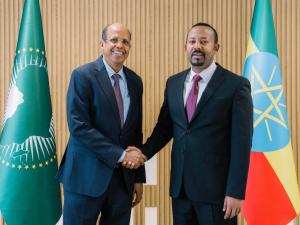
PM Abiy Meets AU Commission Chairperson, Discusses Africa’s Future
Nov 6, 2026 844
Addis Ababa, November 6, 2026 (ENA)— Prime Minister Abiy Ahmed met African Union Commission Chairperson Mahmoud Ali Youssouf on the sidelines of the 2nd African Political Parties Summit, discussing continental governance, inclusive political processes, long-term development priorities and strengthening Africa’s leadership. In a post on his official X account, Abiy said the meeting provided an opportunity to exchange views on key issues shaping the continent’s future. “On the sidelines of the 2nd African Political Parties Summit, I held a meeting with H.E. Mahmoud Ali Youssouf, Chairperson of the African Union Commission, where we exchanged views on continental governance, inclusive political processes, long-term development priorities and strengthening Africa’s leadership,” the Prime Minister stated.
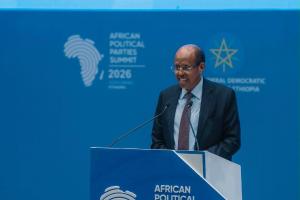
AU Commission Chief Urges Parties to Focus on Serving Citizens and Strengthening Nat'l Interests
Nov 6, 2026 951
Addis Ababa, November 6, 2026 (ENA)— Political parties must go beyond seeking power and focus on serving citizens, strengthening democratic governance and building consensus on Africa’s development priorities, African Union Commission Chairperson Mahmoud Ali Youssouf said today. Addressing the second African Political Parties Summit 2026 underway in Addis Ababa, the Chairperson highlighted the central role of political parties in advancing democratic governance, peace and development in line with the African Union Agenda 2063. Youssouf said political parties have three major responsibilities: developing social and economic policies that serve citizens, building bridges between citizens and state institutions, and raising awareness about the broader interests of their countries. “Are they meant to conquer power? Or is the mission wider than that?” he asked, stressing that political parties should serve the public and promote national interests rather than narrow political, ethnic or sectarian interests. The Chairperson also underscored the role of opposition parties in monitoring government actions and ensuring public accountability. On constitutional governance, Youssouf said states have a fundamental responsibility to protect their constitutions, organize credible elections and ensure respect for fundamental freedoms. “In case of disagreements on those critical issues, dialogue must always prevail,” he noted. He further highlighted the importance of transparency in political party financing, saying strict rules are necessary to prevent corruption and external influences. Referring to the African Charter on Democracy, Elections and Governance, the Chairperson said the instrument recognizes political pluralism and promotes the rights and responsibilities of ruling and opposition parties. He also described the Maputo Protocol as an important foundation for women’s participation in political life, emphasizing the need for forums bringing together women and young people to promote greater access to political participation and decision-making. Youssouf stressed that African citizens must be involved in decisions affecting their communities. Turning to Africa’s economic future, he described political parties as architects of the continent’s future, emphasizing the need for institutions capable of shaping that future around the general public interest rather than partisan considerations. He called for lasting consensus on key development priorities, including education, youth employment, infrastructure development and continental integration. Cooperation in these areas should be strengthened through open debate and citizens’ oversight of public affairs, he added. Youssouf acknowledged that some AU member states are facing challenges arising from unconstitutional changes of government, political instability and internal conflicts. However, he reaffirmed the African Union’s determination to promote democratic governance, peace, development and greater inclusivity in the political space of its member states. The AU Commission Chairperson finally urged the summit to translate the commitments made in Accra into concrete measures, clearly define responsibilities and sustain follow-up.
Featured
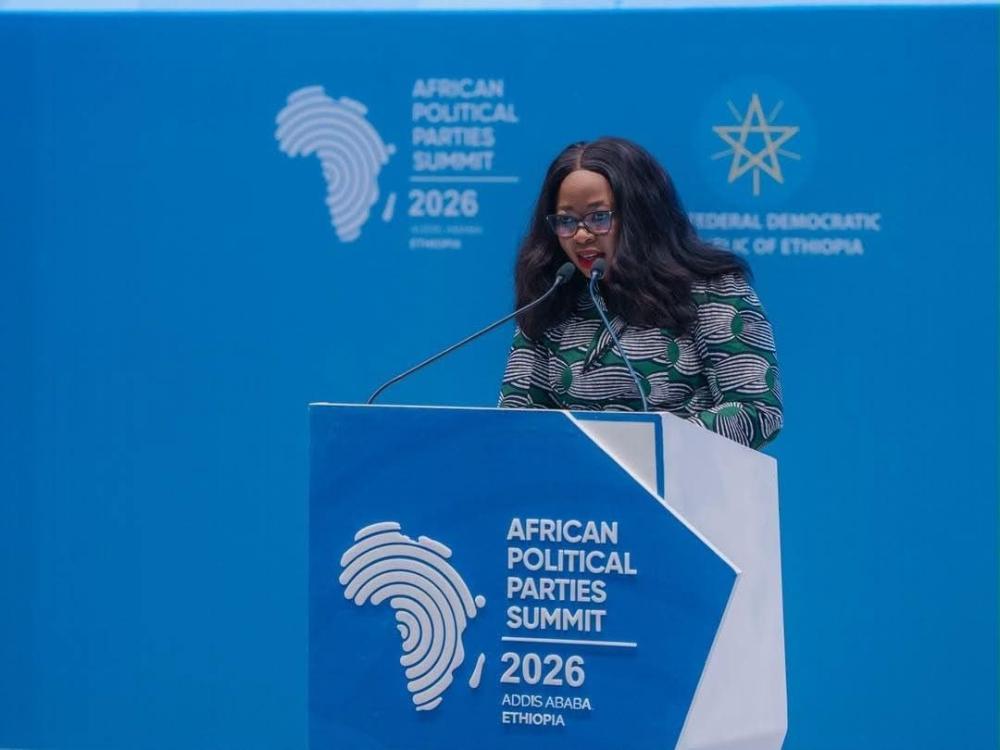
Africa Governance Centre Chair Hails Ethiopia’s Investments in Infrastructure and Energy
Nov 6, 2026 1067
Addis Ababa, November 6, 2026 (ENA)— Ethiopia’s continued investments in infrastructure, energy, industry, and productive activities demonstrate the country's commitment to economic transformation, Africa Governance Centre Executive Chair Benedicta Lasi said. Addressing the Second African Political Parties Summit on its second day, Lasi praised Ethiopia’s development efforts, congratulating Prime Minister Abiy Ahmed, his government, and the Ethiopian people for their commitment to transforming the country. Ethiopia’s Medemer-led economic policies have gained traction over the last few years in driving sustainable transformation and bringing forward young leaders, she noted. Stresssing the role of political organizations, the Executive Chair stated that long-term development priorities such as industrialization, energy systems, and agricultural productivity require sustained commitment beyond electoral cycles. Lasi stressed that political parties must prepare capable leaders, develop sound policies, and strengthen institutional capacity before assuming government responsibilities. “An election can place a party in government overnight, but it cannot supply overnight knowledge required to run a ministry, negotiate a major contract, or manage the national economy,” she added. The Executive Chair emphasized that party schools, research institutions, and policy structures are essential to test proposals, develop sector-specific knowledge, and prepare people for public office. Political parties, she added, should help maintain development priorities across changes in government to ensure that national programmes continue over time. Lasi also emphasized the need for closer cooperation between the African Union and political parties to advance Agenda 2063 and the African Continental Free Trade Area (AfCFTA). She expressed hope that this cooperation would support the proposed African Political Parties Agenda 2040, which aims to establish standards for internal democracy, national development visions, and leadership development, while promoting women’s participation and young people’s contribution. Highlighting the Africa Governance Centre’s work, the Executive Chairperson said its African Political Parties Initiative (APPI), launched in 2025, provides a platform for political parties to exchange experiences and strengthen their capacity to govern. She noted that the initiative has expanded international cooperation through partnerships in Latin America and Asia, leading to the launch of the Intercontinental Dialogue among Political Parties in Seoul, South Korea, in September 2026. Lasi also highlighted the Centre’s collaboration with African legislative institutions to strengthen parliamentarians’ capacity to shape national development policies and support economic transformation.
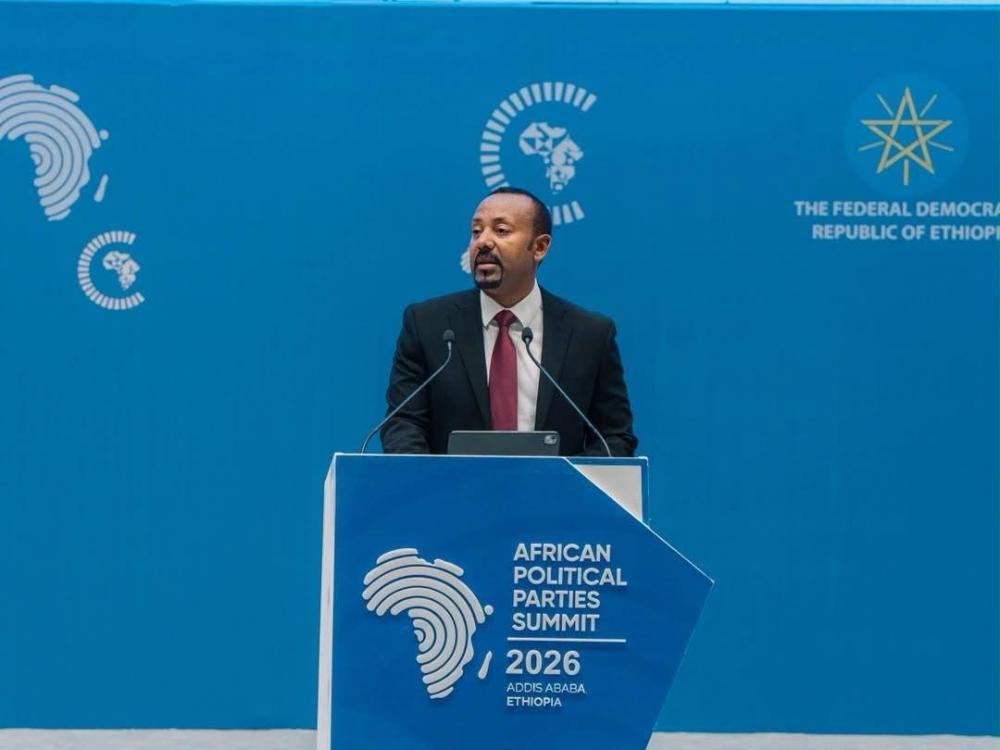
Ethiopia Pledges Training Support for African Political Parties
Nov 6, 2026 1529
Addis Ababa, November 6, 2026 (ENA)— Prime Minister Abiy Ahmed said Ethiopia is committed to supporting leadership development in African political parties by extending training opportunities at the African Leadership Excellence Academy to political parties across the continent. PM Abiy made the commitment while addressing the Second African Political Parties Summit in Addis Ababa, underscoring the importance of preparing a new generation of leaders capable of sustaining development and ensuring continuity in governance. "The …. proposal that I am bringing to attention today is developing new leaders. We have seen countries lose momentum when strong leaders fail to prepare successors. We must give younger members real responsibility and promote those who show judgment and integrity," he said. The Premier said Ethiopia would contribute to the African Leadership Excellence Academy and open its training programmes to political parties across Africa, making the country's leadership development experience available to political actors throughout the continent. Sharing Ethiopia's leadership philosophy, the Premier explained that the governing Prosperity Party is guided by Medemer, or synergy, which brings together different strengths around a common purpose and encourages members to take responsibility for the country as a whole. Citing economic outcomes from Ethiopia's leadership experience, he pointed to digital identification programme and the Grand Ethiopian Renaissance Dam as examples of national development efforts that require sustained commitment and building on the achievements of previous generations. He also highlighted the Green Legacy Initiative, under which more than 56 billion seedlings have been planted since 2019, as an example of collective efforts to restore degraded land, protect water resources and strengthen resilience to climate-related challenges. PM Abiy emphasized that effective political leadership requires accountability and recognition of the contributions of others, including those with different political views, noting that "every citizen has an equal claim on the state, whichever party they support." PM Abiy also stressed that political parties should measure their convictions by the improvements they bring to people's lives, challenging leaders to ask themselves: "Do our people live better because of what we believe?" He illustrated this responsibility through the example of parents walking their children to school, saying their faith in the country's future depends on continued progress and better prospects for the next generation. "When progress does not reach their home, they lose faith not only in party, but in politics itself. That should concern every leader in this room," he noted. Ethiopia's commitment to extending the Academy's training to political parties across Africa reflects its contribution to developing capable future leaders and strengthening leadership capacity to sustain the continent's development.
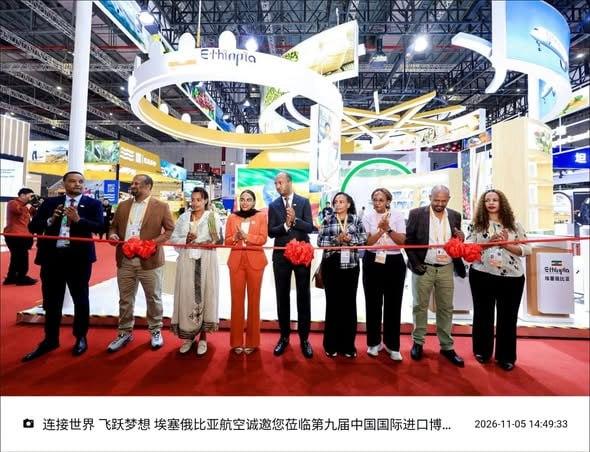
Ethiopia Showcases Export Products at 9th China International Import Expo
Nov 6, 2026 787
Addis Ababa, November 6, 2026 (ENA)— Ethiopian exporters are featuring products from a range of sectors at the 9th China International Import Expo (CIIE), aiming to widen market access, reinforce trade ties, and forge new commercial opportunities in China and beyond. The country’s participation in the exhibition is being coordinated by the Ministry of Trade and Regional Integration. The annual international trade exhibition, held in Shanghai, brings together exporters, importers and business representatives from around the world to promote international trade and investment. This year's expo opened on November 5 and will run through November 10, 2026 Ethiopia has been participating in the exhibition for nine consecutive time, with exporters representing various economic sectors. The Ethiopian pavilion was inaugurated in the presence of representatives of the Ethiopian Embassy in Beijing and participating delegates, according to the Ministry of Trade and Regional Integration. At the Ethiopian pavilion, coffee-tasting programmes and traditional cultural dance performances are attracting visitors and trade representatives, helping promote the country's products while showcasing its rich cultural heritage. Ethiopian Airlines is also presenting special displays at the pavilion to promote the airline and enhance Ethiopia's image among international visitors, complementing the country's broader efforts to strengthen its global profile. To facilitate the participation of Ethiopian exporters, the Ministry of Trade and Regional Integration is providing professional and technical support to help businesses establish international connections, promote their products and facilitate trade agreements. The ministry said Ethiopia's participation in the expo is expected to enable exporters to identify new market opportunities, expand their international presence and strengthen existing trade relationships.
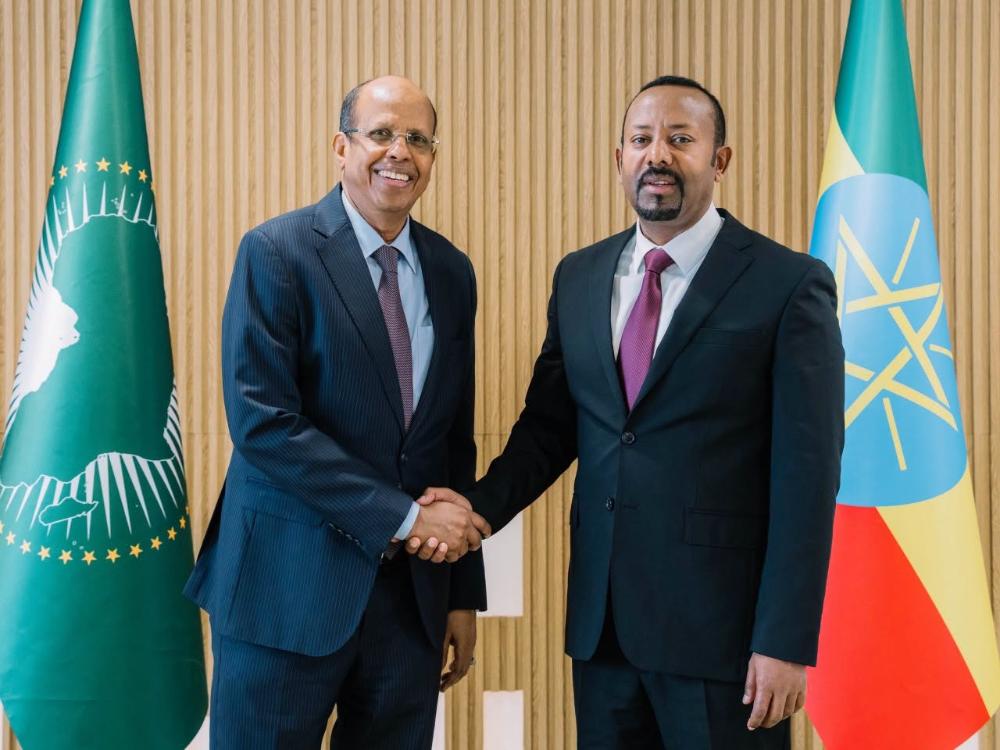
PM Abiy Meets AU Commission Chairperson, Discusses Africa’s Future
Nov 6, 2026 844
Addis Ababa, November 6, 2026 (ENA)— Prime Minister Abiy Ahmed met African Union Commission Chairperson Mahmoud Ali Youssouf on the sidelines of the 2nd African Political Parties Summit, discussing continental governance, inclusive political processes, long-term development priorities and strengthening Africa’s leadership. In a post on his official X account, Abiy said the meeting provided an opportunity to exchange views on key issues shaping the continent’s future. “On the sidelines of the 2nd African Political Parties Summit, I held a meeting with H.E. Mahmoud Ali Youssouf, Chairperson of the African Union Commission, where we exchanged views on continental governance, inclusive political processes, long-term development priorities and strengthening Africa’s leadership,” the Prime Minister stated.
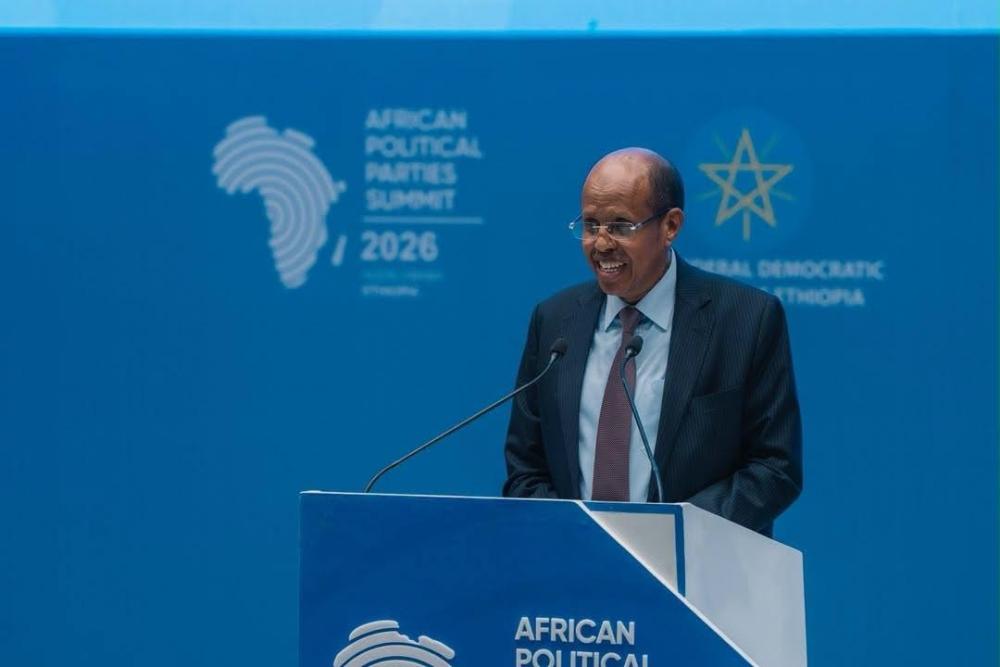
AU Commission Chief Urges Parties to Focus on Serving Citizens and Strengthening Nat'l Interests
Nov 6, 2026 951
Addis Ababa, November 6, 2026 (ENA)— Political parties must go beyond seeking power and focus on serving citizens, strengthening democratic governance and building consensus on Africa’s development priorities, African Union Commission Chairperson Mahmoud Ali Youssouf said today. Addressing the second African Political Parties Summit 2026 underway in Addis Ababa, the Chairperson highlighted the central role of political parties in advancing democratic governance, peace and development in line with the African Union Agenda 2063. Youssouf said political parties have three major responsibilities: developing social and economic policies that serve citizens, building bridges between citizens and state institutions, and raising awareness about the broader interests of their countries. “Are they meant to conquer power? Or is the mission wider than that?” he asked, stressing that political parties should serve the public and promote national interests rather than narrow political, ethnic or sectarian interests. The Chairperson also underscored the role of opposition parties in monitoring government actions and ensuring public accountability. On constitutional governance, Youssouf said states have a fundamental responsibility to protect their constitutions, organize credible elections and ensure respect for fundamental freedoms. “In case of disagreements on those critical issues, dialogue must always prevail,” he noted. He further highlighted the importance of transparency in political party financing, saying strict rules are necessary to prevent corruption and external influences. Referring to the African Charter on Democracy, Elections and Governance, the Chairperson said the instrument recognizes political pluralism and promotes the rights and responsibilities of ruling and opposition parties. He also described the Maputo Protocol as an important foundation for women’s participation in political life, emphasizing the need for forums bringing together women and young people to promote greater access to political participation and decision-making. Youssouf stressed that African citizens must be involved in decisions affecting their communities. Turning to Africa’s economic future, he described political parties as architects of the continent’s future, emphasizing the need for institutions capable of shaping that future around the general public interest rather than partisan considerations. He called for lasting consensus on key development priorities, including education, youth employment, infrastructure development and continental integration. Cooperation in these areas should be strengthened through open debate and citizens’ oversight of public affairs, he added. Youssouf acknowledged that some AU member states are facing challenges arising from unconstitutional changes of government, political instability and internal conflicts. However, he reaffirmed the African Union’s determination to promote democratic governance, peace, development and greater inclusivity in the political space of its member states. The AU Commission Chairperson finally urged the summit to translate the commitments made in Accra into concrete measures, clearly define responsibilities and sustain follow-up.

POA English
Pulse Of Africa - English Language
Your news, current affairs and entertainment channel
Join us on
POA Arabic - عربي
Pulse Of Africa - Arabic Language
قناتكم الاخبارية و الترفيهية
Join us on
Politics
Africa Governance Centre Chair Hails Ethiopia’s Investments in Infrastructure and Energy
Nov 6, 2026 1067
Addis Ababa, November 6, 2026 (ENA)— Ethiopia’s continued investments in infrastructure, energy, industry, and productive activities demonstrate the country's commitment to economic transformation, Africa Governance Centre Executive Chair Benedicta Lasi said. Addressing the Second African Political Parties Summit on its second day, Lasi praised Ethiopia’s development efforts, congratulating Prime Minister Abiy Ahmed, his government, and the Ethiopian people for their commitment to transforming the country. Ethiopia’s Medemer-led economic policies have gained traction over the last few years in driving sustainable transformation and bringing forward young leaders, she noted. Stresssing the role of political organizations, the Executive Chair stated that long-term development priorities such as industrialization, energy systems, and agricultural productivity require sustained commitment beyond electoral cycles. Lasi stressed that political parties must prepare capable leaders, develop sound policies, and strengthen institutional capacity before assuming government responsibilities. “An election can place a party in government overnight, but it cannot supply overnight knowledge required to run a ministry, negotiate a major contract, or manage the national economy,” she added. The Executive Chair emphasized that party schools, research institutions, and policy structures are essential to test proposals, develop sector-specific knowledge, and prepare people for public office. Political parties, she added, should help maintain development priorities across changes in government to ensure that national programmes continue over time. Lasi also emphasized the need for closer cooperation between the African Union and political parties to advance Agenda 2063 and the African Continental Free Trade Area (AfCFTA). She expressed hope that this cooperation would support the proposed African Political Parties Agenda 2040, which aims to establish standards for internal democracy, national development visions, and leadership development, while promoting women’s participation and young people’s contribution. Highlighting the Africa Governance Centre’s work, the Executive Chairperson said its African Political Parties Initiative (APPI), launched in 2025, provides a platform for political parties to exchange experiences and strengthen their capacity to govern. She noted that the initiative has expanded international cooperation through partnerships in Latin America and Asia, leading to the launch of the Intercontinental Dialogue among Political Parties in Seoul, South Korea, in September 2026. Lasi also highlighted the Centre’s collaboration with African legislative institutions to strengthen parliamentarians’ capacity to shape national development policies and support economic transformation.
Ethiopia Pledges Training Support for African Political Parties
Nov 6, 2026 1529
Addis Ababa, November 6, 2026 (ENA)— Prime Minister Abiy Ahmed said Ethiopia is committed to supporting leadership development in African political parties by extending training opportunities at the African Leadership Excellence Academy to political parties across the continent. PM Abiy made the commitment while addressing the Second African Political Parties Summit in Addis Ababa, underscoring the importance of preparing a new generation of leaders capable of sustaining development and ensuring continuity in governance. "The …. proposal that I am bringing to attention today is developing new leaders. We have seen countries lose momentum when strong leaders fail to prepare successors. We must give younger members real responsibility and promote those who show judgment and integrity," he said. The Premier said Ethiopia would contribute to the African Leadership Excellence Academy and open its training programmes to political parties across Africa, making the country's leadership development experience available to political actors throughout the continent. Sharing Ethiopia's leadership philosophy, the Premier explained that the governing Prosperity Party is guided by Medemer, or synergy, which brings together different strengths around a common purpose and encourages members to take responsibility for the country as a whole. Citing economic outcomes from Ethiopia's leadership experience, he pointed to digital identification programme and the Grand Ethiopian Renaissance Dam as examples of national development efforts that require sustained commitment and building on the achievements of previous generations. He also highlighted the Green Legacy Initiative, under which more than 56 billion seedlings have been planted since 2019, as an example of collective efforts to restore degraded land, protect water resources and strengthen resilience to climate-related challenges. PM Abiy emphasized that effective political leadership requires accountability and recognition of the contributions of others, including those with different political views, noting that "every citizen has an equal claim on the state, whichever party they support." PM Abiy also stressed that political parties should measure their convictions by the improvements they bring to people's lives, challenging leaders to ask themselves: "Do our people live better because of what we believe?" He illustrated this responsibility through the example of parents walking their children to school, saying their faith in the country's future depends on continued progress and better prospects for the next generation. "When progress does not reach their home, they lose faith not only in party, but in politics itself. That should concern every leader in this room," he noted. Ethiopia's commitment to extending the Academy's training to political parties across Africa reflects its contribution to developing capable future leaders and strengthening leadership capacity to sustain the continent's development.
PM Abiy Meets AU Commission Chairperson, Discusses Africa’s Future
Nov 6, 2026 844
Addis Ababa, November 6, 2026 (ENA)— Prime Minister Abiy Ahmed met African Union Commission Chairperson Mahmoud Ali Youssouf on the sidelines of the 2nd African Political Parties Summit, discussing continental governance, inclusive political processes, long-term development priorities and strengthening Africa’s leadership. In a post on his official X account, Abiy said the meeting provided an opportunity to exchange views on key issues shaping the continent’s future. “On the sidelines of the 2nd African Political Parties Summit, I held a meeting with H.E. Mahmoud Ali Youssouf, Chairperson of the African Union Commission, where we exchanged views on continental governance, inclusive political processes, long-term development priorities and strengthening Africa’s leadership,” the Prime Minister stated.
AU Commission Chief Urges Parties to Focus on Serving Citizens and Strengthening Nat'l Interests
Nov 6, 2026 951
Addis Ababa, November 6, 2026 (ENA)— Political parties must go beyond seeking power and focus on serving citizens, strengthening democratic governance and building consensus on Africa’s development priorities, African Union Commission Chairperson Mahmoud Ali Youssouf said today. Addressing the second African Political Parties Summit 2026 underway in Addis Ababa, the Chairperson highlighted the central role of political parties in advancing democratic governance, peace and development in line with the African Union Agenda 2063. Youssouf said political parties have three major responsibilities: developing social and economic policies that serve citizens, building bridges between citizens and state institutions, and raising awareness about the broader interests of their countries. “Are they meant to conquer power? Or is the mission wider than that?” he asked, stressing that political parties should serve the public and promote national interests rather than narrow political, ethnic or sectarian interests. The Chairperson also underscored the role of opposition parties in monitoring government actions and ensuring public accountability. On constitutional governance, Youssouf said states have a fundamental responsibility to protect their constitutions, organize credible elections and ensure respect for fundamental freedoms. “In case of disagreements on those critical issues, dialogue must always prevail,” he noted. He further highlighted the importance of transparency in political party financing, saying strict rules are necessary to prevent corruption and external influences. Referring to the African Charter on Democracy, Elections and Governance, the Chairperson said the instrument recognizes political pluralism and promotes the rights and responsibilities of ruling and opposition parties. He also described the Maputo Protocol as an important foundation for women’s participation in political life, emphasizing the need for forums bringing together women and young people to promote greater access to political participation and decision-making. Youssouf stressed that African citizens must be involved in decisions affecting their communities. Turning to Africa’s economic future, he described political parties as architects of the continent’s future, emphasizing the need for institutions capable of shaping that future around the general public interest rather than partisan considerations. He called for lasting consensus on key development priorities, including education, youth employment, infrastructure development and continental integration. Cooperation in these areas should be strengthened through open debate and citizens’ oversight of public affairs, he added. Youssouf acknowledged that some AU member states are facing challenges arising from unconstitutional changes of government, political instability and internal conflicts. However, he reaffirmed the African Union’s determination to promote democratic governance, peace, development and greater inclusivity in the political space of its member states. The AU Commission Chairperson finally urged the summit to translate the commitments made in Accra into concrete measures, clearly define responsibilities and sustain follow-up.
Ethiopia Champions Medemer-Led Leadership for Inclusive National Development
Nov 6, 2026 944
Addis Ababa, November 6, 2026 (ENA)— Ethiopia's Prosperity Party Vice President Adem Farah has underscored the importance of Medemer as a guiding philosophy for overcoming political fragmentation, mobilizing diverse national capabilities and advancing inclusive prosperity. Adem, who also serves as Coordinator for Democratic System Building with the rank of Deputy Prime Minister, made the remarks while addressing the opening of the Second African Political Parties Summit at the Adwa Victory Memorial in Addis Ababa. He emphasized that political parties must move beyond electoral competition to become drivers of national transformation by generating ideas, nurturing leadership, reconciling competing interests and sustaining development efforts beyond electoral cycles. Adem explained that Medemer, an indigenous philosophy developed by Prime Minister Abiy Ahmed, promotes the pooling of people's potential, institutional capabilities and accumulated achievements around shared national objectives. He said the philosophy provides a framework for overcoming historical divisions and political fragmentation. Moreover, Medemer is fostering collective responsibility and holistic prosperity across generations, he underscored. Highlighting the Prosperity Party's experience, Adem said its formation brought previously separate political organizations together under a common national institution, seeking to broaden political participation and unite diverse communities. He stressed that the party's priority is to translate its broad membership base into institutional strength through continuous capacity building, leadership development and disciplined internal governance. He further highlighted the party's performance evaluation system, which seeks to reward competence and integrity, identify institutional weaknesses and strengthen accountability among leaders and members. On political inclusiveness, Adem underscored the importance of sustained engagement with other political organizations through platforms such as the Ethiopian Political Parties Joint Council and broader dialogue initiatives on peace and democracy. He also noted that leaders from competing political parties have been entrusted with public responsibilities at different levels, describing the approach as an effort to harness diverse talents, broaden participation and strengthen shared national stewardship. Such cooperation, he stressed, should respect institutional mandates and the distinct identities of political parties while safeguarding meaningful political competition. Turning to Africa's broader development challenges, Adem said the continent's economic transformation depends on political parties' ability to mobilize investment, develop human capital, promote innovation, strengthen institutions and convert national potential into productive capabilities. He called for a political culture that balances competition with cooperation, and ambition with accountability, emphasizing that political parties must ultimately be judged by their contribution to improving citizens' lives. Drawing lessons from Ethiopia's historic victory at the Battle of Adwa in 1896, Adem said the country's ability to overcome colonial aggression through unity and collective purpose offers an enduring lesson for Africa. He urged African political leaders to draw inspiration from that legacy by strengthening continental solidarity, building institutions that uphold human dignity and expanding opportunities for citizens. The Second African Political Parties Summit is being held in Addis Ababa under the theme “Governing for Growth: Political Parties as Architects of Africa's Economic Future,” bringing together political leaders and stakeholders to explore the role of political parties in advancing economic transformation and inclusive development across the continent.
.jpg)
PM Abiy Urges African Political Parties to Prioritize Leadership Renewal, Long-Term Dev’t
Nov 6, 2026 971
Addis Ababa, November 6, 2026 (ENA)— Prime Minister Abiy Ahmed called on African political parties to embrace leadership renewal and build consensus on long-term national priorities. He also stressed that the continent's development must transcend electoral cycles and changes of government. The Prime Minister made the call while opening the Second African Political Parties Summit in Addis Ababa, where he proposed two key commitments for inclusion in the Addis Ababa Declaration: establishing consensus on long-term national development priorities and strengthening leadership development and succession across Africa. He emphasized that political parties should agree on strategic national goals with measurable milestones to ensure continuity of development efforts regardless of political transitions. PM Abiy elaborated that parties can maintain ideological and policy differences and compete for electoral support while working together on fundamental national interests and long-term development objectives. He also stressed that leadership succession is essential to sustaining development, warning that countries risk losing hard-won progress when incumbent leaders fail to prepare the next generation of leadership. Highlighting Ethiopia's experience in political inclusiveness, the Prime Minister said the country's reformed government has incorporated leaders from opposition political parties. This reflects an approach that values broader participation and shared responsibility, the Premier revealed. He noted that Ethiopia's Medemer philosophy encourages political actors to recognize and build on one another's contributions despite their differences, particularly when national interests call for collective action. Turning to economic transformation, PM Abiy outlined key measures undertaken through Ethiopia's Homegrown Economic Reform Agenda, including opening the telecommunications, banking and competition sectors to foreign participation and introducing a market-based foreign exchange system. He also highlighted the Green Legacy Initiative, noting that more than 50 billion seedlings have been planted since its launch in 2019 through the collective participation of citizens, communities and institutions. The initiative, he explained, is aimed at restoring degraded landscapes, protecting water resources and strengthening national resilience to climate-related challenges, including droughts and floods. The Prime Minister's proposals place leadership renewal, political consensus and policy continuity at the center of Africa's development agenda, underscoring the need for political parties to serve not only as vehicles for electoral competition but also as institutions that sustain national transformation. He called on African political parties to strengthen cooperation around shared national priorities and build a development vision that endures beyond political transitions. The Second African Political Parties Summit is being held in Addis Ababa under the theme “Governing for Growth: Political Parties as Architects of Africa's Economic Future.”
Ethiopia, France Vow to Deepen Military and Strategic Cooperation
Nov 6, 2026 1922
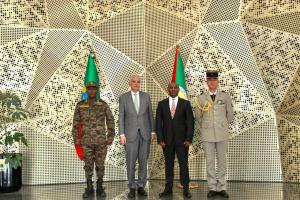
Addis Ababa, November 6, 2026 (ENA)— Ethiopia and France have pledged to deepen their longstanding military and strategic cooperation, with renewed emphasis on military capacity building, knowledge transfer and regional peace and stability. The commitment was made during talks between Ethiopian Defense Minister Mohammed Idris and French Ambassador to Ethiopia Alexis Lamek in Addis Ababa on Wondsday. The meeting, part of the Defense Minister’s ongoing military diplomacy engagements with foreign ambassadors, focused on strengthening the two countries’ historical ties and expanding cooperation in military and strategic affairs. Minister Mohammed expressed appreciation for France’s support in enhancing Ethiopia’s military capabilities through knowledge transfer, strengthening institutional capacity and improving its preparedness for peacekeeping operations. He also called on France to support Ethiopia’s efforts to safeguard its legitimate and equitable interests in the region. On the ongoing Disarmament, Demobilization and Reintegration (DDR) process in the Tigray Region, the Minister urged France to extend the necessary support to ensure its successful implementation. Ambassador Lamek, for his part, reaffirmed France’s commitment to strengthening its longstanding relations and multifaceted cooperation with Ethiopia. He underscored his country’s readiness to enhance joint efforts in promoting regional peace and stability, while advancing military training and capacity-building cooperation. The renewed commitment signals both countries’ interest in translating their longstanding diplomatic relations into stronger practical cooperation in defense, military development and regional security, as ENA learned.
.jpg)
African Political Parties Summit Enters Second Day in Addis Ababa
Nov 6, 2026 1413
Addis Ababa, November 6, 2026 (ENA)— The Second African Political Parties Summit (APPS 2026), which brought together more than 1,000 delegates from across Africa in Addis Ababa, entered its second day today. Ther discussions are focusing on positioning political parties as key drivers of economic transformation, inclusive development and sustainable growth. Convened at the Adwa Victory Memorial under the theme “Governing for Growth,” the summit brings together leaders of governing and opposition political parties, heads of state, government officials, scholars and civil society representatives to explore how political institutions can better respond to Africa’s development priorities. Organized by Ethiopia’s Prosperity Party and coordinated by the Africa Governance Center, the continental gathering seeks to move political parties beyond electoral competition and strengthen their role in shaping long-term development policies, building effective institutions and advancing shared prosperity. A central focus of the summit is the need for stronger inter-party collaboration on national and continental priorities, particularly in addressing structural barriers to economic transformation, ensuring policy continuity beyond electoral cycles and strengthening institutional accountability. Delegates are also deliberating on practical approaches to employment creation, inclusive economic growth, climate-resilient development and the establishment of productive economic systems capable of withstanding global challenges. The summit further provides a platform for experience-sharing and structured dialogue among African political parties on democracy, peace, governance and economic transformation. It also promotes stronger engagement with the private sector, financial institutions, academia and regional institutions, as ENA learned. At its core, APPS seeks to redefine the role of political parties in Africa—from primarily serving as vehicles for electoral mobilization to becoming architects of development policies, incubators of leadership and institutional drivers of national transformation. The gathering is also expected to produce the Addis Ababa Declaration, setting out a shared direction and collective commitments to advancing productive, inclusive and sustainable economic growth across the continent. Building on the previous Ghana Declaration of August 2025, the Addis Ababa summit aims to strengthen a lasting continental platform through which African political parties can develop collective responses to shared challenges and advance African solutions to African problems.
Politics
Africa Governance Centre Chair Hails Ethiopia’s Investments in Infrastructure and Energy
Nov 6, 2026 1067
Addis Ababa, November 6, 2026 (ENA)— Ethiopia’s continued investments in infrastructure, energy, industry, and productive activities demonstrate the country's commitment to economic transformation, Africa Governance Centre Executive Chair Benedicta Lasi said. Addressing the Second African Political Parties Summit on its second day, Lasi praised Ethiopia’s development efforts, congratulating Prime Minister Abiy Ahmed, his government, and the Ethiopian people for their commitment to transforming the country. Ethiopia’s Medemer-led economic policies have gained traction over the last few years in driving sustainable transformation and bringing forward young leaders, she noted. Stresssing the role of political organizations, the Executive Chair stated that long-term development priorities such as industrialization, energy systems, and agricultural productivity require sustained commitment beyond electoral cycles. Lasi stressed that political parties must prepare capable leaders, develop sound policies, and strengthen institutional capacity before assuming government responsibilities. “An election can place a party in government overnight, but it cannot supply overnight knowledge required to run a ministry, negotiate a major contract, or manage the national economy,” she added. The Executive Chair emphasized that party schools, research institutions, and policy structures are essential to test proposals, develop sector-specific knowledge, and prepare people for public office. Political parties, she added, should help maintain development priorities across changes in government to ensure that national programmes continue over time. Lasi also emphasized the need for closer cooperation between the African Union and political parties to advance Agenda 2063 and the African Continental Free Trade Area (AfCFTA). She expressed hope that this cooperation would support the proposed African Political Parties Agenda 2040, which aims to establish standards for internal democracy, national development visions, and leadership development, while promoting women’s participation and young people’s contribution. Highlighting the Africa Governance Centre’s work, the Executive Chairperson said its African Political Parties Initiative (APPI), launched in 2025, provides a platform for political parties to exchange experiences and strengthen their capacity to govern. She noted that the initiative has expanded international cooperation through partnerships in Latin America and Asia, leading to the launch of the Intercontinental Dialogue among Political Parties in Seoul, South Korea, in September 2026. Lasi also highlighted the Centre’s collaboration with African legislative institutions to strengthen parliamentarians’ capacity to shape national development policies and support economic transformation.
Ethiopia Pledges Training Support for African Political Parties
Nov 6, 2026 1529
Addis Ababa, November 6, 2026 (ENA)— Prime Minister Abiy Ahmed said Ethiopia is committed to supporting leadership development in African political parties by extending training opportunities at the African Leadership Excellence Academy to political parties across the continent. PM Abiy made the commitment while addressing the Second African Political Parties Summit in Addis Ababa, underscoring the importance of preparing a new generation of leaders capable of sustaining development and ensuring continuity in governance. "The …. proposal that I am bringing to attention today is developing new leaders. We have seen countries lose momentum when strong leaders fail to prepare successors. We must give younger members real responsibility and promote those who show judgment and integrity," he said. The Premier said Ethiopia would contribute to the African Leadership Excellence Academy and open its training programmes to political parties across Africa, making the country's leadership development experience available to political actors throughout the continent. Sharing Ethiopia's leadership philosophy, the Premier explained that the governing Prosperity Party is guided by Medemer, or synergy, which brings together different strengths around a common purpose and encourages members to take responsibility for the country as a whole. Citing economic outcomes from Ethiopia's leadership experience, he pointed to digital identification programme and the Grand Ethiopian Renaissance Dam as examples of national development efforts that require sustained commitment and building on the achievements of previous generations. He also highlighted the Green Legacy Initiative, under which more than 56 billion seedlings have been planted since 2019, as an example of collective efforts to restore degraded land, protect water resources and strengthen resilience to climate-related challenges. PM Abiy emphasized that effective political leadership requires accountability and recognition of the contributions of others, including those with different political views, noting that "every citizen has an equal claim on the state, whichever party they support." PM Abiy also stressed that political parties should measure their convictions by the improvements they bring to people's lives, challenging leaders to ask themselves: "Do our people live better because of what we believe?" He illustrated this responsibility through the example of parents walking their children to school, saying their faith in the country's future depends on continued progress and better prospects for the next generation. "When progress does not reach their home, they lose faith not only in party, but in politics itself. That should concern every leader in this room," he noted. Ethiopia's commitment to extending the Academy's training to political parties across Africa reflects its contribution to developing capable future leaders and strengthening leadership capacity to sustain the continent's development.
PM Abiy Meets AU Commission Chairperson, Discusses Africa’s Future
Nov 6, 2026 844
Addis Ababa, November 6, 2026 (ENA)— Prime Minister Abiy Ahmed met African Union Commission Chairperson Mahmoud Ali Youssouf on the sidelines of the 2nd African Political Parties Summit, discussing continental governance, inclusive political processes, long-term development priorities and strengthening Africa’s leadership. In a post on his official X account, Abiy said the meeting provided an opportunity to exchange views on key issues shaping the continent’s future. “On the sidelines of the 2nd African Political Parties Summit, I held a meeting with H.E. Mahmoud Ali Youssouf, Chairperson of the African Union Commission, where we exchanged views on continental governance, inclusive political processes, long-term development priorities and strengthening Africa’s leadership,” the Prime Minister stated.
AU Commission Chief Urges Parties to Focus on Serving Citizens and Strengthening Nat'l Interests
Nov 6, 2026 951
Addis Ababa, November 6, 2026 (ENA)— Political parties must go beyond seeking power and focus on serving citizens, strengthening democratic governance and building consensus on Africa’s development priorities, African Union Commission Chairperson Mahmoud Ali Youssouf said today. Addressing the second African Political Parties Summit 2026 underway in Addis Ababa, the Chairperson highlighted the central role of political parties in advancing democratic governance, peace and development in line with the African Union Agenda 2063. Youssouf said political parties have three major responsibilities: developing social and economic policies that serve citizens, building bridges between citizens and state institutions, and raising awareness about the broader interests of their countries. “Are they meant to conquer power? Or is the mission wider than that?” he asked, stressing that political parties should serve the public and promote national interests rather than narrow political, ethnic or sectarian interests. The Chairperson also underscored the role of opposition parties in monitoring government actions and ensuring public accountability. On constitutional governance, Youssouf said states have a fundamental responsibility to protect their constitutions, organize credible elections and ensure respect for fundamental freedoms. “In case of disagreements on those critical issues, dialogue must always prevail,” he noted. He further highlighted the importance of transparency in political party financing, saying strict rules are necessary to prevent corruption and external influences. Referring to the African Charter on Democracy, Elections and Governance, the Chairperson said the instrument recognizes political pluralism and promotes the rights and responsibilities of ruling and opposition parties. He also described the Maputo Protocol as an important foundation for women’s participation in political life, emphasizing the need for forums bringing together women and young people to promote greater access to political participation and decision-making. Youssouf stressed that African citizens must be involved in decisions affecting their communities. Turning to Africa’s economic future, he described political parties as architects of the continent’s future, emphasizing the need for institutions capable of shaping that future around the general public interest rather than partisan considerations. He called for lasting consensus on key development priorities, including education, youth employment, infrastructure development and continental integration. Cooperation in these areas should be strengthened through open debate and citizens’ oversight of public affairs, he added. Youssouf acknowledged that some AU member states are facing challenges arising from unconstitutional changes of government, political instability and internal conflicts. However, he reaffirmed the African Union’s determination to promote democratic governance, peace, development and greater inclusivity in the political space of its member states. The AU Commission Chairperson finally urged the summit to translate the commitments made in Accra into concrete measures, clearly define responsibilities and sustain follow-up.
Ethiopia Champions Medemer-Led Leadership for Inclusive National Development
Nov 6, 2026 944
Addis Ababa, November 6, 2026 (ENA)— Ethiopia's Prosperity Party Vice President Adem Farah has underscored the importance of Medemer as a guiding philosophy for overcoming political fragmentation, mobilizing diverse national capabilities and advancing inclusive prosperity. Adem, who also serves as Coordinator for Democratic System Building with the rank of Deputy Prime Minister, made the remarks while addressing the opening of the Second African Political Parties Summit at the Adwa Victory Memorial in Addis Ababa. He emphasized that political parties must move beyond electoral competition to become drivers of national transformation by generating ideas, nurturing leadership, reconciling competing interests and sustaining development efforts beyond electoral cycles. Adem explained that Medemer, an indigenous philosophy developed by Prime Minister Abiy Ahmed, promotes the pooling of people's potential, institutional capabilities and accumulated achievements around shared national objectives. He said the philosophy provides a framework for overcoming historical divisions and political fragmentation. Moreover, Medemer is fostering collective responsibility and holistic prosperity across generations, he underscored. Highlighting the Prosperity Party's experience, Adem said its formation brought previously separate political organizations together under a common national institution, seeking to broaden political participation and unite diverse communities. He stressed that the party's priority is to translate its broad membership base into institutional strength through continuous capacity building, leadership development and disciplined internal governance. He further highlighted the party's performance evaluation system, which seeks to reward competence and integrity, identify institutional weaknesses and strengthen accountability among leaders and members. On political inclusiveness, Adem underscored the importance of sustained engagement with other political organizations through platforms such as the Ethiopian Political Parties Joint Council and broader dialogue initiatives on peace and democracy. He also noted that leaders from competing political parties have been entrusted with public responsibilities at different levels, describing the approach as an effort to harness diverse talents, broaden participation and strengthen shared national stewardship. Such cooperation, he stressed, should respect institutional mandates and the distinct identities of political parties while safeguarding meaningful political competition. Turning to Africa's broader development challenges, Adem said the continent's economic transformation depends on political parties' ability to mobilize investment, develop human capital, promote innovation, strengthen institutions and convert national potential into productive capabilities. He called for a political culture that balances competition with cooperation, and ambition with accountability, emphasizing that political parties must ultimately be judged by their contribution to improving citizens' lives. Drawing lessons from Ethiopia's historic victory at the Battle of Adwa in 1896, Adem said the country's ability to overcome colonial aggression through unity and collective purpose offers an enduring lesson for Africa. He urged African political leaders to draw inspiration from that legacy by strengthening continental solidarity, building institutions that uphold human dignity and expanding opportunities for citizens. The Second African Political Parties Summit is being held in Addis Ababa under the theme “Governing for Growth: Political Parties as Architects of Africa's Economic Future,” bringing together political leaders and stakeholders to explore the role of political parties in advancing economic transformation and inclusive development across the continent.
PM Abiy Urges African Political Parties to Prioritize Leadership Renewal, Long-Term Dev’t
Nov 6, 2026 971
Addis Ababa, November 6, 2026 (ENA)— Prime Minister Abiy Ahmed called on African political parties to embrace leadership renewal and build consensus on long-term national priorities. He also stressed that the continent's development must transcend electoral cycles and changes of government. The Prime Minister made the call while opening the Second African Political Parties Summit in Addis Ababa, where he proposed two key commitments for inclusion in the Addis Ababa Declaration: establishing consensus on long-term national development priorities and strengthening leadership development and succession across Africa. He emphasized that political parties should agree on strategic national goals with measurable milestones to ensure continuity of development efforts regardless of political transitions. PM Abiy elaborated that parties can maintain ideological and policy differences and compete for electoral support while working together on fundamental national interests and long-term development objectives. He also stressed that leadership succession is essential to sustaining development, warning that countries risk losing hard-won progress when incumbent leaders fail to prepare the next generation of leadership. Highlighting Ethiopia's experience in political inclusiveness, the Prime Minister said the country's reformed government has incorporated leaders from opposition political parties. This reflects an approach that values broader participation and shared responsibility, the Premier revealed. He noted that Ethiopia's Medemer philosophy encourages political actors to recognize and build on one another's contributions despite their differences, particularly when national interests call for collective action. Turning to economic transformation, PM Abiy outlined key measures undertaken through Ethiopia's Homegrown Economic Reform Agenda, including opening the telecommunications, banking and competition sectors to foreign participation and introducing a market-based foreign exchange system. He also highlighted the Green Legacy Initiative, noting that more than 50 billion seedlings have been planted since its launch in 2019 through the collective participation of citizens, communities and institutions. The initiative, he explained, is aimed at restoring degraded landscapes, protecting water resources and strengthening national resilience to climate-related challenges, including droughts and floods. The Prime Minister's proposals place leadership renewal, political consensus and policy continuity at the center of Africa's development agenda, underscoring the need for political parties to serve not only as vehicles for electoral competition but also as institutions that sustain national transformation. He called on African political parties to strengthen cooperation around shared national priorities and build a development vision that endures beyond political transitions. The Second African Political Parties Summit is being held in Addis Ababa under the theme “Governing for Growth: Political Parties as Architects of Africa's Economic Future.”
Ethiopia, France Vow to Deepen Military and Strategic Cooperation
Nov 6, 2026 1922
Addis Ababa, November 6, 2026 (ENA)— Ethiopia and France have pledged to deepen their longstanding military and strategic cooperation, with renewed emphasis on military capacity building, knowledge transfer and regional peace and stability. The commitment was made during talks between Ethiopian Defense Minister Mohammed Idris and French Ambassador to Ethiopia Alexis Lamek in Addis Ababa on Wondsday. The meeting, part of the Defense Minister’s ongoing military diplomacy engagements with foreign ambassadors, focused on strengthening the two countries’ historical ties and expanding cooperation in military and strategic affairs. Minister Mohammed expressed appreciation for France’s support in enhancing Ethiopia’s military capabilities through knowledge transfer, strengthening institutional capacity and improving its preparedness for peacekeeping operations. He also called on France to support Ethiopia’s efforts to safeguard its legitimate and equitable interests in the region. On the ongoing Disarmament, Demobilization and Reintegration (DDR) process in the Tigray Region, the Minister urged France to extend the necessary support to ensure its successful implementation. Ambassador Lamek, for his part, reaffirmed France’s commitment to strengthening its longstanding relations and multifaceted cooperation with Ethiopia. He underscored his country’s readiness to enhance joint efforts in promoting regional peace and stability, while advancing military training and capacity-building cooperation. The renewed commitment signals both countries’ interest in translating their longstanding diplomatic relations into stronger practical cooperation in defense, military development and regional security, as ENA learned.
African Political Parties Summit Enters Second Day in Addis Ababa
Nov 6, 2026 1413
Addis Ababa, November 6, 2026 (ENA)— The Second African Political Parties Summit (APPS 2026), which brought together more than 1,000 delegates from across Africa in Addis Ababa, entered its second day today. Ther discussions are focusing on positioning political parties as key drivers of economic transformation, inclusive development and sustainable growth. Convened at the Adwa Victory Memorial under the theme “Governing for Growth,” the summit brings together leaders of governing and opposition political parties, heads of state, government officials, scholars and civil society representatives to explore how political institutions can better respond to Africa’s development priorities. Organized by Ethiopia’s Prosperity Party and coordinated by the Africa Governance Center, the continental gathering seeks to move political parties beyond electoral competition and strengthen their role in shaping long-term development policies, building effective institutions and advancing shared prosperity. A central focus of the summit is the need for stronger inter-party collaboration on national and continental priorities, particularly in addressing structural barriers to economic transformation, ensuring policy continuity beyond electoral cycles and strengthening institutional accountability. Delegates are also deliberating on practical approaches to employment creation, inclusive economic growth, climate-resilient development and the establishment of productive economic systems capable of withstanding global challenges. The summit further provides a platform for experience-sharing and structured dialogue among African political parties on democracy, peace, governance and economic transformation. It also promotes stronger engagement with the private sector, financial institutions, academia and regional institutions, as ENA learned. At its core, APPS seeks to redefine the role of political parties in Africa—from primarily serving as vehicles for electoral mobilization to becoming architects of development policies, incubators of leadership and institutional drivers of national transformation. The gathering is also expected to produce the Addis Ababa Declaration, setting out a shared direction and collective commitments to advancing productive, inclusive and sustainable economic growth across the continent. Building on the previous Ghana Declaration of August 2025, the Addis Ababa summit aims to strengthen a lasting continental platform through which African political parties can develop collective responses to shared challenges and advance African solutions to African problems.
Social
African Political Parties Summit Participants Visit Prosperity Party Headquarters, MESOB Service Center
Nov 5, 2026 4590
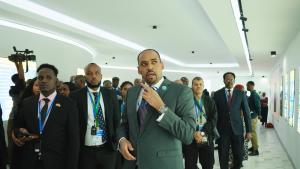
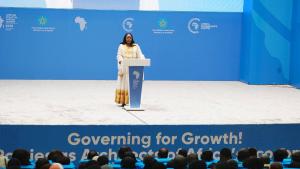
Addis Ababa, November 5, 2026 (ENA)— Participants of the Second African Political Parties Summit have visited the headquarters of Ethiopia’s ruling Prosperity Party in Addis Ababa to learn about the party’s political philosophy, development initiatives and achievements. During the visit, the delegation toured the party’s permanent exhibition, where they received briefings on its history, the Medemer philosophy, major initiatives, key achievements and future vision. The participants also watched video presentations highlighting the Prosperity Party’s journey, major milestones and the development of its headquarters. The delegation subsequently visited the MESOB Service Center, a government initiative designed to streamline public service delivery by bringing multiple government institutions together through an integrated platform. There, they received briefings on Ethiopia’s digital public services, technological advancements and ongoing efforts to modernize government service delivery. The participants expressed amazement at the level of digital development and technological progress, particularly the integration of multiple public services through a unified system. The visits were organized as part of the Second African Political Parties Summit, being held in Ethiopia under the theme: “Governing for Growth: Political Parties as Architects of Africa’s Economic Future.” The three-day summit is taking place at the Adwa Victory Memorial Museum in Addis Ababa, bringing together political party leaders, heads of state and policymakers from across the continent. The summit, which opened today, November 5, 2026, is deliberating on strategies for advancing employment creation, inclusive development and the structural transformation of African economies. Earlier today, the joint opening session of the Africa Women Political Leadership Forum and the African Youth in Politics Forum was also held as part of the summit.
Ethiopia Says Women’s Leadership Indispensable to Africa’s Economic Transformation
Nov 5, 2026 4353
Addis Ababa, November 5, 2026 (ENA)— Ethiopia’s Minister of Women and Social Affairs, Shawit Shanka, called on African countries to ensure women’s equal participation in political leadership and economic decision-making, saying the continent cannot realize its full development potential while marginalizing half of its population. The Minister made the remarks while addressing the joint opening session of the 2nd African Political Parties Summit 2026, which opened alongside the Africa Women Political Leadership Forum 2026 and the African Youth in Politics Forum 2026 in Addis Ababa. “No continent can realize its potential when marginalizing half of its population,” she said. Shawit emphasized that women should be recognized not merely as beneficiaries of assistance but as producers, innovators, leaders and agents of peace and development. She noted that investing in women contributes to economic transformation, democratic governance, social cohesion and sustainable development. The Minister said Africa was undergoing major changes driven by geopolitical shifts, technological advancements, demographic trends, climate pressures and evolving economic relationships. She called on African countries to proactively shape these changes through visionary leadership, resilient institutions and collective action. She explained that Ethiopia’s development approach is guided by the principle of Medemer, which emphasizes synergy, togetherness and collective contribution. The minister added that women are equal stakeholders, productive agents and co-architects of the country's transformation. “Women are producers, innovators, leaders and agents of peace and development, not merely beneficiaries of assistance,” she emphasized. Shawit said advancing women's leadership requires visionary leadership, sustained political commitment and strong institutional action, particularly within political parties. Political parties, she added, should strengthen women's participation in their structures, leadership positions and candidate selection processes to ensure their meaningful representation in decision-making. She also highlighted the commitment of Ethiopia’s Prosperity Party-led government, under the leadership of Prime Minister Abiy Ahmed, to women’s empowerment, saying the Medemer philosophy demonstrates that women can lead at every level. Ethiopia, she noted, is sharing its experience not as a claim of perfection, but as evidence of what can be achieved through political will, an inclusive development philosophy and sustained action. The Minister stressed that decisions made today would shape the future of generations, urging African countries to build a continent where women are equally represented in political leadership, economically empowered and protected by strong institutions. She further called for an Africa where every girl can aspire to become a leader, entrepreneur, scientist or policymaker without barriers imposed by gender or circumstances. Shawit officially opened the joint forum, calling for stronger collective efforts to advance women's political leadership across the continent.
.jpg)
Ethiopia Puts Youth at Center of Governance, Leadership: Minister
Nov 5, 2026 3766
Addis Ababa, November 5, 2026 (ENA)—Ethiopia has placed youth empowerment and participation at the center of its governance and development agenda, with young people holding more than 50 percent of leadership positions at the federal level, Minister of Youth and Sports Aklilu Tadesse said. Ethiopia has placed youth empowerment and participation at the center of its governance and development agenda, with young people holding more than 50 percent of leadership positions at the federal level, Minister of Youth and Sports Aklilu Tadesse said. The minister made the remark while addressing the African Youth in Politics Forum (AYPF) and the Africa Women Political Leadership Summit (AWPLS), flagship platforms of the Second African Political Parties Summit (APPS 2026) currently being held in Addis Ababa from November 5–7. He said Ethiopia recognizes young people as its most valuable national asset and has prioritized their empowerment through investments in employment, entrepreneurship, innovation and leadership development. The minister further elaborated that youth participation in Ethiopia has expanded beyond conventional development initiatives, with young people increasingly assuming leadership responsibilities across government institutions. He noted that more than half of leadership positions at the federal level are occupied by young people, citing the country's experience as an indication of the importance of entrusting youth with decision-making responsibilities. ‘…youth are not waiting to lead tomorrow. They are leading today, from local administration to the highest office of government in the federal level, including more than 50 percent of the leadership positions are held by the young people, including our prime minister, who was only in the early of 40’s when, while he took the office..’’ he said. Aklilu emphasized that youth empowerment requires more than policies and development programs. He also stressed the need for building trust and ensuring meaningful participation in governance and policy-making. "As a first-hand witness to this transformation, I can confidently say that Ethiopia's message is clear. When young people are given a seat at the table, they become architects of progress, not merely beneficiary of it," he added. He called on African political parties to move beyond considering young people merely as voters, supporters and campaign participants, urging them to recognize youth as partners in democratic leadership and governance. The minister further highlighted that Africa's demographic structure makes youth participation indispensable to the continent's development, noting that more than 60 percent of its population is under the age of 25. He said the continent's prosperity, stability and democratic progress would largely depend on how effectively governments and political institutions engage and empower this growing population. Describing young people as innovators, entrepreneurs, peacebuilders and agents of transformation, Aklilu said their creativity, energy and resilience constitute significant resources for addressing Africa's development challenges. He also highlighted the philosophy of Medemer, which emphasizes unity, collective purpose and the mobilization of shared strengths, as an important principle for strengthening inclusive governance and youth participation. The minister called on African political leaders to establish political systems that listen to young people's voices, create opportunities for emerging talent and entrust young leaders with meaningful responsibilities. He stressed that challenges facing the continent, including unemployment, conflict, climate change and technological transformation, cannot be effectively addressed without the active engagement of young people. "The future does not belong to youth alone; it is being built by youth today," he said, calling for greater trust, empowerment and collaboration with the younger generation. The African Youth in Politics Forum and the Africa Women Political Leadership Summit are being held as flagship platforms within the Second African Political Parties Summit (APPS 2026), under the broader theme, "Governing for Growth: Political Parties as Architects of African Economic Future." The summit serves as a vital platform for inter-party dialogue, aiming to shift the focus of African political parties from mere electoral mobilization to becoming robust engines of national transformation.
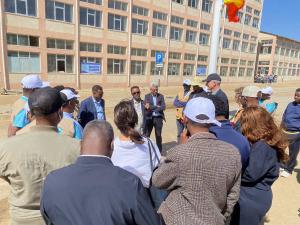
Diplomats, Representatives of Int’l Organizations Visit Rehabilitation Center for Former Combatants in Tigray
Nov 5, 2026 3976
Addis Ababa, November 5, 2026 (ENA)— Representatives of the United Nations and ambassadors from various countries based in Ethiopia have visited a rehabilitation and reintegration center for former combatants in Tigray region. Located in Mekelle, the center previously served as a rehabilitation training facility in the region and is currently providing accommodation and training for former combatants. Currently, some 5,500 former combatants are receiving training at the center as part of efforts to facilitate their successful reintegration into society and transition to civilian life. The rehabilitation program aims to contribute to sustainable national peace while equipping former combatants with the skills and support needed to rebuild their lives and resume productive roles in their communities. Officials of the National Rehabilitation Commission, including Commissioner Temesgen Tilahun, briefed the diplomats and representatives of international organizations during the visit.
Economy
Ethiopia Showcases Export Products at 9th China International Import Expo
Nov 6, 2026 787
Addis Ababa, November 6, 2026 (ENA)— Ethiopian exporters are featuring products from a range of sectors at the 9th China International Import Expo (CIIE), aiming to widen market access, reinforce trade ties, and forge new commercial opportunities in China and beyond. The country’s participation in the exhibition is being coordinated by the Ministry of Trade and Regional Integration. The annual international trade exhibition, held in Shanghai, brings together exporters, importers and business representatives from around the world to promote international trade and investment. This year's expo opened on November 5 and will run through November 10, 2026 Ethiopia has been participating in the exhibition for nine consecutive time, with exporters representing various economic sectors. The Ethiopian pavilion was inaugurated in the presence of representatives of the Ethiopian Embassy in Beijing and participating delegates, according to the Ministry of Trade and Regional Integration. At the Ethiopian pavilion, coffee-tasting programmes and traditional cultural dance performances are attracting visitors and trade representatives, helping promote the country's products while showcasing its rich cultural heritage. Ethiopian Airlines is also presenting special displays at the pavilion to promote the airline and enhance Ethiopia's image among international visitors, complementing the country's broader efforts to strengthen its global profile. To facilitate the participation of Ethiopian exporters, the Ministry of Trade and Regional Integration is providing professional and technical support to help businesses establish international connections, promote their products and facilitate trade agreements. The ministry said Ethiopia's participation in the expo is expected to enable exporters to identify new market opportunities, expand their international presence and strengthen existing trade relationships.
PM Abiy Urges African Political Parties to Prioritize Leadership Renewal, Long-Term Dev’t
Nov 6, 2026 971
Addis Ababa, November 6, 2026 (ENA)— Prime Minister Abiy Ahmed called on African political parties to embrace leadership renewal and build consensus on long-term national priorities. He also stressed that the continent's development must transcend electoral cycles and changes of government. The Prime Minister made the call while opening the Second African Political Parties Summit in Addis Ababa, where he proposed two key commitments for inclusion in the Addis Ababa Declaration: establishing consensus on long-term national development priorities and strengthening leadership development and succession across Africa. He emphasized that political parties should agree on strategic national goals with measurable milestones to ensure continuity of development efforts regardless of political transitions. PM Abiy elaborated that parties can maintain ideological and policy differences and compete for electoral support while working together on fundamental national interests and long-term development objectives. He also stressed that leadership succession is essential to sustaining development, warning that countries risk losing hard-won progress when incumbent leaders fail to prepare the next generation of leadership. Highlighting Ethiopia's experience in political inclusiveness, the Prime Minister said the country's reformed government has incorporated leaders from opposition political parties. This reflects an approach that values broader participation and shared responsibility, the Premier revealed. He noted that Ethiopia's Medemer philosophy encourages political actors to recognize and build on one another's contributions despite their differences, particularly when national interests call for collective action. Turning to economic transformation, PM Abiy outlined key measures undertaken through Ethiopia's Homegrown Economic Reform Agenda, including opening the telecommunications, banking and competition sectors to foreign participation and introducing a market-based foreign exchange system. He also highlighted the Green Legacy Initiative, noting that more than 50 billion seedlings have been planted since its launch in 2019 through the collective participation of citizens, communities and institutions. The initiative, he explained, is aimed at restoring degraded landscapes, protecting water resources and strengthening national resilience to climate-related challenges, including droughts and floods. The Prime Minister's proposals place leadership renewal, political consensus and policy continuity at the center of Africa's development agenda, underscoring the need for political parties to serve not only as vehicles for electoral competition but also as institutions that sustain national transformation. He called on African political parties to strengthen cooperation around shared national priorities and build a development vision that endures beyond political transitions. The Second African Political Parties Summit is being held in Addis Ababa under the theme “Governing for Growth: Political Parties as Architects of Africa's Economic Future.”
.jpg)
African Political Parties Summit Delegates Witness Addis Ababa’s Urban Transformation
Nov 5, 2026 3653
Addis Ababa, November 5, 2026 (ENA)—African Political Parties Summit delegates have toured Addis Ababa’s major urban development projects, witnessing the Ethiopian capital’s ongoing transformation into a modern, inclusive and more accessible city. Speaking at a reception hosted in their honor, Head of the Democracy Building Center Coordinator Office with the rank of Deputy Prime Minister and Prosperity Party Vice President Adam Farah described Addis Ababa as the political capital and beating heart of Africa, emphasizing its significance as a shared home for all Africans. “When you are in Addis Ababa, you are not visiting a foreign city; you are returning home, to the heart of Africa,” he said. Adem underscored that Africa’s strength lies in the bonds of fraternity, solidarity and closer cooperation among its peoples, stressing the importance of shared political visions and aspirations in advancing the continent’s development and self-reliance. He also invited the delegates to experience Ethiopia’s renowned hospitality and rich cultural heritage, expressing hope that the summit would produce meaningful and tangible outcomes toward building a prosperous and united Africa. Meanwhile, the delegates concluded a series of field visits across Addis Ababa, touring major streets, modern urban corridors, public spaces and development projects that are reshaping the capital’s urban landscape. During the visits, they gained insights into Ethiopia’s integrated urban corridor development approach, which combines improved infrastructure, pedestrian-friendly spaces, accessibility and modern urban planning to create more functional and livable urban environments. Through museum visits and presentations, participants also explored the different phases of Addis Ababa’s urban development and the vision underpinning its ongoing transformation. The programme concluded with a cultural reception featuring traditional music, artistic performances and songs reflecting Ethiopia’s rich cultural diversity and heritage. Delegates expressed admiration for the performances and the authenticity of Ethiopian culture. The visits and cultural activities formed part of the accompanying programme of the Second African Political Parties Summit, hosted in Addis Ababa under the theme: ““Governing for Growth: Political Parties as Architects of Africa’s Economic Future.”
African Political Parties Summit Participants Visit Prosperity Party Headquarters, MESOB Service Center
Nov 5, 2026 4590
Addis Ababa, November 5, 2026 (ENA)— Participants of the Second African Political Parties Summit have visited the headquarters of Ethiopia’s ruling Prosperity Party in Addis Ababa to learn about the party’s political philosophy, development initiatives and achievements. During the visit, the delegation toured the party’s permanent exhibition, where they received briefings on its history, the Medemer philosophy, major initiatives, key achievements and future vision. The participants also watched video presentations highlighting the Prosperity Party’s journey, major milestones and the development of its headquarters. The delegation subsequently visited the MESOB Service Center, a government initiative designed to streamline public service delivery by bringing multiple government institutions together through an integrated platform. There, they received briefings on Ethiopia’s digital public services, technological advancements and ongoing efforts to modernize government service delivery. The participants expressed amazement at the level of digital development and technological progress, particularly the integration of multiple public services through a unified system. The visits were organized as part of the Second African Political Parties Summit, being held in Ethiopia under the theme: “Governing for Growth: Political Parties as Architects of Africa’s Economic Future.” The three-day summit is taking place at the Adwa Victory Memorial Museum in Addis Ababa, bringing together political party leaders, heads of state and policymakers from across the continent. The summit, which opened today, November 5, 2026, is deliberating on strategies for advancing employment creation, inclusive development and the structural transformation of African economies. Earlier today, the joint opening session of the Africa Women Political Leadership Forum and the African Youth in Politics Forum was also held as part of the summit.
Videos
.jpg)
.jpg)
.jpg)

Technology
.jpg)
Diplomatic Visibility, Strategic Deterrence and Growing Stakes in the Red Sea Region
Nov 1, 2026 27533
By Staff Writer November 1, 2026 (ENA) The final week of October 2026 brought Ethiopia into sharper international focus, as the country advanced its defence modernization, strengthened strategic partnerships and renewed attention to its interests in the Abay (Nile) Basin and Red Sea region. From the announcement of the delivery of advanced fighter jets and plans to acquire sophisticated air defence systems to high-level diplomatic engagements at the Russia-Africa Summit, Ethiopia's activities reflected the growing intersection of national security, economic ambitions and regional geopolitics. Prime Minister Abiy Ahmed's participation in the Third Russia-Africa Summit in Moscow provided an important platform for advancing bilateral and continental cooperation. His announcement that Ethiopia had received its first 12 Su-35 fighter jets and was set to acquire four batteries of S-400 air defence systems also brought the country's military modernization into the international spotlight. Meanwhile, the Third Ethiopian Water and Energy Week highlighted the country's efforts to strengthen water-resource management amid rising demand from agriculture, industry and a growing population. In Addis Ababa, the introduction of the first 26 natural gas-powered city buses marked another step towards reducing fuel imports, lowering transport costs and expanding the use of locally sourced energy. Beyond these developments, discussions surrounding Ethiopia's interests in the Abay River and sustainable access to the Red Sea continued to feature prominently in national and international discourse. Together, these developments underscored Ethiopia's efforts to strengthen its national capabilities, diversify international partnerships and advance its economic and strategic interests in an increasingly interconnected regional environment. Defence Modernization: Ethiopia Advances Strategic Deterrence One of the week's most consequential announcements came from Prime Minister Abiy Ahmed, who disclosed that Ethiopia had taken delivery of its first 12 Russian-made Su-35 4++ generation fighter jets and was preparing to receive four batteries of S-400 air defence systems. The Prime Minister described the development as a significant milestone in the country's efforts to strengthen national defence and security capabilities, emphasizing the importance of building military readiness during peacetime to deter potential threats. "Today, in accordance with our prior agreement with the Russian government, we have taken delivery of the first twelve Su-35 4++ Generation fighter jets," he announced. He further disclosed that Ethiopia would receive four batteries of S-400 air defence systems, marking another major component of the country's military modernization programme. The Prime Minister elaborated that the delivery was expedited ahead of schedule following high-level engagements with the Russian government, including discussions with President Vladimir Putin. Highlighting the capabilities of the newly acquired aircraft, Abiy said the Su-35 combines advanced radar technology, high manoeuvrability and air-to-air and air-to-ground combat capabilities. He also pointed to its ability to detect and engage aerial threats, including cruise missiles and certain ballistic targets. The acquisition signals Ethiopia's intention to strengthen its air capabilities as part of a broader effort to modernize the Ethiopian National Defence Force (ENDF). Beyond acquiring sophisticated military platforms, the country's evolving defence priorities also place emphasis on operational readiness, technological capabilities and the institutional capacity required to maintain and sustain modern military systems. The announcement has consequently drawn international attention to Ethiopia's changing defence posture and its implications for the wider Horn of Africa and Red Sea security environment. Russia-Africa Summit: Advancing Ethiopia's Strategic Partnerships Ethiopia's defence announcement coincided with Prime Minister Abiy Ahmed's participation in the Third Russia-Africa Summit in Moscow, where he engaged in bilateral and multilateral discussions aimed at expanding cooperation across strategic sectors. Among the key engagements was his meeting with Russian President Vladimir Putin, during which the two leaders discussed ways to deepen the longstanding relationship between their countries. PM Abiy pointed out that the discussions explored opportunities for expanding cooperation in nuclear energy, healthcare, trade and other areas of mutual interest. The meeting reflected the two countries' continued interest in broadening their partnership beyond traditional diplomatic relations into sectors central to Ethiopia's long-term economic and technological ambitions. In a gesture underscoring the importance of intellectual exchange and mutual understanding, the Ethiopian Prime Minister also presented Putin with the Russian edition of his book, Medemer. PM Abiy described the presentation as reflecting the shared commitment of the two countries to dialogue, mutual understanding and the continued advancement of bilateral relations. Addressing the summit, the Prime Minister emphasized the importance of translating longstanding diplomatic relationships and strategic commitments into tangible development outcomes. He identified food security and agricultural productivity, reliable energy supply, and skills and knowledge transfer as three essential pillars underpinning Ethiopia's development ambitions. He further noted that Ethiopia and Russia have maintained diplomatic relations for more than a century, founded on mutual respect and shared interests. As part of efforts to expand this historic partnership, the two countries are pursuing cooperation on the development of a nuclear power plant in Ethiopia, an initiative expected to contribute to the country's long-term energy ambitions. Prime Minister Abiy said the strategic partnership with Russia could help diversify Ethiopia's energy options, accelerate its development aspirations and strengthen cooperation in areas critical to national prosperity. Water and Energy: Strengthening the Foundation for Sustainable Development While defence and diplomacy attracted considerable international attention, Ethiopia's water and energy agenda remained another important focus during the week. The Third Ethiopian Water and Energy Week brought together policymakers, technical experts and other stakeholders to examine the country's progress and challenges in managing its water resources and expanding access to essential services. The third day of the event was dedicated to Water Day under the theme "Evidence to Action: Science-Based Solutions for Integrated WASH and Water Resource Management." Discussions focused on strengthening the identification, documentation and sustainable management of Ethiopia's surface and groundwater resources as population growth, industrialization and agricultural expansion continue to increase national demand. The gathering also provided an opportunity to assess progress over the past decade in drinking water supply and sanitation, recognize achievements and identify remaining gaps. For Ethiopia, effective water-resource management is closely linked to food security, energy generation, industrial development and public health. With agriculture remaining central to the national economy, improved water management and expanded irrigation infrastructure are increasingly important to strengthening agricultural productivity and reducing vulnerability to climate-related shocks. The discussions therefore highlighted the importance of translating scientific evidence, research and policy commitments into practical solutions that can support the country's long-term development. Addis Ababa Introduces Its First Natural Gas-Powered City Buses Another notable development during the week was the introduction of the first 26 natural gas-powered city buses into Addis Ababa's public transportation system. Prime Minister Abiy Ahmed announced that the buses, converted from conventional fuel to natural gas, had officially entered service, marking a new phase in the capital's efforts to modernize public transport and diversify its energy sources. The initiative is expected to reduce the country's fuel import bill, lower public transport operating expenses and make transportation more affordable for passengers. the Prime Minister revealed that the transition is projected to cut passenger fares by half while reducing foreign currency expenditure on conventional fuels. He explained that the initiative followed months of work to transport domestically produced natural gas to Addis Ababa, establish refuelling facilities and retrofit existing buses. Beyond its immediate transport benefits, the project demonstrates efforts to expand the domestic application of locally available energy resources and strengthen technological and industrial capabilities. The Premier also disclosed that an additional 400 natural gas-powered buses were expected to arrive soon, as the government seeks to accelerate the transition towards more affordable and diversified public transportation. The initiative forms part of broader efforts to improve urban mobility, reduce dependence on imported petroleum products and deliver tangible economic benefits to citizens. Abay and Red Sea: Ethiopia's Strategic Interests Gain International Attention Alongside developments in defence, diplomacy and economic transformation, Ethiopia's interests in the Abay River and sustainable access to the Red Sea continued to attract attention from political leaders, analysts and international commentators. The country's geographical position, population size, economic ambitions and growing regional responsibilities have increasingly brought these issues into discussions about the future of the Horn of Africa. Former Prime Minister Hailemariam Desalegn described Ethiopia's pursuit of sustainable sea access as a legitimate national aspiration that should be addressed through dialogue, negotiations and mutually beneficial arrangements. He argued that the central question should not be whether Ethiopia needs access to the sea, but how such access can be secured peacefully while respecting the interests of all parties. With a population of approximately 130 million, a growing economy and a vast geographical area, Ethiopia is the world's most populous landlocked country. Hailemariam described the loss of direct maritime access as a historical development that continues to influence the country's economic and strategic interests. He also traced the region's present geographical arrangements to the European scramble for Africa in the 1880s, arguing that the issue deserves serious consideration rather than being passed on to future generations. His remarks added to the growing discussion about Ethiopia's maritime interests and the importance of pursuing regional solutions through constructive engagement. Meanwhile, former African Union Commission Chairperson Nkosazana Dlamini-Zuma highlighted Ethiopia's broader continental significance, particularly its homegrown development approach and investments in energy. Speaking to ENA in Moscow ahead of the Russia-Africa Summit, Dlamini-Zuma described Ethiopia as an important model of African development and self-determination. Having led the African Union Commission from its headquarters in Addis Ababa between 2012 and 2017, she emphasized the country's unique responsibility as the diplomatic capital of Africa. She said Ethiopia should continue contributing to the vision of an integrated, peaceful and prosperous continent, driven by African leadership and the aspirations of its people. Her remarks highlighted the importance of Ethiopia's development experience and its role in advancing continental cooperation. A Week Reflecting Ethiopia's Expanding Strategic Priorities Taken together, the developments of the final week of October reflected several interconnected dimensions of Ethiopia's national priorities. The defence acquisitions highlighted efforts to strengthen military readiness and strategic deterrence. The Russia-Africa Summit provided an opportunity to expand international partnerships in energy, trade, healthcare and technology. The Water and Energy Week reinforced the importance of sustainable resource management, while the introduction of natural gas-powered buses demonstrated the practical application of domestic energy resources. At the same time, discussions surrounding the Abay River and Red Sea access underscored the enduring importance of geography, economic interests and regional cooperation in shaping Ethiopia's strategic outlook. These developments point to a broader national agenda in which security, economic transformation, technological advancement and diplomatic engagement increasingly intersect. As Ethiopia continues to pursue its development ambitions and navigate a changing regional and international environment, the challenge will be to translate these strategic priorities into sustainable economic gains, stronger national institutions and peaceful, mutually beneficial regional partnerships.
.jpg)
Ethiopia’s Defence Modernization Signals New Era of Strategic Deterrence
Nov 1, 2026 16605
By Staff Writer November 1, 2026 (ENA) Ethiopia’s announcement of the acquisition of advanced Russian-made Su-35 fighter jets and plans to receive S-400 air defence systems marks a significant development in the country’s efforts to modernize its national defence capabilities, strengthen the protection of its airspace and reinforce its strategic deterrence. Prime Minister Abiy Ahmed announced on October 28 in Moscow, Russia that Ethiopia had taken delivery of its first batch of Su-35 fighter jets under an agreement with Russia and would also receive four batteries of the S-400 air defence system. He described the development as a major milestone in the country’s efforts to strengthen national security, safeguard sovereignty and contribute to regional stability. The announcement, made during the Prime Minister’s visit to Moscow for the Third Russia–Africa Summit, also underscored the growing defence cooperation between Ethiopia and Russia. Beyond Military Acquisition: A Strategic Investment in National Security The acquisition represents more than the addition of advanced military equipment to Ethiopia’s arsenal. It reflects a broader effort to build a modern defence force capable of responding to evolving security challenges and protecting the country's national interests. The Su-35, a fourth-generation-plus multirole fighter, is designed to undertake air-superiority and air-to-ground missions. Its advanced radar, manoeuvrability and weapons systems provide capabilities for airspace surveillance, interception and a range of combat operations. The planned acquisition of the Russian-made S-400 system would add another dimension to Ethiopia’s air defence architecture. Designed to engage aircraft, cruise missiles and other aerial threats, the system is intended to provide long-range air defence capabilities and strengthen the protection of strategic assets. Together, these platforms could expand Ethiopia’s capacity to monitor and defend its airspace. However, their effectiveness will depend not only on the equipment itself but also on trained personnel, maintenance systems, logistics, command-and-control infrastructure and the ability to integrate different defence capabilities. Deterrence as an Instrument of Peace The strategic significance of military modernization extends beyond battlefield capabilities. A credible defence posture can serve as a deterrent by raising the potential costs of aggression and discouraging threats before they escalate into conflict. Prime Minister Abiy has emphasized this principle, noting that military preparedness is not simply about fighting wars but also about preventing them. For Ethiopia, strengthening defence readiness is closely connected to protecting its sovereignty, territorial integrity and national development interests. The objective, as articulated by the government, is to build the capacity to safeguard peace and security while reducing vulnerability to external threats. This approach places deterrence within a broader national security framework in which military preparedness is intended to support stability rather than confrontation. Regional Security and the Horn of Africa Ethiopia’s defence modernization carries significance beyond its national borders, particularly given its strategic position in the Horn of Africa and its extensive economic and security interests across the wider Red Sea region. As a landlocked country with a large population and substantial dependence on regional trade and transport corridors, Ethiopia has important interests in the security of its airspace, critical infrastructure and cross-border economic connections. The evolving security environment in the Horn of Africa, together with the growing use of drones, precision-guided weapons and other emerging military technologies, has increased the importance of modern surveillance, air defence and rapid-response capabilities. In this context, Ethiopia’s investment in advanced fighter aircraft and air defence systems reflects an effort to adapt its defence posture to changing regional and technological realities. At the same time, military modernization alone cannot guarantee regional stability. Sustainable peace also requires diplomatic engagement, confidence-building, respect for national sovereignty and stronger regional cooperation. A credible deterrent is most effective when complemented by constructive relations with neighbouring countries and regional institutions. Building a Modern and Sustainable Defence Force The acquisition of advanced platforms also places greater importance on the institutional and technological foundations of national defence. Operating sophisticated fighter aircraft and integrated air defence systems requires specialized training, reliable maintenance facilities, technical expertise, secure supply chains and sustained investment in personnel development. The Ethiopian National Defence Force (ENDF) has made significant strides in expanding its military capabilities through the acquisition of modern and sophisticated weaponry, reflecting an ambitious effort to transform its defence posture. Beyond conventional military capabilities, the ENDF is increasingly moving towards a technology-driven defence model, seeking to integrate artificial intelligence, cyber operations, digital warfare and advanced surveillance technologies into its military operations. This transition reflects the changing nature of modern warfare, where technological superiority, real-time intelligence and integrated command-and-control systems are becoming increasingly important. However, building a modern and technologically advanced military requires more than acquiring sophisticated weapons systems. It also demands sustained investment in specialized training, technical expertise, maintenance infrastructure, logistics, research and development, and institutional capacity to operate and sustain these capabilities over the long term. Strengthening these foundations will be essential to translating military modernization into lasting operational readiness and strategic self-reliance. The development also highlights the importance of strengthening domestic technical expertise and reducing dependence on external support wherever possible. Building such capabilities is essential to ensuring that military modernization translates into sustainable national defence readiness. Sovereignty, Security and the Pursuit of Peace Ethiopia’s latest defence acquisitions form part of a broader national effort to strengthen its security institutions and respond to an increasingly complex regional environment. The delivery of the Su-35 fighter jets and the planned arrival of the S-400 systems signal an expansion of the country’s defence ambitions and its military cooperation with Russia. Ultimately, the significance of this modernization will be measured not simply by the sophistication of the equipment acquired, but by the country's ability to translate those capabilities into effective national defence, strategic resilience and a more secure regional environment. For Ethiopia, the central objective remains the protection of sovereignty and the preservation of peace. A modern, capable and sustainable defence force, complemented by diplomacy and regional cooperation, can play an important role in safeguarding national interests and creating the security conditions necessary for long-term development.
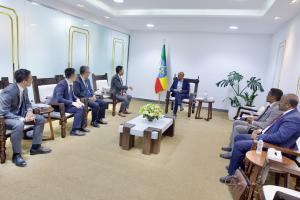
Ethiopia Moves to Deepen Digital Partnership with Huawei as It Advances 2030 Vision
Oct 31, 2026 13595
Addis Ababa, October 31, 2026 (ENA) — Ethiopia and Chinese technology giant Huawei have agreed to deepen their strategic cooperation in digital transformation. The agreement focuses on expanding ICT infrastructure, strengthening national technological capabilities, and accelerating the country's digital economy. Deputy Prime Minister Temesgen Tiruneh held discussions with Eric Yuan, the newly appointed Chief Executive Officer of Huawei Ethiopia, on the progress of Ethiopia's digital economy and prospects for further cooperation. In a social media post, Temesgen said the discussions reflected a shared commitment to advancing Ethiopia's transformation into a more connected, inclusive, and competitive economy. He noted that Huawei has played an important role in Ethiopia's digital development, particularly through the expansion of ICT infrastructure and improved connectivity. Yuan commended the government's ongoing efforts to advance the country's digital economy and reaffirmed Huawei's commitment to supporting Ethiopia's national development ambitions, the Deputy Prime Minister said. The discussions also explored opportunities to expand collaboration as Ethiopia advances its Digital Ethiopia 2030 strategy, with particular emphasis on national ownership, mutual trust, sustainability, security, and local value creation. Temesgen underscored that Ethiopia's digital transformation is not merely about adopting emerging technologies, but ensuring that they deliver tangible benefits to citizens, strengthen domestic technological capabilities, and create new opportunities for innovation and economic growth. He emphasized that although strong international partnerships are essential to advancing the country's digital ambitions, Ethiopia's technological future must remain firmly anchored in its own national priorities and aspirations. The two sides agreed to further strengthen their cooperation and translate their shared commitments into practical outcomes that contribute to Ethiopia's long-term development. "Our ambition is clear: an Ethiopia that is not only more connected, but more capable, more competitive, and better positioned to shape its own future," Temesgen stated.
Tanzania Interested in Exploring Ethiopia's Experience in AI-Assisted Tribunal Hearings
Oct 29, 2026 17313
Addis Ababa, October 29, 2026 (ENA) —The Tanzanian Finance Commissioner for Financial Sector Development, Dionisia Peter Mjema, has expressed interest in exploring artificial intelligence for tribunal hearings, citing Ethiopia's experience as a useful lesson for improving efficiency and reducing human error. The Commissioner made the remarks following a visit to Ethiopia's Capital Market Administrative Tribunal, where the Tanzanian delegation learned about the country's legal and regulatory framework for capital markets and the tribunal's operations. She said the delegation was particularly interested in Ethiopia's plan to develop AI-assisted hearings that could help improve the timely resolution of cases. According to the Commissioner, Tanzania could explore similar technology to modernize its tribunal's courtroom operations. The application of AI in hearings was an area of interest in the country's financial sector development efforts, she added. During the visit, the delegation also toured Ethiopia's capital market institutions, including the Ethiopian Securities Exchange and the Ethiopian Commodity Exchange, providing insights into the institutional arrangements supporting the country's developing capital market. Mjema said Tanzania could draw lessons from Ethiopia's experience in building institutional expertise, particularly the international exposure of professionals working in its capital market institutions. She also highlighted the importance of raising awareness of capital market products and services so that more companies, including small and medium-sized enterprises, could benefit from capital market financing. For his part, Eliad E. Mndeme, a lawyer and member of Tanzania’s Capital Market Tribunal, said the delegation learned how Ethiopia’s tribunal uses technology to facilitate electronic complaint filing and virtual hearings, allowing participants to follow proceedings remotely. The tribunal also uses artificial intelligence to transcribe spoken proceedings into written records, with the system reportedly achieving 87 percent accuracy, he said, adding that the tribunal is working with the Artificial Intelligence Institute of Ethiopia to improve its accuracy further. Mndeme pointed out that these practices offered useful lessons for Tanzania, particularly in applying technology to make dispute resolution more accessible and efficient. He also highlighted the tribunal’s efforts to prepare a guidebook on dispute-resolution mechanisms for lawyers and judges, saying public awareness of the system helps strengthen investor confidence by demonstrating that capital market disputes can be handled through an impartial and independent body.
Sport
.jpg)
WHO RC76 Participants “Walk the Talk” in Addis Ababa, Championing Healthier Africa
Aug 23, 2026 170534
Addis Ababa, August 23, 2026 (ENA) —Participants of the 76th Session of the World Health Organization (WHO) Regional Committee for Africa (RC76) joined a symbolic health walk on Sunday from the Adwa Victory Memorial to Meskel Square in Addis Ababa. The participants also turned the message of “Walk the Talk” into action while promoting physical activity and healthier lifestyles across Africa. Ethiopia’s Minister of Health Dr. Mekdes Daba, African health ministers, senior government officials, WHO leaders and prominent athletes, including Ethiopian Athletics Federation President Commander Sileshi Sihine, took part in the event. The initiative sought to translate health policies and commitments into practical action by encouraging people to make regular physical activity part of their daily lives and strengthening public awareness about the prevention of non-communicable diseases. The walk began at the Adwa Victory Memorial, a landmark symbolizing Ethiopia’s historic victory and African resistance to colonialism, and continued through Addis Ababa’s pedestrian routes before concluding at Meskel Square. Organizers emphasized that regular physical activity plays a vital role in reducing the risk of non-communicable diseases, including diabetes, hypertension and cardiovascular diseases, while contributing to healthier and more active communities. The event also highlighted Africa’s collective commitment to improving public health and demonstrated the importance of moving beyond policy discussions toward tangible, everyday health practices. The 76th Session of the WHO Regional Committee for Africa, scheduled to take place in Addis Ababa from August 24 to 28, 2026, will bring together more than 600 delegates, including health ministers and senior officials from the WHO African Region’s 47 member states, global health leaders, development partners, donors and WHO representatives. Over the five-day session, participants will assess progress toward regional health goals, deliberate on new strategies and resolutions. The session is also anticipated to identify collective actions to strengthen health systems, advance universal health coverage, enhance health security and improve emergency preparedness across the continent. The gathering is expected to serve as a major platform for African countries and global health partners to deepen continental health cooperation and advance practical solutions to Africa’s most pressing health challenges.
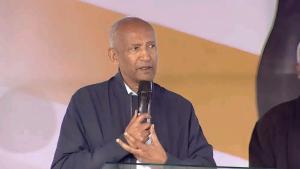
National Dialogue Conference to Address Root Causes of Differences through Consultation, Says ENDC Chief
Jul 12, 2026 163763
Addis Ababa, July 12, 2026 (ENA) —The upcoming National Dialogue Conference will serve as a platform to resolve the issues underlying Ethiopia's longstanding differences through peaceful consultation, Chief Commissioner of the Ethiopian National Dialogue Commission (ENDC) Professor Mesfin Araya, said. Speaking at a five-kilometer public race organized by the Commission at Meskel Square under the theme "Ethiopia is consulting" today, Professor Mesfin said the country has finalized all preparations for the landmark conference, which is scheduled to begin on July 15, 2026 in Addis Ababa. "The main national consultation conference will be a place where issues that are the source of our differences will be resolved through consultation," he said. According to the Chief Commissioner, delegates representing communities from every region, all woredas, Addis Ababa, Dire Dawa, and Ethiopians living abroad have already arrived in the capital to participate in the conference. He said participants are expected to engage in inclusive and constructive discussions and work toward consensus on recommendations that offer lasting solutions to issues that have fueled differences among Ethiopians. Professor Mesfin described the conference as a historic opportunity to address national challenges through dialogue rather than confrontation. He also expressed appreciation to security institutions, federal and regional government bodies, civil society organizations, and other stakeholders for their contributions in preparing for what he described as a significant stage in Ethiopia's national dialogue process. Participants in a five-kilometer race also expressed optimism that the conference would help strengthen national unity and foster lasting peace. "There is no problem that cannot be solved through consultation," participant Sherefa Ali said. "I believe the challenges that have persisted in Ethiopia for generations can be addressed through the main consultation conference." He added that such dialogue platforms help build trust between citizens and the government while creating opportunities to work together toward common national goals. Another participant, Gemechisa Waqgari, said the conference represents an important step toward reinforcing peace, unity, solidarity, and democratic values. Participant Tnisae Abebe also voiced hope that the conference would generate practical ideas to address the country's social and economic challenges. The National Dialogue Conference will deliberate on eight broad thematic areas identified during nationwide consultations. The agenda includes nation building, systems of government and governance, the political and electoral system, the status of the federal cities of Addis Ababa and Dire Dawa, religion and state relations, institution building, the rule of law and human rights, socio economic issues including the concerns of farmers and pastoralists, corruption and good governance, as well as peace building. The five kilometer race was attended by Deputy Chairperson of the House of Peoples' Representatives Standing Committee on Democratic Affairs Azmeraw Andemo, Professor Mesfin Araya, senior government officials, representatives of civil society organizations, and members of the public.

Diplomatic Football Participants Praise Ethiopia’s Heritage and Hospitality
Jun 14, 2026 161598
Addis Ababa, June 14, 2026 (ENA) —Participants in a diplomatic football event held in Addis Ababa have praised Ethiopia’s cultural heritage, historical legacy and warm hospitality. The tournament, organized in anticipation of the 2026 World Cup, brought together diplomatic football teams and invited guests who later toured key historical and cultural sites in the city. The delegation visited the Ethiopian National Museum, the Adwa Victory Memorial and Addis Sport Park, gaining what many described as a deeper appreciation of Ethiopia’s past and present development. Several participants said the experience reshaped their understanding of the country. Gordon Johnson, one of the participants, expressed admiration for what he witnessed during the visit. “The people are so welcoming and friendly. I love the culture,” he said. He further stated that: “We had a tour of the museum, and the guide showed us hominid fossils recovered in the ’60s, ’70s, and ’90s that date back millions of years.” Johnson said the experience reflected Ethiopia’s deeper historical significance beyond modern perceptions. Cameroonian guest Loic Kovamo also said the visit challenged her previous perceptions of the country. “I am speechless because I didn’t picture Ethiopia like this. It’s a very developed country, and the people are so proud of who they are,” she said, noting, “I’m going back with a lot of pride as an African because I discovered the incredible courage and bravery of the Ethiopian people.” Mark Hayes, one of the visitors, said his expectations were changed after arriving in Addis Ababa. “You have a perception before you come, but it’s the complete opposite. It’s an amazing country,” he said, adding, “What we do now is go home and tell stories about how good Ethiopia is. I feel like a proud advocate.” He further noted that he intends to share his experience in the United Kingdom, saying he would “educate others in England about what he had seen in Addis Ababa.” Joseph Kirule, who works with the Food and Agriculture Organization of the United Nations in Addis Ababa, highlighted the importance of the historical sites visited. “Today we saw different milestones in human civilization that originated here,” he said, adding, “Most importantly, we learned about the Adwa victory. That is a massive milestone that raises our prestige as Africans.”
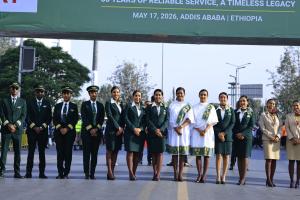
Ethiopian Airlines Rises as Africa’s Leading Carrier After Decades of Expansion, Success, Says CEO
May 17, 2026 167578
Addis Ababa, May 17, 2026 —Ethiopian Airlines has solidified its position as Africa’s largest and leading airline after years of sustained growth and operational success, the airline’s Group Chief Executive Officer, Mesfin Tasew, said on Sunday. The remarks were made during an 8-kilometer street race organized as part of celebrations marking the airline’s 80th anniversary. Speaking at the event, CEO Mesfin reflected on the airline’s humble beginnings in 1946, when it launched operations with only a small fleet of aircraft. Since then, he said, the carrier has expanded significantly and now operates one of the continent’s most modern fleets, including advanced aircraft from Boeing and Airbus. According to Tasew, the airline currently serves more than 145 international destinations worldwide and has achieved strong growth across multiple sectors, including cargo transportation, aviation training through the Ethiopian Aviation Academy, and other aviation-related services. He further said the airline’s operational strength and long-term strategic investments have helped make it one of the most preferred carriers in Africa and a major player in the global aviation industry. As part of commemorating its eight decades of operations, Ethiopian Airlines is holding a series of celebratory events, including the street race, panel discussions, exhibitions, and community outreach programs. The anniversary run attracted senior officials, including Sileshi Sihine, President of the Ethiopian Athletics Federation, alongside airline executives and invited guests. The race began at Pushkin Square, commonly known as Sar Bet, and is set to conclude at Bole International Airport. Athletes, airline employees, members of the sporting community, and participants from various institutions are taking part in the event.
Environment
Ethiopia to Host One of Most Consequential COPs in Human Story, Says UN-Habitat
Nov 3, 2026 11027
Addis Ababa, November 3, 2026 (ENA)— Ethiopia’s hosting of the global COP summit presents an unprecedented opportunity to amplify Africa's voice in international climate diplomacy and rebuild multilateral solidarity, UN-Habitat Regional Director for Africa Oumar Sylla said. In an exclusive interview with ENA, the Regional Director underscored that the upcoming conference comes at a critical juncture in global geopolitics, positioning Africa to demonstrate tangible progress in combating climate change and driving green investment. Ethiopia has been officially selected to host the 32nd UN Climate Change Conference (COP32) in Addis Ababa in November 2027, following the conclusion of COP30 in Belém, Brazil. Its selection demonstrates the country's practical commitment to implementing its climate change policies and strategies, it was learned. "We are all excited to see Ethiopia hosting one of the most critical and most important COP in the human story," Sylla asserted. He highlighted that Ethiopia, as the host nation and the seat of the African Union, offers a pivotal platform for African leaders, mayors, and ministers to forge a common action agenda while leveraging shared experiences to address climate vulnerabilities. "This COP happening in Africa, in Ethiopia, is a real opportunity for Africa to be more vocal, but also at the same time to build the solidarity we need," Sylla noted. The Director added that multilateralism faces pressing global challenges that require unified continental leadership. With Africa experiencing the fastest rate of urbanization globally, Sylla stressed the urgency of securing international partnership, adaptation funding, and mitigation support to build resilient African cities. Sylla reaffirmed UN-Habitat's readiness to support the Ethiopian Government in successfully hosting the conference, adding that the organization had already engaged with the COP presidencies. Furthermore, he noted that UN-Habitat is working with the city of Addis Ababa to ensure that urban development and climate resilience receive due attention in the COP32 process. Regarding Ethiopia's growing role, Sylla commended the country's leadership and ongoing initiatives aimed at reducing emissions and promoting green development. He particularly highlighted Ethiopia's efforts in clean cooking, cleaner energy for vehicles, the development of green corridors and large-scale tree-planting initiatives. Talking about leadership, he said "We can only commend the leadership of Ethiopia on those measures to curb emissions in the country, from clean cooking to cleaner energy for vehicles, all those green corridors as well with the goal of planting millions of trees in Ethiopia," he said. Sylla described these initiatives as valuable experiences that other African countries, cities and policymakers could learn from and replicate in their respective contexts. He also pointed to Ethiopia's urban regeneration, greening and urban transformation efforts as important areas through which the country could demonstrate its development experiences during the conference. "We need to see what is happening in Ethiopia and how we can replicate it in our countries elsewhere in Africa," Sylla emphasized. Ethiopia’s proactive and ambitious domestic policies have positioned the nation as a prominent leader in continental and global climate action. The East African nation has made major progress in advancing its climate resilience and green economy framework through large-scale national initiatives and policy milestones, reports indicate.

Ethiopia Inaugurates 11 EV Fast-Charging Stations Across Six Cities
Oct 31, 2026 12649
Addis Ababa, October 31, 2026 (ENA) — The Ethiopian Electric Utility (EEU) inaugurated 11 electric vehicle fast-charging stations today across six cities. The facilities are capable of charging 96 vehicles simultaneously, marking a significant step in the country's efforts to expand electric mobility infrastructure. The stations have been established in Addis Ababa, Bishoftu, Mojo, Adama, Batu, and Hawassa. Five of these are located in Addis Ababa, as part of a broader initiative to improve access to electric vehicle charging services nationwide. Speaking at the inauguration ceremony, the utility’s CEO, Getu Geremew, said that opening 11 charging stations in a single day marked a significant milestone for the institution. One of the newly inaugurated facilities, located along what is commonly known as Hachalu Road in Addis Ababa, was constructed in collaboration with the city administration and can charge nearly 12 vehicles at a time. Getu noted that the center would help meet the growing demand for charging services in the area, with potential for further capacity expansion. He added that the utility is working to expand charging infrastructure extensively across Addis Ababa and its surroundings, announcing plans to increase the number of charging stations fivefold over the next year. Beyond the capital, the utility is also planning to extend charging services to more regional cities, including Dire Dawa, Mekelle, Bahir Dar, Gondar, Jijiga, Jimma, and Arba Minch, among others. The expansion is expected to improve the availability of charging services as the adoption of electric vehicles increases across the country. Getu further noted that the utility has developed the capacity to accommodate up to 150 electric vehicles for charging at a time, adding that expanding the infrastructure would encourage clean energy use, reduce air pollution, and lessen dependence on conventional fuel. He stated that encouraging electric vehicles and expanding charging infrastructure are among the efforts the institution is undertaking to promote the use of clean energy. Bishoftu City Mayor Alemayehu Assefa, for his part, said the newly established charging facilities in his city would support tourism and green development activities by making it easier for electric vehicle users to access charging services. Located 47 kilometers from Addis Ababa, Bishoftu is a tourism and economic center known for its lakes and natural resources. Alemayehu said improved charging access would make travel and stays more convenient for visitors. He added that electric vehicles offer an important alternative for easing fuel demand and reducing air pollution, assuring that the city administration would cooperate in preparing sites and facilitating the establishment and operation of additional charging stations in Bishoftu and its surroundings. Ethiopia's expansion of electric vehicle charging infrastructure is part of its broader transition toward electric mobility, aimed at reducing dependence on imported petroleum and making greater use of the country's renewable energy resources. In January 2024, the government prohibited the importation of gasoline- and diesel-powered vehicles as part of efforts to accelerate electric mobility and reduce fuel imports. Ethiopia subsequently developed its National E-Mobility Strategy and Implementation Plan (2025–2030), which sets out measures to expand charging infrastructure, promote electric public transport, encourage local vehicle production, and strengthen the domestic electric mobility industry. The strategy envisages establishing more than 2,200 charging centers across Addis Ababa and regional areas by 2030, reflecting the importance of accessible charging facilities in supporting the country's transition to electric transport.
.jpg)
Natural Gas-Powered Buses Mark Milestone in Ethiopia’s Drive for Economic Resilience and Sustainability
Oct 30, 2026 14439
Addis Ababa, October 30, 2026 (ENA) — Ethiopia has taken a significant step toward sustainable energy use and economic self-reliance with the launch of natural gas-powered public transport buses in Addis Ababa, inaugurated by Prime Minister Abiy Ahmed today. The initial rollout of 26 converted city buses marks a strategic shift toward harnessing domestically produced natural gas as a cleaner and more affordable alternative to imported petroleum. The initiative is expected to reduce public transport operating costs, ease the country's dependence on imported fuel, and curb urban carbon emissions while creating new opportunities for the wider use of locally produced energy. Speaking at the inauguration ceremony, Prime Minister Abiy highlighted the extensive coordination and infrastructure development required to transform Ethiopia's domestic natural gas resources into a practical energy source for public transportation. He said the initiative builds on the initial phase of natural gas production in Gode, Somali Region. “The gas we produced there is not like liquid fuel. Because it is in gaseous form, extracting it from the well, transporting it, and delivering it to users requires significant additional work,” PM Abiy said. He explained that, unlike conventional liquid fuels, natural gas requires specialized infrastructure for storage, transportation, and distribution. “For that reason, dedicated storage facilities and specialized stations like this are necessary. A standard fuel station will not work for gas because their physical characteristics are entirely different,” he said. The conversion initiative builds on existing public transport infrastructure, drawing on domestic technical expertise to retrofit former diesel-powered Anbessa buses to operate on natural gas. “These buses you see are former Addis Ababa Anbessa buses that were previously fueled by diesel. By bringing them in, completely modifying them, adjusting their interiors, and adapting them for natural gas, considering we are beginners in this, we have successfully converted around 256 buses over the past few months,” the Prime Minister noted. Alongside the retrofitting programme, the government is expanding the city's fleet through the procurement of new gas-powered buses to accelerate the transition. “If we proceeded only by retrofitting, it would take too long. Therefore, we have ordered around 400 new gas buses, which will arrive within the next three months,” he announced. “When those 400 arrive, gas-powered vehicles will make up at least 30 percent of the current Anbessa bus fleet in Addis Ababa. Once we reach that benchmark in three to four months, we will scale up further to completely convert all fuel-using city buses in Addis Ababa to natural gas within a few years.” The transition to locally produced natural gas is also expected to lower public transport fares, ease the financial burden on urban households, and reduce Ethiopia's expenditure on imported petroleum. “Under current realistic conditions, [transport costs] drop by a minimum of 50 percent,” Prime Minister Abiy explained. “If you pay one Birr on this bus, you would have paid two Birr on the previous one.” Identifying transportation, housing, and food as major financial pressures facing low-income citizens, he said reducing costs in these areas remains central to improving living standards. “For low-income people, transportation and housing are the main burdens in Ethiopia,” he noted. “If we reduce transport costs, provide housing through our initiatives, and maintain our efforts on food security, we address the three issues that concern people most. Resolving these gives citizens the opportunity to live better lives.” “Our primary desire is to produce enough food to feed ourselves. When transport is imported, it comes with a lot of hassle,” PM Abiy stated, highlighting the importance of strengthening domestic production and industrial capacity. “We have ordered nearly 100 gas trucks, arriving in two to three months,” he added. He said lower transportation costs from factories to construction sites, combined with reduced manufacturing expenses, would generate broader economic benefits, particularly in housing construction, agricultural produce distribution, and urban economic activities. The next phases of the strategy will extend natural gas utilization to fertilizer production, electricity generation, and other commercial applications. “Gas extraction is an exciting beginning, but it must expand,” he said. “If taxis convert their cylinders and switch to gas, fares will decrease. In the next phase, gas will serve as an input for fertilizer and electricity generation.” He cited the Mojo and Debre Berhan ceramics manufacturing factories, which together meet more than 100 percent of national demand and have been converted to natural gas. “We will no longer import fuel for them. Because they utilize local energy and labor, ceramics will be delivered to the public at an affordable price,” he said. To facilitate the wider distribution of natural gas and support industrial operations, the government has also ordered additional transportation infrastructure. “We have ordered nearly 100 gas trucks, arriving in two to three months,” he added. He said lower transportation costs from factories to construction sites, combined with reduced manufacturing expenses, would generate broader economic benefits, particularly in housing construction, agricultural produce distribution, and urban economic activities. The next phases of the strategy will extend natural gas utilization to fertilizer production, electricity generation, and other commercial applications. Acknowledging the technical and financial challenges involved in developing the sector, the Prime Minister reaffirmed the government's commitment to addressing existing limitations through sustained investment, knowledge development, and national collaboration. “This work is complex. Beyond financial constraints, there are knowledge limitations, but we will address them diligently,” he remarked, adding that “very commendable results are being seen.” “The coming times for Ethiopia and our children are very promising and bright,” he said. “There is no result achieved without effort, work, and diligence. When we join forces, immense energy, capacity, knowledge, and wealth are gathered. Applied to nation-building, Ethiopia will flourish and achieve its aspirations through a united effort.”
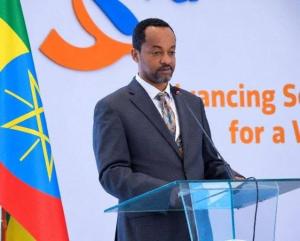
Success Achieved in Natural Resource Conservation Playing Pivotal Role in Regional Shared Benefit: Ministry
Oct 30, 2026 13229
Addis Ababa, October 30, 2026 (ENA) — Ethiopia’s strides in natural resource conservation and watershed development are significantly fostering regional growth and mutual benefit, according to the Ministry of Water and Energy. Success achieved in natural resource conservation is playing a pivotal role in regional shared benefit: Ministry of Water and Energy Ethiopia’s strides in natural resource conservation and watershed development are significantly fostering regional growth and mutual benefit, according to the Ministry of Water and Energy. The 3rd Ethiopian Water and Energy Week continues under the theme “Advancing Science-Based Policy and Partnerships for a Water and Energy Secure Future.” Speaking on the occasion, Michael Mehari, advisor to the Minister of Water and Energy, highlighted that developing water resources through integrated management is key to simultaneously safeguarding water, food, and energy security. He emphasized the necessity of expanding multipurpose water storage and infrastructure to harmoniously elevate both irrigation development and power generation. Noting that Ethiopia contributes over 86 percent of the water entering the Nile Basin system, he explained that prudently developing and protecting its water resources is essential not only for national progress but also for the shared prospering of all basin nations. Reflecting on Ethiopia’s extensive endeavors in soil and water conservation, watershed management, and environmental protection, he underscored that safeguarding upper basin ecosystems remains vital for domestic advancement and for downstream nations' mutual advantage. Accordingly, he pointed out the imperative to reinforce cross-border river governance through collaboration grounded in equity and equitable utilization. He further noted that policy formulation and development choices within the water and energy domains must firmly anchor themselves on scientific research and empirical evidence. He added that scaling up investment while building the capacity of domestic contractors and the private sector is vital for progress. Observing that viewing the water-energy-food-ecosystem nexus in unison is crucial for sustainable development, he stressed that these sectors transcend technical dialogues, it is interlinked with national survival, prosperity, and sovereignty. He concluded by noting that deliberations during Water and Energy Week have centered around green energy, power access, eco-friendly and health-conscious cooking options, integrated water resources management, sanitation, and digital innovation.
Most viewed
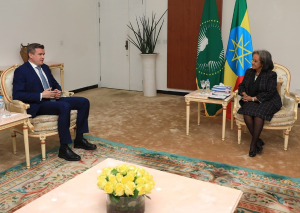
President Sahle-Work Holds Discussion with World Anti-Doping Agency President Bonka
Mar 29, 2023 389351
Addis Ababa March 29/2023/ENA/ President Sahle-Work Zewde has received a delegation led by World Anti-Doping Agency (WADA) President Witold Bonka today, according to the Office of the President. The discussion centered on the conditions under which Ethiopia and the World Anti-Doping Agency can work closely in anti-doping control and investigation, and how the organization can provide technical support, it was learned. During the discussion, Sahle-Work said that Ethiopia has a long history in athletics and is known in the world since athlete Abebe Bikila won marathon in Rome. She finally thanked the World Anti-Doping Agency for its technical support in anti-doping control.
Ethiopian Diaspora Demand Egypt to Change Counterproductive Posture on GERD
Apr 4, 2023 303033
Addis Ababa April 4/2023 (ENA) Ethiopians in the Diaspora have called on Egypt to change its counterproductive posture and find mutually beneficial agreements on the Grand Ethiopian Renaissance Dam (GERD). In a statement the diaspora issued yesterday, they noted that Ethiopia is the main source of the Nile by contributing 86 percent of the water to the Nile basin states while utilizing less than 1 percent of the potential for hydroelectric power. Ethiopians are currently building the GERD on the Blue Nile that is financed entirely by Ethiopians and is a crucial project for the country's development as it will provide clean, renewable energy and lift millions out of poverty. About 65 percent of the 122 million of Ethiopia's population have no access to any form of electricity. The much-needed electricity will facilitate economic growth for Ethiopia and the region, the statement elaborated. The dam will promote regional cooperation and integration while offering opportunity for eleven countries of the Nile Basin to work together to manage the river's resources more efficiently and effectively, it added. The GERD is being built with the highest environmental and technical standards to achieve the objectives of the national electrification program and the execution of Ethiopia’s Climate-Resilient Green Economy Strategy. According to the statement, Ethiopia has provided scientific evidence and expert testimonies that GERD will not significantly affect the flow of water downstream, and provided compelling arguments for the need for equitable use of the Nile's resources by all countries in the region. The diaspora further said they understand that the GERD has raised concerns in Egypt about the downstream effects on the Nile's flow and water availability since Egyptians have been misinformed about the GERD for many years. But on the contrary, the dam will provide several benefits to Egypt and Sudan, including increased water flow during dry seasons and decreased flooding events. “We want to assure Egyptians that Ethiopians are committed to fair and equitable use of the Nile's waters without harming our downstream neighbors. We recognize that the Nile River is a shared resource, and we support finding a mutually beneficial solution.” As Ethiopians in the Diaspora, we reiterate our support for fair and equitable use of the Nile River and call on the Egyptian people and Egyptian Diaspora to question the misinformation about the GERD in Egypt's mainstream media and embrace the spirit of friendship and cooperation by understanding that the GERD is a project of great national importance to Ethiopians that will benefit Egyptians by ensuring a reliable and predictable supply of water, that Ethiopians have the right to use their water resources for the development of its people and economy, in accordance with the principles of equitable and reasonable utilization without causing significant harm. Efforts to destabilize Ethiopia by the regime in Egypt, will indeed affect the historical and diplomatic relations dating back to several thousand years, the long-term interest of the Egyptian people and make Ethiopians less trusting in cooperating on the GERD and future hydropower projects on the Nile, they warned. The diaspora groups urged Egyptian leaders to engage in constructive dialogue with the leaders of Ethiopia regarding the GERD and steer away from their counterproductive posture of calling for a “binding agreement” on the GERD filling and the subsequent operations as an imposing instrument on water sharing that Ethiopians will never accept. The GERD can be a source of cooperation and collaboration between our two countries rather than a source of conflict, they underscored. "Ethiopians believe that, through dialogue and understanding, peaceful and equitable agreements that benefit all parties involved can be realized to build a brighter future for all people in the Nile basin. Belligerent positions by Egyptian leaders stating ‘all options are open’ are contrary to the spirit of the 2015 Declaration of Principles signed by Ethiopia, Sudan and Egypt." According to the statement, such postures will surely harm Egypt's long-term interest and impede trustful cooperation with the Ethiopian people and government. They asked Arab League and its member states to refrain from interfering in the issue of the GERD, which is the sole concern of the three riparian countries (Ethiopia, Sudan and Egypt) and their shared regional organization (the African Union), which is mediating the talks to find ‘African Solutions to African Problems.’ The issues remaining on the table at the trilateral negotiations under the auspices of the African Union are being narrowed to a handful of critical matters on equity and justice, on which the Arab league nations have no business or legal right to be involved.

Ethiopia's Ayana Takes Paris Win on Marathon Debut
Apr 2, 2023 301879
Addis Ababa April 2/ 2023 (ENA) Ethiopia's Abeje Ayana won the men's race at the Paris Marathon on Sunday in his first competitive run over the distance. The 20-year-old Ayana won with a time of two hours, seven minutes and 15 seconds, 20 seconds ahead of compatriot and pre-race favourite Guye Adola with Kenya's Josphat Boit a further five seconds back in third. After clocking 59:39 in a half marathon in Poznan, Poland in 2021, Ayana was one of the men to watch on a grey, windy morning in the French capital, Reuters reported.
Africa’s Sustainable Growth Hinges on Science, Technology and Innovation: Experts
Mar 3, 2023 298975
Addis Ababa March 3/2023/ENA/ Achieving the ambitious targets of the 2030 and 2063 Agendas of Africa requires leveraging the power of science, technology, and innovation (STI), according to experts. A press release issued by the ECA stated experts at the Ninth African Regional Forum on Sustainable Development have emphasized the crucial role of STI as a key driver and enabler for ensuring economic growth, improving well-being, mitigating the effects of climate change, and safeguarding the environment. They also underscored the need to strengthen national and regional STI ecosystems by fostering innovation, promoting entrepreneurship, and investing in research and development. By doing so, the experts said that Africa can harness the potential of STI to accelerate its socio-economic progress and achieve the Sustainable Development Goals (SDGs) by 2030 and the African Union's Agenda by 2063. The session, held on 2 March 2023, builds on the recommendations of the Fifth African Science, Technology, and Innovation Forum, which accentuates the central role of STI and digitalization during the COVID-19 pandemic and the need for the necessary infrastructures for the development of STI, plans, and policies that are action-oriented towards strengthening its full implantation. The experts highlighted that despite advances in STI, significant gaps remain in bridging the scientific and technological divide between developed countries and Africa. The highly uneven global distribution of scientific capacity and access to knowledge threatens to derail the goal of leaving no one behind, which is the central and transformative promise of Agenda 2030. “We need a clear political will from governments to ensure science, technology, and innovation is a reality. By doing so our education systems will be capacitated to deliver knowledge that is vital to solving Africa’s sustainability challenges,” Niger Higher Education and Research Minister Mamoudou Djibo said. The strategy includes the establishment of universities as centers for excellence and investments in education, technical competencies, and training in the fields of science, technology, research, and innovation. These initiatives are crucial in accelerating progress towards achieving global goals. However, in order to fully leverage the potential of STI, significant investments in research and development are required. National systems also need to be strengthened, Namibia Information and Communication Technologies Deputy Minister Emma Theophilus, stated adding that “strengthening our national systems for STI is a key game changer for rapid structural transformation in Africa. Leveraging the digital transformation can achieve a stronger, smarter, and more inclusive recovery.” Emerging evidence suggests that an STI and digital Africa can be a springboard to accelerate the implementation of the SDGs and fulfill the aspirations of Agenda 2063.
Feature Article
.jpg)
Geopolitical Rivalries, Economic Pressures and Climate Risks Dominate the Global Agenda
Nov 2, 2026 15528
By Staff Writer November 1, 2026 (ENA) The final week of October 2026 underscored the increasingly interconnected nature of global affairs, as geopolitical rivalries, diplomatic efforts to contain conflicts, economic uncertainty and escalating climate risks continued to shape the international agenda. From the Middle East and Europe to Africa, Asia and the Americas, governments and international institutions faced mounting pressure to address security threats, navigate economic uncertainties and respond to humanitarian and environmental emergencies. Meanwhile, intensifying competition over energy, advanced technologies and strategic supply chains further illustrated how economic resilience and national security are becoming increasingly intertwined. Against this backdrop, diplomatic engagement, multilateral cooperation and the pursuit of sustainable development remained central to international efforts to navigate an increasingly complex global landscape. Peace and Security: Diplomatic Efforts Amid Persistent Conflicts Conflict prevention, regional stability and diplomatic engagement remained among the most pressing international priorities during the week, as several regions continued to grapple with armed conflicts and heightened geopolitical tensions. In the Middle East, tensions involving Iran, Saudi Arabia and Yemen raised renewed concerns about regional security and the vulnerability of critical energy infrastructure and international maritime routes. Houthi attacks and reported threats to Saudi infrastructure heightened concerns over the safety of commercial shipping and strategic energy facilities, particularly around vital waterways. Against this backdrop, diplomatic initiatives involving regional mediators continued to explore opportunities to ease tensions between Iran and its regional adversaries. The developments underscored the importance of sustained dialogue in preventing further escalation in a region whose stability has far-reaching implications for global security and energy markets. In Europe, diplomatic efforts to advance negotiations over the Russia-Ukraine conflict remained in focus. Ukrainian President Volodymyr Zelenskyy indicated that technical-level discussions involving Ukraine, Russia and the United States could resume in November. Nevertheless, persistent disagreements over territorial arrangements and security guarantees continued to complicate prospects for a comprehensive settlement. Meanwhile, Sudan's humanitarian and security crisis remained acute as fighting between the Sudanese Armed Forces and the Rapid Support Forces continued to inflict civilian casualties, displace communities and destroy critical infrastructure. Reports of deadly drone attacks around the disputed Abyei region further highlighted the vulnerability of civilian populations and the urgent need for effective protection measures. These developments illustrated the persistent challenges facing international peace efforts and reinforced the need for coordinated diplomacy, conflict prevention and stronger mechanisms to protect civilians. Uncertainty, Trade Competition and Supply Chain Pressures Economic uncertainty, intensifying trade competition and energy market vulnerabilities continued to influence international economic discussions as governments sought to strengthen their resilience against external shocks. The International Monetary Fund's October 2026 World Economic Outlook projected global economic growth of 3.1 percent in 2026, increasing to 3.4 percent in 2027. Global headline inflation was forecast to reach 4.7 percent in 2026 before easing to 4.1 percent the following year. The IMF cautioned that geopolitical conflicts, renewed trade tensions, fiscal vulnerabilities and uncertainty surrounding artificial intelligence investment could weigh on global economic performance. Energy-importing economies remain particularly exposed to these pressures. Higher petroleum prices can increase transportation and production costs, erode household purchasing power and intensify inflationary pressures, particularly in countries with limited domestic energy resources. Meanwhile, G20 foreign ministers convened in Atlanta to discuss economic security, food supplies, international trade and the protection of critical supply chains. Their deliberations reflected growing recognition that diversified trade partnerships, resilient supply networks and closer international economic cooperation are essential to sustaining global growth. The broader picture points to an increasingly challenging economic environment in which governments must balance domestic economic priorities with the need to navigate geopolitical uncertainty and interconnected global markets. Climate and Environment: Growing Urgency for Global Action Climate change and environmental sustainability remained high on the international agenda, with new United Nations assessments highlighting the widening gap between existing climate commitments and the action required to address escalating environmental risks. On October 27, UN Climate Change released assessments examining national climate commitments, adaptation planning and progress in implementing the Paris Agreement. The findings highlighted the need for more ambitious climate action, particularly in developing countries increasingly exposed to drought, flooding, agricultural disruption and other climate-related shocks. The assessments also emphasized the importance of mobilizing climate finance, expanding early-warning systems and investing in climate-resilient infrastructure to protect vulnerable communities and critical economic sectors. Meanwhile, preparations continued for the 31st UN Climate Change Conference (COP31), scheduled to take place in Antalya, Türkiye, from November 9 to 20. The conference is expected to place climate finance, adaptation, emissions reduction and the implementation of international commitments at the center of global discussions. For African countries, the stakes are particularly high. Despite contributing relatively little to global greenhouse gas emissions, the continent faces disproportionate exposure to climate-related risks affecting agriculture, water resources, food security and livelihoods. Consequently, greater investment in renewable energy, climate-resilient agriculture, adaptation infrastructure and sustainable natural resource management remains essential to advancing Africa's development priorities. Elections and Public Accountability in Focus Electoral developments, political participation and public accountability also featured prominently in international affairs, reflecting the continuing influence of democratic processes on national governance and global relations. In Brazil, President Luiz Inácio Lula da Silva secured another presidential term after defeating conservative challenger Flávio Bolsonaro in the October 25 runoff election. The outcome is expected to shape the country's domestic policy direction and international engagement, particularly Brazil's role in Latin American affairs and broader global diplomacy. In the United States, political campaigning intensified ahead of the November 3 midterm elections, with economic conditions, immigration, public security and control of Congress emerging as major issues. The outcome is expected to influence the balance of political power in Washington and the implementation of President Donald Trump's legislative agenda. Meanwhile, youth-led demonstrations in France and other European countries reflected mounting public concerns over housing affordability, education, the rising cost of living and government accountability. These developments highlighted the importance of responsive governance, meaningful political participation and accountable institutions in addressing public expectations and maintaining confidence in democratic systems. Ebola Outbreak Raises Regional Concerns Public health remained another significant international concern as the Bundibugyo strain of Ebola continued to challenge disease-control efforts in the Democratic Republic of Congo. Health authorities and international partners intensified efforts to contain the outbreak, with reported cases and fatalities raising concerns about the potential for cross-border transmission and the capacity of regional healthcare systems to respond effectively. The situation underscored the importance of early detection, contact tracing, infection prevention, public awareness and cross-border coordination in containing infectious diseases. For African countries, the outbreak once again highlighted the need to strengthen healthcare infrastructure, disease surveillance systems and emergency response capabilities, particularly in areas with limited access to essential medical services. Beyond infectious diseases, the relationship between climate change and public health also attracted international attention. The 2026 Lancet Countdown report highlighted the growing burden of heat-related deaths and other health consequences associated with rising temperatures. Its findings reinforced the understanding that climate change is no longer solely an environmental challenge but an increasingly serious threat to public health, human wellbeing and economic productivity. Energy Security: Geopolitical Tensions Expose Global Vulnerabilities Energy security remained a major factor shaping international economic and diplomatic relations as geopolitical tensions threatened critical petroleum infrastructure and strategic maritime corridors. Reported attacks and threats involving energy facilities in Saudi Arabia and shipping routes around the Strait of Hormuz raised concerns about potential disruptions to global oil supplies. Given the strategic importance of the Middle East to international energy markets, instability in the region carries significant consequences for both energy-producing and energy-importing economies. Disruptions to major shipping corridors could increase transportation and insurance costs, undermine international trade and intensify inflationary pressures, particularly in economies heavily dependent on imported fuel. These vulnerabilities have reinforced the importance of diversifying energy sources, strengthening domestic production and accelerating investment in renewable energy. The growing intersection of energy security, geopolitical stability and economic resilience is making diversified and sustainable energy systems an increasingly important component of national development strategies. Technological Competition Reshapes Global Power Relations Competition over artificial intelligence, semiconductors, advanced manufacturing and other strategic technologies continued to reshape relations among major powers. China's fifth plenary session, which opened on October 26, attracted international attention as Beijing considered its economic and political priorities amid intensifying global technological competition. The discussions came as major economies sought to strengthen domestic industrial capabilities, secure critical technologies and reduce vulnerabilities in strategic supply chains. Meanwhile, the United States and Japan announced plans to deepen defence-industrial cooperation through missile production arrangements in Japan, reflecting their efforts to strengthen regional security and technological capabilities. These developments point to a broader transformation in international relations, where technological innovation, industrial capacity and control over critical resources are increasingly viewed as strategic assets. As competition intensifies, technological sovereignty and the ability to secure essential supply chains are becoming increasingly important determinants of economic competitiveness and national security. Multilateral Cooperation Faces Geopolitical Divisions International diplomatic engagements during the week demonstrated both the continuing relevance of multilateral institutions and the growing difficulty of achieving consensus amid geopolitical divisions. G20 foreign ministers discussed international security, energy and food supplies, trade and maritime transportation during their meeting in Atlanta. However, differences over major geopolitical conflicts prevented the adoption of a joint communiqué, illustrating the challenges of building common positions among major powers on contentious international issues. At the United Nations, the General Assembly adopted another resolution calling for an end to the longstanding United States economic embargo against Cuba. The vote reflected continued international opposition to the restrictions, although the resolution is non-binding. Meanwhile, ASEAN-related defence engagements in the Philippines provided a platform for regional countries and the United States to discuss maritime security, defence cooperation and regional stability amid intensifying strategic competition in the Indo-Pacific. Together, these engagements highlighted the importance of diplomatic dialogue and multilateral cooperation in addressing shared global challenges, even as competing national interests and geopolitical rivalries continue to complicate international consensus-building. Conclusion An Increasingly Interconnected and Uncertain World The final week of October 2026 offered a clear reminder that global security, economic stability, technological advancement, political governance and environmental sustainability are deeply interconnected. From diplomatic initiatives seeking to contain conflicts in the Middle East and Europe to growing concerns over energy security, trade competition, technological sovereignty and climate vulnerability, developments across regions demonstrated how challenges in one part of the world can generate far-reaching consequences elsewhere. For developing economies, particularly across Africa, these dynamics present both significant challenges and opportunities. Exposure to external economic shocks, climate-related disasters and geopolitical disruptions underscores the importance of strengthening domestic resilience, diversifying partnerships and investing in sustainable development. As November begins, the international community faces a critical task: translating diplomatic commitments and multilateral discussions into practical action. The ability to bridge geopolitical divisions, protect vulnerable populations, strengthen economic resilience and accelerate climate action will remain essential to shaping a more stable, secure and sustainable global future. Sources: The roundup draws on reporting and analysis from major international and regional media and institutional sources including Reuters, AP, BBC, Al Jazeera, The Guardian, CNN, France 24, DW, Africanews, Euronews, The New York Times, The Washington Post, Bloomberg and Financial Times.
.jpg)
Diplomatic Visibility, Strategic Deterrence and Growing Stakes in the Red Sea Region
Nov 1, 2026 27533
By Staff Writer November 1, 2026 (ENA) The final week of October 2026 brought Ethiopia into sharper international focus, as the country advanced its defence modernization, strengthened strategic partnerships and renewed attention to its interests in the Abay (Nile) Basin and Red Sea region. From the announcement of the delivery of advanced fighter jets and plans to acquire sophisticated air defence systems to high-level diplomatic engagements at the Russia-Africa Summit, Ethiopia's activities reflected the growing intersection of national security, economic ambitions and regional geopolitics. Prime Minister Abiy Ahmed's participation in the Third Russia-Africa Summit in Moscow provided an important platform for advancing bilateral and continental cooperation. His announcement that Ethiopia had received its first 12 Su-35 fighter jets and was set to acquire four batteries of S-400 air defence systems also brought the country's military modernization into the international spotlight. Meanwhile, the Third Ethiopian Water and Energy Week highlighted the country's efforts to strengthen water-resource management amid rising demand from agriculture, industry and a growing population. In Addis Ababa, the introduction of the first 26 natural gas-powered city buses marked another step towards reducing fuel imports, lowering transport costs and expanding the use of locally sourced energy. Beyond these developments, discussions surrounding Ethiopia's interests in the Abay River and sustainable access to the Red Sea continued to feature prominently in national and international discourse. Together, these developments underscored Ethiopia's efforts to strengthen its national capabilities, diversify international partnerships and advance its economic and strategic interests in an increasingly interconnected regional environment. Defence Modernization: Ethiopia Advances Strategic Deterrence One of the week's most consequential announcements came from Prime Minister Abiy Ahmed, who disclosed that Ethiopia had taken delivery of its first 12 Russian-made Su-35 4++ generation fighter jets and was preparing to receive four batteries of S-400 air defence systems. The Prime Minister described the development as a significant milestone in the country's efforts to strengthen national defence and security capabilities, emphasizing the importance of building military readiness during peacetime to deter potential threats. "Today, in accordance with our prior agreement with the Russian government, we have taken delivery of the first twelve Su-35 4++ Generation fighter jets," he announced. He further disclosed that Ethiopia would receive four batteries of S-400 air defence systems, marking another major component of the country's military modernization programme. The Prime Minister elaborated that the delivery was expedited ahead of schedule following high-level engagements with the Russian government, including discussions with President Vladimir Putin. Highlighting the capabilities of the newly acquired aircraft, Abiy said the Su-35 combines advanced radar technology, high manoeuvrability and air-to-air and air-to-ground combat capabilities. He also pointed to its ability to detect and engage aerial threats, including cruise missiles and certain ballistic targets. The acquisition signals Ethiopia's intention to strengthen its air capabilities as part of a broader effort to modernize the Ethiopian National Defence Force (ENDF). Beyond acquiring sophisticated military platforms, the country's evolving defence priorities also place emphasis on operational readiness, technological capabilities and the institutional capacity required to maintain and sustain modern military systems. The announcement has consequently drawn international attention to Ethiopia's changing defence posture and its implications for the wider Horn of Africa and Red Sea security environment. Russia-Africa Summit: Advancing Ethiopia's Strategic Partnerships Ethiopia's defence announcement coincided with Prime Minister Abiy Ahmed's participation in the Third Russia-Africa Summit in Moscow, where he engaged in bilateral and multilateral discussions aimed at expanding cooperation across strategic sectors. Among the key engagements was his meeting with Russian President Vladimir Putin, during which the two leaders discussed ways to deepen the longstanding relationship between their countries. PM Abiy pointed out that the discussions explored opportunities for expanding cooperation in nuclear energy, healthcare, trade and other areas of mutual interest. The meeting reflected the two countries' continued interest in broadening their partnership beyond traditional diplomatic relations into sectors central to Ethiopia's long-term economic and technological ambitions. In a gesture underscoring the importance of intellectual exchange and mutual understanding, the Ethiopian Prime Minister also presented Putin with the Russian edition of his book, Medemer. PM Abiy described the presentation as reflecting the shared commitment of the two countries to dialogue, mutual understanding and the continued advancement of bilateral relations. Addressing the summit, the Prime Minister emphasized the importance of translating longstanding diplomatic relationships and strategic commitments into tangible development outcomes. He identified food security and agricultural productivity, reliable energy supply, and skills and knowledge transfer as three essential pillars underpinning Ethiopia's development ambitions. He further noted that Ethiopia and Russia have maintained diplomatic relations for more than a century, founded on mutual respect and shared interests. As part of efforts to expand this historic partnership, the two countries are pursuing cooperation on the development of a nuclear power plant in Ethiopia, an initiative expected to contribute to the country's long-term energy ambitions. Prime Minister Abiy said the strategic partnership with Russia could help diversify Ethiopia's energy options, accelerate its development aspirations and strengthen cooperation in areas critical to national prosperity. Water and Energy: Strengthening the Foundation for Sustainable Development While defence and diplomacy attracted considerable international attention, Ethiopia's water and energy agenda remained another important focus during the week. The Third Ethiopian Water and Energy Week brought together policymakers, technical experts and other stakeholders to examine the country's progress and challenges in managing its water resources and expanding access to essential services. The third day of the event was dedicated to Water Day under the theme "Evidence to Action: Science-Based Solutions for Integrated WASH and Water Resource Management." Discussions focused on strengthening the identification, documentation and sustainable management of Ethiopia's surface and groundwater resources as population growth, industrialization and agricultural expansion continue to increase national demand. The gathering also provided an opportunity to assess progress over the past decade in drinking water supply and sanitation, recognize achievements and identify remaining gaps. For Ethiopia, effective water-resource management is closely linked to food security, energy generation, industrial development and public health. With agriculture remaining central to the national economy, improved water management and expanded irrigation infrastructure are increasingly important to strengthening agricultural productivity and reducing vulnerability to climate-related shocks. The discussions therefore highlighted the importance of translating scientific evidence, research and policy commitments into practical solutions that can support the country's long-term development. Addis Ababa Introduces Its First Natural Gas-Powered City Buses Another notable development during the week was the introduction of the first 26 natural gas-powered city buses into Addis Ababa's public transportation system. Prime Minister Abiy Ahmed announced that the buses, converted from conventional fuel to natural gas, had officially entered service, marking a new phase in the capital's efforts to modernize public transport and diversify its energy sources. The initiative is expected to reduce the country's fuel import bill, lower public transport operating expenses and make transportation more affordable for passengers. the Prime Minister revealed that the transition is projected to cut passenger fares by half while reducing foreign currency expenditure on conventional fuels. He explained that the initiative followed months of work to transport domestically produced natural gas to Addis Ababa, establish refuelling facilities and retrofit existing buses. Beyond its immediate transport benefits, the project demonstrates efforts to expand the domestic application of locally available energy resources and strengthen technological and industrial capabilities. The Premier also disclosed that an additional 400 natural gas-powered buses were expected to arrive soon, as the government seeks to accelerate the transition towards more affordable and diversified public transportation. The initiative forms part of broader efforts to improve urban mobility, reduce dependence on imported petroleum products and deliver tangible economic benefits to citizens. Abay and Red Sea: Ethiopia's Strategic Interests Gain International Attention Alongside developments in defence, diplomacy and economic transformation, Ethiopia's interests in the Abay River and sustainable access to the Red Sea continued to attract attention from political leaders, analysts and international commentators. The country's geographical position, population size, economic ambitions and growing regional responsibilities have increasingly brought these issues into discussions about the future of the Horn of Africa. Former Prime Minister Hailemariam Desalegn described Ethiopia's pursuit of sustainable sea access as a legitimate national aspiration that should be addressed through dialogue, negotiations and mutually beneficial arrangements. He argued that the central question should not be whether Ethiopia needs access to the sea, but how such access can be secured peacefully while respecting the interests of all parties. With a population of approximately 130 million, a growing economy and a vast geographical area, Ethiopia is the world's most populous landlocked country. Hailemariam described the loss of direct maritime access as a historical development that continues to influence the country's economic and strategic interests. He also traced the region's present geographical arrangements to the European scramble for Africa in the 1880s, arguing that the issue deserves serious consideration rather than being passed on to future generations. His remarks added to the growing discussion about Ethiopia's maritime interests and the importance of pursuing regional solutions through constructive engagement. Meanwhile, former African Union Commission Chairperson Nkosazana Dlamini-Zuma highlighted Ethiopia's broader continental significance, particularly its homegrown development approach and investments in energy. Speaking to ENA in Moscow ahead of the Russia-Africa Summit, Dlamini-Zuma described Ethiopia as an important model of African development and self-determination. Having led the African Union Commission from its headquarters in Addis Ababa between 2012 and 2017, she emphasized the country's unique responsibility as the diplomatic capital of Africa. She said Ethiopia should continue contributing to the vision of an integrated, peaceful and prosperous continent, driven by African leadership and the aspirations of its people. Her remarks highlighted the importance of Ethiopia's development experience and its role in advancing continental cooperation. A Week Reflecting Ethiopia's Expanding Strategic Priorities Taken together, the developments of the final week of October reflected several interconnected dimensions of Ethiopia's national priorities. The defence acquisitions highlighted efforts to strengthen military readiness and strategic deterrence. The Russia-Africa Summit provided an opportunity to expand international partnerships in energy, trade, healthcare and technology. The Water and Energy Week reinforced the importance of sustainable resource management, while the introduction of natural gas-powered buses demonstrated the practical application of domestic energy resources. At the same time, discussions surrounding the Abay River and Red Sea access underscored the enduring importance of geography, economic interests and regional cooperation in shaping Ethiopia's strategic outlook. These developments point to a broader national agenda in which security, economic transformation, technological advancement and diplomatic engagement increasingly intersect. As Ethiopia continues to pursue its development ambitions and navigate a changing regional and international environment, the challenge will be to translate these strategic priorities into sustainable economic gains, stronger national institutions and peaceful, mutually beneficial regional partnerships.


