Pan-African AI Residency Strengthens Cross-Border Partnerships, Advances Innovation: EAII Director General - ENA English


Pan-African AI Residency Strengthens Cross-Border Partnerships, Advances Innovation: EAII Director General
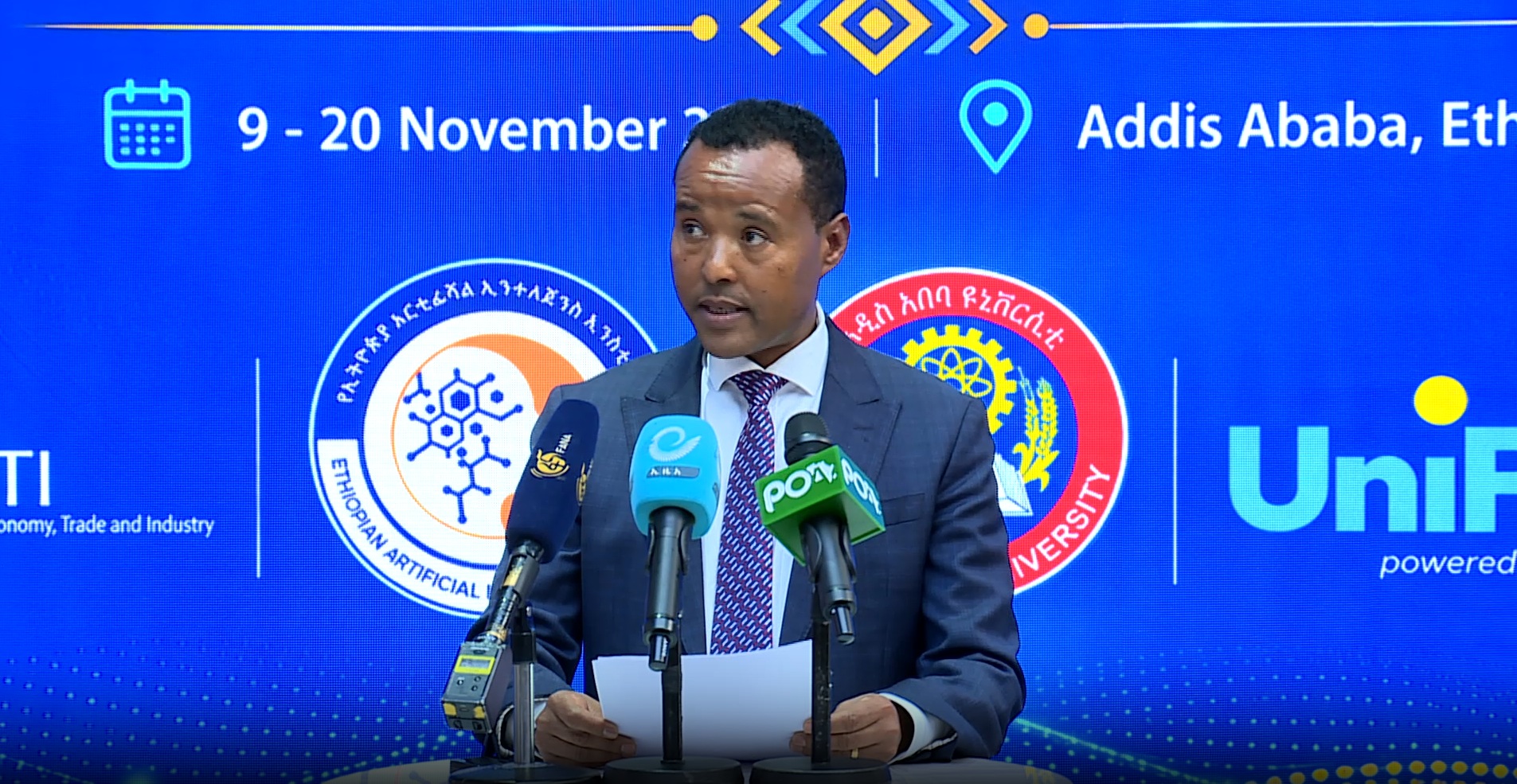
Addis Ababa, November 20, 2026 (ENA)— The Pan-African AI Ventures Residency has strengthened cross-border partnerships among young African innovators while equipping them with the skills to develop market-ready artificial intelligence solutions, Ethiopian Artificial Intelligence Institute (EAII) Director General Worku Gachena said.
A total of 51 young innovators from across Africa graduated today after completing a two-week intensive residency designed to transform AI prototypes into commercially viable products.
Held in Addis Ababa under the AI UniPod initiative, the program brought together young technology entrepreneurs from several African countries to exchange expertise, collaborate on projects and explore opportunities for cross-border innovation.
The residency was organized through a partnership involving the EAII, the United Nations Development Programme (UNDP), Addis Ababa University (AAU) and Japan's Ministry of Economy, Trade and Industry (METI).
During the program, participants received technical and business training, worked with mentors and coaches, refined their prototypes and tested AI models to advance their early-stage ideas toward market-ready solutions.
Speaking at the closing ceremony, Worku congratulated the graduates and highlighted the relationships and professional networks established during the residency as among its most valuable outcomes.
"What makes me happiest is the connection you built," Worku said. "You didn't just walk next to each other. You built real links among each other and with Ethiopian startups. Some of those friendships, I'm sure, will become partnerships, and some of those partnerships will become companies that work across borders."
He said participants also visited Addis Ababa's ongoing urban development projects, including the Chaka Project, and the Adwa Victory Memorial Museum.
Worku said the museum visit reflected the Pan-African spirit of the residency, underscoring the importance of African solidarity, collective strength and self-reliance.
"After these two weeks with you, I don't think it is a question anymore. You will shape it," he said.
Describing the graduation as the beginning of a new journey rather than a farewell, Worku urged participants to become ambassadors of African innovation. He also assured them that the AI UniPod would remain open to supporting their ventures as they expand across the continent.
UNDP Resident Representative in Ethiopia Samuel Doe, meanwhile, described the AI revolution as a new frontier in Africa's pursuit of technological sovereignty, calling the graduating innovators the "new foot soldiers of Adwa."
Drawing parallels between Africa's historical struggle against colonial domination and the contemporary risks of technological and intellectual dependency, Doe urged the graduates to help position the continent as a creator and developer of AI technologies rather than merely a consumer.
He commended Ethiopia's commitment to digital transformation under Prime Minister Abiy Ahmed and highlighted the country's initiative to establish what he described as the world's first dedicated AI university.
Doe also challenged the graduates to translate Africa's widely discussed potential into tangible commercial achievements, citing Japan's post-World War II industrial transformation as an example of how technological adaptation, reverse engineering and innovation can accelerate economic development.
"We are really tired with potential. Take this potential to the market," he said.
Participants said the residency broadened their understanding of entrepreneurship, shifting their focus beyond coding to encompass market positioning, business strategies, product development and collaboration.
Patrick Shilukwe Kasama, an innovator from Zambia, said the training helped him better understand how to position his project in the market. He also praised Ethiopia's efforts to advance artificial intelligence.
"The interaction has been amazing. Different countries, different cultures, there's really been no isolating. It's one Africa, so we found a way to live with each other," Kasama said.
He expressed appreciation to the organizers and sponsors for providing an opportunity for 51 innovators from across the continent to develop their skills and establish professional connections.
Nanri Ouakhilatou Torou from Benin said the residency challenged her initial approach to developing and presenting her web application, prompting her to reconsider its technical aspects and strengthen its business strategy.
"Beyond having knowledge from our mentors, we also have critical thinking of each of our projects from different participants as well," she said, highlighting the value of peer feedback and the professional networks established during the program.
"Beyond anything else, I connected with everyone, and the network I built, I think the network is really, really powerful. Ethiopia is and will always be one of the countries that actually captured my heart," Torou added.
Ashinze Emmanuel Chidi from Nigeria also said that although he initially joined the residency with a primary focus on coding his idea, mentorship and exchanges with fellow innovators broadened his understanding of developing scalable technology ventures.
The residency is part of wider efforts to strengthen Africa's artificial intelligence ecosystem by building local technological capabilities, supporting young entrepreneurs and fostering cross-border partnerships to help African-developed innovations reach regional and international markets.


