COP32 Offers Ethiopia A Strategic Path to Green Growth and Global Influence - ENA English


COP32 Offers Ethiopia A Strategic Path to Green Growth and Global Influence
By Staff Writer
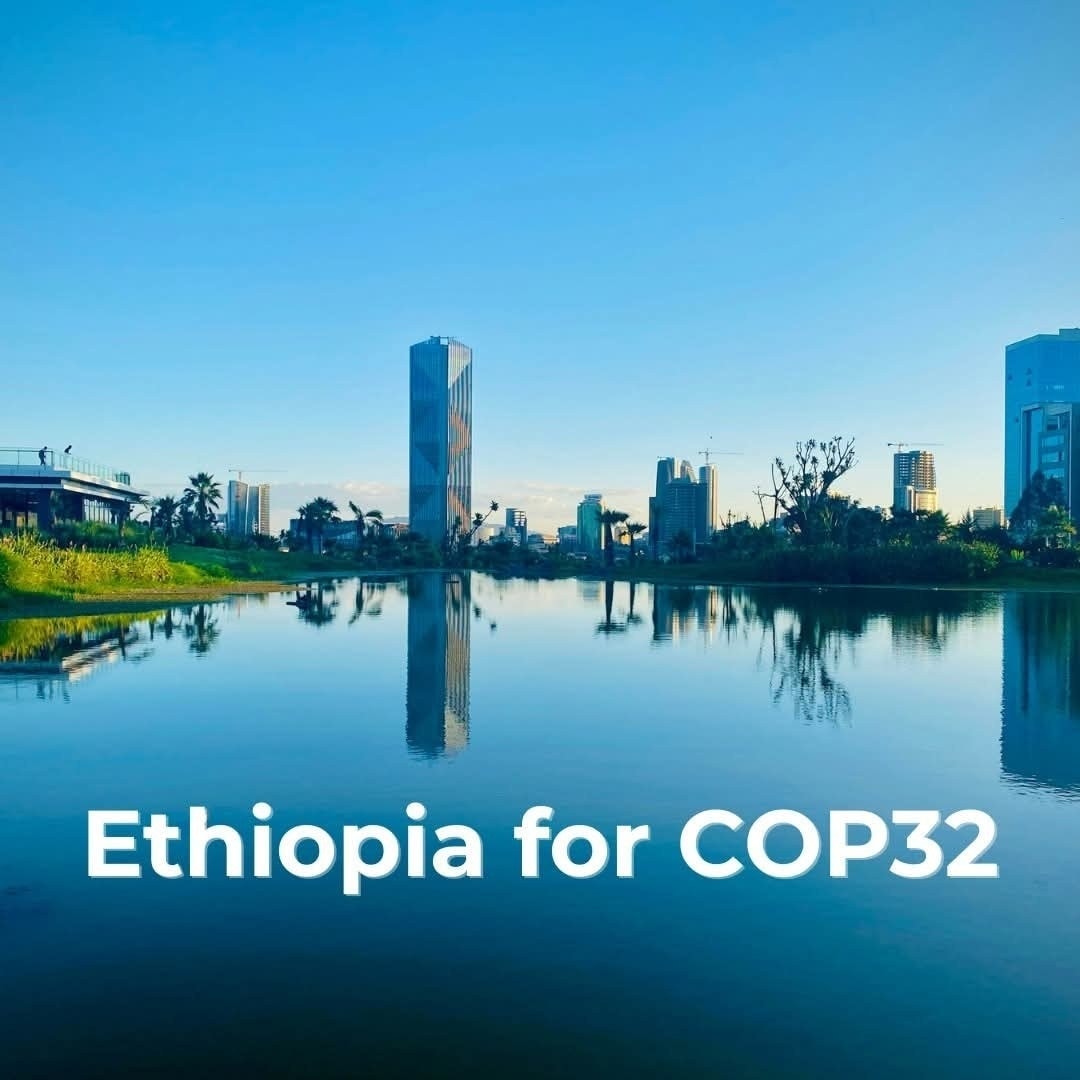
When world leaders, policymakers, climate negotiators, investors, and development partners gather in Addis Ababa from November 8 to 19, 2027, for the 32nd United Nations Climate Change Conference (COP32), Ethiopia will take center stage in global climate diplomacy at a defining moment for the country and the African continent.
Hosting the summit presents Ethiopia with a historic opportunity to strengthen its international standing, mobilize climate finance, attract green investment, deepen development partnerships, and accelerate its transition toward a climate-resilient, low-carbon economy. Beyond convening one of the world's largest diplomatic gatherings, COP32 provides Ethiopia with a powerful platform to place Africa's climate priorities at the heart of global negotiations while showcasing its progress in renewable energy, environmental restoration, sustainable transport, and green development.
The opportunity also carries significant political and economic weight. For Ethiopia, COP32 is not simply an international conference to be organized and successfully delivered. It is an opportunity to translate diplomatic leadership into concrete development gains, positioning the country as a destination for climate investment and a prominent voice in shaping the future of global climate cooperation.
Ethiopia secured the hosting role following unanimous endorsement by the African Group of Negotiators at COP30 in Belém, Brazil, in November 2025, after Nigeria withdrew its competing bid in support of a unified African candidacy. The endorsement reflected continental confidence in Ethiopia's diplomatic standing and its growing engagement in international climate affairs.
The conference also builds on Ethiopia's experience hosting the Second Africa Climate Summit in September 2025, which attracted more than 25,000 participants and produced the Addis Ababa Declaration. As the headquarters of the African Union, Addis Ababa is uniquely positioned to bring together world leaders, policymakers, development partners, climate experts, and investors.
The Strategic Value of COP32
The strategic value of COP32 extends far beyond international recognition. It offers Ethiopia an opportunity to mobilize financing for renewable energy, climate-smart agriculture, resilient infrastructure, forest restoration, clean technologies, and sustainable urban development.
It also provides a critical platform for advocating accessible, predictable, affordable, and concessional climate finance for African countries, which have contributed relatively little to historical global emissions but face disproportionately severe climate impacts.
At COP29 in Baku, countries agreed on a new climate finance goal calling on developed countries to take the lead in mobilizing at least 300 billion USD annually for developing nations by 2035, within a broader ambition to scale climate finance from all sources to 1.3 trillion USD annually. Ethiopia can use its COP32 presidency to advocate for practical mechanisms that translate these commitments into accessible financing for vulnerable economies.
Prime Minister Abiy Ahmed has consistently emphasized that climate action must be viewed as an economic and development priority rather than a narrowly environmental concern. Addressing the opening of COP31 in Antalya, Türkiye, in November 2026, he stated: "In Ethiopia, climate action is economic policy."
The statement captures an important dimension of Ethiopia's approach to climate change: environmental protection, economic transformation, agricultural productivity, energy development, and livelihood security are interconnected priorities.
During the same conference, the Prime Minister called for climate financing that reaches vulnerable communities before disasters occur, stressing: "Funding should be agreed in advance. It can then move at the speed of our forecasters, while there is still time to save lives." These remarks offer a clear indication of the priorities Ethiopia intends to advance as it prepares to assume a prominent role in international climate diplomacy through COP32.
Prime Minister Abiy has also highlighted the broader national benefits of hosting the conference. In convening the COP32 National Steering Committee on November 16, 2026, he described the summit as an opportunity to advance Ethiopia's climate and environmental agenda, strengthen international partnerships, attract investment, and translate national initiatives into lasting development outcomes. He further emphasized the need for a coordinated, whole-of-government approach to ensure that preparations are aligned and the country is ready to deliver a successful international conference.
Domestic Transformation: Building Credibility Through Action
Ethiopia's ambition to host COP32 is anchored in domestic initiatives demonstrating its commitment to environmental protection, renewable energy, and climate-resilient development.
One of the most visible is the Green Legacy Initiative, launched in 2019. The nationwide program has mobilized millions of citizens in large-scale tree-planting and environmental restoration campaigns. Government figures indicate that more than 56 billion seedlings have been planted through the initiative, reflecting the scale of the country's efforts to restore degraded landscapes and expand green spaces.
The initiative has become an important component of Ethiopia's environmental diplomacy. It also demonstrates how public participation can support national environmental objectives while creating awareness about the importance of protecting natural resources.
Speaking at the Second Africa Climate Summit in Addis Ababa in September 2025, Prime Minister Abiy highlighted the initiative as an example of Ethiopia's homegrown climate solutions. He also articulated a broader African ambition, declaring: "We are not here to negotiate our survival. We are here to design the world's next climate economy."
The statement reflects Ethiopia's intention to move beyond the conventional portrayal of Africa as merely a victim of climate change and instead position the continent as an active contributor to global climate solutions.
In the energy sector, Ethiopia has steadily expanded its renewable electricity generation capacity through investments in hydropower, wind, and solar energy. The inauguration of the Grand Ethiopian Renaissance Dam (GERD) in September 2025 marked a major milestone in the country's ambition to strengthen clean energy generation, expand electricity access, and increase regional power exports.
Ethiopia has also taken significant steps toward sustainable transport. Since January 2024, the country has restricted imports of conventional petrol- and diesel-powered vehicles as part of its transition toward electric mobility. Although expanding charging infrastructure, ensuring vehicle affordability, and strengthening electricity distribution remain important priorities, the policy positions Ethiopia as an early mover in Africa's clean transport transition.
These initiatives complement Ethiopia's updated Nationally Determined Contribution (NDC 3.0), which targets a reduction in projected greenhouse gas emissions of up to 70.3 percent below business-as-usual levels by 2035, contingent on international support, alongside a long-term ambition of achieving carbon neutrality by 2050.
However, Ethiopia's climate agenda extends beyond emissions reduction. Climate change poses significant risks to agriculture, food security, water resources, and rural livelihoods. World Bank assessments have estimated that climate impacts could cost the country between 1 and 1.5 percent of GDP annually, with the potential for substantially greater losses in the coming decades.
Consequently, adaptation financing, climate-resilient agriculture, water resource management, early-warning systems, and disaster preparedness must remain central priorities in Ethiopia's preparations for COP32.
This is particularly important given the Prime Minister's recent emphasis on early action and financial support for vulnerable communities. At COP31, he underscored the urgency of ensuring that climate finance is available when early warnings are issued and reaches those most exposed to climate risks. His appeal was particularly powerful when he observed: "Our farmers once trusted the seasons to arrive on time. Let us make sure our support does."
The statement captures the human dimension of climate change and reinforces the importance of ensuring that international climate commitments produce tangible benefits for communities whose livelihoods depend on increasingly unpredictable weather patterns.
Advancing Africa's Climate Priorities
COP32 will give Ethiopia an influential platform to amplify Africa's collective position in international climate negotiations, particularly on climate finance, technology transfer, adaptation, and loss and damage.
For African countries, the central challenge is balancing the urgent need for industrialization, energy access, employment creation, and agricultural modernization with the growing threats posed by climate change.
Ethiopia can use its COP32 presidency to champion a development framework that recognizes Africa's right to economic transformation while supporting clean energy, environmental protection, and climate resilience.
At the Second Africa Climate Summit, Prime Minister Abiy offered a particularly important perspective on the continent's position in the global climate economy. He called for a shift in how international partners approach Africa's climate ambitions, stating: "It is time to replace climate aid with climate investment. This is not charity. It is the most strategic investment humanity can make." This position could become a defining theme of Ethiopia's COP32 diplomacy.
Rather than treating Africa primarily as a recipient of climate assistance, Ethiopia can advocate for investment partnerships that recognize the continent's enormous renewable energy potential, agricultural resources, biodiversity, critical minerals, and young population.
The continent has considerable opportunities to develop solar, wind, geothermal, and hydropower resources, expand green industrialization, strengthen sustainable agriculture, and build climate-resilient infrastructure. However, realizing these opportunities requires affordable financing, technology transfer, capacity building, and stronger international partnerships. COP32 should therefore provide a platform for moving beyond declarations toward practical investment agreements, bankable projects, and measurable implementation commitments.
The summit will also offer Ethiopia an opportunity to showcase its tourism potential, biodiversity, cultural heritage, and emerging economic opportunities. From the historical landmarks of Aksum and Lalibela to the Simien and Bale Mountains, the Great Rift Valley, and Lake Tana, Ethiopia possesses considerable natural and cultural assets that can reinforce its broader green growth narrative.
Hosting thousands of international delegates will also generate economic opportunities across tourism, hospitality, transport, construction, and other service industries. Investments in conference facilities, urban infrastructure, transport networks, accommodation, and digital connectivity could produce economic benefits extending well beyond the summit.
Turning COP32 into Lasting National Gains
With less than a year remaining before the summit opens, effective implementation will be decisive in turning Ethiopia's hosting responsibilities into lasting national benefits. The government's establishment of coordination structures and engagement with international partners, alongside Prime Minister Abiy's convening of the National Steering Committee, signals the importance attached to a coordinated national preparation process.
Successful delivery will require targeted investments in conference venues, hospitality, public transport, security, telecommunications, and urban environmental management. Equally important will be the participation of the private sector, universities, research institutions, civil society organizations, youth groups, and local communities.
The private sector, in particular, has an important role to play in converting the international attention generated by COP32 into investment opportunities. Businesses operating in renewable energy, electric mobility, construction, agriculture, tourism, manufacturing, and financial services should be encouraged to develop partnerships and investment proposals ahead of the conference.
Ethiopia must also ensure that its domestic climate achievements are supported by transparent implementation and measurable results. Expanding last-mile electricity access, scaling up clean cooking solutions, strengthening electric vehicle infrastructure, improving climate-smart agricultural practices, and monitoring the long-term survival of planted trees are among the important benchmarks that can demonstrate progress.
The conference should also provide an opportunity to strengthen Ethiopia's institutional capacity for climate finance mobilization, project preparation, environmental governance, and international partnership management.
Ultimately, the country's credibility as a climate host will depend not only on its ability to organize a successful international gathering but also on its capacity to demonstrate that its climate ambitions are translating into practical development outcomes.
A Defining Opportunity for Ethiopia and Africa
COP32 represents both an international responsibility and a defining national opportunity for Ethiopia. Prime Minister Abiy Ahmed's vision of moving from climate aid toward climate investment, combined with his emphasis on early action, accessible financing, and climate-resilient development, provides an important foundation for shaping Ethiopia's engagement with the international community.
The country's presidency can help advance a more balanced global climate agenda—one that recognizes Africa's development aspirations, acknowledges its disproportionate vulnerability to climate impacts, and creates opportunities for the continent to participate more meaningfully in the emerging global green economy.
For Ethiopia, the challenge is to ensure that the diplomatic visibility and international partnerships generated by COP32 translate into renewable energy investments, stronger infrastructure, employment opportunities, improved livelihoods, and greater climate resilience.
The ultimate measure of Ethiopia's COP32 presidency will not simply be the successful organization of a global summit in Addis Ababa. It will be the extent to which the conference helps convert international commitments into tangible investments, strengthens Africa's voice in global climate governance, and delivers lasting benefits for Ethiopians and the wider African continent.


