Prime Minister Abiy Reaffirms Ethiopia’s Readiness to Help Restore Peace in Sudan - ENA English


Prime Minister Abiy Reaffirms Ethiopia’s Readiness to Help Restore Peace in Sudan
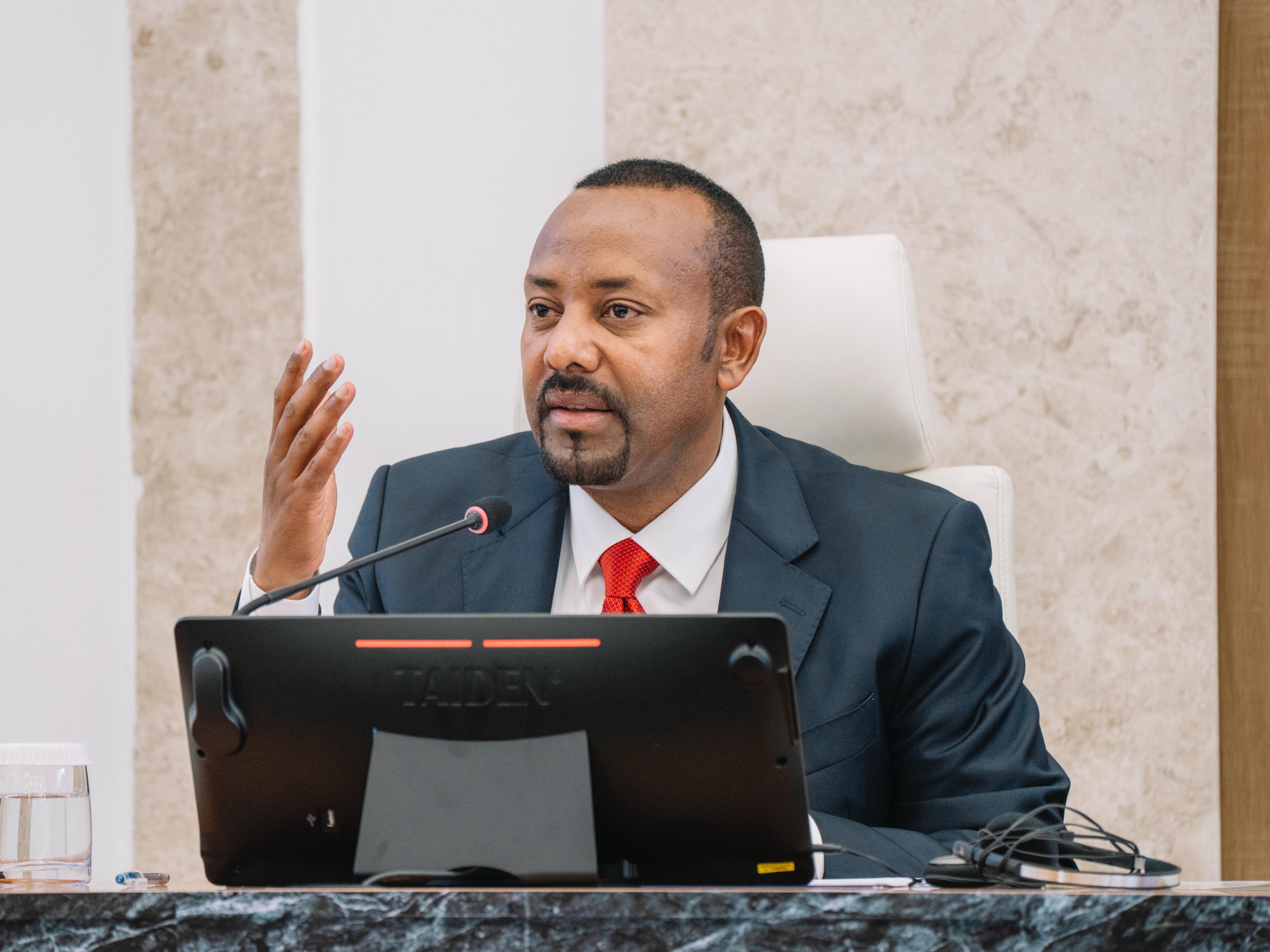
Addis Ababa, November 25, 2026 (ENA)— Prime Minister Abiy Ahmed has reaffirmed Ethiopia’s readiness to commit its resources to restoring peace and stability in war-torn Sudan.
The Prime Minister also called on Eritrea to end its alleged support for forces hostile to Ethiopia and embrace peaceful coexistence and mutual development.
Addressing the House of Peoples’ Representatives on Thursday, the Prime Minister outlined Ethiopia’s foreign policy priorities toward neighboring countries, underscoring the country’s commitment to regional peace, cooperation and shared prosperity.
On Sudan, Prime Minister Abiy reiterated Ethiopia’s longstanding commitment to its neighbor’s stability, emphasizing the deep historical, social and brotherly ties between the two countries.
“Sudan’s peace is our peace,” he told lawmakers, reaffirming Ethiopia’s willingness to contribute whatever it can to help the country overcome its devastating conflict.
“If Ethiopia can contribute in any way to restoring Sudan to where it was, we are ready to spend our time and our money,” he said, urging the warring parties to give the proposed peace initiative a chance, noting that dialogue could produce meaningful results.
The Prime Minister’s remarks build on his recent initiative inviting Sudanese military, political and civilian stakeholders to an inclusive national dialogue hosted and facilitated by Ethiopia.
In a statement issued in Arabic, PM Abiy described the initiative as a sincere effort to help Sudan overcome its prolonged conflict through an inclusive, Sudanese-led political process.
“At this critical historical juncture, the Ethiopian government is putting forward a sincere and genuine initiative calling on all Sudanese parties, across their military, political, and civilian components, to participate in a comprehensive and open Sudanese dialogue to be hosted and facilitated by Ethiopia,” he stated.
Turning to Eritrea, the Prime Minister detailed Ethiopia’s extensive diplomatic and economic efforts to build constructive relations following the rapprochement between the two countries.
The Premier also expressing disappointment over Eritrean regime’s rejection of opportunities for cooperation.
He recalled that Ethiopia had played an active role in helping Eritrea reconnect with regional neighbors after years of diplomatic isolation, including providing Ethiopian aircraft to facilitate engagements with countries with which Eritrean officials had limited contact.
Beyond diplomatic engagement, Ethiopia had also proposed practical economic cooperation, including electricity supplies at domestic Ethiopian rates and joint development of roads and ports to address infrastructure and energy constraints.
However, he said, the Eritrean government rejected these proposals, arguing that its lack of a development-oriented vision had undermined opportunities for bilateral cooperation.
“The reason is that while the Eritrean government is a government for the time being, words like development and growth do not exist in its vocabulary,” PM Abiy said.
The Prime Minister also recalled the initial goodwill demonstrated by Eritrea following the attack on Ethiopia’s Northern Command but said relations subsequently deteriorated after Eritrean forces entered the Tigray region during the conflict.
He accused the forces of involvement in killings, looting and the destruction of infrastructure, adding that relations further soured following the signing of the Pretoria Peace Agreement.
Against this backdrop, Prime Minister Abiy called on Eritrea to make a clear choice between confrontation and cooperation, outlining two essential expectations for the future of bilateral relations: ending support for forces hostile to Ethiopia and pursuing mutually beneficial development.
He urged Asmara to immediately stop arming Ethiopia’s adversaries, end its alleged role as a weapons supply channel and cease cooperation with forces undermining peace and stability.


