GDP Rebasing Positions Ethiopia Third Largest Economy in Sub-Saharan Africa - ENA English


GDP Rebasing Positions Ethiopia Third Largest Economy in Sub-Saharan Africa
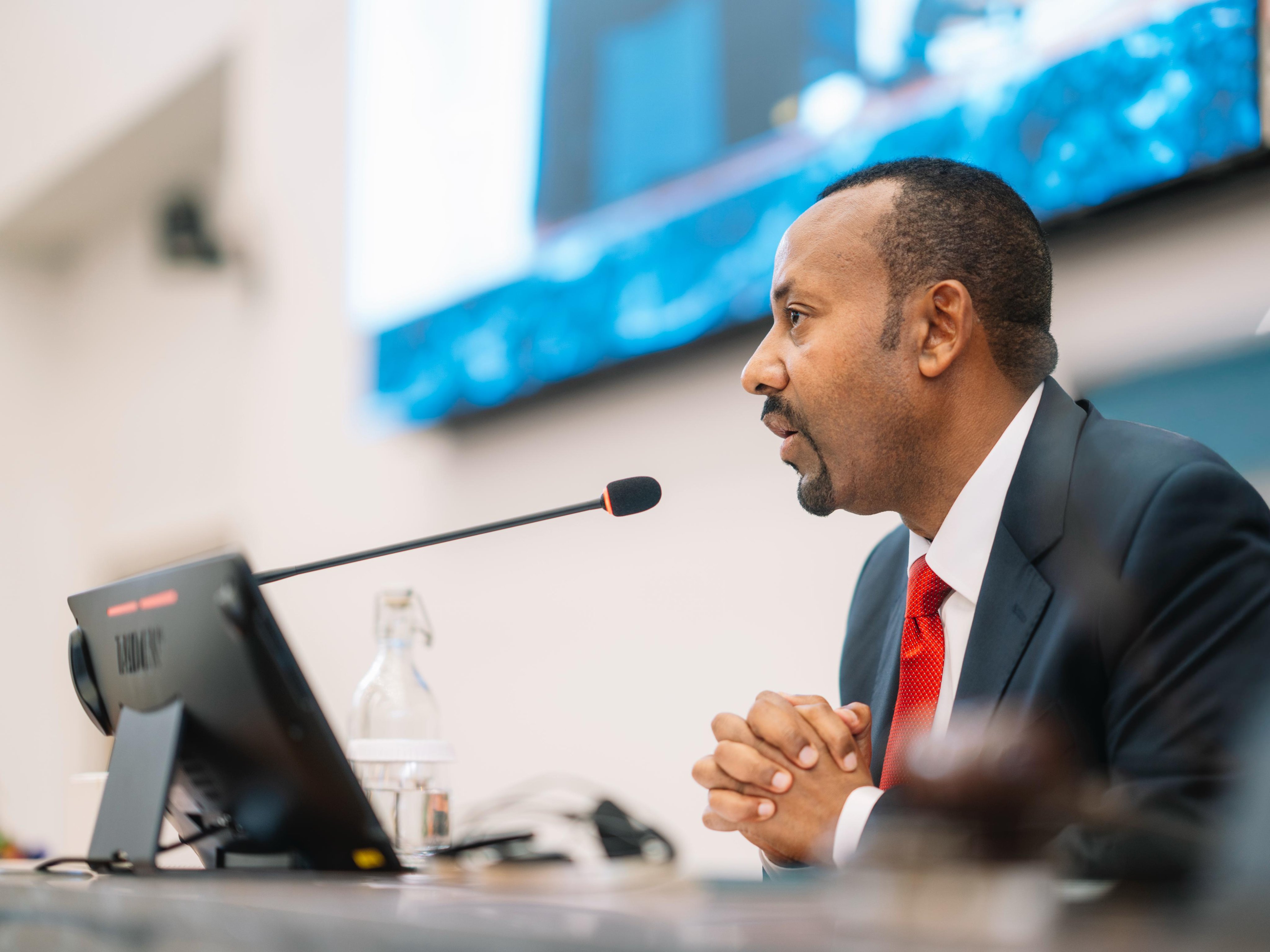
Addis Ababa, November 26, 2026 (ENA)— The GDP rebasing carried out in Ethiopia has positioned the nation as the third-largest economy in Sub-Saharan Africa at 210 billion USD, Prime Minister Abiy Ahmed stated.
Addressing the House of People’s Representatives, the PM said GDP rebasing has revealed Ethiopia’s economic size and provided a broader picture of its actual economic capacity.
Undertaken after 11 years by revising the country's economic measurements, the GDP rebasing has placed Ethiopia as the third-largest economy in Sub-Saharan Africa, after South Africa and Nigeria.
He explained that international standards recommend rebasing national economies approximately every five years to account for structural changes, including emerging industries, new economic activities and sectors whose market significance has declined.
However, Ethiopia had not undertaken such an exercise for 11 years, resulting in significant economic activities remaining inadequately reflected in the country's national accounts.
Prime Minister Abiy noted that the GDP rebasing exercise presented three possible estimates, with the government opting for the most conservative assessment, which placed Ethiopia's economy at 210 billion USD.
He emphasized that the figure was based on the economic activities captured through the exercise, while a considerable informal economy remains outside the measured economic base.
The PM described the revised economic standing as a major opportunity, saying the country's sustained efforts to build one of Africa's major economies were beginning to yield tangible results.
He said the new assessment provides a more comprehensive picture of Ethiopia's economic size and productive capacity, reflecting the cumulative impact of developments across multiple sectors.
Prime Minister Abiy further stated that the latest rebasing exercise involved an extensive economic census conducted over more than a year by the Ethiopian Statistics Service, with the participation of thousands of people and support from international institutions, including the World Bank and the International Monetary Fund (IMF).
The exercise incorporated economic activities that have expanded or emerged through the country's reform initiatives, providing a broader picture of Ethiopia's actual economic capacity.
Citing the digital economy as one example, the Premier noted that mobile money and digital financial services, which were virtually nonexistent before the reform, have grown into major economic activities, with transactions amounting to trillions of Birr.
He said the previous GDP accounting framework lacked adequate mechanisms to capture the scale and contribution of these emerging digital economic activities.
The Prime Minister also highlighted the expansion of urban corridor development, explaining that the scale of infrastructure development and associated economic activities had not been adequately reflected in the previous national accounting system.
In agriculture, he pointed to the expansion of cluster farming, through which farmers combine land and labor to improve productivity and agricultural output.
In the industrial sector, PM Abiy highlighted the expansion of industrial parks as the growth of manufacturing activities and industrial production had not been adequately captured under the previous GDP measurement framework.
The Green Legacy initiative was also identified as an important contributor to economic activity, extending beyond tree planting to include agricultural production, particularly coffee, avocados and other fruits.
In the energy sector, he cited developments in wind power and the Grand Ethiopian Renaissance Dam (GERD) hydropower projects.
Regarding tourism and services, PM Abiy pointed to the expansion of tourism infrastructure and Ethiopia's growing capacity to host major international conferences.
He also mentioned the growth of Ethiopian Airlines and developments in railway services as important elements of the expanding service economy.


