IGAD Media Awards Emerge as One of Africa’s Best Platforms for Journalists: Workneh - ENA English


IGAD Media Awards Emerge as One of Africa’s Best Platforms for Journalists: Workneh
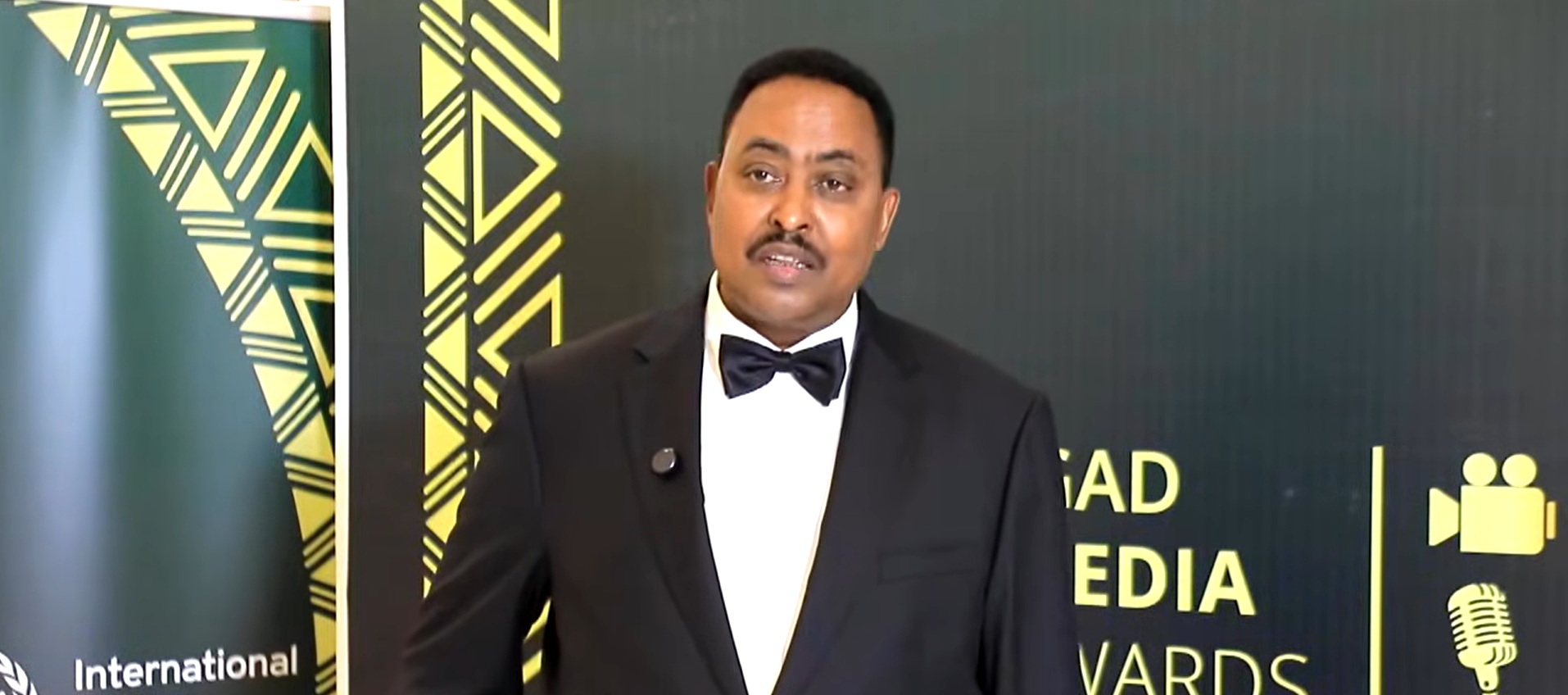
Addis Ababa, November 21, 2026 ENA)— The Intergovernmental Authority on Development IGAD Executive Secretary Dr. Workneh Gebeyehu has described the IGAD Media Awards as one of Africa’s leading media recognition platforms.
The Executive Secretary emphasized media professionals’ growing contribution in the region to bringing regional journalists together, amplifying credible African voices, and reshaping narratives about the Greater Horn of Africa.
The IGAD Media Awards 2026 recognized around 20 journalists last night from member states, celebrating outstanding journalists and storytellers whose work is shaping public conversations and transforming narratives across the Greater Horn of Africa.
Speaking to ENA, Dr. Workneh said the initiative had grown significantly since its launch in Djibouti four years ago, reflecting its expanding regional reach and impact.
“When we started this initiative four years ago in Djibouti, it was not like this. It was not as big as it is today. Without fear of contradiction, I can say that this is one of the best media awards in Africa,” he said.
He highlighted two major achievements of the awards: fostering regional connections among journalists and recognizing the contributions of African media professionals in telling the continent’s own stories.
“First, the goal is to bring regional journalists together, bringing credible voices from across the region onto one platform to share experiences. Second, it is about appreciating our own journalists. Our stories should be told by our own sons and daughters,” he emphasized.
Dr. Workneh said the initiative was moving in the right direction, particularly in strengthening regional media cooperation and promoting African perspectives on issues affecting the region.
Turning to IGAD’s broader mandate, he stressed that the persistent challenges facing the Horn of Africa, including peace and security threats, climate change, drought, and food insecurity; require collective regional responses rather than isolated national efforts.
Established in 1986, IGAD was founded to address shared regional challenges, and its role in coordinating member states' efforts remains essential, he noted.
“These challenges are not confined to one country, and no single country can win the battle against the challenges facing this region,” he said.
He underscored the importance of IGAD as a regional platform for pooling efforts, mobilizing resources, exchanging experiences, and sharing successful practices among member states.
While acknowledging the resilience demonstrated by the region, he stressed that stronger commitment from member states remains essential to overcoming the challenges.
Although the region has yet to overcome all its difficulties, collective action remains the most effective way forward, he added.


