Ethiopia’s Future Should be Constructed on Sovereign Seaport: Queen’s University Belfast Lecturer - ENA English


Ethiopia’s Future Should be Constructed on Sovereign Seaport: Queen’s University Belfast Lecturer
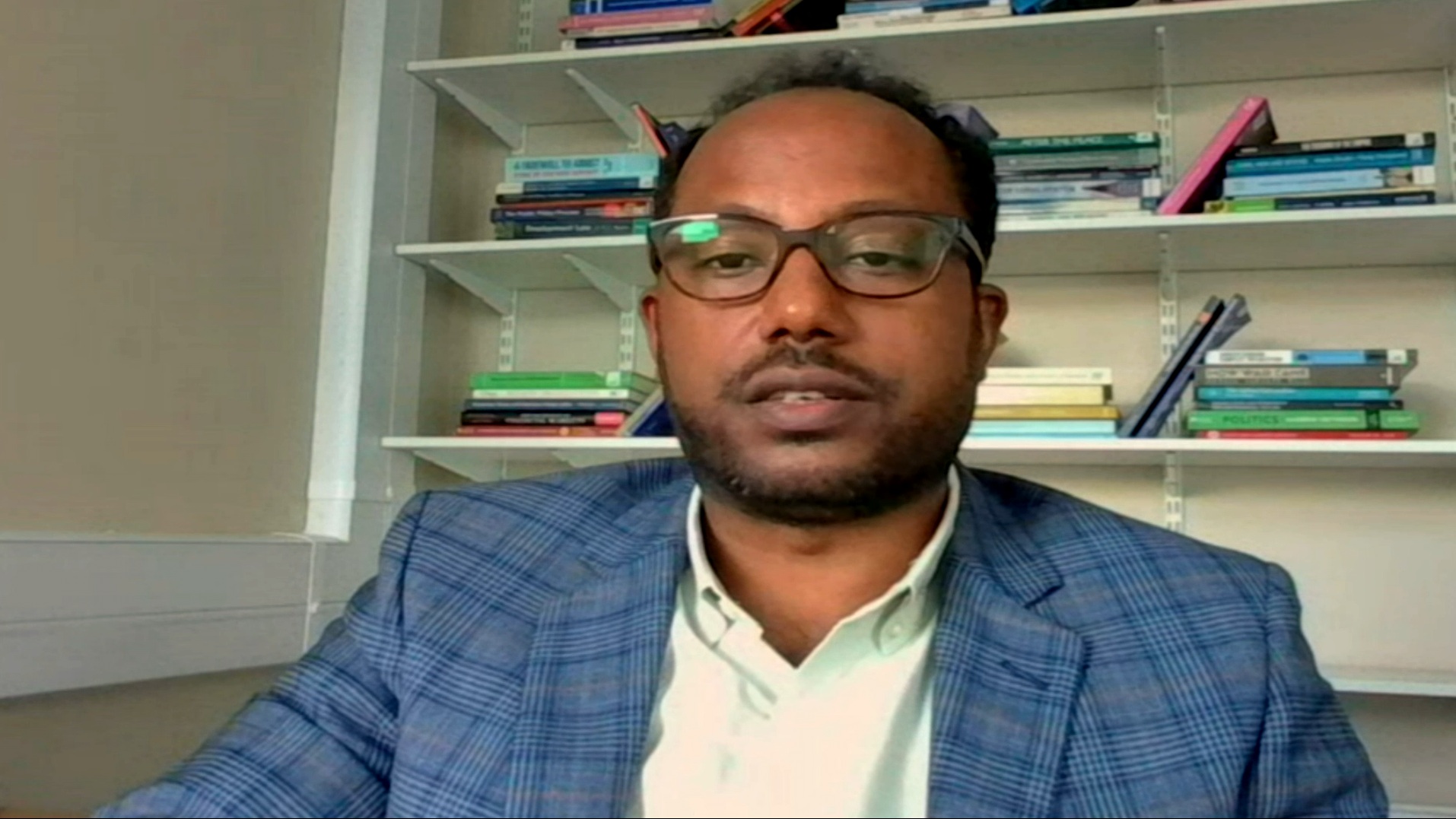
Addis Ababa, November 17, 2026 (ENA)— Ethiopia’s maritime future should be built on sovereign ownership of a Red Sea port, not reliance on access granted by its neighbours, Queen’s University Belfast political scientist Bizuneh Yimenu said.
According to him, restoring Ethiopia’s coastal status could strengthen the country’s security and economy while opening new possibilities for cooperation across the Horn of Africa.
The lecturer in Comparative Politics at Queen’s University Belfast views the loss of Ethiopia’s coastline following Eritrea’s independence in 1993 as a major geopolitical shift, with consequences that continue to affect Ethiopia’s long-term strategic interests.
In his view, the process that led to Eritrea’s independence should have included separate negotiations on Ethiopia’s maritime position and unresolved border issues.
“The legitimacy of Eritrea’s self-determination and the responsibility of Ethiopian leaders to safeguard Ethiopian strategic interests are two distinct issues,” Bizuneh Yimenu said.
The lecturer blamed the transitional government that facilitated the 1993 independence referendum without securing the country’s Red Sea foothold.
He believes the issue should now be addressed through diplomacy and political negotiation, rather than rigid legal or constitutional arguments.
“The issue should be handled politically in terms of geopolitical scenarios, in terms of regional integration, and from [a] political negotiation point of view,” he stressed.
For a rapidly industrializing country with a large and growing population, direct maritime connectivity is vital as approximately 95 percent of Ethiopia’s import-export trade currently moves through a single corridor in Djibouti, Bizuneh elaborated.
This concentration leaves Ethiopia exposed to economic and strategic risks, he warned.
The scholar sees Ethiopia’s proximity to the Red Sea, alongside its economic and military weight, as giving the country an important role in maritime security.
“Ethiopia cannot sit idly when a lot of things are going on in the Red Sea,” he said, adding that the government has a duty to protect its citizens and national interests.
Despite the history of tension between Ethiopia and Eritrea, he regards Assab as a potential source of mutual benefit.
Ethiopian use of the port could bring Eritrea revenue, jobs and investment, while giving Ethiopia a vital trade route.
Closer economic ties could also create shared interests and reduce the risk of conflict between the countries, Bizuneh stated.
“There is one theory: countries that trade with each other do not fight each other,” he noted.
Looking ahead, he called for a more integrated Horn of Africa, with shared port infrastructure, connected transport corridors and the freer movement of goods and labor.


