Guterres Urges Climate Finance Equity for Developing Nations - ENA English


Guterres Urges Climate Finance Equity for Developing Nations
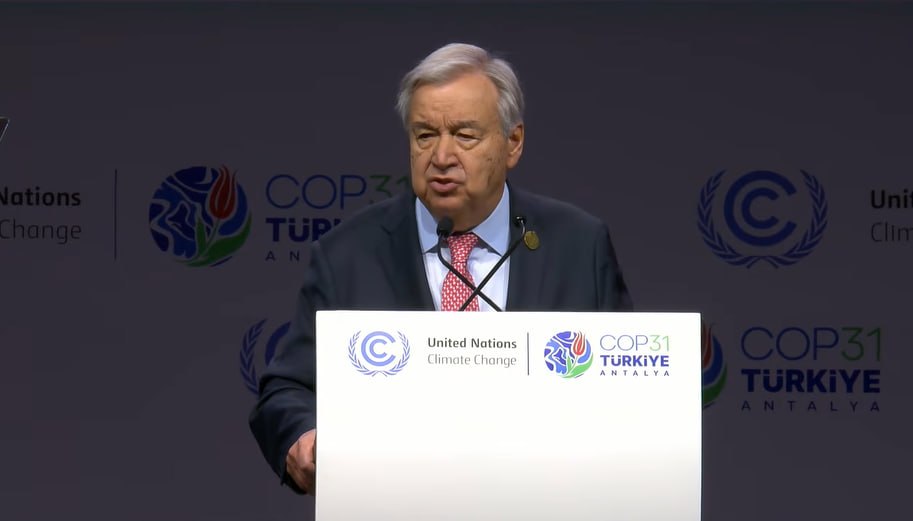
Addis Ababa, November 11, 2026 (ENA)— UN Secretary-General António Guterres has called for an urgent increase in equitable climate financing for developing nations, warning that emerging economies outside China, representing nearly two-thirds of the global population, receive less than one-fifth of global clean energy investment.
Speaking at COP31, Guterres declared climate justice a defining challenge of the decade. He urged the international community to rectify the growing imbalance in global financing and ensure developing countries receive the critical resources needed to accelerate their clean energy transitions.
He stressed that developing countries should not be expected to transform their economies and meet climate commitments without adequate financial support.
"We cannot demand that countries transform their economies while denying them the means to do so," he said, underscoring the importance of equitable access to climate finance.
Guterres also noted that emerging and developing economies outside China are home to nearly two-thirds of the world's population but receive less than 20 percent of global clean energy investment, highlighting the significant financing gap that continues to constrain their transition to sustainable energy.
He said closing this gap is essential to enabling developing economies to pursue sustainable development while contributing meaningfully to global efforts to combat climate change.
The UN chief also warned that global climate action remains far below the level required by science, stressing that greenhouse gas emissions must decline by 6 percent annually to address the escalating climate crisis.
However, current national climate plans, including conditional commitments, would achieve at best only one-third of the required annual emissions reductions, he cautioned.
Reflecting on progress over the past decade, Guterres pointed to the rapid expansion of renewable energy as evidence that a faster transition away from fossil fuels is both possible and economically viable.
He noted that solar power alone accounted for nearly three-quarters of the growth in global electricity demand last year, while electric vehicles continued to gain market share.
According to him, clean energy has become the cheapest source of new electricity generation in most parts of the world, offering significant opportunities to accelerate the global energy transition.
Nevertheless, he warned that fossil fuel interests continue to undermine climate action by distorting scientific evidence, delaying policy decisions and weakening accountability.
Guterres urged world leaders to move beyond pledges and translate climate commitments into tangible results, emphasizing that adequate financing, stronger international cooperation and an accelerated transition to clean energy are essential to confronting the climate crisis.


