PM Abiy Says Ethiopia Taking Concrete Action to Address Climate Change - ENA English


PM Abiy Says Ethiopia Taking Concrete Action to Address Climate Change
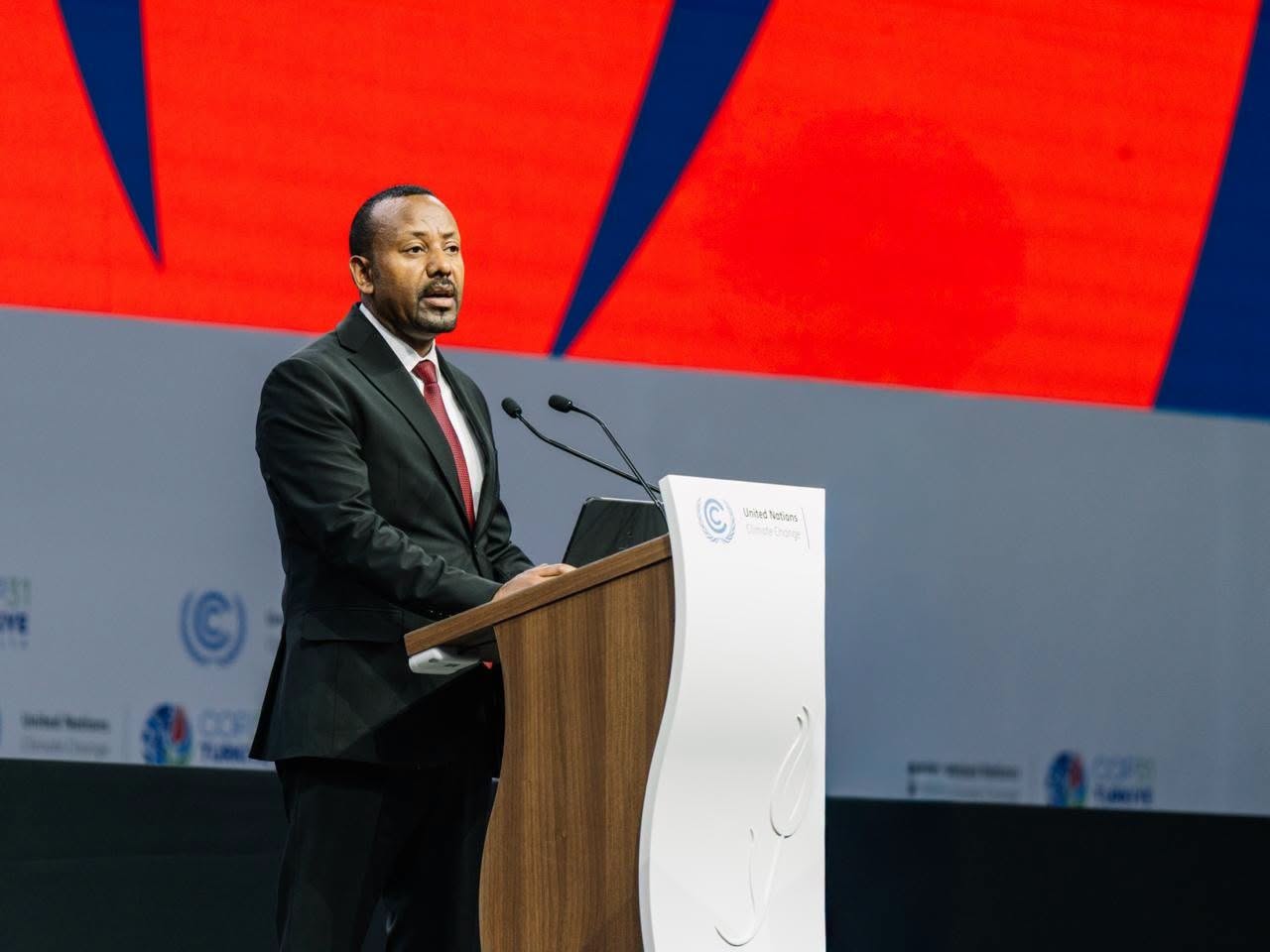
Addis Ababa, November 11, 2026 (ENA)—Prime Minister Abiy Ahmed has reaffirmed Ethiopia’s commitment to tackling climate change through investments in renewable energy, large-scale tree-planting campaigns, climate-resilient agriculture, urban environmental protection, and electric mobility, stressing that climate action is an integral part of the country’s economic policy.
Addressing the opening of the COP31 conference in Antalya, Türkiye, today, the Prime Minister said Ethiopia views climate action as central to its economic strategy, noting that changing weather patterns directly affect agricultural production, energy generation, livelihoods, and long-term national development.
“In Ethiopia, climate action is economic policy,” he underscored.
Explaining the economic consequences of climate change, PM Abiy noted that droughts and floods associated with El Niño severely affect harvests, displace families, and delay economic recovery.
“When El Niño returns, droughts and floods affect harvests and force families from their homes. The rain comes back, floods subside, but recovery takes much longer,” he said.
He highlighted Ethiopia’s efforts to work with local communities and regional administrations to anticipate climate risks, strengthen preparedness, and protect livelihoods before disasters occur.
The Prime Minister further emphasized that climate change has implications beyond Ethiopia’s borders, particularly given the country’s significant role in regional electricity supply and its dependence on rainfall for agricultural production.
“More than 90 percent of our electricity comes from water, including the power we supply to neighboring countries. Rainfall also sustains the coffee. Many of you begin your day with Ethiopia’s gift to the world, Arabica coffee, but rising temperatures and changing rainfall threaten the forests and the farms where it grows,” he stated.
His remarks underscored the close relationship between climate stability and Ethiopia’s broader economic interests. Hydropower supports domestic electricity consumption and regional exports, while coffee remains one of the country’s major agricultural commodities and an important source of foreign exchange.
Consequently, irregular rainfall and rising temperatures pose significant risks not only to smallholder farmers but also to national productivity, energy security, and export earnings.
Highlighting Ethiopia’s homegrown approach to climate resilience, PM Abiy said the philosophy of Medemer guides national efforts by bringing citizens, institutions, and resources together around shared development objectives.
“Every year, millions of Ethiopians join in planting trees. Together, we have planted over 56 billion seedlings, restoring degraded land and expanding our forests,” he said.
He explained that the Green Legacy Initiative goes beyond environmental restoration by creating employment opportunities, improving livelihoods, and fostering a shared civic responsibility to protect natural resources.
“The initiative has created jobs and improved livelihoods. Planting is now a family habit. It is teaching us to honor the land we inherit, to live in harmony with nature, and to care for what we leave to our children,” he stated.
Beyond community engagement, the initiative contributes to restoring degraded landscapes, strengthening watersheds, and improving the ecological foundations that sustain agriculture and rural livelihoods.
Ethiopia is also extending its environmental interventions into urban areas through flood protection measures, river rehabilitation, and the development of accessible green public spaces.
“We are extending that work into our cities, building flood fences, cleaning polluted rivers, and turning their banks into parks and walkways where families gather and children play,” the Prime Minister said.
PM Abiy also highlighted Ethiopia’s efforts to diversify its energy sources, reducing the vulnerability of electricity generation and the wider economy to changing rainfall patterns.
“We are also taking a long view with our energy supply, developing wind, solar, and geothermal power, while planning for nuclear, so a dry year does less harm to our economy,” he said.
The strategy reflects the importance of reliable and diversified energy supplies in supporting industrial expansion, attracting investment, increasing productivity, and strengthening regional electricity trade.
While hydropower remains central to Ethiopia’s electricity generation, expanding alternative energy sources is expected to help cushion the economy against severe droughts and fluctuations in water availability.
The Prime Minister further underscored the role of technology in strengthening climate resilience, particularly through improved weather forecasting and early-warning systems to protect farmers and vulnerable communities.
“We use satellite data to watch the land, and we are improving forecasts with artificial intelligence to give farmers earlier warning,” he said.
Beyond domestic interventions, PM Abiy called for predictable climate financing to enable vulnerable countries to translate early warnings into timely action before extreme weather events cause widespread damage.
Highlighting Ethiopia’s transition toward clean transportation, he pointed to the country’s decision to ban imports of petrol and diesel-powered vehicles as part of its efforts to accelerate the adoption of electric mobility.
“Ethiopia is doing its part. We have banned imports of petrol and diesel cars as we switch to EVs,” he said.
The measure forms part of the country’s broader efforts to reduce dependence on fossil fuels and align the transportation sector with its expanding clean-energy ambitions.
Looking ahead, PM Abiy emphasized that Ethiopia would place early action and accessible climate financing at the center of its preparations to host COP32.
“Ethiopia will host COP32. We will put early action at the center, funding released when warning comes, reaching the most exposed first,” he said.
Reaffirming Ethiopia’s commitment to international climate cooperation, the Prime Minister pledged to work closely with the COP31 Presidency to ensure a successful conference outcome and expressed the country’s readiness to welcome global delegates to Addis Ababa for COP32.
“Ethiopia will work closely with COP31 Presidency for a successful outcome here. We look forward to welcoming you for COP32 in the Land of Origins,” he said.


