PM Abiy Calls for Predictable Climate Finance, Early Action to Protect Vulnerable Communities - ENA English


PM Abiy Calls for Predictable Climate Finance, Early Action to Protect Vulnerable Communities
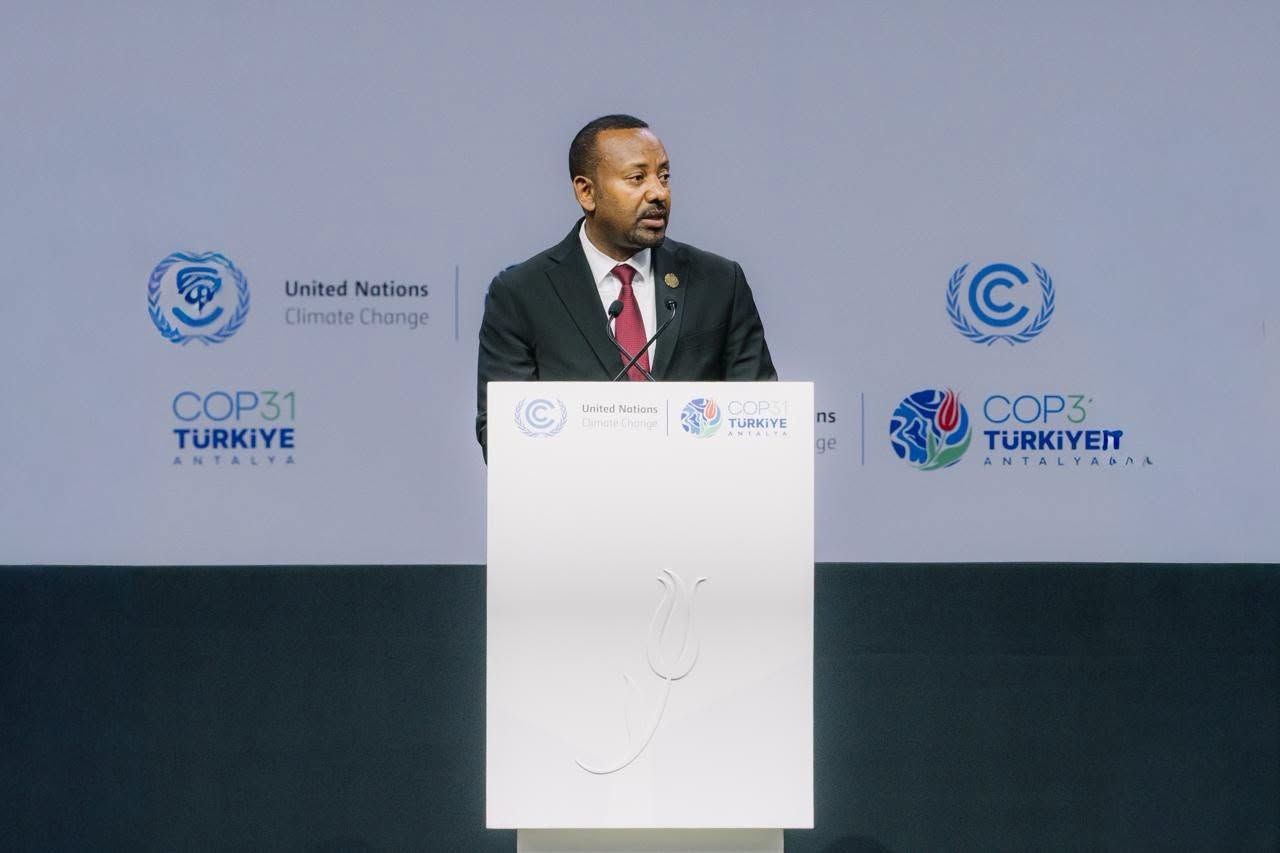
Addis Ababa, November 11, 2026 (ENA)— Prime Minister Abiy Ahmed called for predictable climate finance that reaches vulnerable communities before disasters strike.
The Prime Minister further urged the international community to translate climate commitments into timely, accessible and affordable support.
Addressing the opening of the 31st United Nations Climate Change Conference (COP31) in Türkiye’s Mediterranean city of Antalya, PM Abiy underscored that climate action is not merely an environmental concern for Ethiopia but a fundamental part of its economic policy and development strategy.
“In Ethiopia, climate action is economic policy,” he said, highlighting how recurring El Niño-related droughts and floods threaten agricultural production, displace families and prolong recovery, even after rainfall returns and floodwaters recede.
He stressed that Ethiopia is strengthening community-level preparedness and working with local governments to anticipate climate risks and protect livelihoods before disasters occur.
Highlighting the country's broader climate vulnerability, the Premier noted that more than 90 percent of Ethiopia's electricity comes from hydropower, making rainfall patterns critical not only to domestic energy security but also to electricity supplies to neighboring countries.
He also warned that rising temperatures and changing rainfall patterns threaten the forests and agricultural landscapes that sustain Ethiopia's globally renowned Arabica coffee.
The Prime Minister said Ethiopia's homegrown philosophy of Medemer guides its climate response by bringing communities, institutions and resources together around shared development objectives.
Under the Green Legacy Initiative, millions of Ethiopians participate in annual tree-planting campaigns, with more than 56 billion seedlings planted to date, contributing to land restoration, forest expansion, job creation and improved livelihoods.
“Planting is now a family habit,” he said, describing the initiative as a growing culture of environmental stewardship and responsibility toward future generations.
Ethiopia is also extending its environmental efforts into urban areas through flood protection measures, river rehabilitation and the development of green public spaces, including parks and walkways along riverbanks.
On the energy front, PM Abiy highlighted the country's investments in wind, solar and geothermal power, alongside plans to explore nuclear energy, as part of a long-term strategy to diversify electricity sources and reduce economic vulnerability during dry seasons.
He further emphasized the growing role of technology in climate resilience, noting that Ethiopia is using satellite data to monitor environmental conditions and artificial intelligence to improve weather forecasting and provide farmers with earlier warnings of extreme weather events.
The country's Fayda digital identification (ID) system is also helping strengthen the delivery of support to vulnerable households.
However, the Prime Minister stressed that early warnings must be backed by financing that enables communities to take timely protective measures.
“Funding should be agreed in advance. It can then move at the speed of our forecasters, while there is still time to save lives,” he said.
Turning to the global climate financing gap, Abiy called for stronger coordination between climate, development, trade and financial institutions, arguing that commitments made in international climate negotiations must be reflected in actual financing decisions.
He noted that developing countries spend nearly one trillion US dollars annually on public debt interest, significantly constraining their capacity to invest in climate resilience, infrastructure and essential social services.
Referring to the financing discussions in Sevilla, he stressed that high borrowing costs undermine developing countries' ability to respond to climate challenges, calling for multilateral financial institutions to make financing more affordable.
The Prime Minister also urged faster emissions reductions, warning that the growing cost of responding to climate-related damage leaves fewer resources available for education, healthcare and opportunities for young people.
Highlighting Ethiopia's contribution to the global energy transition, he said the country has banned imports of petrol- and diesel-powered vehicles as it accelerates the shift toward electric mobility.
He called on countries with the greatest historical responsibility for emissions and the financial capacity to act to lead with deeper emissions reductions during this decade.
Looking ahead to Ethiopia's COP32 Presidency, Prime Minister Abiy said early action and predictable climate financing would be central to the country's priorities, particularly ensuring that resources are released when early warnings are issued and reach the most climate-vulnerable communities first.
He urged countries to make their climate finance pledges clear and measurable, setting out three essential commitments: how much funding will be provided, when it will be delivered and under what terms.
Such clarity, he said, would enable governments to plan their budgets, investors to make commitments and communities to prepare for climate risks.
Ethiopia, he added, will work closely with the COP31 Presidency to ensure a successful outcome in Türkiye and looks forward to welcoming the international community to Addis Ababa for COP32 in 2027.
Concluding his remarks, the Prime Minister invoked the vulnerability of farmers to increasingly unpredictable weather patterns, delivering a powerful appeal for timely international solidarity.
“Our farmers once trusted the seasons to arrive on time. Let us make sure our support does,” he said.


