How Ethiopia’s Military Modernization Is Emerging as Strategic Pillar of Regional Stability” - ENA English


How Ethiopia’s Military Modernization Is Emerging as Strategic Pillar of Regional Stability”
By Staff Writer
November 8, 2026 (ENA)
Ethiopia’s growing military and technological capabilities are becoming increasingly significant, not only for safeguarding its national security but also for advancing peace, stability and economic integration in the Horn of Africa.
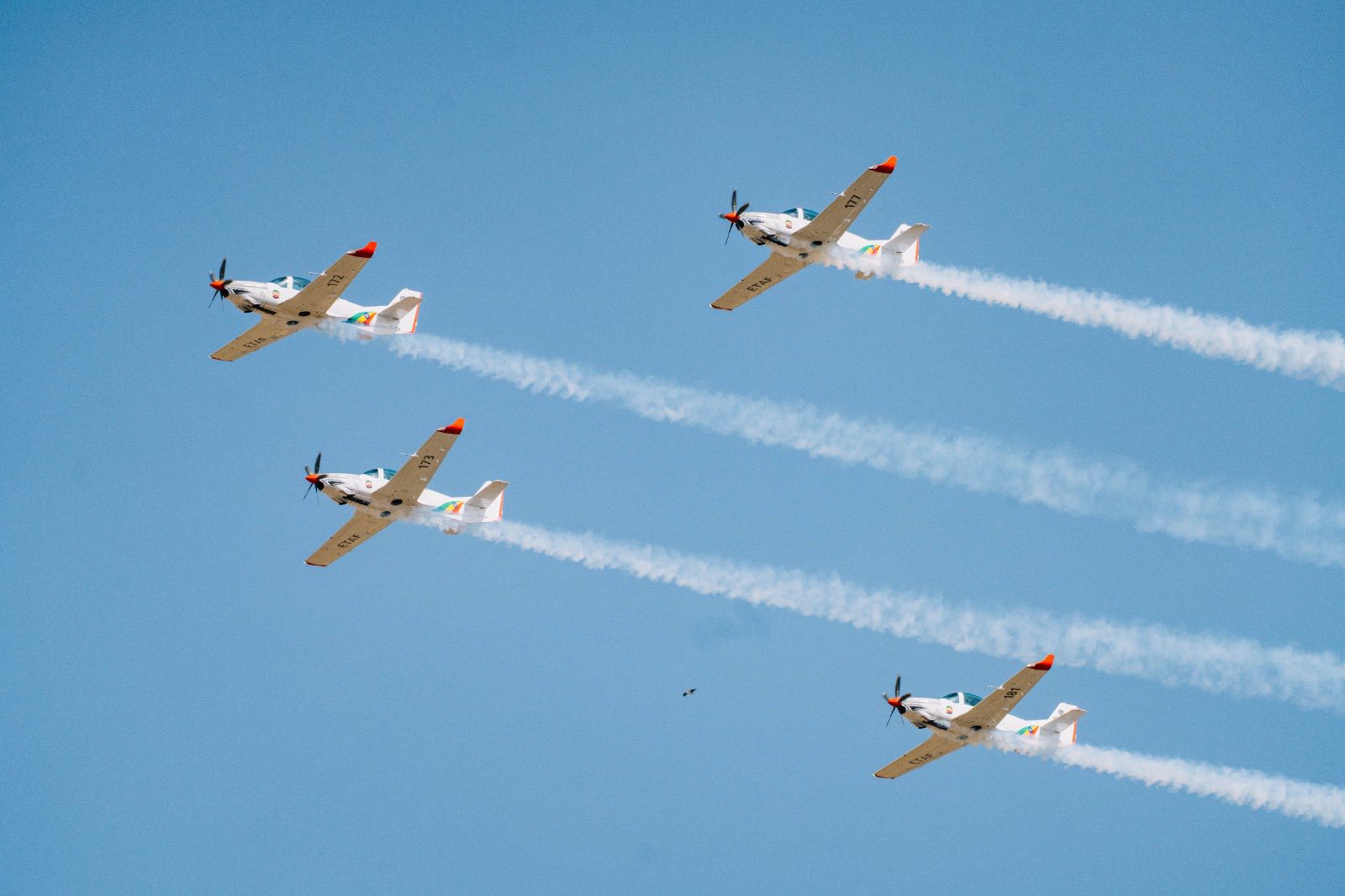
By modernising its defence institutions, strengthening its air force and investing in advanced military technology, the country has enhanced its capacity to address emerging security challenges while contributing to a more secure and stable regional environment.
The current acquisition of 12 fighter jets from Russia marks another step in Ethiopia’s efforts to modernise its military capabilities. Beyond strengthening national defence, such technological advancements can contribute to regional security by enhancing the country's capacity to deter threats, respond to security emergencies and support collective efforts to maintain peace.
Rather than viewing military modernisation exclusively through the lens of geopolitical competition, greater attention should be given to its broader contribution to regional stability, security cooperation and economic integration. In this regard, Ethiopia’s defence modernisation offers significant benefits that extend beyond safeguarding its national sovereignty and territorial integrity. Its advancing military technology and growing operational capabilities can strengthen regional security, enhance collective responses to shared security challenges, deter potential threats and contribute to a more stable environment.
Through responsible military development, Ethiopia can also help build trust among regional partners by demonstrating that strong defence institutions and peaceful cooperation are complementary objectives. In particular, advancements in air power can improve the country's capacity to protect its airspace, support regional security cooperation and respond to emerging threats.
These capabilities can further contribute to protecting strategic infrastructure, securing cross-border trade routes and creating favourable conditions for regional economic cooperation and integration. A technologically advanced and professionally organised defence force is an important component of both national and regional security. In a region facing terrorism, cross-border criminal activities, political instability and other transnational threats, the ability of states to protect their territories and respond effectively to emerging challenges is essential.
Ethiopia's investment in defence technology, particularly in air power, surveillance capabilities and operational readiness, therefore, can strengthen its ability to address security threats that extend beyond national borders. Modern military systems can improve situational awareness, enhance the protection of critical infrastructure and facilitate timely responses to security emergencies.
Stronger defence capabilities also contribute to deterrence, reducing the likelihood of potential adversaries resorting to military confrontation. When supported by responsible defence policies, transparency and diplomatic engagement, military preparedness can reinforce confidence in national security institutions and contribute to a more predictable regional security environment.
Hence, Ethiopia's military modernisation should be viewed as part of the broader effort to build the institutional and technological capacity required to safeguard peace and stability in the Horn of Africa.
The security challenges confronting the Horn of Africa are interconnected and cannot be effectively addressed by individual countries acting alone. They require coordinated responses and stronger regional security partnerships.
Ethiopia's growing military capabilities can enhance its contribution to these collective efforts by strengthening its capacity to participate in regional peace and security initiatives as advanced defence technology can improve operational preparedness, intelligence assessment, border protection and the ability to respond to emerging threats.
Ethiopia has a longstanding role in regional peace and security efforts, including its engagement in African and international peacekeeping initiatives. Its experience and institutional capabilities provide an important foundation for continued cooperation with neighbouring countries and regional organisations.
Peace and security are fundamental prerequisites for sustainable economic integration. Regional trade, cross-border investment, transport networks, energy cooperation and infrastructure development all depend on a stable and predictable security environment.
The Horn of Africa possesses considerable economic potential because of its strategic geographical position, natural resources, expanding markets and opportunities for regional connectivity. However, persistent insecurity can undermine investment, disrupt trade routes, damage infrastructure and discourage economic cooperation.
Ethiopia's strong defence capabilities helps address these challenges by improving the protection of strategic infrastructure, transportation corridors and economic assets. A capable defence institution can also help create the security conditions necessary for implementing regional development projects.
This is particularly important as countries in the region pursue greater economic connectivity through road networks, railway systems, energy interconnections, ports and trade corridors. Protecting these shared economic interests requires not only diplomatic cooperation but also adequate national and regional security capabilities.
Consequently, advances in military technology also have an economic dimension when they contribute to protecting the foundations of regional development and integration. The development of air power is another important element of modern defence systems, particularly in geographically extensive regions where security threats can emerge across difficult terrain and national borders.
Ethiopia's modernisation of its air force can strengthen its capacity to monitor its airspace, protect national infrastructure and respond to emergencies. Modern aircraft and associated technological systems can also improve operational coordination and support humanitarian and disaster-response activities where appropriate.
The broader regional value of these capabilities lies in their potential contribution to security cooperation. Through appropriate bilateral and multilateral arrangements, countries can strengthen information sharing, coordinate responses to common threats and establish mechanisms for preventing security incidents.
Such cooperation can help ensure that advances in military technology become instruments of collective security rather than sources of mistrust. It also highlights the importance of combining military preparedness with diplomatic engagement and confidence-building measures.
Ethiopia's defence development should therefore be understood within the context of its legitimate national security interests and its broader responsibility to contribute to a peaceful neighbourhood.
In this context, narratives portray Ethiopia's defence advancements, including some media coverage emerging from Egypt, as inherently threatening risk diverting attention from the broader importance of regional security cooperation. Such interpretations can deepen mistrust and complicate diplomatic relations.
Countries in the region would benefit more from constructive engagement, mutual respect and dialogue than from interpreting one another's national defence developments as grounds for confrontation.
The relationship between defence capabilities and economic development is particularly important in a region where insecurity can undermine major development ambitions. Strong institutions, secure borders and protected infrastructure provide an enabling environment for trade, investment and regional connectivity.
Ethiopia's military and technological development can also contribute to these objectives by strengthening national resilience and supporting the security requirements of regional cooperation.
In conclusion, Ethiopia's advancing military technology represents an important development with implications extending beyond national defence. Its potential contribution to regional peace, stability and economic integration lies in strengthening the capacity to deter security threats, support collective security initiatives and protect the infrastructure and economic corridors upon which regional cooperation depends.
The Horn of Africa needs a security environment that enables countries to expand trade, connect markets, develop shared infrastructure and pursue common economic interests. Achieving this requires capable national institutions, stronger regional partnerships and a shared commitment to resolving differences peacefully.
Ethiopia's military modernisation should therefore be assessed within this broader regional context. The objective should not be to turn technological advancement into a source of rivalry, but to ensure that stronger defence capabilities contribute to a more secure neighbourhood and a more integrated region.


