African Political Parties Summit Concludes by Adopting "Addis Ababa Declaration" - ENA English


African Political Parties Summit Concludes by Adopting "Addis Ababa Declaration"
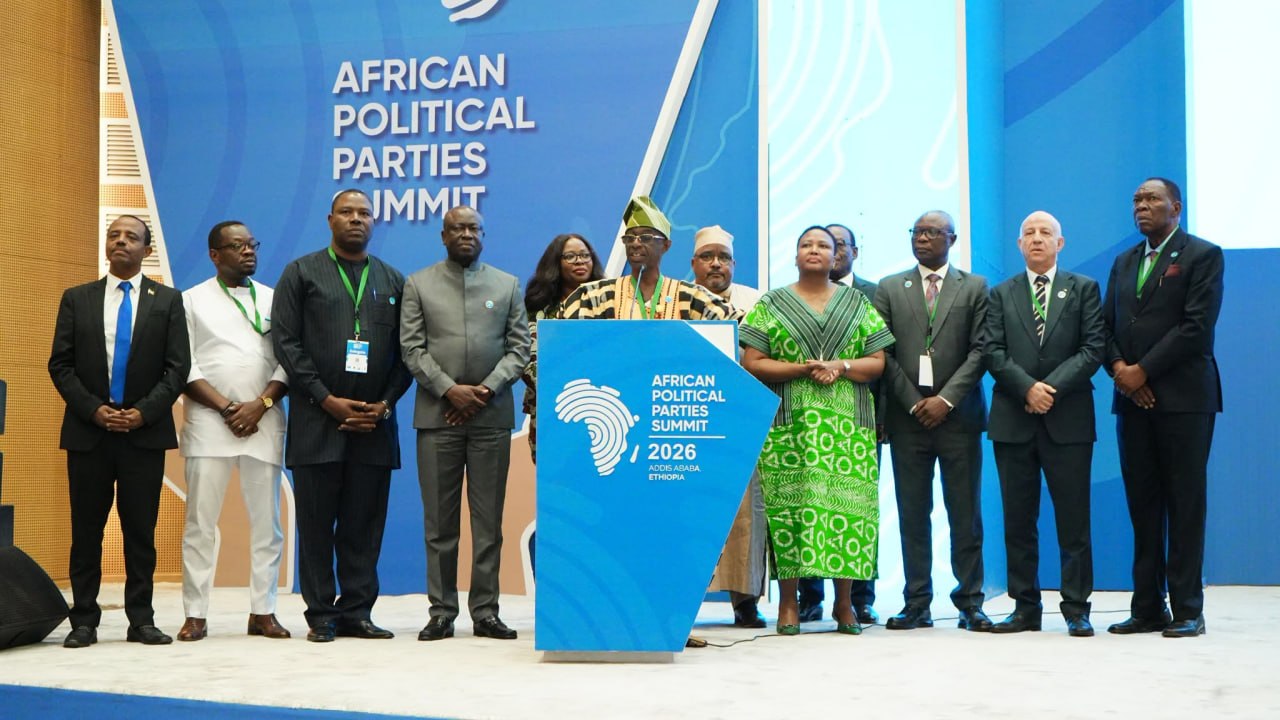
Addis Ababa, November 7, 2026 (ENA)— The Second African Political Parties Summit concluded today with the adoption of the Addis Ababa Declaration, outlining a continental framework to strengthen political leadership, democratic governance and the role of political parties in driving Africa's economic transformation.
The declaration underscores that Africa's economic transformation requires deliberate political choices, capable public institutions, sustained productive investment and consistent national development priorities.
It recognizes political parties as key actors in shaping national policies, preparing leaders for public office and providing political direction for the continent's long-term development.
A major outcome of the summit was the adoption of the Charter of the African Political Parties Initiative (APPI) on November 6, establishing its governing constitutional framework, institutional organs and leadership arrangements within the Africa Governance Centre (AGC).
The summit also endorsed the inaugural APPI Bureau Leadership for a three-year term, marking the beginning of the initiative's institutional transition under the newly adopted Charter.
Delegates further agreed to launch an inclusive continental consultation process to formulate APPI Agenda 2040, a collective political vision that will define shared aspirations, development priorities and measurable ambitions for Africa's political, economic and institutional transformation.
The proposed agenda is expected to complement the African Union's Agenda 2063 by providing a framework through which participating political parties can translate continental development aspirations into political programs and sustained commitments.
On economic transformation, it calls on political parties to advance policies promoting industrialization, productive investment, technological development and employment creation, particularly in manufacturing, agro-processing, modern agriculture, mineral beneficiation, digital industries and internationally competitive services.
It also commits participating parties to mobilizing legislative and public support for the African Continental Free Trade Area (AfCFTA), expanding intra-African trade, strengthening regional value chains and improving transport, logistics, energy systems and digital connectivity.
The declaration further stresses Africa's sovereign right to determine the development and utilization of its natural resources, while promoting domestic value addition, industrial capabilities and the contribution of resource wealth to national prosperity.
It calls for greater mobilization of domestic financial resources, stronger capital markets and development finance institutions, alongside transparent public financial management, accountable resource allocation and prudent debt governance.
The leaders also emphasized the importance of fairer international economic partnerships, improved access to technology and development finance, and stronger African participation in global value chains.
On governance, the declaration reaffirms commitment to constitutionalism, democratic accountability, political pluralism, the rule of law, fundamental rights and peaceful political competition. It unequivocally rejects unconstitutional changes of government.
It also highlights the need to preserve institutional memory, professional expertise and administrative continuity through political transitions, while encouraging governing and opposition parties to engage constructively on long-term national development priorities.
The declaration calls for professional, effective and accountable public institutions capable of translating development priorities into practical results.
Recognizing the importance of Africa's young population, it urges greater investment in education, technical training, technology, enterprise development and productive employment. It also reaffirms women's equal participation in political leadership, public administration and economic decision-making.
The summit further agreed to strengthen continental political education and leadership development through the establishment of the Council of African Political Party Schools and Institutes (CAPPSI) and the Political Academy for Transformational Leadership (PATL) under the APPI framework.
The declaration also welcomes Prime Minister Abiy Ahmed’s pledge to contribute to the development of the Political Academy for Transformational Leadership (PATL) and to make Ethiopia’s leadership training opportunities accessible to political parties across Africa.
The declaration recognizes this commitment as an important contribution to strengthening policy competence, institutional learning and leadership succession across the continent.
It also recognizes the African Youth in Politics Forum and the Africa Women Political Leadership Summit as continuing platforms within APPI, providing opportunities for young people and women to contribute to continental political cooperation and decision-making.
The APPI Bureau Leadership and its Secretariat are mandated to facilitate the implementation of the declaration, promote exchanges of national experiences and institutional practices, and present periodic progress reports to the African Political Parties Summit.
The declaration concludes by reaffirming the collective responsibility of African political parties to strengthen public institutions, advance productive economic transformation and pursue the long-term prosperity of African peoples.
It also expresses appreciation to Prime Minister Abiy Ahmed for his high patronage of the summit and to the Ethiopian Government, people and Prosperity Party for hosting the gathering in Addis Ababa from November 5 to 7, 2026.


