Medemer in Action - ENA English


Medemer in Action
By Jibril Lamo
November 11, 2026 (ENA)
Governing for Growth: How Strategic Synergy Transformed Ethiopia and Offers a Blueprint for Africa
Africa does not suffer from a lack of potential or resources. Its historic constraint has been the gap between vision and realization. True transformation requires the realization of three unbroken links: a strategic plan that captures aspirations; a strategic leadership that unites fragmented forces; as well as a strategic execution that converts policy into visible and measurable progress.
In recent years, Ethiopia has embarked on a bold political and economic experiment. Under the leadership of Prime Minister Abiy Ahmed, the Prosperity Party emerged — growing into one of Africa’s largest political institutions with over 16.9 million members. The Prosperity Party has thus emerged a leading entity in Africa’s political leadership for economic transformation. Anchored in the philosophy of Medemer, the party puts public interest first. This pragmatic approach serves as a living example to Africa. It proves that a strong, visionary political party is indispensable for transforming the lives of its people.
Strategic Execution in Agriculture
Agricultural transformation lies at the heart of Ethiopia’s Prosperity Party agenda. This transformation drive is guided by five uncompromising objectives: producing excess to ensure food security and sovereignty, accelerating import substitution, driving export promotion, generating millions of jobs, and building lasting household wealth. For this emerging party, political sovereignty without economic strength is fragile. True independence must be built on productivity, prosperity and self-reliance, which are the core values of the Prosperity Party.
The transformation is backed by profound policy shifts: long-term land deed security, fertilizer subsidies, duty-free importation of agricultural machinery, and technology transfer.
Through this approach, Ethiopia has eliminated its 1 billion USD wheat import bill. Now, the nation harvests tens of million metric tons and exports surplus grain. This Prosperity Party-led transformation offers Africa a powerful lesson: replace wheat imports with homegrown abundance and turn food dependence into sovereignty. In coffee — the major export commodity of the country, structural market reforms crossed 3 billion USD in annual export earnings. This alone marks a historic breakthrough in Ethiopia’s coffee exports. while the Green Legacy Initiative has planted over 56 billion tree seedlings to secure climate resilience.
Meanwhile, the Green Legacy Initiative has reinforced this transformation, with over 56 billion tree seedlings planted since 2019 to strengthen climate resilience and sustain agricultural growth.
Industrial Growth
The Prosperity Party has sparked an industrial growth, achieving structural self-sufficiency in key industrial products. Through the “Made in Ethiopia” campaign, aggressive import substitution in cement, steel, and ceramics has saved billions. Today, 44 percent of pharmaceutical products are manufactured locally, establishing continental leadership.
To guarantee input sovereignty, the Ethiopian Investment Holdings has partnered with the Dangote Group. They are building a 2.5 billion USD natural gas-to-urea mega-complex, set to produce 3 million metric tons of urea annually.
Strategic Leadership in Digital Economy
Through the Digital Ethiopia 2025 strategy, telecommunications liberalization ended a state monopoly, securing 850 million USD in direct FDI; while modernizing Ethio Telecom. The Telebirr platform has surpassed 45 million active users, facilitating trillions of Birr in digital transactions.
Meanwhile, over 500 public services have been fully digitized. To power the future workforce, the visionary 5 Million Coders Initiative is equipping millions of African youth with cutting-edge software programming, AI, and data science skills.
Unlocking Mineral Potential
In mining, policy reforms directed commercial and artisanal gold straight to central bank reserves. For the first time in history, gold has become Ethiopia's number one foreign currency earner, generating over 5.6 billion USD. The inauguration of the state-of-the-art National Precious Metals Refinery adds local value before export, creating thousands of high-quality jobs and elevating the quality of life for mining communities.
Strategic Execution in Tourism
Clarity of thought and imaginative leadership has also unlocked Ethiopia’s tourism wealth. Brand-new eco-tourism destinations were created from scratch. This was made possible through the Dine for Sheger, Dine for Ethiopia, and Dine for Generation initiatives. Concurrently, major investments renovated historical, cultural, and spiritual landmarks. Sites like Lalibela, Fasilides Castle, Jimma Abajifar Palace and the historic city of Harar were restored, driving double-digit revenue growth and drawing millions of global visitors.
Urban Renewal
The Prosperity Party’s urban transformation model—exemplified by the Addis Ababa Corridor Development—has revolutionized urban living. With similar corridor developments actively in progress across 78 major cities nationwide, urban centers are being transformed into clean, green, walkable, and smart habitats that boost commerce and create massive urban employment.
Rural Corridor Development
Going beyond urban centers, the Prosperity Party has extended its visionary corridor transformation into the countryside through rural corridor development. This initiative integrates rural infrastructure, including feeder roads, electrification, water access, and digital connectivity. It connects farming communities directly to economic hubs, reduces post-harvest losses, and turns rural settlements into vibrant centers of growth.
Mega Projects for Comprehensive Sovereignty
Beyond poverty reduction, true statehood requires monumental infrastructure. The Prosperity Party delivered the Grand Ethiopian Renaissance Dam (GERD) which stands as a national symbol of patriotism and self-funding. This mega project drives regional energy integration by exporting clean electricity across the Horn of Africa. To revolutionize continental logistics, construction has been underway for the new Bishoftu International mega Airport with a total outlay of 12.5 billion USD, designed as Africa's largest international aviation hub. Add to this the major Natural Gas and Petroleum Development Projects… Through these, Ethiopia is guaranteeing its energy sovereignty.
The Ethiopian transformation under the Prosperity Party was not an accident of circumstances. Grounded in the philosophy of Medemer, this strategic alignment has propelled Ethiopia to the top of Africa’s economic rankings. The nation has achieved an extraordinary 10.2 percent economic growth rate. Medemer is no longer just an idea. It is a tried, tested, and empirically proven philosophy that can be replicated across the African continent.
How can African political parties adapt this model?
African countries can adapt this promising Ethiopian model and start marching on the path to prosperity. How?
First: Build Institutional Synergy. Move political organizations away from short-term electoral cycles toward unified, development-focused governance platforms.
Second: Achieve productive sovereignty. Instead of relying on imports, we must harness our own land, labor, and resources to end our dependence on foreign aid.
And Third: Integrate Regional Value Chains. Link trade, energy, and agricultural markets so that no African nation faces global supply crises alone.
The story of Ethiopia over the last seven and eight years demonstrates that rapid, homegrown economic transformation is not a distant vision. It is achievable through strategic clarity, public-first leadership, and disciplined execution.
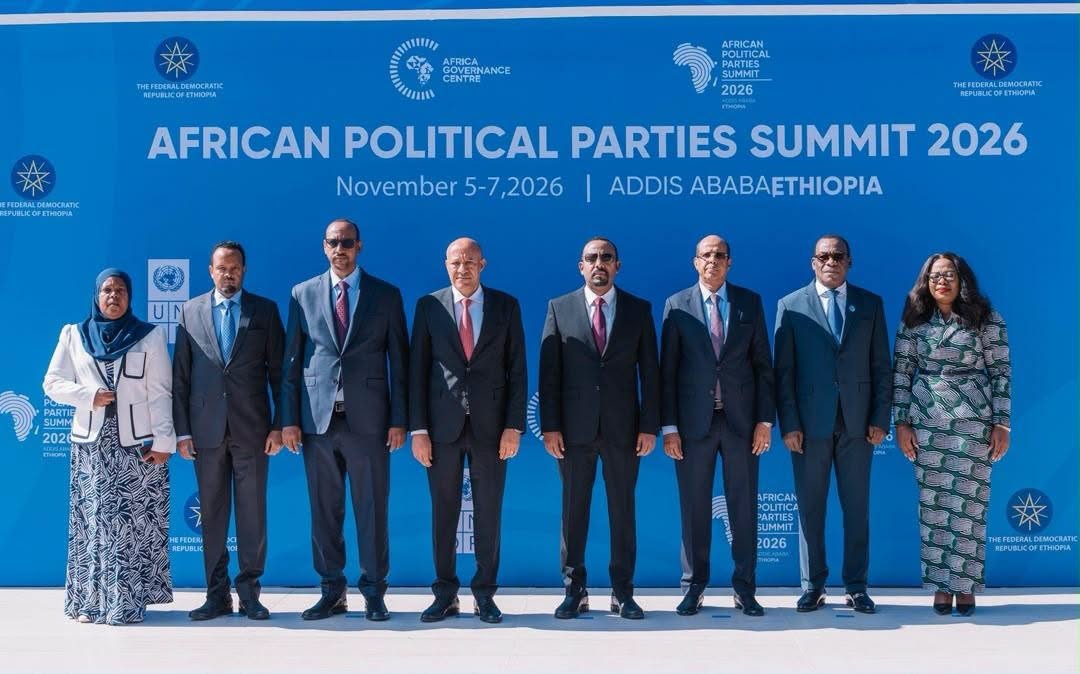
As 600 political party leaders, heads of state and policy architects gather here in Addis Ababa for the Second African Political Parties Summit (APPS), the mandate is clear:
When nations align their strategic plans, exercise courageous strategic leadership, and commit to relentless strategic execution—Africa does not merely adapt to the future. Africa builds it.


