WHO Emergency Medical Teams Global Meeting Kicks Off in Addis Ababa - ENA English


WHO Emergency Medical Teams Global Meeting Kicks Off in Addis Ababa
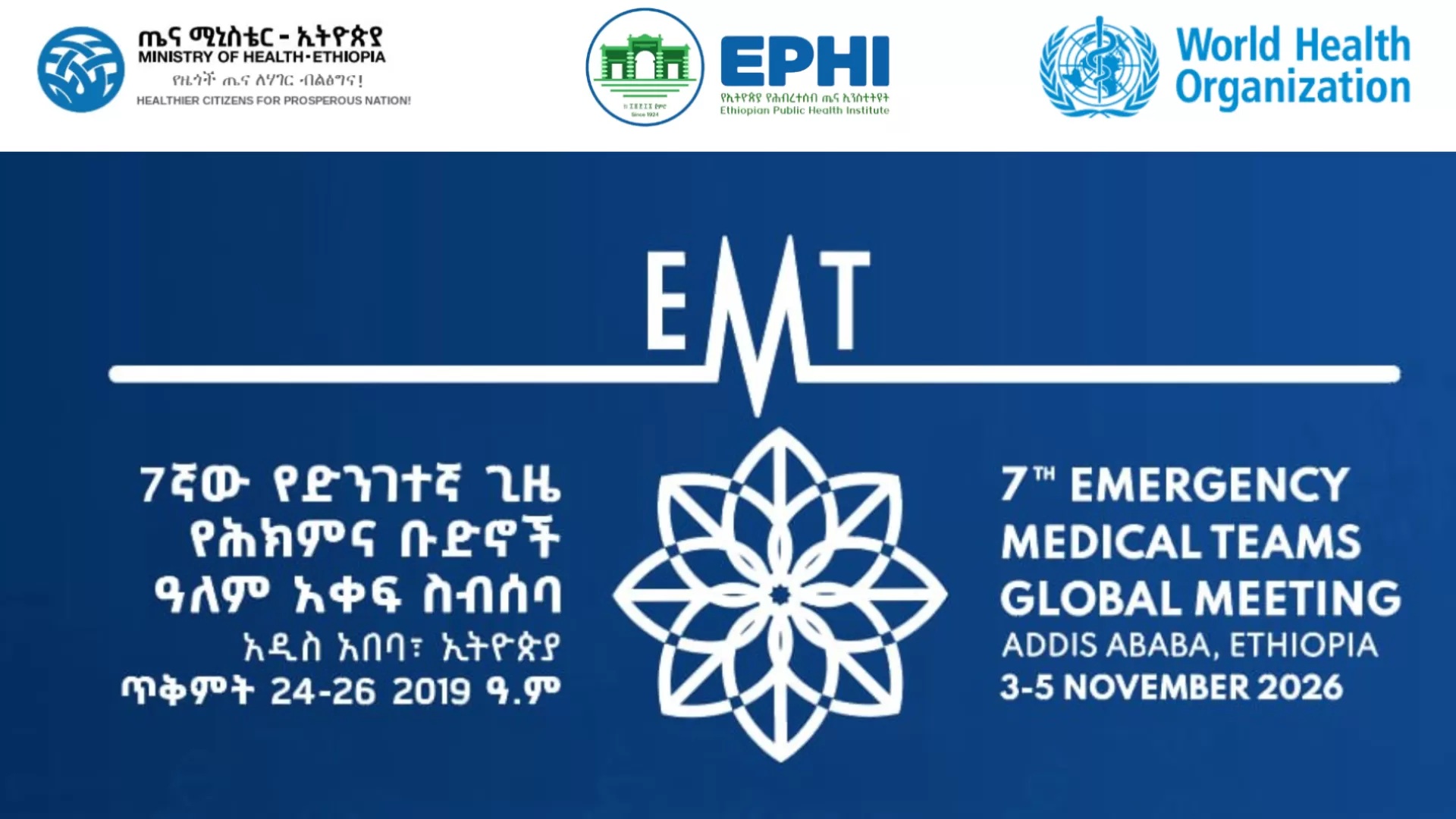
Addis Ababa, November 3, 2026 (ENA)— Ethiopia is hosting the 7th World Health Organization Emergency Medical Teams (EMT) Global Meeting, marking the first time the global gathering has taken place in the WHO African Region.
Speaking at the opening ceremony today, Deputy Director General of the Ethiopian Public Health Institute, Dr. Melkamu Abte, said Ethiopia has progressively strengthened its emergency medical team through sustained investment in national capacities, institutional systems and human resources.
He said Ethiopian medical teams have supported responses to major disease outbreaks, incidents and landslides, including the Marburg virus response.
Dr. Melkamu said Ethiopia’s efforts are focused on consolidating the progress achieved, strengthening operational readiness and ensuring the long-term sustainability of its national emergency medical team.
He also expressed Ethiopia’s ambition to further develop its institutional capacity and work towards becoming a WHO Collaborating Centre.
WHO Regional Director for Africa Dr. Mohamed Yakub Janabi commended Ethiopia’s progress, noting that Senegal was the first African country to receive WHO classification, followed by Ethiopia.
He said the African Region faces more than 100 significant public health events annually, underlining the importance of strengthening national emergency response capacities.
“Africa will not wait for help. Africa is the help,” Dr. Janabi said, calling on African governments to translate their commitments into funded national plans and strengthen regional cooperation.
He also highlighted the African Region Framework 2026–2030, which aims to ensure that every member state has a functional national emergency medical team by 2030.
In a video message, WHO Director-General Dr. Tedros Adhanom Ghebreyesus said the meeting provides an important opportunity to strengthen national capacities and accelerate progress in emergency preparedness and response.
He noted that 77 emergency medical teams from 42 countries have received international classification, including Ethiopia’s national team, the first civilian team in the WHO African Region to achieve the classification.
Dr. Tedros emphasized that investment in emergency medical teams goes beyond responding to crises and requires building a skilled, trained and well-prepared health workforce before emergencies occur.
“Investing in emergency medical teams is not only about responding when crisis strikes,” he said, emphasizing the importance of strengthening health systems and building more resilient communities.
The global meeting, taking place from November 3–5 in Addis Ababa, brings together health officials, emergency medical team representatives and international partners to exchange experiences, strengthen collaboration and advance global emergency medical response capacities.


