Ethiopia Prepares 4.5 Million Hectares for Summer Irrigated Wheat Production - ENA English


Ethiopia Prepares 4.5 Million Hectares for Summer Irrigated Wheat Production
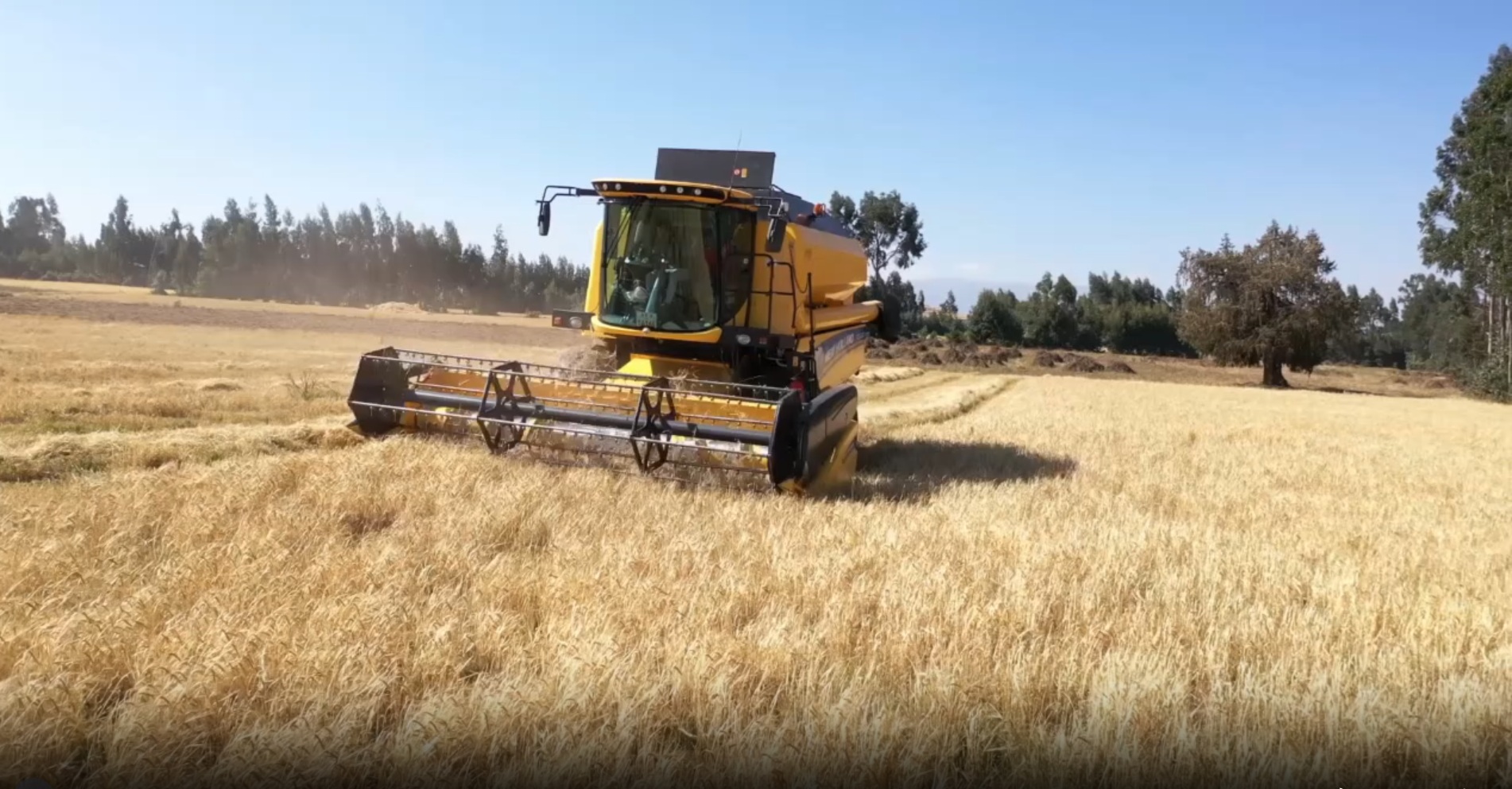
Addis Ababa, October 31, 2026 (ENA) — More than 4.5 million hectares of land will be cultivated under this year’s summer irrigated wheat development program, according to Ministry of Agriculture.
Lead Executive Officer for Crop Development at the Ministry, Teshome Geletu, said the target marks a significant scaling of the national initiative, which has become a cornerstone of Ethiopia’s strategy to ensure food sovereignty.
Historically, Ethiopia faced an annual wheat demand exceeding 107 million quintals, necessitating the expenditure of 700 million USD to 1 billion USD each year to bridge the deficit.
However, agricultural reforms introduced under the current administration have successfully shifted the narrative from aid dependency to self-sufficiency.
The summer irrigated wheat initiative, championed by Prime Minister Abiy Ahmed, has proven to be a transformative catalyst.
Since the 2021/22 fiscal year, these efforts have enabled Ethiopia to cease wheat imports entirely and build the infrastructure required to enter the international export market, the Lead Executive Officer said.
"The strides made in the agricultural sector have fundamentally decoupled our farmers and pastoralists from a total reliance on rain-fed agriculture," Teshome told ENA. "We are fostering a dynamic new development culture."
The initiative has effectively dismantled the traditional practice of limiting wheat cultivation to a single season in highland and midland regions.
By leveraging diverse irrigation methods, farmers are now empowered to harvest up to three times per year, extending productivity into vast lowland areas previously considered unsuitable for such crops, he explained.
According to Teshome, the program’s growth has been rapid. What began as a pilot project covering just 20,000 hectares has expanded exponentially.
During the 2025/26 season, the country successfully cultivated 3.78 million hectares, resulting in a bumper harvest of 149 million quintals.
Looking ahead, the Ministry is preparing for the upcoming season, which commences in November. For this, the government has set a target to cultivate 4.5 million hectares, with a projected yield of 189 million quintals.
Beyond the production figures, Teshome emphasized that the initiative has significantly bolstered the economic livelihoods of rural communities, effectively replacing long-standing mindsets of dependency with a focus on sustainable, high-yield productivity.


