Ethiopia Emerges as Leading Healthcare Manufacturing Hub in Africa: Expert - ENA English


Ethiopia Emerges as Leading Healthcare Manufacturing Hub in Africa: Expert
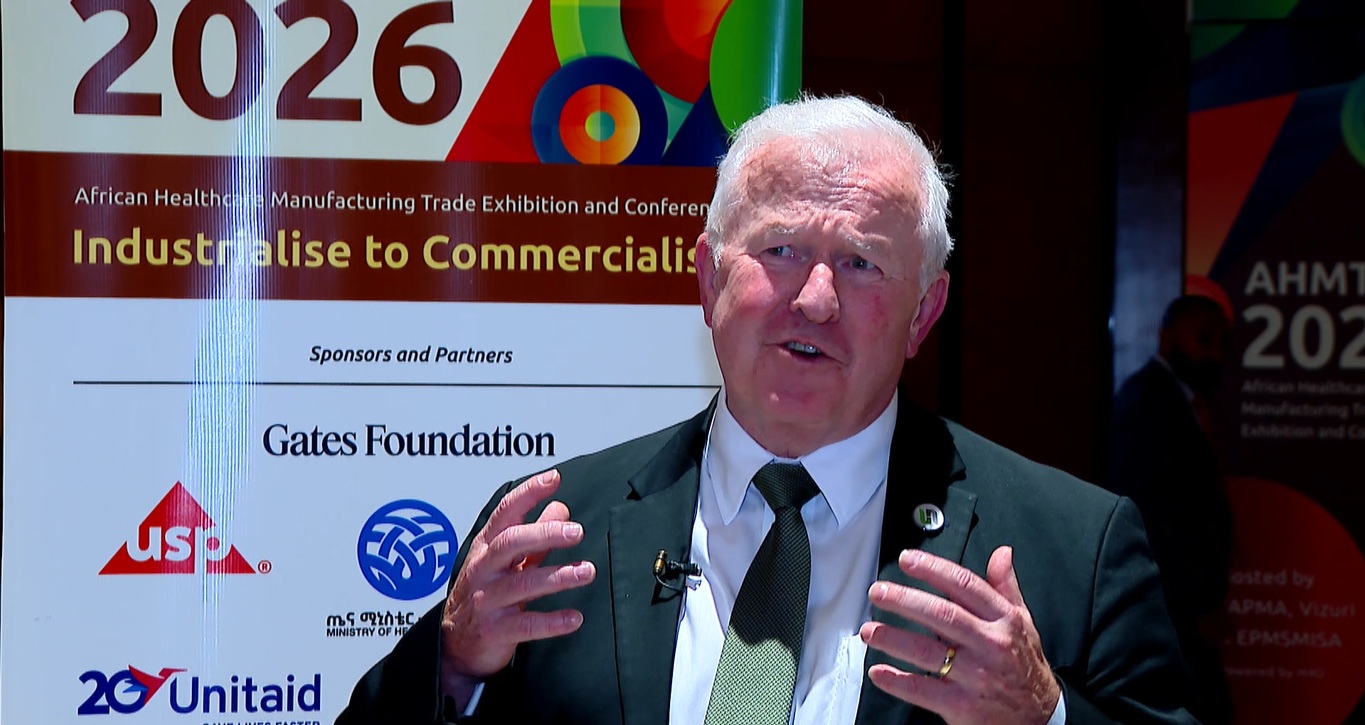
Addis Ababa, October 29, 2026 (ENA)— Ethiopia is becoming a premier destination for healthcare manufacturing investment in Africa, driven by bold policy reforms, improved foreign exchange access, and an open investment environment, according to Dr. Iain Barton, Founding Principal of Health 4 Development.
Speaking to ENA on the sidelines of the African Healthcare Manufacturing Trade Exhibition and Conference (AHMTEC 2026) in Addis Ababa, Dr. Barton noted that recent reforms have significantly transformed the nation's business climate.
He emphasized that these changes are creating major new opportunities for investors across the pharmaceutical and broader healthcare manufacturing sectors.
Barton, who has worked in Ethiopia’s pharmaceutical sector for nearly two decades, recalled that the country had previously been a difficult market to serve because of import restrictions and foreign exchange constraints. However, he said the situation had changed considerably over the past three years.
“What we’ve seen over the last 36 months is a complete transformation of the Ethiopian market,” he said. “I’ve always called Ethiopia the jewel of the East. It is such an incredible economy and such an incredible population. And suddenly it’s opened up.”
He attributed the transformation to government led reforms in regulation, foreign exchange management, investment incentives, and business ownership, saying the changes were helping attract renewed investor interest.
“Those policies are what is driving this transformation,” Barton said, adding that the impact could extend beyond healthcare manufacturing to other sectors of the economy.
He said Ethiopia’s large population and economic potential made it an increasingly important market for companies seeking to expand their presence across Africa.
While countries such as Nigeria, Tanzania, Rwanda, Egypt, Morocco, and Algeria also offer significant investment opportunities, Barton said Ethiopia should be central to companies’ long-term strategies for the continent.
“Anyone who doesn’t have Ethiopia on their strategic plan is missing the biggest opportunity of the moment,” he said.
Barton also highlighted Ethiopia’s potential within Africa’s broader drive to expand local production of medicines, vaccines, and medical devices, a move aimed at strengthening the continent’s capacity to meet its healthcare needs.
Referring to Africa Centers for Disease Control and Prevention Director General Dr. Jean Kaseya’s description of African manufacturing as “the second liberation of Africa,” Barton stressed the importance of developing domestic production capacity and making better use of the continent’s human and economic resources.
“We have to allow ourselves to explore our talents, explore our capacity, explore our market potential, and deliver against the promise we have made to the patients we serve,” he said. “If we do that effectively, our dreams know no bounds.”
He also commended African entrepreneurs for building businesses and creating economic value despite challenging operating conditions.
To sustain this progress, he called on governments to strengthen investment in universities, research and development, innovation hubs, and other support systems needed to nurture local talent and industrial capacity.
“All we have to do is give our talent the space, the opportunity, and the capacity,” he said.
AHMTEC 2026, held in Addis Ababa from October 26 to 28 under the theme “Industrialize to Commercialize,” brought together manufacturers, policymakers, investors, regulators, and development partners to explore ways to strengthen Africa’s healthcare manufacturing ecosystem and expand the continent’s capacity to produce essential health products locally.


