Former AUC Chairperson Urges Africa to Fundamentally Restructure Economic Systems - ENA English


Former AUC Chairperson Urges Africa to Fundamentally Restructure Economic Systems
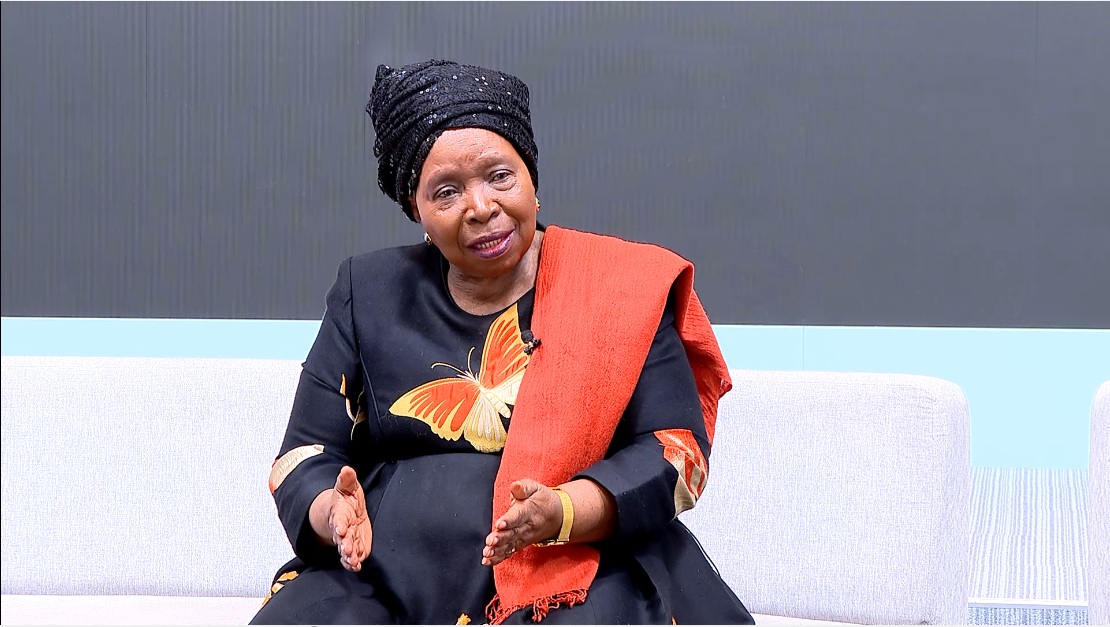
Addis Ababa, October 28, 2026 (ENA)— Former African Union Commission (AUC) Chairperson Nkosazana Dlamini-Zuma called African nations to fundamentally restructure their economic systems.
She argues the continent must move beyond its role as a mere exporter of raw materials to become a global hub of value-added production.
In an exclusive interview with ENA on the sidelines of the Russia-Africa Summit, Dlamini-Zuma addressed the "African paradox"—a continent defined by immense natural wealth existing alongside persistent poverty.
She emphasized that the path to prosperity lies in "decolonizing the mind" and taking absolute control over the continent's vast resources.
Dlamini-Zuma highlighted the structural flaws in current trade patterns, where minerals are shipped directly from mines to ports, bypassing local industrialization. She warned that this cycle is effectively an export of the continent's future.
"Africa is rich, but its riches leave the ports—leave the mines to the ports to go and reach other countries," she explained.
"If we take our minerals from the mine to the port, we're not only exporting raw material, we're exporting high-level jobs that are going to be created to beneficiate and process those raw materials. We are also exporting revenue because we sell cheap and we buy expensive."
She argued that by processing resources locally, African nations could generate the revenue necessary for a "skills revolution." This would equip the youth to build their own nations rather than seeking opportunities abroad.
"We must train our young people so that they don't dream of escaping Africa, but they fix Africa," she added.
Turning to agriculture, Dlamini-Zuma invoked the words of Thomas Sankara, emphasizing the link between nutrition and political autonomy: "Who feeds you controls you."
With Africa holding 60 percent of the world’s available arable land, she argued that food insecurity is a choice, not a necessity.
"We have land, we have sunshine, we have water, and we have people. We don't lack anything," she noted.
"So, let's change our mindset and understand that we can have food sovereignty if we decide to do so. Who respects somebody who can't feed themselves?"
She proposed that the solution lies in intra-African trade, utilizing the African Continental Free Trade Area (AfCFTA) to ensure that what one nation produces, another can consume, thereby reducing dependency on external imports.
Dlamini-Zuma also stressed that economic progress is tethered to political and social integration. She urged African states to ratify the 2018 protocol on the free movement of people, which she identified as a critical catalyst for trade.
"Trade would be difficult amongst ourselves if movement is difficult," she explained. "We need free movement of goods and people so that trade can be much easier."
She concluded by emphasizing the power of a unified diplomatic front. According to Dlamini-Zuma, the continent’s influence on the global stage is currently diluted by fragmentation.
"If we're united, it means we can speak with one voice, even at the UN," she said. "If we speak in 55 voices, people just hear the noise; they don't know what we said. So, it's very important that we unite in ideas and integrate."
By championing local beneficiation, food self-sufficiency, and the removal of borders for trade, Dlamini-Zuma’s vision offers a roadmap for an Africa that is no longer a passive participant in the global economy, but a self-reliant, unified, and prosperous global player.


