ENDF at 119: Advancing Ethiopia’s Peace, Regional Stability and Tech Self-Reliance - ENA English


ENDF at 119: Advancing Ethiopia’s Peace, Regional Stability and Tech Self-Reliance
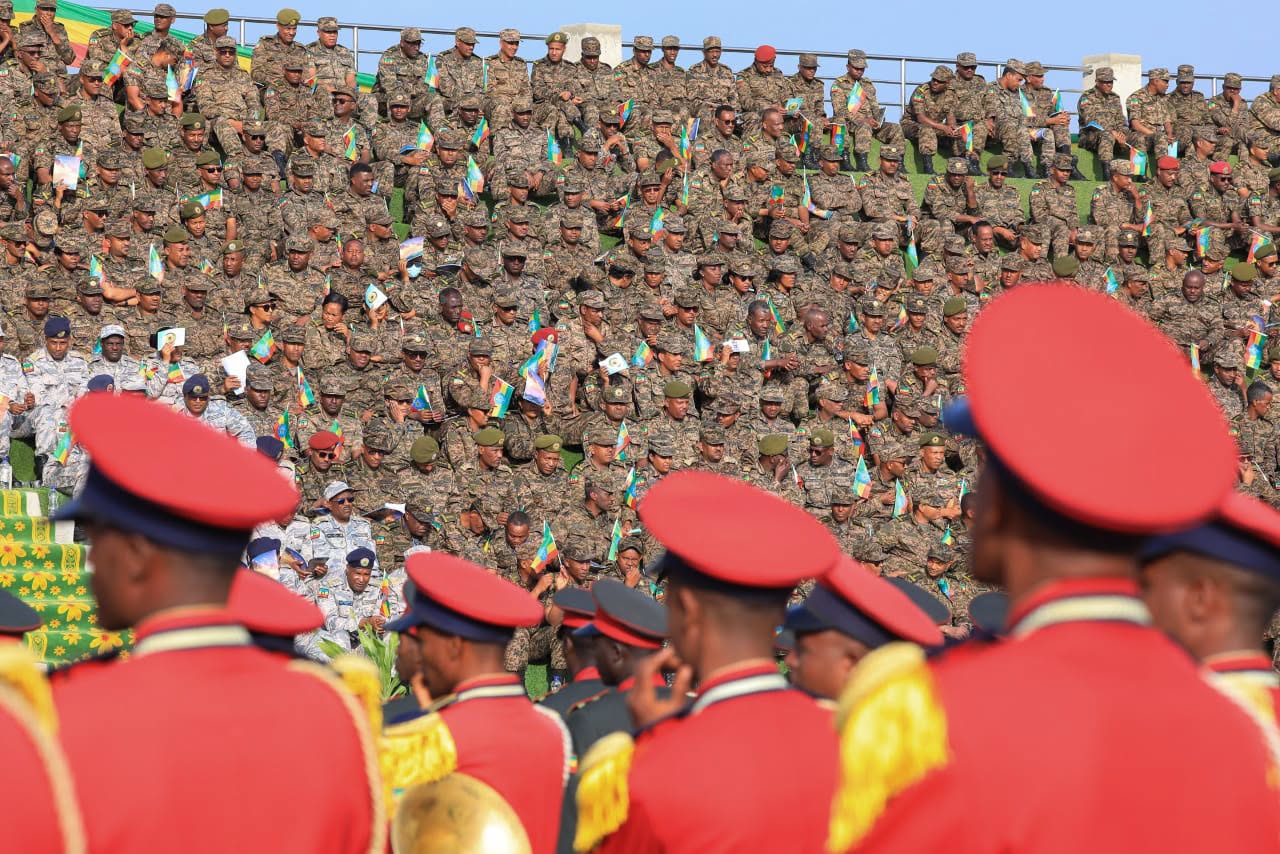
By Staff Writer
October 25, 2026 (ENA)
The Ethiopian National Defense Force (ENDF), marking 119 years of institutional development, represents a longstanding pillar of Ethiopia’s sovereignty, territorial integrity and national security. From defending the country’s independence to participating in international peacekeeping operations and expanding domestic defense manufacturing, the institution has continued to evolve in response to changing national, regional and global security demands.
Today, the ENDF is pursuing a transformation that extends beyond conventional military strength. Reforms in organizational structure, professional training, technological development and defense production are intended to strengthen its operational capabilities and reduce dependence on external suppliers. At the same time, its contributions to peace and security at national, regional and international levels remain important dimensions of its institutional responsibilities.
The development of the force reflects the relationship between national defense, institutional resilience and technological capacity. Its future effectiveness will depend not only on the equipment it possesses, but also on the professionalism of its personnel, the strength of its institutions and its ability to contribute to lasting peace.
Resilience Legacy
Ethiopia’s military history is closely connected with its struggle to preserve independence and territorial integrity. Across successive generations, the country’s armed forces have defended national sovereignty while adapting to changing political circumstances, military doctrines and technological developments.
The ENDF’s historical legacy includes the wider tradition of Ethiopian resistance to colonial aggression, notably the victory at Adwa in 1896, as well as the military experiences that shaped the country’s subsequent defense institutions. These historical milestones preceded the establishment of the modern army and helped shape the national consciousness surrounding sovereignty and independence. Over the decades, the armed forces have undergone changes in command structures, training systems, equipment and operational responsibilities.
The contemporary ENDF is building on this historical experience while seeking to develop a more professional, technologically capable and institutionally resilient force. The reform agenda pursued in recent years places particular emphasis on organizational unity, operational readiness, specialized capabilities and modern military science.
In July 2026, ENDF Chief of Staff Field Marshal Birhanu Jula said the force had strengthened its unity, expanded its organizational structure and continued modernizing its equipment and technology amid an increasingly complex security environment. These efforts, he said, were intended to reinforce its capacity to safeguard Ethiopia’s sovereignty.
The significance of this transformation lies in its effort to connect historical experience with the requirements of contemporary national defense. A modern military must combine discipline and institutional continuity with scientific knowledge, technical expertise and the capacity to respond to rapidly changing security conditions.
A Pillar of National Peace
The ENDF’s principal constitutional responsibility is to defend Ethiopia’s sovereignty and territorial integrity. Its contribution to national peace also involves protecting the country against armed threats, responding to security emergencies and supporting conditions in which citizens can pursue their social and economic activities in safety.
National peace, however, extends beyond military operations. Sustainable stability requires functioning institutions, political dialogue, reconciliation, respect for the law and public confidence. The defense force can contribute to these objectives by maintaining professionalism, observing constitutional responsibilities and protecting civilians in accordance with applicable law.
The ENDF’s experience in complex security environments has reinforced the importance of coordination, intelligence, training and operational preparedness. Its ongoing institutional reforms seek to strengthen these capabilities while adapting to emerging threats.
The force’s relationship with the public is equally important. National defense is most effective when the military operates as a professional institution serving the country and its people, rather than a particular political interest. Maintaining political neutrality, respecting civilian authority and upholding the rights of citizens are essential to sustaining public trust.
The military’s role in national peace should therefore be assessed not only through its ability to confront armed threats, but also through its adherence to the law, protection of civilians and contribution to an environment conducive to reconciliation and development. In a country with diverse communities and complex social and political dynamics, lasting peace requires cooperation among security institutions, public authorities, communities and other stakeholders. The ENDF’s professional conduct and institutional accountability are important to this broader national effort.
Regional Security
Ethiopia occupies a strategically important position in the Horn of Africa, a region where security developments frequently cross-national borders. The ENDF’s contribution to regional peace includes cooperation with neighboring countries and participation in regional security mechanisms. Ethiopia has maintained an important role in the Eastern Africa Standby Force, an African regional arrangement designed to support peace operations and respond to crises.
In May 2026, Field Marshal Birhanu Jula reaffirmed Ethiopia’s commitment to regional peace and security during discussions with the outgoing and incoming leadership of the Eastern Africa Standby Force. The meeting highlighted the importance of regional cooperation in addressing shared security challenges.
Such cooperation demonstrates that national defense and regional stability are interconnected. Information sharing, military coordination, joint preparedness and professional exchanges can help countries respond more effectively to threats that no single state can address independently.
The ENDF’s regional responsibilities must also be understood within the broader principle that durable security cannot be achieved through military measures alone. Diplomatic engagement, peaceful settlement of disputes, economic cooperation and respect for national sovereignty remain essential to preventing conflicts and strengthening relations among neighboring countries.
A stable Horn of Africa would create greater opportunities for regional trade, infrastructure development, investment and economic integration. By contributing to legitimate regional security arrangements and supporting cooperative approaches to shared threats, Ethiopia’s defense institutions can help create conditions for these wider development objectives.
International Peacekeeping
One of the most visible expressions of Ethiopia’s contribution to international peace has been its participation in United Nations peacekeeping operations. Ethiopian personnel have served in international missions for decades, reflecting the country’s longstanding engagement with multilateral efforts to maintain peace and protect communities affected by conflict.
According to the United Nations, Ethiopia’s participation in UN-authorized operations dates back to 1951, when Ethiopian personnel served as part of the multinational force in the Korean War. Since then, Ethiopian military personnel have contributed to peace and security operations in different parts of the world.
A prominent example is the United Nations Interim Security Force for Abyei (UNISFA), established in 2011 to help stabilize the disputed Abyei area between Sudan and South Sudan. The mission monitors security arrangements, supports the protection of civilians and humanitarian personnel, and contributes to efforts to prevent renewed violence.
The deployment of Ethiopian troops to Abyei followed an agreement reached by Sudanese and South Sudanese representatives in Addis Ababa. The mission illustrates how Ethiopian military personnel have supported internationally mandated security arrangements in a sensitive border region.
Ethiopian personnel have also served in other United Nations missions, including operations in South Sudan. Their responsibilities have included supporting civilian protection, maintaining security in designated areas and helping create conditions for humanitarian activities and political processes.
These experiences have given Ethiopian peacekeepers opportunities to work within multinational command structures, cooperate with personnel from different countries and apply international peacekeeping standards in demanding operational environments.
International peacekeeping also strengthens professional experience. Service in multinational missions exposes military personnel to different approaches to logistics, communication, civilian protection and operational coordination. Lessons gained from these assignments can contribute to training and institutional development at home.
The broader significance of Ethiopia’s peacekeeping record is that military capability can serve purposes beyond national defense. When deployed under an authorized mandate and in accordance with international law, disciplined military personnel can help protect vulnerable populations, support humanitarian access and contribute to efforts to restore stability.
Defense Technology, Industrial Capacity
Alongside its peace and security responsibilities, the ENDF is pursuing a transformation in military technology and domestic production. The objective is to strengthen the country’s ability to manufacture, maintain and sustain essential defense equipment while developing the technical expertise required for modern military operations.
For a country with extensive security responsibilities, dependence on foreign suppliers can affect the availability, maintenance and long-term sustainability of military equipment.
Developing domestic production capacity can help reduce these vulnerabilities, retain technical knowledge and build a stronger industrial foundation for national defense.
Ethiopia’s defense industrial institutions provide important examples of this approach. The Homicho Ammunition Engineering Complex is associated with domestic ammunition production, while the wider defense industry has been working to strengthen capabilities in equipment manufacturing, engineering and maintenance.
These facilities illustrate how defense production can bring together mechanical engineering, industrial processes, technical training and specialized manufacturing. Their strategic importance lies not simply in the products they manufacture, but also in the knowledge and skills developed through sustained industrial activity.
Developing domestic expertise in this field can also expand opportunities for engineering research and technical education.
Another significant step came in June 2026, when the Information Network Security Administration and the Ethiopian Air Force signed a memorandum of understanding to establish a drone technology center and strengthen research, laboratory cooperation and aerospace capabilities. The initiative is intended to support innovation and the development of local expertise in unmanned aerial systems.
In August 2026, the ENDF and the Ethiopian Artificial Intelligence Institute also signed a cooperation agreement to explore the application of artificial intelligence in areas including logistics, military training, cybersecurity, military healthcare, air operations and electronic warfare.
The agreement points to a broader shift in defense modernization. Military effectiveness increasingly depends on the ability to collect, process and use information, maintain secure communications and support rapid, informed decision-making. Artificial intelligence and related digital technologies could contribute to these objectives, although their operational benefits will depend on research, testing, qualified personnel and effective implementation.
These initiatives demonstrate that Ethiopia’s defense transformation is not limited to acquiring modern equipment. It also involves building the scientific, industrial and educational capabilities required to develop and sustain advanced systems.
Human Capital Dimension
Technology alone cannot create an effective defense institution. Modern military systems require skilled operators, engineers, technicians, researchers, maintenance specialists and commanders capable of applying scientific knowledge to operational requirements. For this reason, investment in military education and professional development is central to the ENDF’s modernization. Military academies, specialized training institutions and cooperation with civilian research organizations can help develop the expertise needed to operate sophisticated equipment and maintain complex systems.
The partnership between the ENDF, the Ethiopian Air Force, the Information Network Security Administration and the Ethiopian Artificial Intelligence Institute illustrates the potential value of cooperation between defense institutions and the wider scientific community. Such partnerships can strengthen research capacity, encourage the exchange of technical knowledge and support the development of locally relevant solutions. They can also help cultivate a generation of Ethiopian engineers and researchers whose expertise may contribute to defense manufacturing and other technology-intensive sectors.
Domestic defense production can generate benefits beyond the military when it develops transferable industrial skills, strengthens engineering capacity and encourages research and innovation. The long-term objective is to build a system in which training, research, manufacturing and operational requirements reinforce one another. This would enable Ethiopia to develop more of the expertise necessary to maintain its defense capabilities while creating a stronger foundation for technological advancement.
Self-Reliance
The ENDF’s industrial and technological transformation forms part of Ethiopia’s wider pursuit of productive capacity and economic self-reliance. Similar priorities are evident in the country’s efforts to expand agricultural production, develop mineral resources, strengthen manufacturing and invest in scientific knowledge.
Defense production has a distinct purpose because it is directly connected to national security. Nevertheless, it can contribute to broader industrial development by encouraging specialized engineering, technical training and domestic manufacturing.
The development of ammunition production, engineering facilities and drone research demonstrates the range of capabilities required to build a more self-reliant defense sector. These initiatives can help strengthen maintenance capacity, improve the availability of selected equipment and create opportunities for domestic technical expertise.
It is important, however, to distinguish progress in selected areas from complete self-sufficiency. Modern military systems depend on extensive supply chains involving specialized components, software, materials and technical knowledge. Building sustainable domestic capacity is therefore a continuing process that requires investment, research, reliable production standards and international technical cooperation where necessary. The strongest measure of progress is not the number of factories established or the equipment acquired, but the ability to produce reliable systems, maintain them over time, develop skilled personnel and meet clearly identified national defense requirements.
A more capable domestic defense industry can strengthen strategic autonomy by giving Ethiopia greater control over parts of its supply chains. It can also improve the country’s capacity to respond to changing security requirements without relying exclusively on external procurement.
The Road Ahead
As the ENDF marks 119 years of institutional development, its future will be shaped by its ability to combine historical experience with professional standards, technological innovation and a commitment to peace. Its responsibilities remain broad: protecting national sovereignty, contributing to domestic security within the law, supporting regional stability and participating in international peacekeeping. Meeting these responsibilities requires an institution that is well trained, technically capable, disciplined and accountable.
The development of domestic defense industries, drone technology and artificial intelligence cooperation indicates a growing emphasis on technological preparedness. Sustaining these efforts will require stronger research institutions, skilled human resources, effective industrial management and continued adaptation to changing military technologies. Equally important is the relationship between security and peace. Military readiness can deter threats and help protect communities, but lasting stability also depends on dialogue, diplomacy, reconciliation and cooperation among nations and communities. The ENDF’s long-term contribution will be strengthened when professional defense capabilities complement these wider efforts.
The force’s 119-year institutional journey thus represents both a historical legacy and a continuing responsibility. Its achievements in national defense, regional cooperation, international peacekeeping and technological development provide a foundation on which further progress can be built.
Ultimately, the strength of the Ethiopian National Defense Force will be measured not only by its capacity to defend the country, but also by its professionalism, its contribution to a secure regional environment and its ability to adapt responsibly to the demands of modern defense. By combining institutional resilience with technological advancement and a sustained commitment to peace, the ENDF can continue to serve as an important pillar of Ethiopia’s sovereignty and national development.


