PM Advisor Getachew Underscores Ethiopia’s Pivotal Geopolitical Position - ENA English


PM Advisor Getachew Underscores Ethiopia’s Pivotal Geopolitical Position
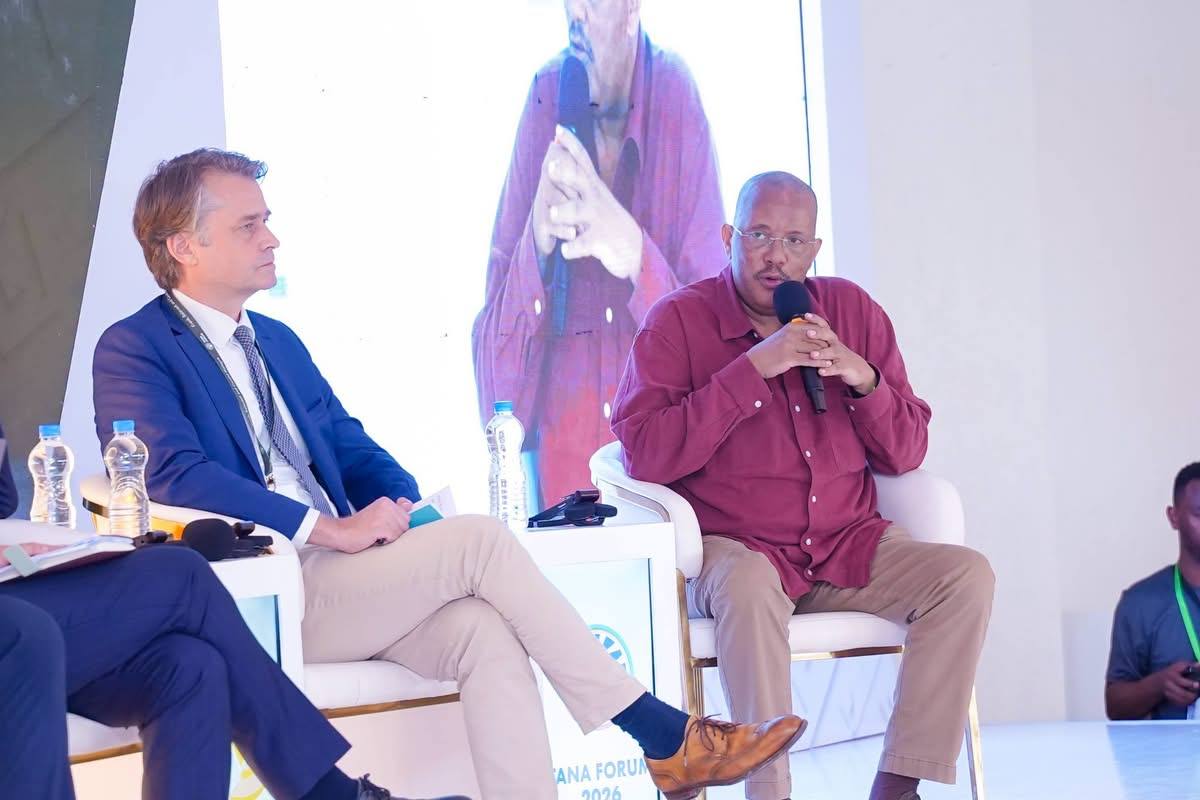
Addis Ababa, October 23, 2026 (ENA) — Advisor to the Prime Minister on East African Affairs, Getachew Reda emphasized Ethiopia’s pivotal geopolitical position, stressing that whatever political, economic, and security developments in the country carry serious implications for the wider region.
The remarks came during the Tana Forum 2026 Special Envoys Dialogue, convened today in the city of Bahir Dar to address pressing regional security challenges in the Horn of Africa and the Red Sea region.
The panelists included Advisor to the Prime Minister on East African Affairs Getachew Reda; UN Secretary-General’s Special Envoy for the Horn of Africa Guang Cong; French Special Envoy for the Horn of Africa Frédéric Clavier; Germany’s Special Envoy for the Horn of Africa, Ambassador Heiko Nitzschke; and Personal Envoy of the UN Secretary-General for Sudan, Pekka Haavisto.
Speaking at the dialogue, Getachew underscored that whatever political, economic, and security developments unfold in Ethiopia carry profound ramifications for the broader Horn of Africa and Red Sea region.
“Ethiopia is too important, and whatever developments happen in Ethiopia will have serious ramifications politically, economically, and in terms of security for the rest of the region,” Getachew said.
Highlighting the nation’s status as a country of over 130 million people with one of the world’s fastest-growing economies, he noted that Ethiopia serves not only as an economic powerhouse but also as a critical contributor to international peace and security.
He stressed that, as a neighbor to some of the region’s most volatile areas, Ethiopia’s responsibility in maintaining stability becomes even more vital.
Addressing internal security dynamics, Getachew underscored the Ethiopian government’s commitment to resolving conflicts through peaceful dialogue and multilateral frameworks.
“One thing we should take into account, in terms of addressing internal problems in Ethiopia, is the government's focus on addressing conflicts or possible sources of conflicts peacefully through dialogue,” he stated, referencing efforts to resolve the conflict in northern Ethiopia through the signing of the Pretoria Agreement.
However, he cautioned that domestic efforts to achieve peace face serious external obstacles, pointing to interference from regional actors.
Getachew singled out Eritrea as one of players of displaying “recalcitrant behavior” and continuing to “foment crisis” in the region.
He urged the international community to adopt a holistic approach that distinguishes between internal peace initiatives and the necessity of confronting external forces fueling instability across the Horn, including in neighboring Sudan and Somalia.
Highlighting how security challenges across the Horn of Africa, the Red Sea, and the Gulf are increasingly merging into a complex regional dynamic, UN Special Envoy Guang Cong described the current situation as a “polycrisis,” noting that ongoing conflicts in Sudan, South Sudan, and Somalia, alongside maritime threats in the Red Sea, are deeply interconnected.
He emphasized that resolving these crises requires a coordinated regional approach rather than isolated measures.
Echoing these concerns, German Special Envoy Ambassador Heiko Nitzschke noted the heightened sense of urgency among European and African policymakers in addressing these overlapping security threats, particularly given their impact on global trade routes through the strategic Bab el-Mandeb Strait.
He underscored the need for region-led peace initiatives and economic integration.
Pekka Haavisto, Personal Envoy of the UN Secretary-General for Sudan, also noted that international and regional diplomatic efforts must align to address complex, multi-state crises in the Horn of Africa.
For his part, French Special Envoy for the Horn of Africa Frédéric Clavier emphasized that stronger multilateral cooperation is necessary to stabilize the broader Horn of Africa and Red Sea region.
Moreover, the panelists highlighted key cross-border infrastructure, trade, and connectivity developments that reflect a shared commitment to long-term regional integration and stability.


