Ghanaian President Says Ethiopia’s Megech Dam Inspires Revival of Abandoned Irrigation Project - ENA English


Ghanaian President Says Ethiopia’s Megech Dam Inspires Revival of Abandoned Irrigation Project
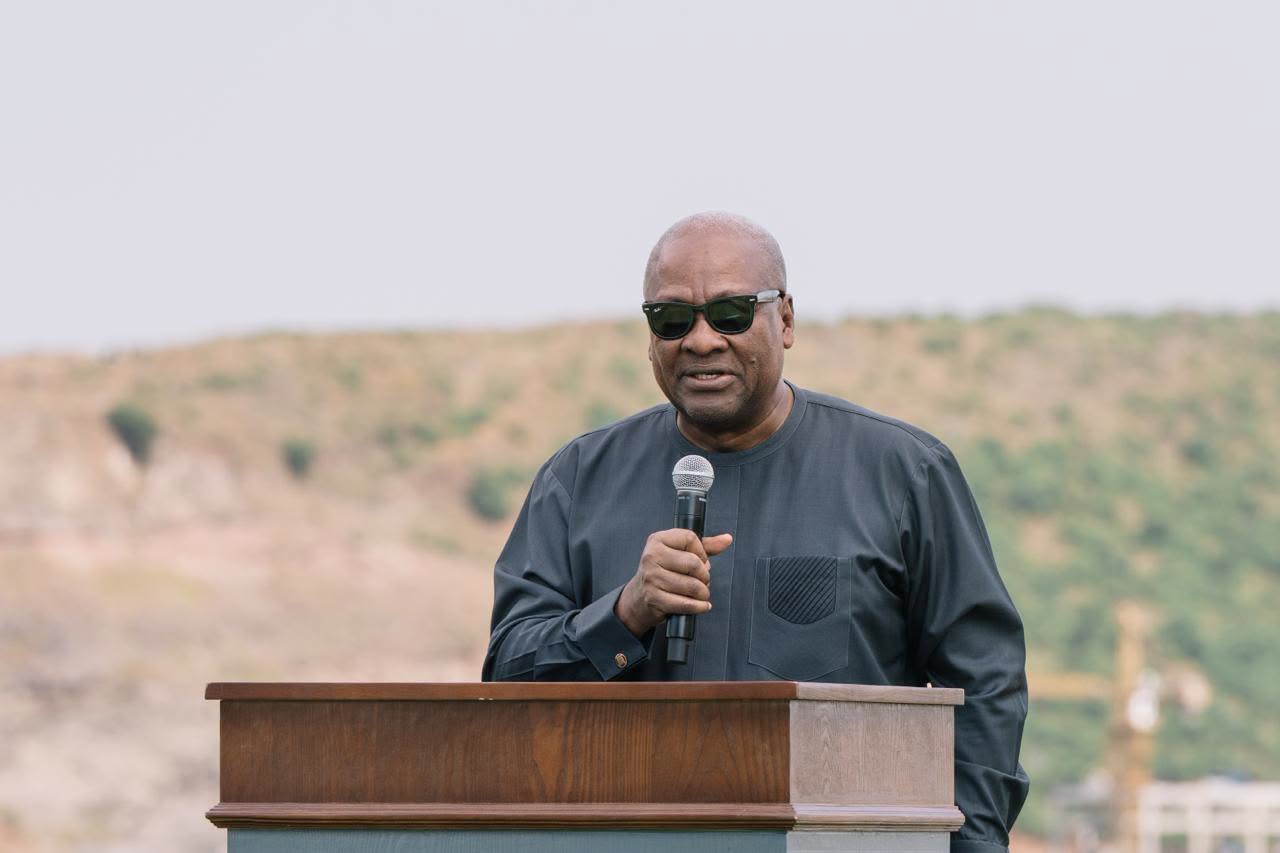
Addis Ababa, October 23, 2026 (ENA) — Ghanaian President John Dramani Mahama said Ethiopia’s Megech Irrigation Dam Project has inspired him to revive Ghana’s long-stalled Pwalugu Irrigation Project.
He highlighted the Megech mega-project as an inspiring example of how irrigation development can strengthen food security, boost agricultural productivity, and drive Africa’s economic transformation.
Speaking at the inauguration of the Megech irrigation dam project in Gondar, Amhara Regional State, today, Mahama commended Prime Minister Abiy Ahmed for reviving the long-delayed project.
He said the ongoing Ethiopia’s development efforts as an inspiration for African leaders.
“I want to stand on behalf of the people of Ghana and salute my brother, Prime Minister Abiy, for the very commendable work you’ve done,” Mahama said.
“These are the kind of transformational leaders we need in Africa,” he added.
The Ghanaian president said the ceremony had motivated him to restart the Pwalugu irrigation project, which he said had been attempted years ago but subsequently abandoned.
The planned Ghanaian project combines irrigation with solar and hydropower generation, with irrigation expected to cover approximately 25,000 hectares of farmland and contribute to the country’s food security.
Mahama said Ethiopia’s experience demonstrated how renewed commitment could turn long-delayed infrastructure projects into investments that deliver tangible benefits to citizens.
Recalling that the Megech project began 19 years ago, he said the project was revived about three years ago under Prime Minister Abiy’s leadership.
He welcomed the opportunity to witness the release of water for irrigation and drinking-water supply to Gondar and surrounding communities.
The Megech dam, with a storage capacity of 185 million cubic meters, is expected to irrigate more than 17,000 hectares of farmland, benefiting tens of thousands of farmers while expanding access to drinking water and creating opportunities in fisheries, agriculture, tourism, and employment.
Beyond its development significance, Mahama highlighted Ethiopia’s historical role in Africa’s struggle against colonial domination, describing the country as a powerful symbol of African resistance.
He also recalled Ghana’s distinction as the first country in sub-Saharan Africa to gain independence from colonial rule, drawing a connection between the continent’s liberation struggle and the responsibility of today’s leaders to deliver economic prosperity.
“Our early leaders fought against colonial domination, and we fought to overthrow colonialism and liberate the continent. It behooves on us, the leaders of today, to bring economic transformation and prosperity to our people,” he said.
Mahama also highlighted the historical connection between Gondar and Ghana, noting that a military barracks in Ghana bears the Ethiopian city’s name and served as the headquarters of the December 31 Revolution.
He said he had long wanted to visit Gondar after learning about its history and civilization through books and welcomed the opportunity to attend the dam’s inauguration.
Reflecting on his successive visit, Mahama said he had witnessed the country changing from year to year.


