Does Egypt Want a Stable Sudan or a Neighbor Weakened by Conflict? - ENA English


Does Egypt Want a Stable Sudan or a Neighbor Weakened by Conflict?
By Tison Tesfay
October 22, 2026 (ENA)
Not every war that devastates a country necessarily runs counter to the interests of its neighbors. For some regional powers, prolonged instability presents an ideal opportunity to expand influence, reshape political calculations, and postpone the reckoning with a neighbor that should be regarded as an equal.
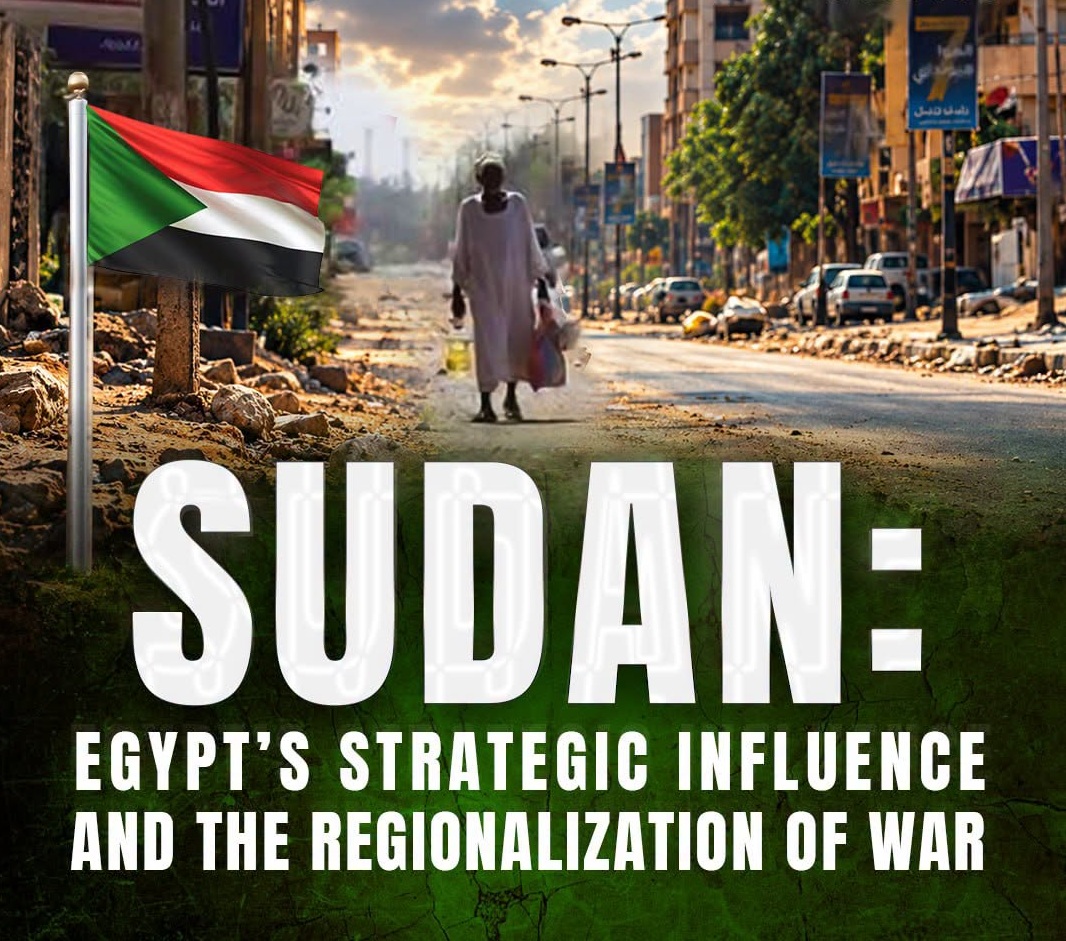
In the case of relations between Egypt and Sudan, the question is no longer whether Egypt is involved in the Sudanese war, but rather the extent of its involvement and the deeper strategic objectives Cairo seeks to achieve by fueling the conflict through support for a particular military faction. In this context, political analyst Mohamed Al-Arrousi argues that Egypt’s continued intervention in Sudan threatens the country’s sovereignty and endangers stability throughout the Horn of Africa.
A careful reading of developments on the ground and in the political arena confirms that Egypt’s approach in Sudan is aimed less at ending the war than at ensuring its continuation and securing a compliant, pro-Egyptian regime, even if this comes at the cost of prolonging the suffering of the Sudanese people and exhausting the country’s national capabilities.
Water Strategy, Resource Plunder, and Fears over the GERD
The figures reveal the scale of the systematic destruction inflicted on Sudan’s economic infrastructure since the conflict erupted on April 15, 2023. Estimates by the Food and Agriculture Organization of the United Nations (FAO) indicate that grain production in 2025 declined by 22 percent compared with the previous year and stood approximately 19 percent below the average of the preceding five years. The World Bank also reported that Sudan’s gross domestic product contracted by 29.4 percent in 2023, followed by a further contraction of 14 percent in 2024.
This economic and political paralysis serves vital and direct Egyptian strategic interests.
If Sudan achieves stability and recovers, it will be able to make independent decisions regarding the management of Nile projects, foremost among them the Grand Ethiopian Renaissance Dam (GERD), which is essential for Sudan in mitigating devastating floods and benefiting from the vital electricity supplies it receives from the dam to develop eastern Sudan.
Moreover, a stable Sudan in control of its own affairs would work to regulate its water allocations. This means that the huge volumes of water that have been wasted as they flow from Sudan into Egypt would cease, a prospect that Egyptian strategic calculations fear and regard as a threat to the country’s customary water security.
That is precisely why Egyptian politicians work day and night to keep Sudan mired in instability, while seeking to preserve a regional order in which Sudan remains dependent and unable to fully control its own resources.
Egypt’s gains from Sudan’s weakening extend far beyond the Nile water issue. Sudan’s instability also raises concerns over the illicit extraction and smuggling of its wealth, with reports of cross-border trafficking involving natural resources, livestock, and raw materials threatening Sudan’s economic sovereignty.
Cario’s politicians exploit the state of chaos and the absence of border controls to support its economy and meet its needs at the expense of the resources of the exhausted Sudanese people.
As senior researcher Abdushakur Abdelsamad emphasizes, Egypt’s approach views the exhaustion of Sudan as a guarantee that it will be unable to demand its fair share of water or exploit its vast lands and resources. This ensures the uninterrupted flow of water and wealth northward while keeping Sudan shackled by dependency and subordination.
The Border Dispute and the Imposition of a De Facto Reality in Halaib
Egypt’s exploitation of Sudan’s weakness is most clearly demonstrated in the issue of the occupied Halaib, Shalateen, and Abu Ramad area. While Sudan has historically insisted on its sovereignty over this strategically important coastal region, Egypt has exploited successive political and military crises in Khartoum to consolidate its military and administrative control and impose a fait accompli.
The continuation of the war and the fragmentation of Sudanese institutions provide Egypt with an ideal cover to close this issue politically and diplomatically. Sudan’s leadership has become completely incapable of raising the issue of sovereignty over Halaib or even making a verbal claim to it. This reflects a clear equation of political subordination: tacit acceptance of territorial control in exchange for weapons and diplomatic support.
Military Support and Direct Bias Toward One Faction
Despite Egyptian President Abdel Fattah el-Sisi’s official statements about “protecting Sudanese state institutions”—most recently during his meeting with Abdel Fattah al-Burhan on October 4, 2026—the actual conduct of the Egyptian military goes beyond supporting the concept of the “state” and extends to direct involvement in backing one military party at the expense of the Sudanese people.
Egyptian intervention is no longer confined to diplomatic support. A documented Reuters report dated February 2, 2026, revealed satellite imagery and intelligence assessments confirming the deployment of combat drones at Egyptian bases near the Sudanese border for use in supporting Sudanese army operations.
This direct technological and military intervention transforms Egypt from a party supposedly sponsoring peace into a direct partner in managing battles on the ground, adding fuel to the fire and prolonging the confrontations.
Violation of Sudanese Sovereignty
Egyptian military involvement has reached unprecedented levels through an explicit violation of Sudanese sovereignty. Egypt has reportedly massacred at least 200 Sudanese miners and wounded many others in targeting mining sites in Sudan’s North Al-Wadi area. Many observers say the recent civilian attacks are part of Egypt’s direct and indirect involvement in Sudan’s ongoing conflict, aimed at maximizing its own interests.
In a recent interview with Ethiopian News Agency (ENA), Abdulshakur Abdulsamad, Senior Researcher at the Center for Strategic Studies and Regional Integration Initiative, underscored that Egypt seeks to prolong the war in Sudan to continue benefiting from the country’s water resources.
In that regard, these airstrikes were not merely a violation of international borders and international law, which prohibits the use of force against the territory of other states; they also resulted in civilian casualties among Sudanese miners and other civilians. The widespread protests the bombing sparked in Sudanese cities reflect public anger and condemnation of the suspicious silence of Sudanese authorities, which have been accused of complicity and of abandoning their duty to protect citizens in exchange for Egyptian military assistance.
The conduct of military operations inside Sudanese territory confirms that Cairo has come to treat Sudanese airspace and geography as an open security hinterland for its operations, with no regard for the principles of sovereignty or international law.
The Regional Hegemonic Agenda and Sudan’s Future
Egypt understands that an independent Sudan governed democratically and supported by strong civilian institutions would make decisions based exclusively on Sudanese national interests. These interests could necessarily conflict with Egyptian calculations on water, borders, and regional alliances. According to political commentators, Egypt’s current strategy is aimed at shaping a Sudan that remains weak, fragmented, and dependent on Cairo, unable to fully assert control over its resources or pursue an independent regional agenda.
Egypt’s insistence on imposing military solutions and supporting one military faction obstructs any path toward a comprehensive political settlement that includes civilian forces and ensures the restoration of constitutional governance. The objective is not to build peace, but to tighten control over political and military decision-making in Khartoum, allowing Egypt thereafter to exert pressure on the region and obstruct regional development projects that do not serve its immediate interests.
Sovereignty Is Not Granted; It Is Reclaimed
Sudan’s future and the protection of its sovereignty cannot be secured through dependence on foreign powers that build their interests at the expense of the Sudanese people’s suffering. The true test of the credibility of Egypt’s slogan of “respecting Sudan’s sovereignty” requires an immediate halt to direct military interventions, respect for Sudanese territory and airspace, and an end to arming one particular faction at the expense of a comprehensive political solution.
Ultimately, the Sudanese people and their national institutions face an unmistakable reality. A strong and independent Sudan cannot be built as long as its resources and destiny are entrusted to the wishes of regional allies who regard Sudan’s weakness as a source of stability for themselves, and the destruction of its foundations and plunder of its wealth as guarantees of their own influence.


