Inter-Religious Council Reaffirms Commitment to National Unity and Peace - ENA English


Inter-Religious Council Reaffirms Commitment to National Unity and Peace
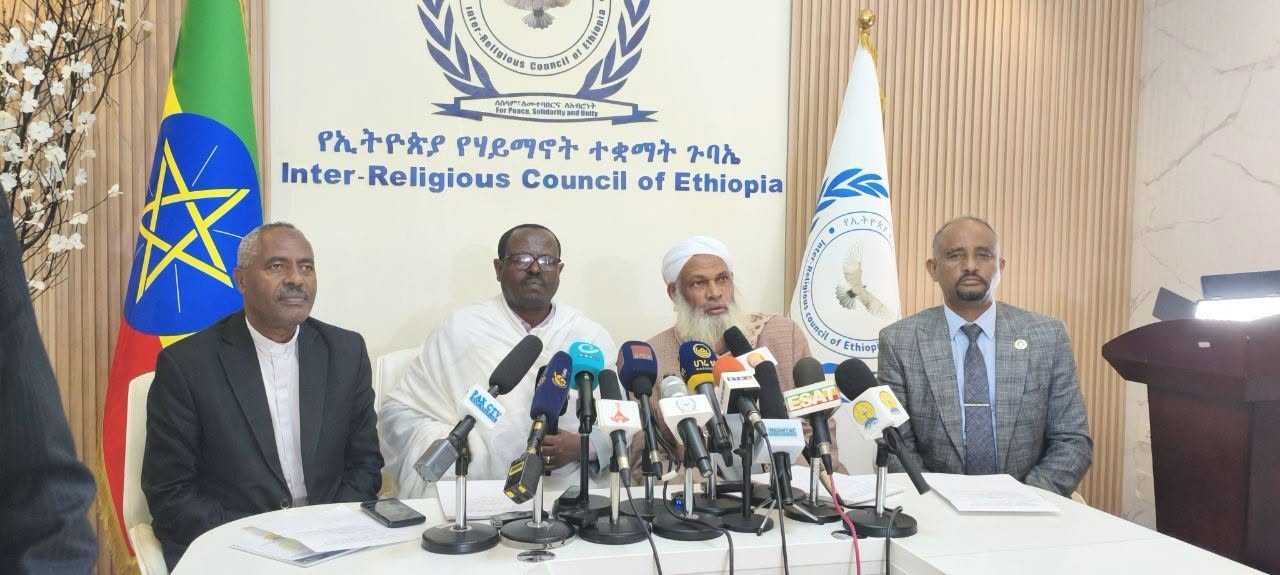
Addis Ababa, October 21, 2026 (ENA) — The Inter-Religious Council of Ethiopia (IRCE) and its member religious institutions have reaffirmed their commitment to promoting peace, religious freedom, social harmony and national unity across the country.
Representatives of four of the council’s five-member religious institutions made the commitment during a joint media briefing, outlining their respective religious teachings and institutional positions on five key areas aimed at strengthening peaceful coexistence and social development.
The five thematic areas include respecting and protecting human dignity; safeguarding places of worship and religious freedom; preventing disinformation and hate speech on digital media; enhancing the participation of women and youth in peacebuilding; and integrating indigenous conflict resolution mechanisms with religious teachings.
Mistir Feresebhat Dubale, Vice Chairman of the Council of Scholars of the Ethiopian Orthodox Tewahedo Church (EOTC), said respecting human beings amounts to respecting the God who created them, noting that religious teachings call on people to respect one another.
He stressed the importance of using digital media for constructive purposes and called for greater participation of women and youth in peacebuilding.
He also underscored the need to strengthen indigenous conflict resolution mechanisms to promote sustainable peace.
Sheikh Mohammed-Zein Zeharadin, Secretary of the Ulama Council of the Ethiopian Islamic Affairs Supreme Council (EIASC), described digital media as a product of modern times that should be used for positive purposes.
He said appropriate regulatory measures are necessary to address the spread of hate speech through social media, while emphasizing the importance of strengthening women’s and youth’s participation in peacebuilding and promoting effective indigenous reconciliation mechanisms.
Ashebir Ketema, Director of Foreign Relations at the Ethiopian Council of Gospel Believers’ Churches, also stressed that digital technology should be used to promote peace, togetherness and national unity.
He highlighted the need to educate the younger generation on responsible social media use and create an enabling environment for women and youth to participate actively in peacebuilding efforts.
He further emphasized the importance of giving due attention to indigenous conflict resolution practices.
Angaw Getahun, Assistant President and Department Director of the Seventh-day Adventist Church of Ethiopia, said information shared through social media should contribute to peace, social cohesion and national unity.
He underscored the significant role of religious leaders in encouraging the participation of women and youth in peacebuilding.
He also noted that indigenous conflict resolution mechanisms help heal wounds and restore broken relationships, calling for their continued use and strengthening.
The representatives’ remarks underscored the role of religious institutions in fostering mutual respect, countering divisive narratives and strengthening traditional approaches to reconciliation as part of broader efforts to sustain peace and unity in Ethiopia.


