Ethiopia Calls for Data-Driven Policymaking to Accelerate Africa’s Progress - ENA English


Ethiopia Calls for Data-Driven Policymaking to Accelerate Africa’s Progress
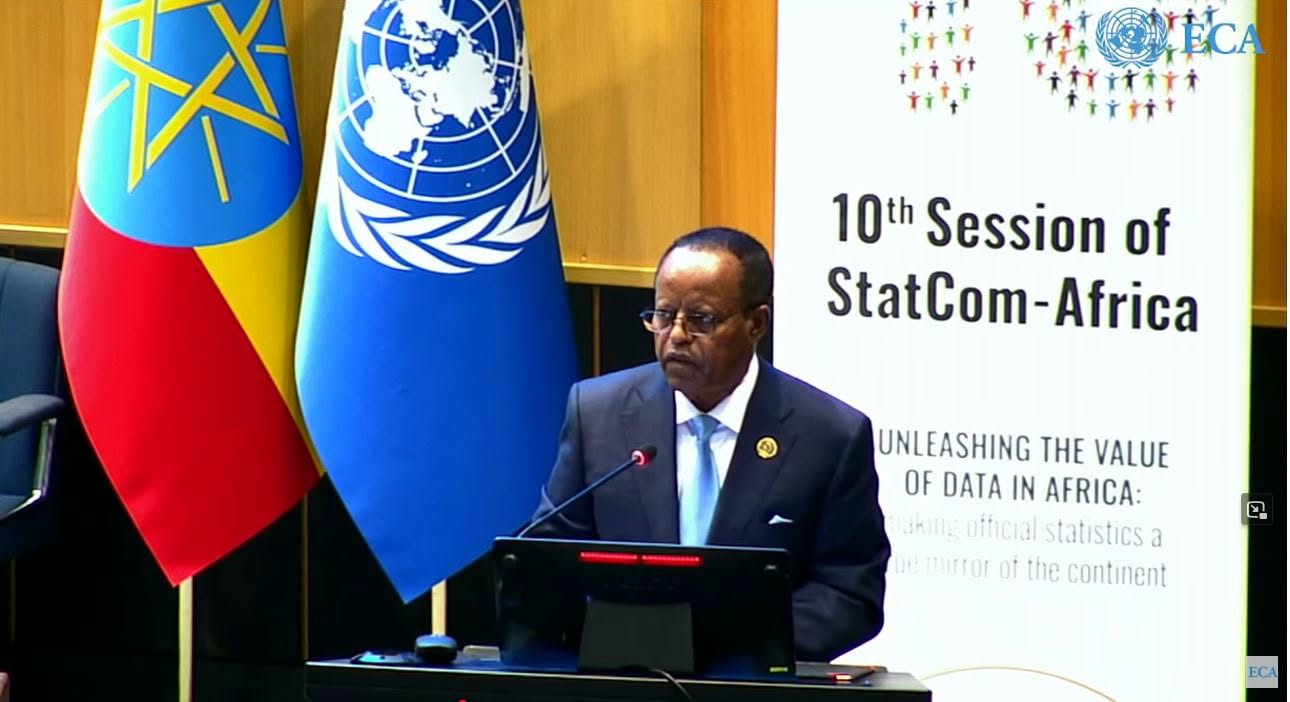
Addis Ababa, October 21, 2026 (ENA) —Ethiopia has reformed its statistical legislation and established an independent statistical service to strengthen the production and coordination of official data, President Taye Atske Selassie said.
Taye underscored the importance of reliable statistics in driving evidence-based development in Africa.
Addressing the opening of the 10th Session of the Statistical Commission for Africa and the 12th Meeting of the Regional Committee of the United Nations Global Geospatial Information Management for Africa in Addis Ababa, the President said Ethiopia’s development planning is anchored in measurable targets and reliable data.
He emphasized that development cannot be effectively planned, sustained, or scaled up without accurate measurement, noting that official statistics are essential for shaping development strategies, tracking progress, and strengthening accountability.
The President also highlighted Ethiopia’s reforms in the financial and digital sectors, including the National Digital Payment Strategy, financial sector liberalization, interoperable payment infrastructure, and the national digital identification program, Fayda.
He said Fayda enables secure electronic verification and expands access to banking, mobile money, telecommunications, and other essential public services, demonstrating how digital infrastructure can improve service delivery and financial inclusion.
According to the President, mobile money and mobile banking accounts in Ethiopia reached 257 million and processed more than 24 trillion birr in transactions during the first nine months of 2026, reflecting the expansion of the country’s financial and digital systems.
Drawing lessons from these reforms, he stressed that statistics must serve as practical tools for sustainable development and be communicated clearly and accessibly to policymakers and citizens, rather than being treated as an end in themselves.
He also called for statistical institutions to integrate and safeguard diverse data sources without compromising statistical integrity, emphasizing that innovation must reinforce data quality, institutional independence, and public trust.
The President urged African governments to protect the professional independence of official statistics, strengthen legal and institutional frameworks, invest in national statistical systems, and ground policy decisions in scientific evidence.
He cautioned that poor-quality data undermines evidence-based policymaking, impedes development, and weakens accountability.
Taye further emphasized the need for timely, detailed statistics and the adoption of new technologies and emerging data sources, while acknowledging the resource constraints facing statistical institutions.
President Taye reaffirmed Ethiopia’s readiness to share its experiences with other African countries while learning from theirs.
He also called for stronger continental cooperation to reinforce official statistics as a public good and ensure that every community is represented in the evidence guiding development.
Running for five days, the joint meetings bring together African statistical and geospatial information stakeholders to advance the continent’s efforts to strengthen data systems, improve evidence-based policymaking, monitor development progress, and address Africa’s priorities.


