Eritrea’s Migration Economy: Can the Nation Survive Without Forced Remittance? - ENA English


Eritrea’s Migration Economy: Can the Nation Survive Without Forced Remittance?
By Staff Writer
October 20, 2026 (ENA)
Britain’s October 2026 ultimatum to Eritrea exposed a long-standing contradiction at the heart of Isaias Afwerki’s regime. The Asmara administration promotes self-reliance while rejecting fixed national budgets and external dependence. Yet, its system is sustained by the very forces it claims to transcend: indefinite national service drives emigration, while remittances from Eritreans abroad help finance the system that compels them to leave.
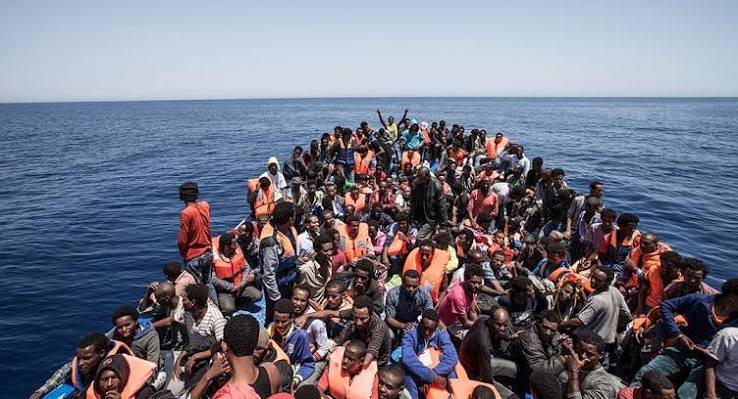
Home Secretary Shabana Mahmood announced that Eritrea faces a total visa ban for its nationals unless Asmara resumes cooperation on the return of failed asylum seekers and foreign national offenders. Preferential processing for officials has already been withdrawn, and diplomats have been placed under travel limits outside London. This announcement came at a moment when Eritreans formed the largest nationality among small-boat arrivals in the year to June 2026—roughly 5,875 recorded arrivals, or about 18 percent of the total—and ranked second in overall asylum claims, with initial grant rates near 83–84 percent. Although Eritrea dismissed the pressure as a "dismissible political gimmick," the sequence of events requires a closer examination of a political economy that has organized continuous emigration into a remittance resource.
That political economy, controlled by Shabia under President Isaias Afwerki since independence, rests on three interlocking pillars: indefinite national service, party ownership of the command economy, and the systematic capture of external financial flows. While appearing distinct, these pillars function as a single mechanism that converts the population into both a captive labor force at home and a source of finance abroad. This framework structured itself around the continuous extraction of value from that emigration, yielding a sustained regime monopoly.
Way back in 1997, Eritrea ratified a constitution that has remained unimplemented for nearly three decades. In 2001, independent media outlets were shut down after senior party figures called for democratic elections and constitutional enforcement. As a result, what was once framed as temporary wartime mobilization hardened into a permanent state architecture in which citizenship itself was redefined as an obligation rather than a right.
Although national service was formally limited to 18 months under Proclamation 82/1995, it has operated without an end date since the 1998–2000 border war. Secondary school students complete their final year at the Sawa military training center before being assigned to military or civilian roles that can last for decades, earning a meager stipend of 450 to 500 Nakfa a month—roughly 30 USD.
Conditions like these are what the UN Commission of Inquiry characterized as “slavery-like,” linking them to arbitrary detention and the collective punishment of families. Such practices drive continuous emigration, where the outflow is not a policy failure but rather a deliberate revenue stream.
While resident population estimates hover around 3.6 million, diaspora figures range from roughly 600,000 to 900,000 registered migrants and refugees, with up to one-third of the Eritrean-born population living outside the country. According to UNHCR data for the end of 2025, there were roughly 555,000 refugees plus more than 118,000 asylum seekers—totaling approximately 670,000–679,000 people of concern—with new asylum applications in 2025 alone exceeding 53,000.
Although the formal economy remains dominated by Shabia-linked enterprises and the state, private-sector activity outside small family trade is constrained by currency controls, licensing restrictions, and the national-service labor regime. The decisive resource is human capital exported and then taxed; most household survival depends on external transfers estimated at 200 to 300 million USD annually—equivalent to roughly 30 percent of Eritrea's GDP. These flows keep households solvent in an environment of limited domestic opportunity, while a parallel 2 percent diaspora tax is levied on Eritreans abroad and collected through embassies and informal networks.
Economic ownership is concentrated in party-controlled structures: the Hidri Trust functions as the central holding vehicle for Shabia’s commercial interests, the Red Sea Trading Corporation holds an effective monopoly on significant imports and serves as a primary channel for foreign exchange, construction firms such as Segen and Bidho execute major works frequently using national-service labor, and Himbol Financial Services manages remittances and related transactions. State banks exist, yet the party retains parallel financial channels outside conventional budgetary oversight, amidst no comprehensive national budget having been published since independence.
This dual extraction reduces the need for productive employment creation and creates a closed loop in which indefinite national service and political controls generate flight, which in turn generates remittances and state revenue. When compared to the official doctrine of self-reliance that Eritrea follows—which rejects aid dependency while treating citizens as both free labor and external financiers—isolation from conventional multilateral finance is justified, while political pluralism is framed as a threat to national unity and sovereignty. This produces a distinctive equilibrium in which political power is monopolized, and the regime’s authority on budgets and the precise size of party holdings stay outside public scrutiny.
Eritrea’s political economy has converted a significant fraction of its population into a transnational resource, where labor is extracted under coercive conditions while the diaspora supplies foreign exchange, producing an equilibrium of repression and economic stagnation.
Consequently, host states are left to absorb the social and fiscal costs, as the ruling Shabia system externalizes those costs while capturing the financial returns. Eritrea’s migration economy is therefore not an unintended by-product of isolation, but the operating logic of a political order that converts its people into the principal resource keeping the regime intact. The stakes are the continuous depletion of a generation and the durability of a closed regime that feeds on it.


