Ethiopia’s Gold Refinery Ushers in New Era of Industrial Transformation - ENA English


Ethiopia’s Gold Refinery Ushers in New Era of Industrial Transformation
By Bruno Jomba
October 14, 2026 (ENA)
Ethiopia is moving to capture more of the wealth beneath its soil, as a newly inaugurated precious metals refinery opens the door to a more value-driven future for the country’s mining industry.
Inaugurated by Prime Minister Abiy Ahmed at the Bole Lemi Special Economic Zone in Addis Ababa, the National Precious Metals Refinery marks a significant step in Ethiopia’s ambition to move beyond extracting mineral resources and expand its role in processing, refining and marketing them.
For a country whose gold industry is generating growing foreign-exchange earnings, the facility addresses a longstanding gap in the mineral value chain: the limited capacity to refine precious metals domestically to the standards demanded by international markets.
The distinction is economically important. Extracting gold generates revenue, but refining it and developing industries around it can create additional opportunities for investment, employment, technological advancement and industrial growth.
With the new facility, Ethiopia is seeking to retain a greater share of that value at home while laying the groundwork for a more integrated mining industry.
Located in the Bole Lemi Special Economic Zone, the refinery has a planned initial annual processing capacity of more than 600 tonnes of precious metals, with an estimated valuation capacity of about 80 billion US dollars annually. These figures refer to its stated processing and valuation capability, not Ethiopia’s annual gold output or projected export earnings.
The project is a joint venture between Ethiopian Investment Holdings (EIH), which holds a 51 percent stake, and Sam Precious Metals, which owns the remaining 49 percent.
Beyond the inauguration, the facility raises a broader question for Ethiopia’s economic transformation: how can the country turn its growing mineral wealth into a stronger domestic industrial base?
Keeping More of the Gold Economy at Home
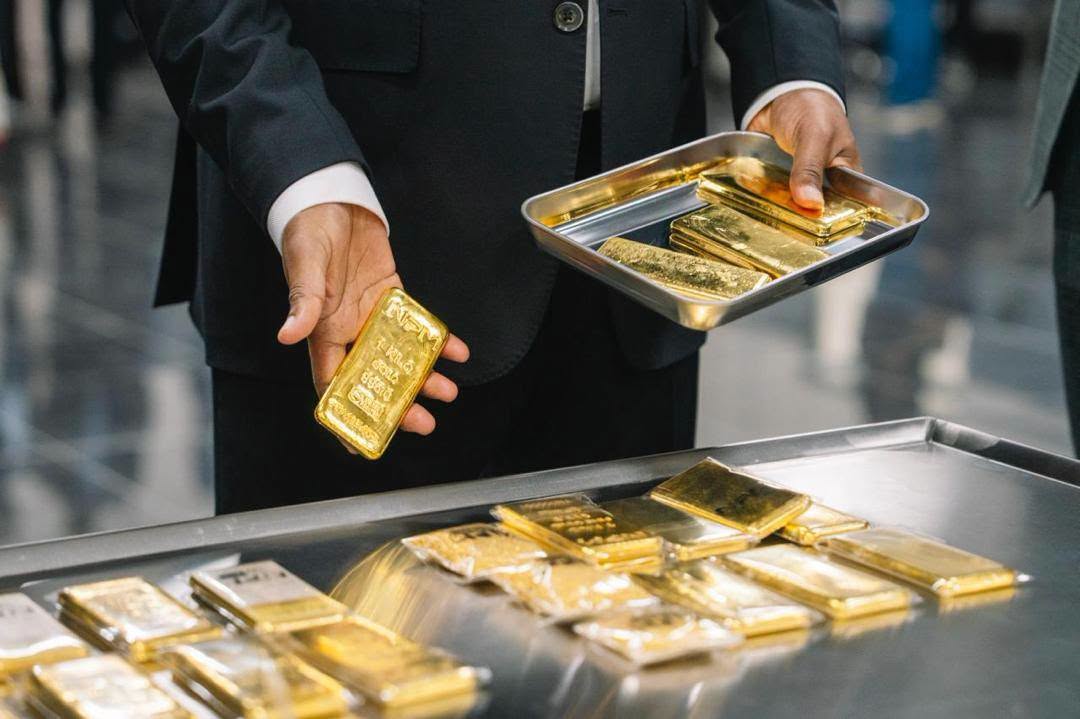
The real significance of the refinery lies in what happens to gold after it leaves the mine. Gold extracted from the ground often requires testing, smelting and refining before it can be transformed into bullion that meets the specifications of international buyers and financial institutions. These processes create economic value through technical expertise, quality assurance and specialized industrial services.
When such facilities are unavailable domestically, producers must rely on processing services elsewhere, allowing other markets and businesses to capture part of the value generated by the mineral.
The new refinery gives Ethiopia an opportunity to perform more of these activities within its own borders, potentially reducing dependence on foreign refining services and retaining a greater share of the economic benefits associated with its gold industry.
At the inauguration, Prime Minister Abiy Ahmed emphasized the importance of moving beyond the extraction and export of raw materials toward domestic processing and industrial production. That ambition reflects a wider development priority: natural resources should serve not only as sources of immediate revenue but also as foundations for building productive industries, developing technical expertise and expanding economic opportunities.
For Ethiopia, refining gold locally could help establish stronger links between mining operations, laboratories, industrial services, manufacturing businesses and international markets.
The objective, therefore, is not simply to process a valuable metal. It is to develop a broader economic ecosystem around it.
Gold’s Growing Contribution to the Economy
The refinery comes as gold assumes an increasingly important role in Ethiopia’s efforts to expand mining revenues and generate foreign currency.
According to performance figures presented by Ministry of Mines earlier, Ethiopia produced approximately 44 tonnes of gold during the concluded fiscal year, generating a record 5.65 billion US dollars in foreign-exchange earnings.
The figures underscore the growing importance of gold to the national economy and the need to develop the infrastructure required to process, certify and market production efficiently.
As output expands, domestic capacity for assaying, refining, secure storage and quality certification becomes increasingly important. International buyers need confidence in the purity, traceability and handling of the gold they purchase.
A modern refinery could help connect Ethiopian producers with these requirements, potentially making parts of the process between extraction and sale more efficient. It could also provide a domestic destination for producers seeking professional testing and processing services, helping strengthen the organization of the gold market.
However, the scale of the economic benefits will depend on several factors, including the refinery’s operating costs, the amount of gold processed, the quality of its output and the commercial terms offered to producers. Domestic refining capacity alone does not automatically guarantee higher export earnings or greater profitability.
Its importance lies in providing infrastructure through which Ethiopia can pursue those gains while developing more expertise and capacity within its own economy.
Beyond Gold: Building a Broader Industrial Base
The refinery’s potential reaches beyond the immediate business of processing precious metals.
A competitive refining industry depends on a network of supporting activities, including laboratory analysis, metallurgy, equipment maintenance, secure logistics, storage and specialized technical services. These requirements can create opportunities for domestic businesses and professionals as the industry develops.
Universities and technical institutions could also play a greater role in training chemists, metallurgists, engineers and laboratory specialists, helping build the skills required to sustain modern mineral-processing operations. One particularly promising opportunity lies in the development of Ethiopia’s jewelry and precious-metals manufacturing industries.
Access to refined gold of known purity could support businesses seeking to produce jewelry, investment bars and other finished products. Such activities offer opportunities to capture value not only from the metal itself but also from design, craftsmanship, quality assurance, branding and market access.
Instead of relying predominantly on the export of a mineral commodity, Ethiopia could gradually expand its participation in the industries that transform that commodity into higher-value products.
This transition would require more than a refinery. Downstream businesses would need access to finance, reliable supplies of refined metal, skilled workers, appropriate technology and competitive domestic and international markets.
Nevertheless, the new facility provides an important foundation from which such industries could grow.
Can Ethiopia Become a Regional Refining Hub?
Ethiopia’s geographical position and air transport connections could also create opportunities to serve precious-metals producers beyond its borders.
The refinery’s location in the Bole Lemi Special Economic Zone places it within reach of Addis Ababa Bole International Airport and Ethiopian Airlines’ extensive cargo network. These connections could support the secure movement of precious metals and related products, although competitiveness would also depend on logistics costs, security arrangements and regulatory requirements.
Across the continent, substantial mineral resources coexist with a persistent challenge: much of the value generated through advanced processing and manufacturing is captured beyond the countries where those resources originate.
Expanding domestic and regional processing capacity could help African economies retain more of that value, develop technical capabilities and strengthen industrial cooperation.
For Ethiopia, becoming a major regional refining centre would require more than installing modern equipment. The facility would need to establish credibility with international buyers, meet relevant market standards, attract a dependable supply of precious metals and compete effectively with established refining centres.
The potential is significant, but realizing it will depend on operational performance, commercial discipline and sustained investment.
Technology, Skills and Knowledge Transfer
The refinery also offers Ethiopia an opportunity to develop technical expertise that could benefit the wider mining sector. Precious-metals refining involves sophisticated metallurgical processes, accurate laboratory analysis, strict quality controls and secure management of high-value materials. Operating such a facility requires a workforce with specialized skills and the ability to maintain consistent technical standards.
Through the joint venture, Ethiopian engineers, chemists, technicians and other professionals could gain experience in modern refining operations and related technologies.
The long-term value of that opportunity will depend on the extent to which local employees develop advanced skills, assume technical and managerial responsibilities, and transfer their knowledge to other parts of the economy.
Effective knowledge transfer could help Ethiopia build the domestic expertise needed to operate and expand mineral-processing industries rather than remain dependent on external technical support. These capabilities could also support the development of other mineral resources, where testing, processing technology, industrial management and quality assurance are essential to improving productivity and competitiveness.
In this sense, the refinery’s contribution could extend beyond the value of the gold it processes. It could also help build the human capital required for a more technologically capable mining industry.
From Mineral Wealth to Lasting Economic Value
For Ethiopia, the National Precious Metals Refinery represents an important addition to the infrastructure needed to transform mining into a stronger pillar of economic development. The distinction between extracting resources and developing industries around them is fundamental. Extraction brings minerals to the surface; processing, manufacturing and specialized services create further opportunities to generate income, employment and technical capabilities.
The refinery provides Ethiopia with a new platform to pursue those opportunities. Its ultimate contribution, however, will depend on how effectively it is integrated into the domestic mining industry and connected to regional and international markets.
Reliable supplies of gold, competitive operating costs, internationally accepted quality standards, transparent commercial arrangements and strong local skills development will all be essential to realizing its potential.
There is also a broader economic imperative: the benefits of mineral wealth must extend beyond export receipts to support productive investment, local enterprises and sustainable employment.
Ethiopia has taken an important step toward capturing more value from its precious metals. The next challenge is to turn that new capacity into a competitive industry—one that strengthens the mining sector, expands domestic expertise and creates opportunities further along the value chain.
The measure of the refinery’s success will ultimately be not simply how much gold passes through its facilities, but how much lasting economic value Ethiopia can build around it.


