Ministry of Finance Highlights Economic Case for Investment in Nutrition - ENA English


Ministry of Finance Highlights Economic Case for Investment in Nutrition
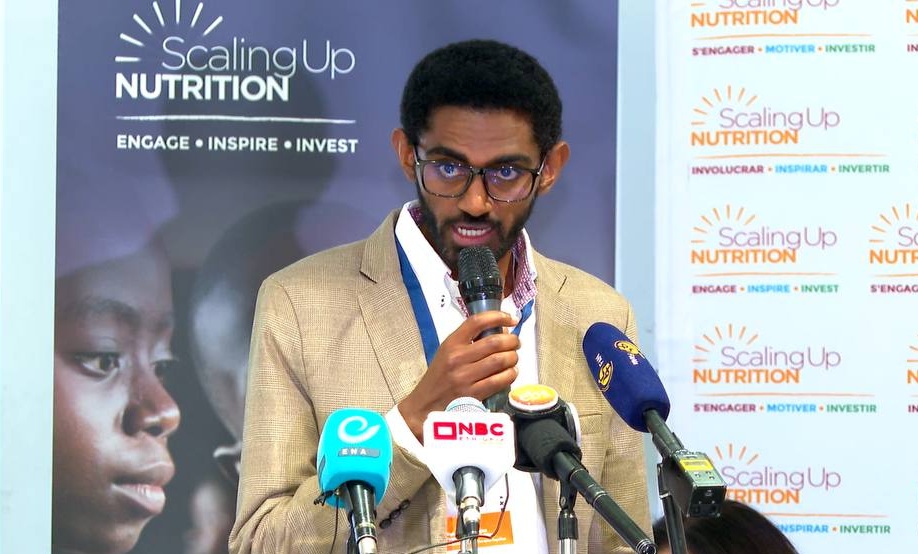
Addis Ababa, October 13, 2026 (ENA) — Ethiopia’s Ministry of Finance has underscored the economic necessity of investing in nutrition, highlighting the high costs associated with child stunting and anemia, as well as the potential economic gains from eliminating undernutrition.
Speaking at a high-level dialogue on nutrition financing in Addis Ababa, Samson Gebremariam, representing the Ministry’s International Financial Directorate, stressed that nutrition investments are vital for driving economic growth, boosting productivity, and building human capital.
He identified domestic resource mobilization, targeted investment, and rigorous expenditure tracking as critical priorities for sustainable financing, particularly as official development assistance declines and competition for external resources intensifies.
For the current fiscal year, the federal government has allocated nearly 20 million USD to the Seqota Declaration, with regional governments expected to match the amount, according to Samson.
He noted that a financial administration directive now guides the allocation and management of these funds.
Samson also pointed to collaboration with the African Development Bank on the Multisectoral Action for Stunting Reduction Project as a successful model of partnership-based financing.
He emphasized that investment priorities must align with clear cost estimates, structured financing plans, and measurable outcomes to ensure efficient resource utilization.
Hiwot Darsene, Lead Executive at the Ministry of Health’s Nutrition Coordination Office, explained that Ethiopia’s approach relies on multisectoral coordination, integrating health, agriculture, education, water, and social protection under the national Food and Nutrition Strategy.
Since joining the Scaling Up Nutrition Movement in 2012, Ethiopia has leveraged its 10-year Food and Nutrition Strategy and the Seqota Declaration’s 15-year roadmap to coordinate interventions and accelerate efforts to end child stunting by 2030.
At the local level, costed district implementation plans enable administrations to prioritize high-impact interventions and coordinate cross-sector budgets. Meanwhile, nutrition budget tracking and performance-monitoring tools are enhancing accountability and assessing spending efficiency.
Hiwot also highlighted oversight mechanisms, including a high-level forum of federal ministers and regional presidents, alongside dedicated federal and regional coordination bodies.
The dialogue convenes delegates from Ethiopia and across Africa to share best practices in domestic resource mobilization, nutrition investment models, and innovative financing mechanisms.
The forum aims to refine funding strategies and foster collaboration between governments and development partners to tackle malnutrition and support long-term human capital.


