Ethiopia Targets 74.3 Percent Cut in Greenhouse Gas Emissions by 2030 : Minister of Energy and Water - ENA English


Ethiopia Targets 74.3 Percent Cut in Greenhouse Gas Emissions by 2030 : Minister of Energy and Water
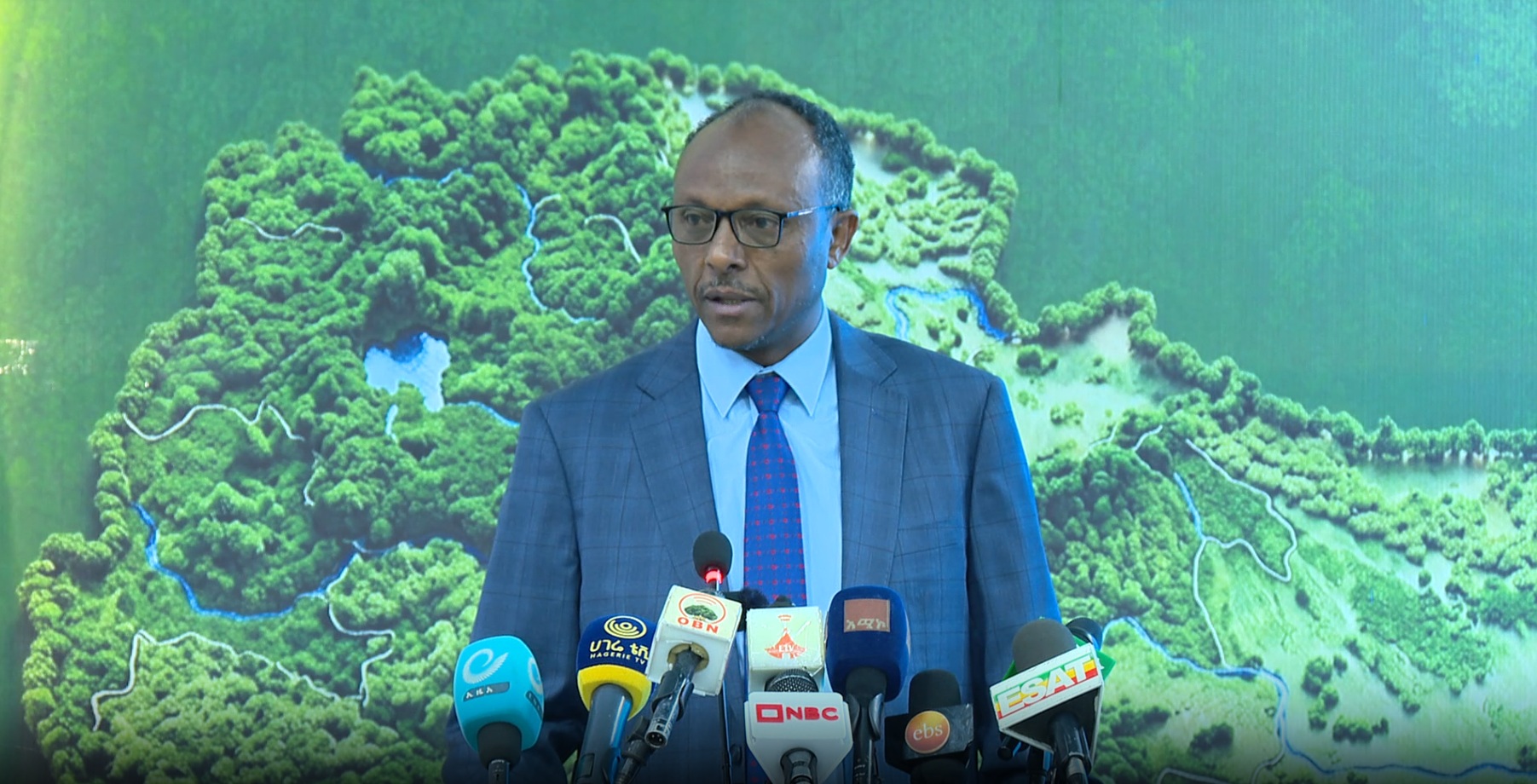
Addis Ababa, October 13, 2026 (ENA) — Ethiopia has committed to reducing greenhouse gas emissions by 74.3 percent by 2030, compared with the business-as-usual scenario, Minister of Water and Energy Habtamu Itefa said, highlighting the country’s climate action efforts despite mounting environmental challenges.
Speaking at the 65th session of the Intergovernmental Panel on Climate Change (IPCC), which opened in Addis Ababa on October 12, the minister said Ethiopia was pursuing the ambitious target through renewable energy expansion, large-scale tree planting and the restoration of degraded landscapes.
“Throughout national and international contribution, Ethiopia has committed to highly ambitious 74.3 percent reduction in greenhouse gas emissions by 2030, relative to the business-as-usual scenario,” Habtamu said.
Ethiopia was already experiencing the severe consequences of climate change, including erratic rainfall, recurrent droughts and devastating floods , he elaborated.
“Ethiopia is living in the front lines of the global climate crisis,” the minister elaborated, noting that anthropogenic climate change had seriously disrupted the country’s natural balance.
The shifting rainfall patterns and increasingly frequent extreme weather events were affecting agriculture, water availability and energy production, he stated.
“Recurrent droughts lead to tragic crop failures and the loss of livestock,” he added.
However, he stressed that Ethiopia was taking concrete measures to address the crisis rather than merely bearing its consequences.
According to him, the government had made the Climate-Resilient Green Economy strategy a cornerstone of national policy and was expanding renewable energy production through hydropower, wind and solar power. Ethiopia is also extending its clean electricity grid to neighboring countries to support Africa’s energy transition.
The minister also highlighted the Green Legacy Initiative, which he said had contributed to expanding forest cover and restoring degraded landscapes.
“I am incredibly proud to share that to date, we have planted more than 56 billion trees across the country,” he said.
He added that Ethiopia’s forest cover had increased from 17.2 percent to 23.6 percent.
“This is not just about planting trees, it is about restoring degraded water bodies, improving soil fertility, and raising better life.”
He emphasized that Ethiopia’s climate ambitions were grounded in scientific evidence, pointing to the country’s engagement with the IPCC and the use of its methodologies in preparing national greenhouse gas inventories.
He said the findings of the IPCC should inform national development strategies and strengthen climate change mitigation and adaptation efforts.
IPCC Chair Jim Skea praised the Ethiopian government and the city of Addis Ababa, stating that they have done a tremendous job preparing for this important meeting, and expressed gratitude for their kind welcome and hospitality.
Ethiopia has strongly supported the IPCC's scientific work, and Jim Skea underlined that he is proud to see Ethiopian scientists engaged in all three working group contributions to the second assessment report.
The Director General of the Ethiopian Meteorological Institute (EMI), Fetene Teshome, said that African countries contribute the least to global greenhouse gas emissions, yet the region remains among the most vulnerable to climate variability and climate change.
This reality highlights the urgent need for stronger adaptation, improved resilience, and greater access to climate services that support informed decision-making at all levels, he stressed.
Therefore, Fetene said, in this regard, the work of the IPCC is indispensable.
The scientific assessments prepared by the IPCC provide the foundation upon which governments, development partners, researchers, and communities can understand climate risks and identify effective responses. The credibility, transparency, and rigor of the IPCC process continue to guide global climate action and inspire confidence in climate science.


