Ethiopia-Russia Agribusiness Ties Poised to Boost Technology Transfer, Food Security - ENA English


Ethiopia-Russia Agribusiness Ties Poised to Boost Technology Transfer, Food Security
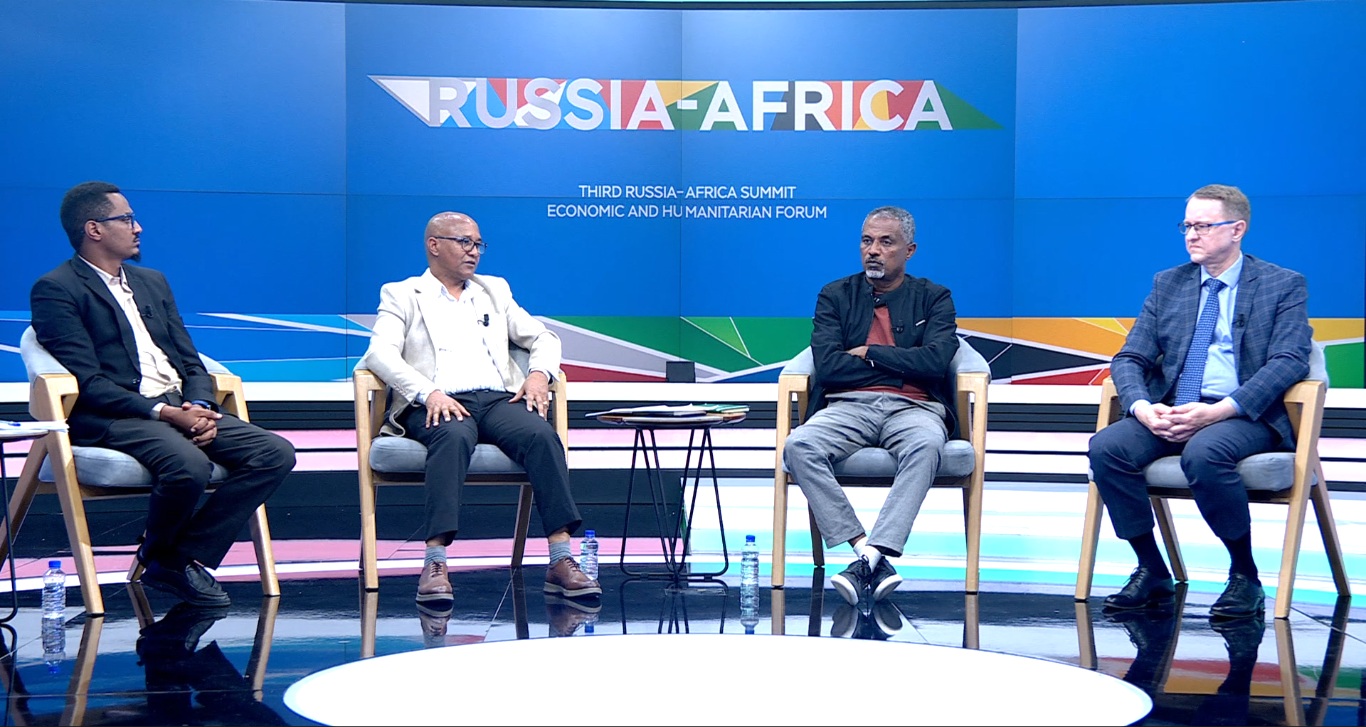
Addis Ababa, October 13, 2026 (ENA) — Strengthening agribusiness cooperation between Ethiopia and Russia could accelerate technology transfer, boost agricultural productivity, enhance food security, and unlock new investment opportunities, stakeholders said during a roundtable discussion hosted by ENA.
Russian Trade Representative to Ethiopia Yaroslav Tarasyuk highlighted that Ethiopia has emerged as one of Russia’s top 10 trading partners in Africa.
Tarasyuk noted significant momentum in bilateral trade through 2025, driven by a fourfold increase in Russian exports to Ethiopia and a doubling of Ethiopian exports to Russia.
Ethiopia exported 18,000 tons of green coffee valued at 123 million USD to Russia, alongside flowers, fruits, vegetables, avocados, herbs, and other agricultural products. Russia, meanwhile, supplies Ethiopia with key commodities, including mineral fertilizers and sunflower oil.
Tarasyuk stressed the need to expand cooperation beyond conventional trade to include joint investments, technology transfer, and local production of agricultural machinery and inputs. He affirmed that Russia is ready to share advanced agricultural technologies and support the development of Ethiopia’s manufacturing capacity.
He identified sunflower cultivation, poultry production, and dairy development as promising areas for bilateral cooperation, noting that expanding domestic sunflower production could help Ethiopia reduce its reliance on imported edible oils.
Weyssa Garedew, Crop Commercialization Program Director at the Agricultural Transformation Institute, noted that agriculture remains a central pillar of Ethiopia’s economy.
The sector contributes approximately 30 to 40 percent of gross domestic product, supports the livelihoods of around 79 million people, and accounts for about 80 percent of exports.
However, Garedew pointed out that population growth, climate change, and limited access to inputs continue to constrain productivity. He emphasized the critical need for reliable fertilizer supplies, mechanization, agrochemicals, and modern technologies to transform the sector.
He added that stronger cooperation with Russia could facilitate technology transfer, build local capacity, and introduce solutions tailored to Ethiopia’s agricultural conditions.
Furthermore, plans are underway to establish approximately 50 agribusiness companies to accelerate commercialization, boost agro-processing, and improve market access for farmers.
Meanwhile, Habtamu Million, Country Head of Promising International Trading Company, emphasized that expanding domestic processing of agricultural commodities is essential for improving food security, creating jobs, and facilitating technology transfer.
He noted that Russia’s expertise in grain production, storage, transportation, and processing could significantly strengthen Ethiopia’s food-processing industry.
His company is currently exploring opportunities in grain milling and edible-oil extraction to increase domestic supply and generate higher economic value.
Habtamu also stressed the need to upgrade processing facilities, product quality, and packaging to make Ethiopian agricultural exports more competitive internationally.
Dareskedar Taye, President of the Union of African Diasporas in Russia and Head of the Ethiopian Community Association, underscored the key role the diaspora plays in bridging Ethiopian and Russian businesses.
He noted that Africans living in Russia can leverage their understanding of both markets to drive investment, technology transfer, and commercial partnerships.
Dareskedar emphasized the need for improved investment conditions, streamlined administrative procedures, and stronger institutional links to maximize this potential.
Tsedeke Abate, former Director General of the Ethiopian Institute of Agricultural Research, stressed the urgency of prioritizing productivity, diversification, value addition, and research to meet the needs of Ethiopia’s rapidly growing population.
He cautioned that the population is projected to reach 205 million to 210 million by 2050, demanding a substantial increase in food production.
Tsedeke noted that Ethiopia spent approximately 2.6 billion USD on food imports in 2023 alone, including 684 million USD on cooking oil.
Expanding domestic production and processing, he argued, is vital to reducing import dependency and raising export value.
He further emphasized that international partnerships must be grounded in mutual equality, with Ethiopia and other African nations taking the lead in defining their own agricultural agendas.
Stronger ties with Russia could bolster fertilizer supplies, advance agricultural research, and support training institutions.
The stakeholders agreed that deepening Ethiopia-Russia agribusiness cooperation will increase agricultural productivity, expand domestic processing, improve food security, and open new avenues for investment and technology transfer.


