Newly Inaugurated Precious Metals Refinery Will Enhance Ethiopia’s Foreign Trade Balance: PM Abiy - ENA English


Newly Inaugurated Precious Metals Refinery Will Enhance Ethiopia’s Foreign Trade Balance: PM Abiy
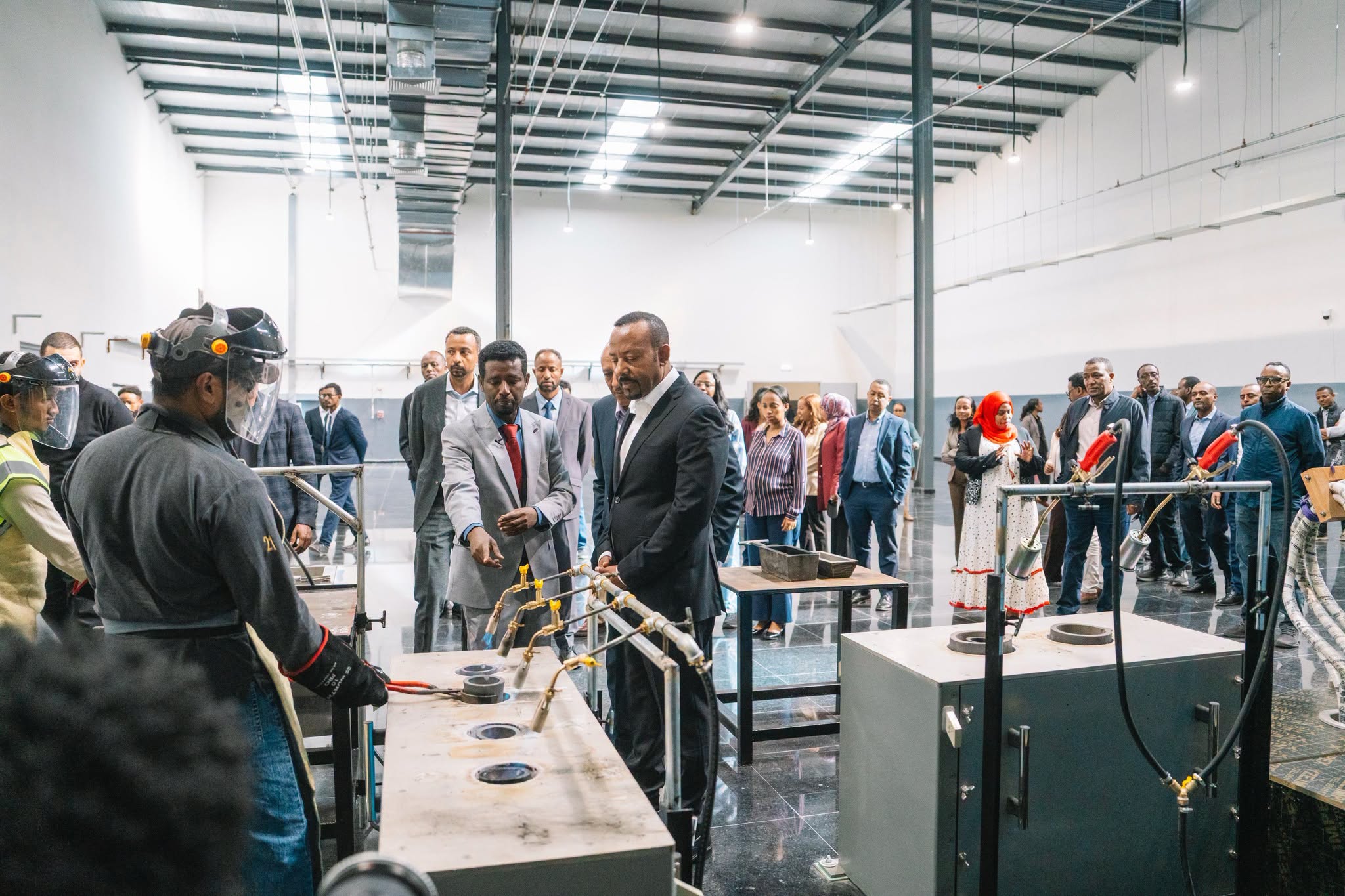
Addis Ababa, October 10, 2026 (ENA)—The National Precious Metals Refinery inaugurated today will significantly improve Ethiopia’s foreign trade balance by enabling the country to add value to its mineral resources, Prime Minister Abiy Ahmed said.
The refinery is a state-of-the-art facility with an annual capacity to process over 600 tonnes of precious metals.
Speaking at the inauguration ceremony, the PM said Ethiopia aims to gradually end the practice of exporting raw materials and importing finished products, a key objective of the government’s Medemer strategy.
The coming years will see Ethiopia processes its natural resources domestically, create more jobs and earn greater foreign exchange from its exports.
“As we clearly stated in the grand strategy of Medemer, the primary objective is to gradually reduce and replace the practice of exporting raw materials and importing finished goods,” he said.
The Prime Minister noted that Ethiopia and other African countries have long exported raw materials at relatively low prices, only to import finished products made from those materials at significantly higher prices.
Citing coffee as an example, Prime Minister Abiy said coffee sold for eight US dollars in Addis Ababa could fetch more than 30 USD after being processed, packaged and marketed internationally, arguing that the price difference demonstrates how much value-producing countries lose when they export commodities without processing them.
The same principle applies to gold, he noted, adding that Ethiopia exported gold worth 5.6 USD last year. The country could have generated significantly higher earnings if it had possessed sufficient refining capacity to process the gold domestically, he elaborated.
The Premier further noted that raw gold also contains other valuable minerals, including silver, which may be discarded as waste when the material is processed without adequate refining technology.
The new refinery will help Ethiopia recover such valuable by-products, improve the quality and value of its gold exports, and capture a greater share of the revenue generated from its mineral resources.
The Prime Minister noted that the facility is a major step toward strengthening Ethiopia’s position in the regional and international precious metals market.
The refinery has substantial processing capacity and could attract gold from other countries, creating additional commercial opportunities and supporting the development of a broader precious metals trading network.
He further stated that the facility could enable annual exports worth up to 80 billion US dollars if sufficient volumes of gold were collected and processed, presenting the figure as a potential export capacity linked to the availability of gold supplies.
PM Abiy also highlighted the importance of domestic ownership and strategic investment in the project, saying that Ethiopia holds a 51-percent stake in the refinery, while its international partner owns the remaining 49 percent.
Accordingly, the partnership is intended not only to establish refining capacity but also to strengthen Ethiopia’s participation in the international precious metals market and expand its role in the mining sector.
Ethiopia’s strategic investments are being extended to different areas of the economy, including mining and pipeline infrastructure, with the aim of ensuring that the country benefits more directly from its natural resources.
The Prime Minister also emphasized the importance of developing local expertise, noting Ethiopian professionals are increasingly taking responsibility for operating and managing major industrial facilities.
Recall that, Ethiopia had exported raw gold for decades without having sufficient domestic capacity to refine it to international standards.
Establishing such capacity would allow the country to improve the quality of its exports and strengthen its ability to manage gold as a financial asset.
The refinery represents an important step toward addressing longstanding structural weaknesses in Ethiopia’s export economy, the Premier noted.
He further underscored the government’s efforts to establish processing industries are intended to support Ethiopia’s economic transformation and contribute to its ambition of becoming a prosperous country and a leading economic force in Africa.
Finally, the Prime Minister congratulated those involved in establishing the refinery, calling on Ethiopians to take pride in the nation’s efforts to expand domestic industrial capacity and maximize the benefits of its natural resources.


