Ethiopia’s Nile Development Push for Regional Integration - ENA English


Ethiopia’s Nile Development Push for Regional Integration
By Yordanos D.
October 10, 2026 (ENA)
For generations, Abay (Blue Nile) has been treated primarily as a dispute over water. For Ethiopia, however, the river represents something much larger: a question of development, sovereignty and the right of a nation to transform its natural resources into a better future for its people. Most importantly, the country considers such development on Abay would accelerate regional integration in the region and beyond. In a country confronting persistent food insecurity, expanding energy demand, rapid population growth, industrialization pressures and the effects of climate variability, the ability to store and use water is inseparable from the ability to generate electricity, irrigate farmland, produce food, create jobs and build a productive economy.
This broader perspective is essential to understanding Ethiopia’s long and often difficult engagement with the Nile. The dispute did not begin with the Grand Ethiopian Renaissance Dam (GERD). It is rooted in a much older regional order shaped by colonial-era arrangements, unequal political influence and competing interpretations of rights over the river.
Ethiopia was not a party to the 1929 Anglo-Egyptian Nile arrangement or the 1959 Egypt-Sudan agreement, yet the legacy of these agreements has continued to influence political arguments over the use of the Nile. The central question has therefore never been simply how much water Ethiopia should use, but whether historical arrangements can continue to constrain the development choices of an upstream country whose economic and social needs have changed fundamentally.
The struggle has also had a financial dimension. Development can be constrained not only by physical obstruction but by the political environment surrounding finance, investment and international institutions.
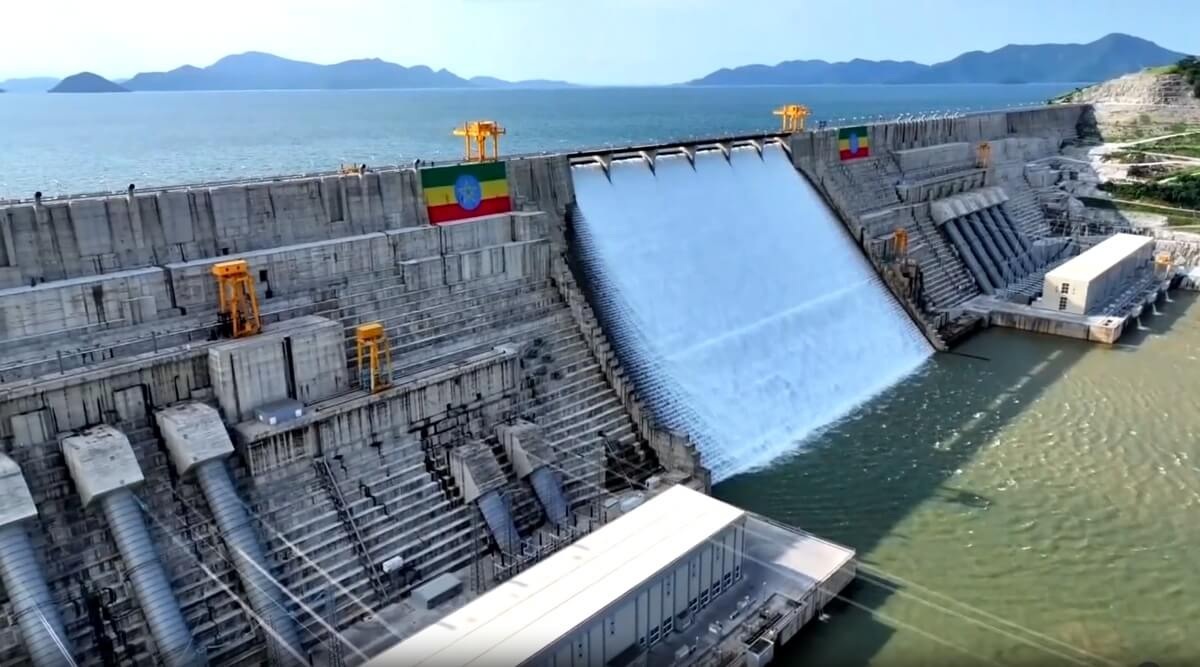
Ethiopia’s experience with major water infrastructure has repeatedly demonstrated the difficulty of converting technical potential into completed development projects when financing becomes entangled with geopolitics. The GERD consequently acquired significance far beyond its engineering dimensions. It became a test of whether Ethiopia could mobilize its own people, institutions and financial resources to undertake a strategic national project when access to conventional external financing was politically complicated.
The completion of the GERD has changed that equation, but it has not ended the larger development challenge. Ethiopia still requires additional water infrastructure to address electricity shortages, expand irrigation, strengthen food security, manage floods and droughts, support industrialization and create the conditions for sustained economic growth. The question now is how the country can move from one landmark project to a broader, financially sustainable and environmentally responsible water development strategy while maintaining cooperation with downstream states.
At the same time, the Nile question has become increasingly intertwined with the geopolitics of the Horn of Africa. Ethiopia’s growing economic capacity, its expanding electricity exports, its pursuit of regional integration and its efforts to secure reliable and mutually beneficial access to the Red Sea have altered the strategic calculations of neighboring states and external powers. This must therefore be understood within a wider contest over development, economic influence and regional order.
This does not make confrontation inevitable. On the contrary, Ethiopia’s strongest long-term position lies in combining development with diplomacy. Equitable and reasonable utilization of shared water resources can provide a foundation for cooperation if all basin countries recognize that the Nile must support both existing needs and legitimate future development. The river need not remain a source of perpetual rivalry. With investment, scientific cooperation, transparent information sharing and mutually beneficial energy and agricultural systems, it can become an engine of regional economic integration.
The story of Ethiopia’s Nile policy is consequently not simply the story of a dam. It is the story of a country seeking to overcome historical development constraints, strengthen financial autonomy and transform natural resources into productive capacity. The GERD is one chapter in that story. The larger challenge is whether Ethiopia can build a new generation of water, energy and agricultural infrastructure that turns its rivers into foundations for food security, industrialization, employment and regional prosperity.
Financial Dimension
The financial dimension of this history is especially important. Development can be constrained without a single dam being physically attacked or a construction site being closed. Diplomatic opposition to external financing can increase political risk, discourage lenders and investors, and make major infrastructure projects more difficult and expensive to develop.
Academic and policy literature has documented claims that Egypt used diplomatic influence to discourage international financial institutions from supporting upstream Nile projects. Research during the GERD era has also described lobbying involving institutions such as the African Development Bank, World Bank and European Investment Bank. Such claims should be examined project by project and supported by documentary evidence. Nevertheless, the broader historical pattern is significant. Ethiopia’s efforts to convert its water resources into electricity and irrigation have repeatedly encountered geopolitical resistance.
This history helps explain the significance of the Grand Ethiopian Renaissance Dam. When conventional external financing proved difficult to secure, Ethiopia increasingly turned to domestic mobilization. Citizens purchased bonds and contributed through savings and donations, while the government and state institutions mobilized substantial domestic resources. The GERD consequently became more than an infrastructure project. It became a demonstration of Ethiopia’s capacity to finance a strategic national undertaking despite difficulties in securing conventional international project finance.
Reflecting on this domestic achievement, Prime Minister Abiy Ahmed emphasized, “For 14 years, millions of ordinary citizens contributed to finance the construction of GERD, ranging from farmers and daily laborers to students and civil servants."
Economic Accountability
The issue has now entered a new phase. In October 2026, Water and Energy Minister Habtamu Itefa announced that Ethiopia had established a national committee to assess economic losses and foregone development opportunities associated with water projects that Ethiopia says were “blocked or obstructed by Egyptians.” According to the minister, the committee had identified more than 22 projects, including the GERD.
"Number one is to identify and to claim the total amount of loss that they have imposed on Ethiopia because of our development. We have prepared as many projects as possible which they have opposed, including the GERD,” he said.
The significance of this initiative extends beyond the question of compensation. It represents an attempt to quantify a dimension of the Nile dispute that has often remained political and rhetorical: the development opportunities Ethiopia says it lost because of external opposition.
If properly documented on a project-by-project basis, such an assessment could provide a more concrete basis for understanding how diplomatic pressure, financing constraints and geopolitical competition affected Ethiopia’s infrastructure development over several decades.
Water Infrastructure, and Food Security
Ethiopia has repeatedly stated that completing one dam does not exhaust its development needs. A country of more than 120 million people facing rapid urbanization, industrialization, food insecurity and rising electricity demand cannot reasonably be expected to freeze its water infrastructure at the level that existed before the GERD.
The country needs more electricity for households, schools, hospitals, irrigation systems, industrial parks, manufacturing facilities, transport infrastructure and digital services. It also needs reliable water storage to reduce its dependence on increasingly unpredictable rainfall.
The nation is widely described as the “Water Tower of East Africa” because of its substantial highland rainfall and extensive river systems. Yet possessing water resources is not equivalent to having usable water infrastructure. The country’s major river basins contain substantial hydropower, irrigation and water supply potential, much of which remains underdeveloped.
The development gap is particularly visible in electricity access and agricultural productivity. Millions of Ethiopians have historically depended on traditional biomass for cooking and household energy, while electricity consumption per person remains low by international standards. At the same time, much of the agricultural economy continues to depend on seasonal rainfall, leaving millions of farmers exposed to drought, irregular rainfall and increasingly severe climate shocks.
Properly designed multipurpose reservoirs can provide electricity, irrigation, domestic water supply, flood regulation and drought management simultaneously. They can create infrastructure for agricultural commercialization and industrialization while reducing the volatility created by seasonal rainfall.
Agriculture remains central to Ethiopia’s economy and employment structure. Yet rain-fed farming leaves millions of farmers exposed to climatic uncertainty. Expanding irrigation can fundamentally change this equation. Multipurpose dams connected to modern irrigation networks can allow farmers to move from dependence on a single rainy season toward more reliable and, where conditions permit, multiple cropping cycles.
The objective should therefore not simply be to build more reservoirs. It should be to create integrated water and agricultural systems in which storage, irrigation, roads, electricity, markets, storage facilities and agro-processing develop together.
Building Hydrological Buffers
Ethiopia’s rainfall is highly seasonal and geographically uneven. Large volumes of annual runoff occur during a relatively short rainy season, while many areas experience extended dry periods. This creates a fundamental water management challenge: substantial quantities of water can arrive within weeks or months, while communities and farms require reliable supplies throughout the year.
Storage infrastructure provides one mechanism for managing this imbalance. Well-designed reservoirs can capture part of the excess water during periods of heavy rainfall and release it gradually during dry periods. They can moderate flood peaks, improve irrigation reliability and support electricity generation when natural river flows decline.
The value of storage is likely to become increasingly important as climate variability intensifies. Ethiopia cannot control global climate change, but it can strengthen its capacity to manage its consequences through reservoirs, watershed restoration, irrigation, soil conservation, early warning systems and improved hydrological forecasting.
Dam construction must therefore be accompanied by serious watershed management. Afforestation, soil conservation, erosion control and sediment management are essential because the long-term performance of reservoirs depends not only on engineering design but also on the condition of the watersheds that feed them.
Equitable Utilization
Ethiopia’s pursuit of additional water infrastructure does not inherently conflict with cooperation with downstream countries. On the contrary, equitable and reasonable utilization provides a framework through which the development interests of all Nile Basin states can be recognized.
Reaffirming this legal baseline, Prime Minister Abiy Ahmed stated: "Ethiopia reaffirms its legal right to the equitable and reasonable utilization of the Nile waters... Our development seeks peace, shared growth, and mutual benefit, not harm to downstream neighbors."
This is particularly important because the Nile Basin is not composed of countries with identical levels of development, population pressures, water availability or economic needs. A sustainable basin framework must therefore account for changing demographic realities and legitimate development requirements rather than freezing the basin into historical patterns of utilization.
Ethiopia’s position can consequently be framed not as a demand for unlimited use, but as a demand for development within a cooperative and rules-based framework. Ethiopia can recognize downstream interests while insisting that its own people also possess legitimate interests in electricity, irrigation, food security and economic development.
Geopolitics of Development Pressure
Ethiopia’s pursuit of hydropower, agricultural development and Red Sea access has altered regional strategic calculations and generated new concerns among neighboring states. Ethiopia maintains that the project is essential to its development and can operate without causing significant harm to downstream countries. The disagreement has consequently evolved into both a water dispute and a broader geopolitical contest.
From Ethiopia’s perspective, the dispute over water resources cannot be examined separately from the wider geopolitical environment surrounding the country. In particular, Ethiopian officials and political actors have increasingly raised concerns about what they regard as a convergence between Egypt and Eritrea aimed at constraining Ethiopia’s regional influence and development.
The Egypt-Eritrea convergence narrative rests on the argument that Cairo and Asmara have found common strategic ground in opposing the expansion of Ethiopia’s economic, political and strategic capacity.
The significance of the relationship lies partly in Eritrea’s strategic location on the Red Sea and Egypt’s longstanding concern about Ethiopia’s growing influence in the Horn.
Egypt and Eritrea have also been supporting forces hostile to the Ethiopian government and of contributing to a regional security environment that places additional pressure on Addis Ababa. These include claims involving diplomatic pressure, political networks and support for actors opposed to the Ethiopian government.
A stronger Ethiopia means greater electricity generation, expanded irrigation, increased industrial capacity, stronger foreign exchange earnings and greater ability to pursue independent regional diplomacy. It also means a country with greater leverage in its relations with neighboring states and greater capacity to pursue its long-term ambition for dependable and mutually beneficial access to the Red Sea.
The appropriate response is not simply confrontation. The strongest answer to external pressure is accelerated development, institutional resilience, financial self-reliance and sustained diplomatic engagement. Every additional megawatt generated, every hectare brought under irrigation, every industrial investment attracted and every regional electricity connection established can reduce the vulnerabilities that external actors might exploit.
Next Generation of Dams
The most important lesson from the GERD may ultimately be financial rather than political. Ethiopia demonstrated that large strategic infrastructure can be financed through substantial domestic mobilization when conventional external financing is unavailable or politically complicated. The next stage, however, should be more sophisticated.
Domestic resources should remain central, but they can be combined with carefully structured concessional finance, private investment, diaspora capital, institutional investors, green finance and revenues generated through electricity exports. The objective should be to build a diversified infrastructure financing system that reduces exposure to political pressure from any single external actor.
Electricity exports are particularly important in this regard. Ethiopia’s expanding generation capacity creates the possibility of converting hydropower into foreign exchange while simultaneously supporting industrialization at home. Electricity exports to neighboring countries can therefore serve two purposes: strengthening regional economic interdependence and improving Ethiopia’s capacity to finance future infrastructure.
A stronger domestic financial system would also allow Ethiopia to mobilize its own savings more effectively. Pension funds, insurance institutions, banks, long-term savings schemes and capital markets can become sources of infrastructure finance if appropriate safeguards and investment frameworks are established.
The GERD represents a historic milestone, but it should not be viewed as the endpoint of Ethiopia’s water development. The next challenge is to build an integrated national water strategy across the country’s major river basins.
Regional Integration
Ethiopia’s hydropower potential also offers a powerful opportunity for regional integration. Electricity can cross borders without many of the logistical complications associated with transporting physical commodities. Underlining this vision, Prime Minister Abiy Ahmed emphasized: "Regional integration and trade will be crucial to the future of our continent, allowing us to grow beyond primary commodities and accelerate our shared development."
Ethiopia can produce renewable electricity, export it to neighboring countries and use the resulting revenues to finance further economic development. Sudan, Djibouti, Kenya and other neighboring countries can benefit from reliable and relatively low-carbon electricity, while Ethiopia benefits from export earnings and stronger regional economic relationships.
This creates an important alternative to the traditional zero-sum conception of Nile politics. Instead of asking which country gains and which country loses from every cubic meter of water, the region can increasingly ask how shared water resources can generate more electricity, more food, more trade and greater economic security for everyone.
Conclusion
Ethiopia’s case for continued development of its water resources rests on a straightforward reality: a country cannot eradicate poverty, expand food production, industrialize and provide modern energy to its population while leaving much of its water infrastructure potential unused.
The GERD demonstrated that Ethiopia can overcome major financial and geopolitical obstacles through domestic mobilization and strategic determination. The government’s initiative to document more than 22 projects it says were obstructed by Egypt provides an opportunity to examine the historical dimension of the dispute through evidence rather than rhetoric.
The central issue is therefore no longer whether Ethiopia will develop its water resources. It is how it will do so. For Ethiopia, water development is ultimately about much more than dams. It is about turning rainfall and river flows into electricity, irrigation, food, employment, industrial production and economic opportunity. For the wider Nile Basin, the choice is between continuing to treat water development as a zero-sum geopolitical struggle and recognizing water infrastructure as a potential foundation for regional integration.
Ethiopia’s legitimate development aspirations cannot be subordinated indefinitely to historical patterns of water utilization. The strongest Ethiopian strategy, therefore, is neither confrontation nor retreat. It is evidence, engineering, financial resilience, responsible resource management and diplomacy. If Ethiopia can combine these elements, its rivers can become not instruments of regional rivalry but foundations for national transformation, food security, energy security and shared prosperity across the Horn of Africa.


