New Directions towards Peace, Transformation and Economic Growth - ENA English


New Directions towards Peace, Transformation and Economic Growth
By Gizachew Meku
Ethiopia’s priorities for the 2019 Ethiopian fiscal year center on consolidating economic gains through structural transformation, quality human development, peace and stronger capability.
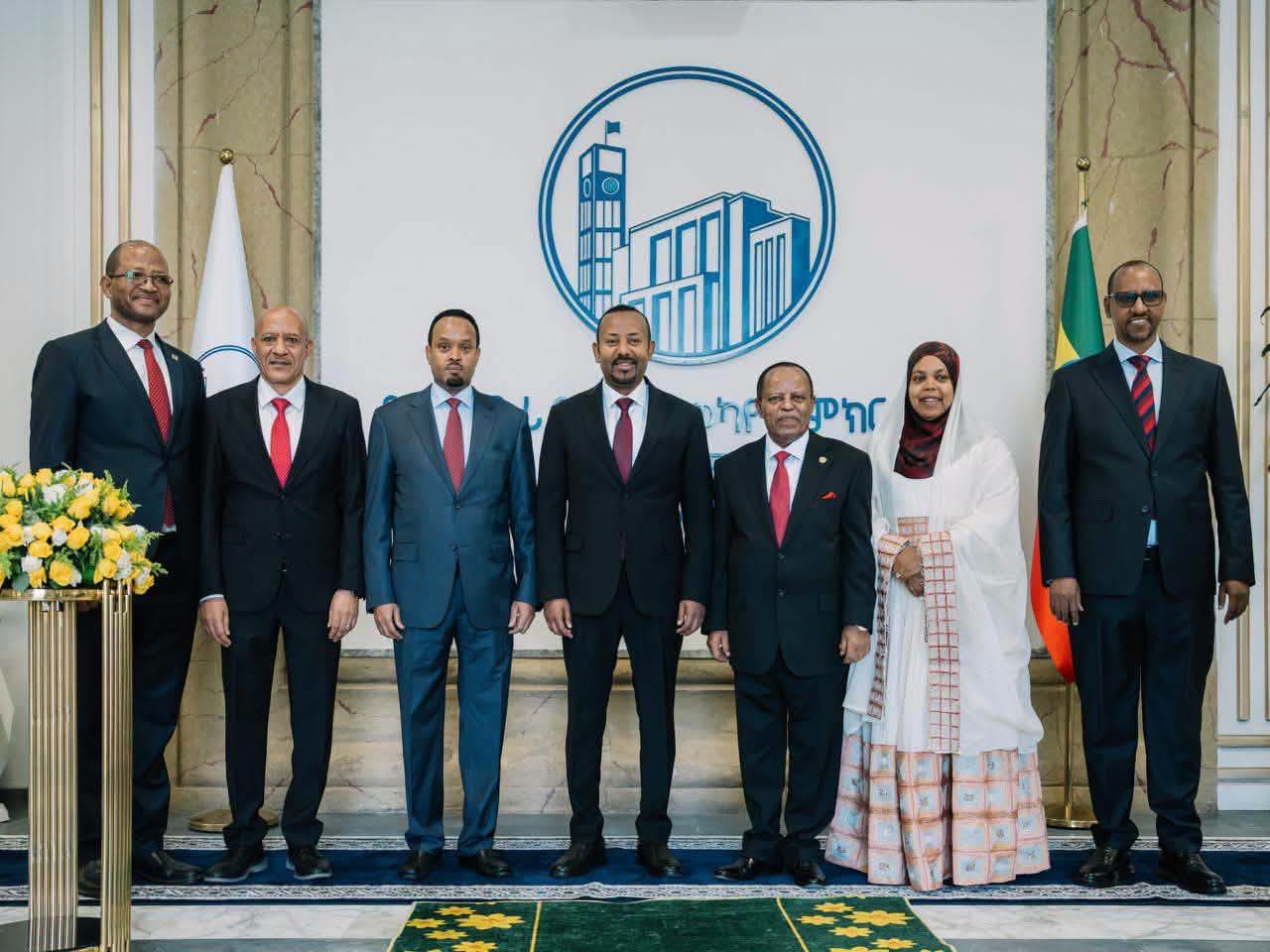
The joint session of the House of People's Representatives and House of Federation marked the opening of a new five-year political and institutional period, with President Taye Atske Selassie outlining key national directions for the period ahead.
During his address, the President called for faster, more accountable and sustainable development, with greater impact on governance, productivity, public services, national unity and prosperity.
He outlined eight priorities: safeguarding peace and unity, pursuing quality-driven structural transformation, accelerating human-centered development, sustaining economic growth, modernizing project execution and financing, strengthening tax and debt management, improving federal-regional coordination, and pursuing a more influential, strategically oriented foreign policy.
Achieving these goals, the President noted, requires stronger implementation capacity, ethical public service, political dialogue, intensified anti-corruption efforts, wider adoption of successful development practices, and stronger technological, defense and security capabilities.
Building on Five Years of Economic Gains
Ethiopia’s recent economic performance provides a foundation for its next development phase, with progress across agriculture, irrigation, manufacturing, mining, exports, foreign direct investment, tourism, digital infrastructure and services.
President Taye attributed the sustained growth partly to measures under the government’s 10-year development plan, including stronger domestic revenue mobilization, discontinuing commercially unviable borrowing and completing long-delayed projects.
Public participation has also strengthened development efforts. The Green Legacy Initiative and urban modernization and corridor development projects exemplify cooperation between the government and communities in expanding implementation capacity.
The economic indicators reflect this momentum. Annual crop production reached 1.3 billion quintals last Ethiopian fiscal year, up from 335 million quintals seven years ago. Foreign trade revenue reached 11.2 billion USD, while foreign direct investment stood at 4.5 billion USD.
Manufacturing industry growth reached 15.8 percent, credit supply expanded to 1.3 trillion Birr, inflation stood at 13.4 percent, and total domestic revenue reached 1 trillion 980 billion Birr, the President said.
These results demonstrate the resilience of Ethiopia’s economic growth amid internal and external pressures and strengthen its capacity to pursue economic sovereignty.
From Growth to Structural Transformation
The next phase must move beyond economic expansion to prioritize quality, productivity and structural transformation. The President identified comprehensive structural transformation as the second of the eight priorities for the 2019 EFC, emphasizing agriculture, industry and infrastructure as foundations for self-sustaining growth.
Human development must similarly shift from expanding services to improving their quality and impact. Education, health and social protection are expected to focus increasingly on better services and tangible improvements in people's lives.
The government aims to raise electricity access to 65 percent, expand clean water access, increase health insurance coverage to 85 percent, raise forest coverage beyond the current 26 percent, and extend student feeding programs to 70 percent, among other targets.
Making Implementation Faster and More Accountable
Delivering development goals requires stronger project execution and financing. The President called for modern, fast, efficient and accountable systems, alongside improved tax administration and systematic debt management.
The government also aims to raise the tax revenue-to-GDP ratio to 9.62 percent, strengthen public revenue and expenditure monitoring, increase tax collection and reduce inflation to single digits.
These measures reflect a broader emphasis on implementation capacity. Progress depends not only on setting ambitious targets but also on executing them effectively.
President Taye urged public servants implementing the plan to prioritize citizens’ needs, value time, reject idleness and serve with dedication.
Peace and Unity as Foundations of Development
Peace and national unity remain central to Ethiopia’s development agenda. The President said economic growth and progress require political stability, calling for stronger unity and cooperation and a definitive departure from armed political violence.
Political practice, he added, should instead rest on peace, dialogue, knowledge and mutual listening.
He stressed the implementation of the outcomes of the National Dialogue, whose recommendations should help bridge differences, strengthen political and social consciousness, and advance lasting nation-building.
The President said Ethiopia must end the cycle in which political violence passes from one generation to another, replacing it with a path of peace, development and unity.
Stronger Federal-Regional Cooperation
Closer cooperation between the federal government and regional states is among the eight priorities. The President called for federal and regional institutions to operate collaboratively, support one another and work efficiently and seamlessly.
Such coordination is essential to translating national priorities and development programs into action across the country.
Successful experiences in agricultural productivity, green development and urban corridor projects should be expanded across regions and treated as national assets.
From International Acceptance to Influence
The President called for the transformation of Ethiopia's foreign policy from “mere acceptance to influence.” This requires expanding the country’s circle of friends and partners, prioritizing regional peace and economic integration, pursuing bold diplomatic initiatives and strengthening Ethiopia’s global standing.
Ethiopia’s efforts have laid a foundation for wider international acceptance of its aspirations and demonstrated its intention to pursue development through cooperation.
The country’s hosting of the 32th United Nations Climate Change Conference (COP32) will also provide an opportunity to demonstrate its conceptual and practical commitment to climate action.
Tourism and Economic Growth Ambitions
Ethiopia aims to attract more than 1.6 million visitors during the fiscal year, placing tourism within its broader economic development ambitions.
Together with measures targeting revenue mobilization, productivity, infrastructure, agriculture and industry, the tourism target forms part of the effort to raise overall economic growth to over 10 percent, according to President Taye.
The broader objective is to sustain economic expansion while improving its quality and impact.
Combating Corruption, Strengthening Institutions
Corruption and malpractice remain major obstacles to effective development, the President said, calling for intensified efforts to eliminate them.
The government plans to strengthen institutional oversight, build public institutions around integrity and ethics, and take stronger action against corruption and malpractice.
The emphasis extends to the conduct of public officials and servants, who must combine knowledge and competence with discipline, moral standing and a strong sense of public responsibility.
Strengthening Technology, Defense and Security
Ethiopia’s development ambitions also depend on strengthening its comprehensive national power. The President emphasized greater self-reliance through modern technology, stronger strategic defense capacity and improved internal resilience.
The government will work to maintain strong operational capabilities within the National Defense Force and security institutions.
He praised members of the defense force and federal security institutions for their service and commitment to protecting the country and its citizens.
Foreseeing Challenges and Building Capacity
The President further emphasized the need for identifying and addressing challenges before they escalate, rather than responding only after they emerge.
Ethiopia’s historical experience demonstrates the cost of inadequate preparation. The country must therefore identify problems early, anticipate threats to its unity and existence, strengthen its overall capacity and develop solutions before difficulties intensify.
Deep thinking, early problem identification and transformative solutions will be essential to future progress. President Taye said this approach reinforces the emphasis on implementation capacity and expanding successful practices instead of repeatedly responding to problems.
Shared Responsibility for the Future
Concluding his address, the President noted that Ethiopia’s future should be defined by growth, prosperity, unity and peace rather than the destruction associated with conflict.
Protecting the country, maintaining peace and pursuing prosperity are shared responsibilities of citizens, not solely obligations of the government, he stressed. He urged Ethiopians to safeguard national unity and sovereignty while sustaining recent gains in productivity and development.
The President also reminded members of the Houses that their mandate comes from the Ethiopian people, expressing confidence that they would fulfill it with duty, competence, integrity, transparency and determination.
The priorities for the new fiscal year thus center on consolidating recent economic and institutional gains while strengthening peace, improving capability, and human development. Together, they outline an approach to sustaining growth, improving public services and strengthening Ethiopia’s ability to pursue its national interests.


