Ethiopia Charts Distinctive Path to Future Through Medemer: PM Abiy - ENA English


Ethiopia Charts Distinctive Path to Future Through Medemer: PM Abiy
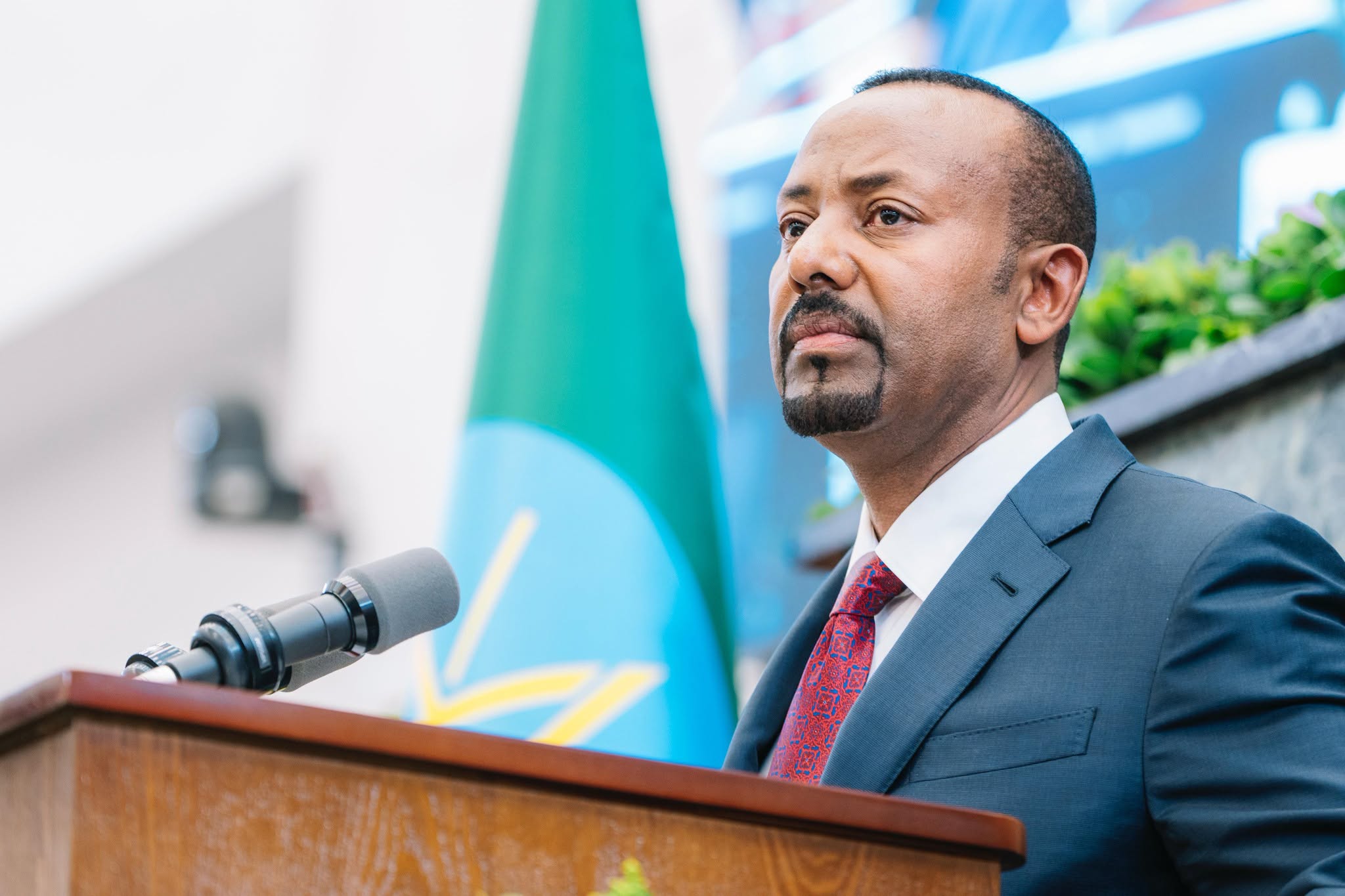
Addis Ababa, October 6, 2026 (ENA)— Ethiopia has charted a distinctive path toward its future by drawing on the country’s best experiences from the past while embracing the essential values and capabilities of the present, Prime Minister Abiy Ahmed said.
Speaking following his reelection as Prime Minister during the first regular session of the House of Peoples’ Representatives in the first working year of the seventh parliamentary term, PM Abiy said Ethiopia’s development trajectory is anchored in the philosophy of Medemer, which he described as an indigenous philosophy founded on addition, synergy ,and collective strength.
The Prime Minister said the government had examined what kind of philosophy could provide solutions to Ethiopia’s pressing challenges and whether the country possessed an indigenous body of wisdom capable of guiding its development.
“We ultimately confirmed that we did have an Ethiopian philosophy, and that is the philosophy of Medemer,” he said.
According to PM Abiy, Ethiopians have historically demonstrated the principles of Medemer through their social and economic life, including intermarriage, trade, farming, pastoralism, mutual support ,and collective defense of the country.
He said Ethiopia’s shared history, values, culture ,and sense of unity had been built and transmitted across generations through traditions of coexistence, cooperation and mutual support.
The Prime Minister further argued that Ethiopian identity had endured internal divisions, political upheavals, social challenges and foreign invasions because Ethiopians had been able to combine unity with diversity, faith with values, individual interests with community interests, and the experiences of the past with the demands of the present.
This approach, he said, provides a foundation for building what he described as a new Ethiopia that can prosper and become a source of pride internationally.
PM Abiy also said Ethiopia should learn from other civilizations while developing its own institutions and values from an indigenous foundation.
He cited European civilization, which he said evolved through the combination of European culture, Greek philosophy and Roman systems of governance, as well as East Asian civilization, which he said drew on Asian culture and Confucian philosophy.
“What prevents us from following a similar principle?” he asked.
The Prime Minister argued that Ethiopia can modernize its state and institutions by drawing on its own civilizational heritage while selectively adapting useful ideas and experiences from other countries.
Rather than adopting foreign models wholesale, he said Ethiopia should adapt external experiences to its own circumstances, values and philosophical foundations.
He said reforms undertaken in recent years have sought to combine international experience with Ethiopia’s traditions and national priorities, with Medemer serving as a unifying framework.
PM Abiy said Ethiopia’s economic transformation could not be achieved through traditional, single sector development approaches.
According to the Prime Minister, the government has therefore pursued a multisector economic strategy designed to connect agriculture, manufacturing, services, infrastructure and other productive sectors.
“Times have changed,” he said, explaining that Ethiopia had moved away from a single track development approach toward pursuing multiple national objectives simultaneously.
He said reforms in macroeconomic policy, production, manufacturing, agriculture, education, health, energy and foreign relations had begun producing results.
The government, he added, would continue examining past shortcomings, making necessary adjustments and preparing the country to navigate rapidly changing global conditions.
The approach, he said, reflects the principle of Medemer by bringing together different sectors and capabilities rather than treating national development as a series of isolated objectives.
The Prime Minister also highlighted Ethiopia’s digital transformation, saying the initiatives are intended not only to enable the country to participate in the emerging digital economy but also to strengthen its capacity to shape its own future.
He cited progress in digital finance, digital markets, digital public services, digital identification, artificial intelligence and digital platforms as important foundations for the country’s digital transformation.
Digitalization is increasingly becoming part of the broader effort to modernize public institutions, expand economic opportunities and improve access to services, he said.
By combining technological capabilities with national priorities, Ethiopia can build a development model that responds to both present needs and future challenges, PM Abiy added.
PM Abiy also highlighted reforms involving state owned enterprises, saying many had previously been associated with losses and heavy debt.
He said Ethiopian Investment Holdings had consolidated and restructured state assets, helping several developmental enterprises move from loss making operations toward generating revenue and profits.
The reforms, he said, are intended to improve the efficiency and productivity of public assets while ensuring that state owned enterprises contribute more effectively to national economic development.
The transformation of these enterprises forms part of the broader effort to make Ethiopia’s economy more productive and financially sustainable, according to the Prime Minister.
PM Abiy also pointed to the restoration and development of Ethiopia’s historical heritage sites, saying previously neglected national assets had been renovated and opened to visitors.
He cited Unity Park and sites around the Lower Palace as examples of national heritage assets restored for present and future generations while also contributing to tourism and economic activity.
For the Prime Minister, preserving historical heritage is not simply a cultural undertaking. It is also part of recognizing Ethiopia’s history as an economic, social and national resource.
The restoration of heritage sites, he said, demonstrates how historical assets can be combined with modern development to create opportunities for tourism, employment and investment.
According to the Prime Minister, reform efforts are also changing Ethiopia’s cities and rural areas.
He said corridor development had transformed urban spaces by bringing together transportation, financial services, networks, recreation, public services and historical sites.
Cities that previously lacked adequate housing, parks and recreational spaces, he said, are increasingly becoming more functional and modern urban environments capable of hosting meetings and international conferences.
The Prime Minister presented urban development as another example of Medemer in practice, with infrastructure and public services being integrated to improve the overall functionality of cities.
PM Abiy also highlighted the government’s environmental and agricultural initiatives.
He said Ethiopia had planted 56 billion seedlings through the Green Legacy initiative, contributing to increased vegetation cover and efforts to combat soil erosion.
He further pointed to the expansion of summer irrigation and increased wheat and rice production, saying agricultural expansion had also contributed to growth in dairy, poultry and egg production.
These developments, he said, indicate that Ethiopia’s ambition to achieve greater food self-sufficiency is becoming increasingly attainable.
The expansion of irrigation and agricultural production is also intended to strengthen food security, increase productivity and create stronger links between crop production and other areas of the agricultural economy.
The Prime Minister also cited the expansion of the Fayda national digital identification system, riverside development and the Gebeta (Dine) tourism initiatives as examples of efforts to unlock and showcase Ethiopia’s national resources.
These initiatives, he said, form part of a broader strategy to modernize the state, improve access to services, develop tourism and make greater use of Ethiopia’s natural, cultural and historical assets.
The Prime Minister said Ethiopia’s development efforts are increasingly focused on combining lessons from the past with the capabilities required for the future.
He emphasized that the government would continue strengthening the reforms and initiatives already underway, arguing that Ethiopia can build a distinctive development path by combining indigenous values, modern institutions and lessons adapted from international experience.
“We will continue to strengthen these promising beginnings,” the Premier underscored.


