Ethiopia Opens a New Five-Year Chapter of National Renewal - ENA English


Ethiopia Opens a New Five-Year Chapter of National Renewal
By Staff Writer
October 5, 2026 (ENA)
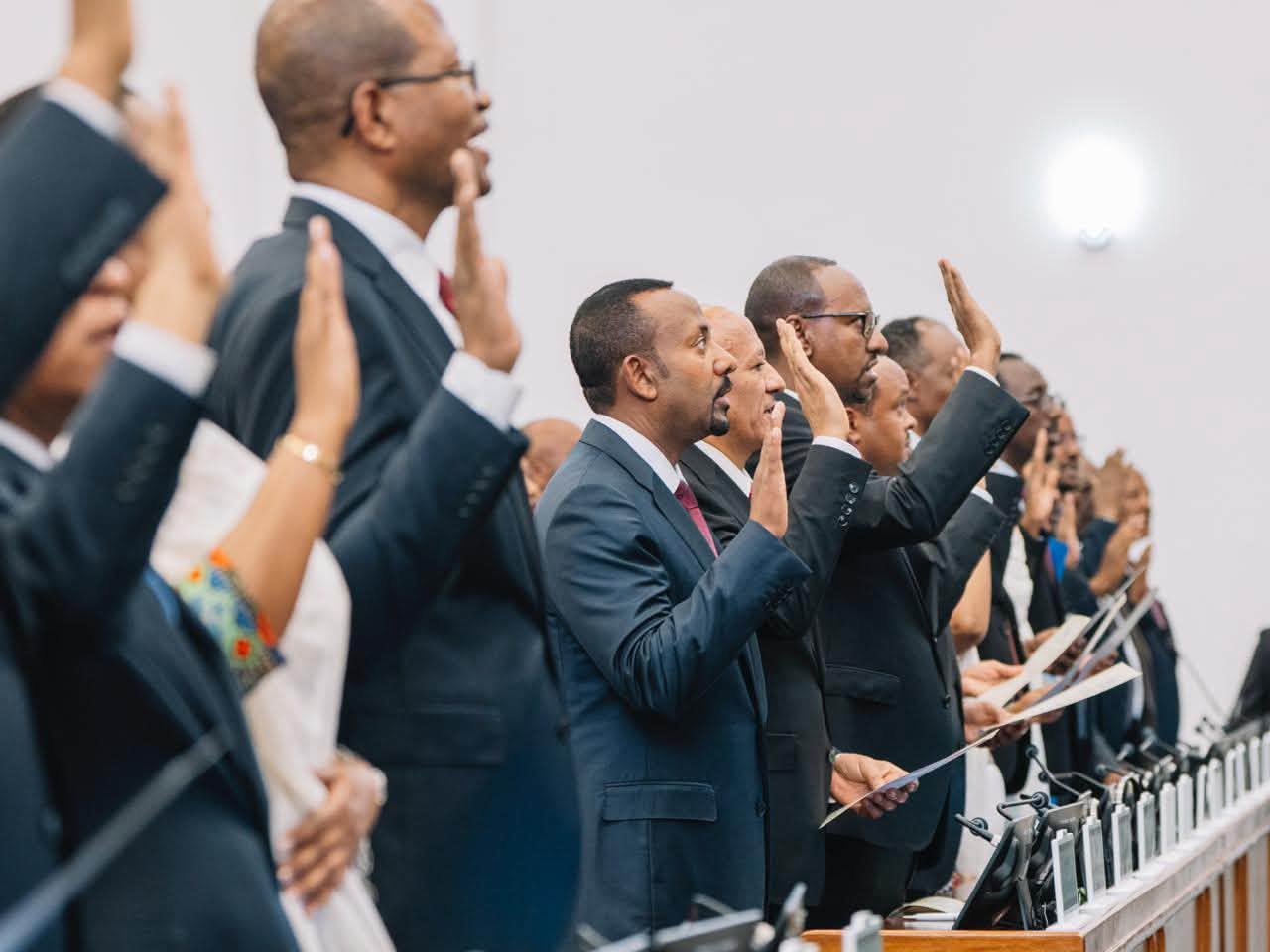
Ethiopia has formally entered a new five year political and institutional chapter with the inauguration of the seventh House of Peoples' Representatives, the establishment of parliamentary leadership in both chambers and the appointment and swearing in of Prime Minister Abiy Ahmed for a second term.
The developments of October 5, 2026 completed a major stage of the constitutional process that followed the seventh general election and established the institutional foundation for the country’s new federal government.
The day brought together the principal elements of the new political order. The newly elected House of Peoples’ Representatives opened the first regular session of the first working year of the seventh parliamentary term and elected Ahmed Shide as Speaker and Ayelech Eshete as Deputy Speaker. The House of Federation elected Muferihat Kamil as Speaker and Desta Ledamo as Deputy Speaker and established the leadership structures of its standing committees.
The House of Peoples’ Representatives subsequently appointed Abiy Ahmed as Prime Minister of the Federal Democratic Republic of Ethiopia. Following his appointment, PM Abiy took the oath of office, formally beginning his second term as head of the federal government.
The sequence represents the transition from an electoral mandate to constitutional government. The election provided the political basis for the new administration, while the inauguration of Parliament, the election of its leadership and the appointment of the Prime Minister established the principal institutions through which the federal government will operate during the new five year period.
In this respect, October 5 represents more than the opening of another parliamentary session. It marks the completion of a constitutional process through which the mandate emerging from the election has been translated into functioning institutions of government.
The new government follows the June 1 seventh general election, in which more than 54 million citizens participated, according to the National Election Board of Ethiopia. With the newly elected House now convened, the country has moved from the electoral stage into a new phase centered on governance, legislation, policy implementation and development.
This gives the day significance beyond the formal ceremonies of the day. It marks the point at which the mandate emerging from the election is translated into the structures through which government will operate during the new five-year period.
The inauguration of the seventh House of Peoples’ Representatives is therefore a defining event in the new parliamentary cycle. The lower chamber will undertake its constitutional responsibilities, including legislation, approval of the federal budget and oversight of the executive. The House of Federation, with its leadership and committee structures established, will similarly begin its responsibilities within the federal constitutional system.
Together, the two chambers provide the legislative foundation for the new period of government. Their work will shape the legal and policy environment in which the executive implements its programs and in which regional and local institutions carry national priorities into communities.
The appointment and swearing in of PM Abiy Ahmed represent the central executive milestone in the formation of the new government. In his address following his appointment, Abiy placed the new term within a broader national framework centered on unity, preparedness, national interests and development.
Reflecting on the transition into the new five-year period, the Prime Minister emphasized the importance of learning from the country’s past while preparing for changing national, regional and global circumstances. “Getting tripped up by an obstacle once is natural, but stumbling repeatedly is not normal,” PM Abiy said, stressing the importance of drawing lessons from previous experiences and strengthening the country’s preparedness for future challenges.
His message also placed national unity at the center of the new political chapter. The Prime Minister said Ethiopia’s challenges can be overcome through collective effort and cooperation, presenting the new term as a period in which citizens should move forward together.
“Ethiopia will have only winning citizens, not losers,” he emphasized, framing national development as a shared undertaking whose benefits should extend across society.
The message is consistent with the Medemer approach presented by the new administration. The concept emphasizes addition, cooperation and the combined use of national capabilities, bringing together government institutions, businesses, communities, technology, human resources and natural resources in pursuit of common development objectives.
The formation of the new government gives this approach an institutional setting. It provides an opportunity to strengthen coordination among Parliament, the executive, regional administrations, the private sector and other national institutions and to connect individual development initiatives within a broader national framework.
Prime Minister Abiy also presented the new political chapter as an opportunity to convert Ethiopia’s accumulated experience and capabilities into practical results. “Yesterday has passed, and tomorrow is yet to come; but today has arrived favorably,” he noted, placing emphasis on the opportunities available in the present and the need to act on them.
The government does not begin its new term with an empty policy agenda. It inherits a range of reforms and development programs pursued across the economy and public sector in recent years. These include agricultural modernization, infrastructure development, energy expansion, digital transformation, manufacturing, tourism, environmental restoration, investment promotion and public sector reform.
The new five-year period provides an opportunity to consolidate these initiatives and strengthen their connections. The central objective is to move from individual projects and sectoral programs toward greater coordination and implementation, allowing progress in one area to reinforce development in others.
Agriculture remains an important foundation of this agenda. Expanded irrigation and increased wheat and rice production have strengthened Ethiopia’s capacity to raise domestic agricultural output and advance food sovereignty. Greater agricultural productivity can also provide inputs for agro processing and manufacturing while supporting transportation, storage, trade and employment.
The Premier referred to the expansion of summer wheat production in his speech as an example of how ambitious national objectives can be translated into practical results. He recalled that the initiative had initially been viewed by some as unrealistic, but said its results had demonstrated Ethiopia’s capacity to increase domestic production and reduce dependence on imported wheat.
The relationship between agriculture and energy is particularly important. Expanded electricity generation can support irrigation and agricultural processing, while reliable power can strengthen rural industries and create opportunities for value addition. Energy development can therefore contribute not only to electricity supply but also to wider economic transformation.
Infrastructure provides another foundation for this transformation. Roads, urban development, energy networks, telecommunications infrastructure and public facilities connect communities with markets and services while improving the movement of people and goods.
Digital transformation adds another dimension to the emerging economic structure. The expansion of digital identification, digital finance, online public services and emerging technologies is creating new possibilities for public administration and economic participation. The Fayda national digital identification system provides a foundation for wider access to services, while digital financial platforms are expanding opportunities for participation in the formal economy.
Technology can also support improvements in government administration, education, research, business development and service delivery. The continued expansion of digital infrastructure consequently has implications well beyond the technology sector itself, providing tools that can support productivity across the economy.
The restructuring and improved management of state-owned enterprises and public assets also form part of the economic agenda. More productive public enterprises can strengthen revenue generation, support employment, attract investment and create stronger links with the private sector. Better utilization of existing assets can complement new investment and contribute to a more productive economic system.
Environmental restoration and tourism provide further dimensions of the development platform. The Green Legacy initiative has expanded tree planting and landscape restoration, linking environmental protection with climate resilience and sustainable development. At the same time, heritage restoration and tourism development are creating opportunities around Ethiopia’s historical, cultural and natural assets.
These sectors are increasingly interconnected within the broader Medemer approach. Agricultural modernization can support manufacturing, expanded electricity can strengthen industry and irrigation, digital services can improve public administration and financial inclusion, infrastructure can connect producers with markets, and tourism can combine heritage preservation with investment and employment.
The new government therefore has an opportunity to approach development as an integrated national process rather than as a collection of separate sectoral activities. Progress in one area can provide the foundation for progress in another, creating stronger links between production, infrastructure, technology, investment and employment.
National unity and institutional cooperation are also important to this process. The federal system provides a framework for cooperation between national and regional institutions, with Parliament providing representation and legislative oversight, the executive providing national policy direction and implementation, and regional governments connecting national programs with local development priorities.
Prime Minister Abiy emphasized this collective dimension in his address, calling for Ethiopians to move forward together and stressing that national interests should transcend political differences. He pointed to cooperation among political actors on matters of national importance as evidence that differences can coexist with collaboration when shared interests are placed at the center.
The government also enters its new term with Ethiopia’s regional and international economic interests closely connected to its development agenda. Sea access remains a long-term national priority, with the government emphasizing peaceful engagement, negotiation and mutually beneficial arrangements.
Abiy reaffirmed this position in his October 5 address, saying, “We will work tirelessly to ensure Ethiopia secures a sea outlet.”
The issue is linked to Ethiopia’s wider economic ambitions because reliable maritime connectivity has implications for trade, logistics, investment and regional economic integration. Ethiopia’s geographic position also creates opportunities to strengthen economic relationships across the Horn of Africa, the Red Sea region and the wider continent through energy cooperation, infrastructure connectivity, trade and digital services.
The Prime Minister placed these ambitions within a broader vision of Ethiopia’s future, arguing that the country should not limit itself to transforming its own economy but should aspire to contribute to transformation beyond its borders.
The new five-year term thus begins with a combination of established institutions, ongoing reforms and a broad development agenda. The parliamentary leadership is in place, the federal executive has been constituted and the Prime Minister has formally assumed his second term.
The significance of October 5 lies in bringing these elements together. The election provided the mandate, the Constitution provided the process, Parliament provided the institutional mechanism and the appointment and swearing in of the Prime Minister completed a central stage in the establishment of the new administration.
The emphasis can now shift from political transition toward implementation. Parliament will legislate and exercise oversight, the executive will formulate and implement policies, and regional governments will carry national priorities into local development. Businesses, investors and citizens will also contribute to the broader economic and social development process.
The new term consequently provides an opportunity to connect Ethiopia’s people, institutions, resources and development programs around a common national agenda. It also creates a framework for combining the country’s historical experience with modern technology, institutions and global knowledge.
The approach seeks to preserve the strengths of Ethiopia’s past while building the capabilities required for a changing economy and a more interconnected world. Agriculture can be modernized while strengthening food production, renewable energy can support industrialization, digital services can improve access to government and finance, tourism can combine heritage with employment, and infrastructure can connect producers and consumers across regions.
This combination is central to the Medemer approach and to the broader development framework presented for the new term. Its practical significance will ultimately depend on how effectively the newly established institutions coordinate policies, allocate resources and implement programs.
October 5, 2026 therefore marks more than the opening of another parliamentary session. It marks Ethiopia’s formal transition from the seventh general election into a new phase of constitutional government and national development, with the seventh Parliament beginning its work and PM Abiy Ahmed beginning his second term as Prime Minister. The principal institutions are now in place. The political mandate has moved into an institutional framework, and the new federal government has assumed responsibility for the next five-year period.
The coming term provides an opportunity to consolidate ongoing reforms, strengthen institutions and connect Ethiopia’s development initiatives more closely with one another. The focus can now increasingly be placed on implementation, productivity, service delivery, investment, employment and broader economic opportunity.
In this sense, the formation of the government is not the conclusion of the political process that began with the election. It is the beginning of its governance phase. The seventh Parliament has begun its work, the federal executive has been formally established and the Prime Minister has assumed his second term. The institutional foundation is therefore in place for the new administration to pursue its national agenda and translate the mandate of the new parliamentary cycle into policies, programs and development results.
Ethiopia has moved from election to government, from mandate to institutions and from political transition to a new phase of national development. The new five year period now begins with the institutions, leadership and constitutional framework required to turn that moment into sustained implementation and national development.


