Ethiopia to Reassert Regional Influence, Secure Sea Access, Says PM Abiy - ENA English


Ethiopia to Reassert Regional Influence, Secure Sea Access, Says PM Abiy
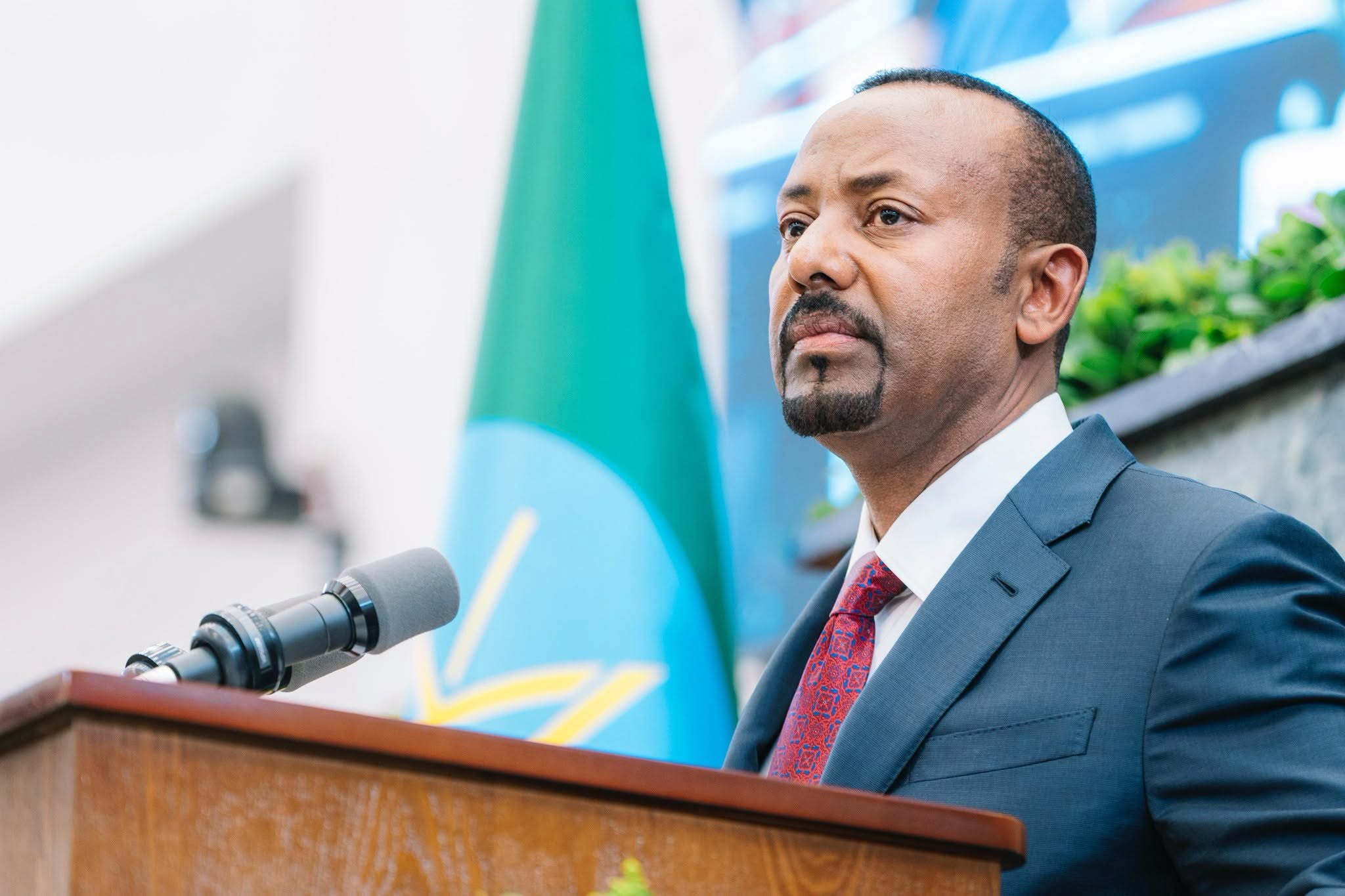
Addis Ababa, October 5, 2026 (ENA)—Prime Minister Abiy Ahmed said Ethiopia will continue to assert its national interests on its own terms and strengthen its role as a decisive anchor state in the region, drawing on the country’s national strength and growing economic potential.
The Prime Minister made the remarks as he was sworn in for a new term following the establishment of the Medemer Government under Ethiopia’s seventh parliamentary term.
Addressing the House of People’s Representatives, PM Abiy said the past few years had been a critical period for laying fundamental foundations, enabling Ethiopia to build a resilient political-economic system capable of withstanding both domestic and external pressures.
Speaking on sea access, he emphasized that Ethiopia’s long-term national and developmental vision is closely linked to securing reliable maritime access. He said his administration will actively pursue a gateway to the sea through dialogue, mutual benefit and give-and-take, while continuing to advance national development and major infrastructure projects.
Reviewing Ethiopia’s recent political and economic trajectory, the Prime Minister outlined how the country had navigated complex internal and external pressures that sought to disrupt its development path.
“When COVID-19 arrived and the world shut down, we continued with resolve. While campaigns were opened against us, as the world turned its back on us and repeatedly showed its injustice, we did not falter for a second,” he said.
He added that Ethiopia had also faced pressure while asserting its right to use its river and complete the Grand Ethiopian Renaissance Dam (GERD).
“When they pulled us with a long rope to prevent us from bringing our dam to completion, we stumbled, but we did not fall, nor will we fall,” Abiy said.
The Prime Minister said these experiences had demonstrated Ethiopia’s capacity to withstand obstacles and continue pursuing its national objectives.
“We have proven in practice that we are building an invincible political-economy system that responds appropriately without falling to obstacles,” he said.
Speaking on turning ambition into results and illustrating the feasibility of Ethiopia’s long-term vision, PM Abiy pointed to progress across key economic, agricultural and infrastructure sectors.
He highlighted the expansion of wheat production, saying the initiative had helped replace imported wheat with domestic production and demonstrated the potential for large-scale agricultural self-sufficiency.
He also cited progress on major water and development projects, including the completion of the Grand Ethiopian Renaissance Dam, advances on projects such as Megech, and the activation of the Tana Beles development initiative.
Major corridor development programs, he added, have accelerated infrastructure expansion and urban modernization across the country, turning long-standing development plans into visible projects and operational realities.
For the Prime Minister, these achievements demonstrate that Ethiopia’s ambitions are not limited to political declarations but can be translated into practical outcomes through sustained national effort.
Addressing a new parliamentary chapter, looking ahead, Prime Minister Abiy outlined a broad agenda for the new parliamentary term aimed at consolidating the foundations laid in recent years and turning them into lasting national institutions.
The administration plans to pursue constitutional updates through the National Dialogue process, maintain a competitive political environment and engage constructively with opposition parties.
On the economic front, the government will continue macroeconomic reforms, strengthen oversight of public expenditure and undertake civil service reforms aimed at improving measurable performance and modernizing public service delivery.
In foreign policy, Abiy said Ethiopia will pursue cooperative relations with neighboring countries based on mutual interests and shared benefits, while continuing its efforts to secure reliable access to the Red Sea.
He also pledged stronger institutional measures against corruption and nepotism, alongside the expansion of digital systems at lower levels of administration to improve efficiency, reduce bureaucracy and modernize government services.
The Prime Minister’s address therefore placed national resilience, economic transformation, political dialogue, institutional reform and maritime access at the center of Ethiopia’s next phase.


