First SPIN Africa Dialogue Fosters Communication Between Policymakers, Scientists - ENA English


First SPIN Africa Dialogue Fosters Communication Between Policymakers, Scientists
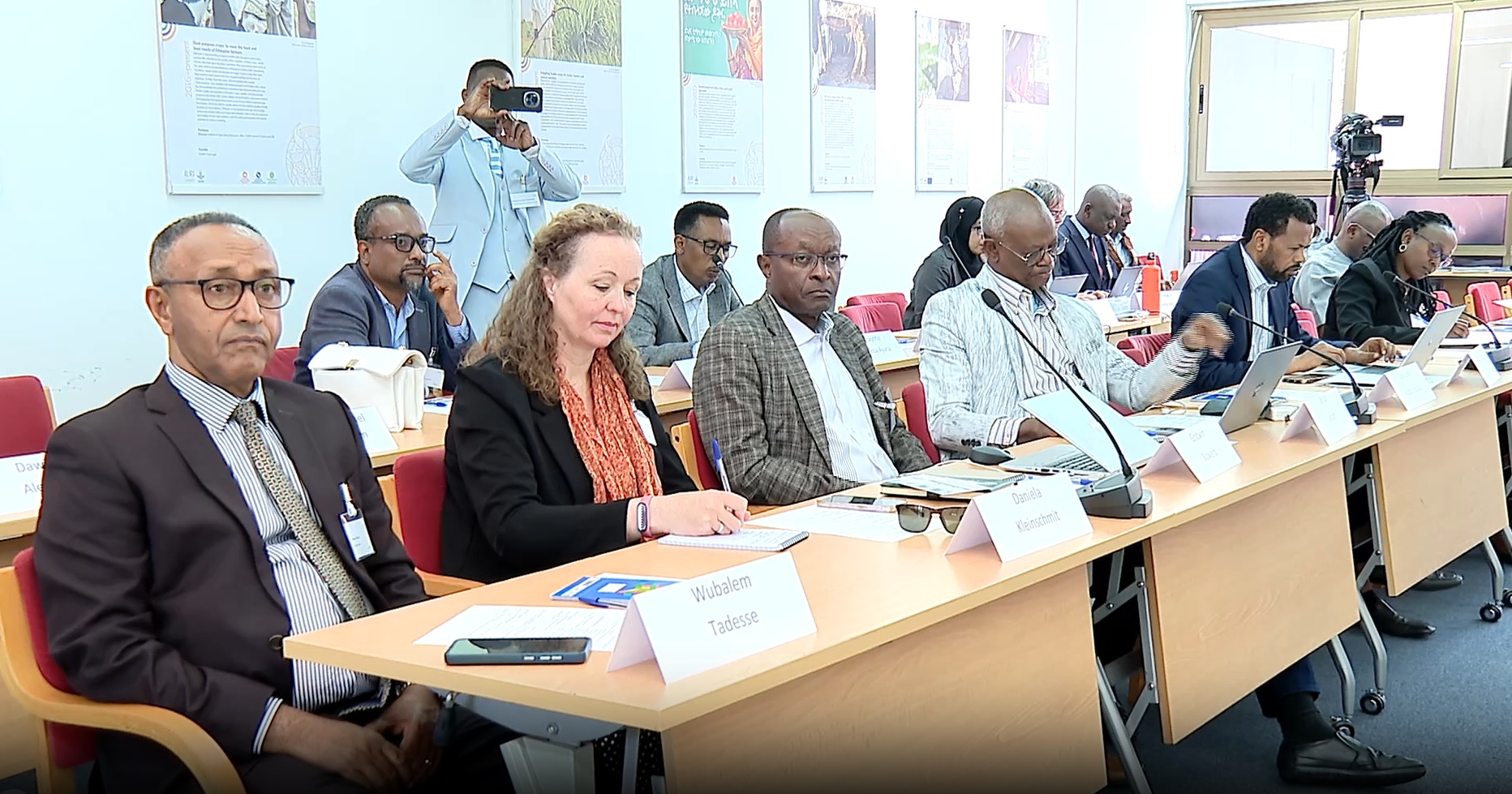
Addis Ababa, October 5, 2026 (ENA)— The first Science Policy Information Network (SPIN) Africa Regional Science-Policy Dialogue on forestry, held in Addis Ababa, enables to establish clear, frictionless communication channels between policymakers and the scientific community.
The dialogue was jointly organized with the International Union of Forest Research Organizations (IUFRO) and Science Policy Information Network (SPIN) Africa.
The dialogue brought together representatives from seven different African countries.
The event marked the first in person discussion forum of the SPIN Africa network in Addis Ababa. Established in 2024 during a workshop in Sweden, the network had previously conducted its activities mainly through virtual meetings.
The dialogue seeks to make forestry research across Africa more connected, accessible and responsive to policy needs, while strengthening collaboration among forestry research institutions across different regions of the continent.
IUFRO President Professor Daniela Kleinschmit said the dialogue provides an opportunity for scientists and policymakers to better understand each other's needs and expectations.
“We aim to discuss between science and policy to better understand each other, to better understand the needs and demands of policies for sciences, and to tell as well what science can offer and what kind of research results we have,” she said.
Kleinschmit also emphasized the importance of stronger regional partnerships among scientific institutions.
“We need to partner up a bit better in the future; if we partner up in a region as well, it becomes much easier,” she said, noting that bringing together scientific institutions from across a region can help generate common knowledge and shared solutions rather than relying on individual countries or institutions.
She added that policymakers in different African countries often face similar challenges and have common development objectives, making regional scientific cooperation particularly important.
Wubalem Tadesse, SPIN Africa Core Group Chair, said the network serves as a bridge between forestry researchers and policymakers by helping translate research findings into information that can support policy decisions.
He said the network also enables researchers to identify practical challenges facing different countries and conduct research that responds directly to those needs.
The initiative aims to connect forestry research across regions, improve access to scientific knowledge and build a stronger continent-wide network of forestry research activities.
Damene Darota, Deputy Director General of Ethiopian Forestry Development (EFD), said Ethiopia has established an institutional framework intended to narrow the longstanding gap between scientific research and practical implementation.
“Ethiopian Forestry Development was established with a specialized structural framework designed to bridge the historic divide between scientific research and operational execution,” Darota said.
He explained that research priorities within EFD are directly linked to practical challenges identified in the field.
“Within EFD, scientific research agendas are directly generated from practical development needs encountered in the field. Research questions are not defined in isolation; they are dictated by live challenges in landscape restoration, tree propagation, disease resistance, value chain development, and community based management,” he said.
Darota said Ethiopia's experience could provide a practical example of how stronger links between science, policy and implementation can support environmental restoration.
“We hope that this institutional synergy provides a practical model for how science policy interfaces can function smoothly within national public administrations,” he said.
He noted that Ethiopia's efforts in evidence-based landscape restoration are reflected in national environmental indicators and restoration activities.
Ethiopia has historically faced significant challenges from land degradation, deforestation and climate variability. Over the past decade, the country has sought to strengthen natural resource governance through nationwide environmental initiatives, including the Green Legacy Initiative launched in 2019.
According to the figures presented at the dialogue, Ethiopia's forest cover has increased to 23.6 percent, covering more than 26 million hectares.
Over the past eight years of planting campaigns, communities, institutions and technical experts have planted 56 billion trees and agroforestry seedlings across different ecological zones, according to EFD.
“These achievements demonstrate that when political leadership, institutional integration, scientific backing, and community ownership align, a lot can be done in environmental recovery,” Darota said.
Juliette Biao, Secretariat Director of the United Nations Forum on Forests (UNFF), underscored the importance of strengthening communication between scientists and policymakers, particularly in translating scientific knowledge into effective forest landscape restoration.
She said scientists and policymakers have historically faced difficulties in communicating in ways that enable research findings to be effectively translated into successful forest restoration projects.
According to Biao, the SPIN Africa dialogue provides an important platform for addressing this gap by fostering collaboration between researchers and policymakers and strengthening the connection between scientific evidence and practical policy implementation.
“What we really want to see going forward: first, we expect to establish clear and frictionless communication channels between policymakers and the scientific community,” Biao said.
The organizers said the dialogue is expected to contribute to a stronger Africa wide science policy network capable of supporting evidence-based forestry policies, regional cooperation and sustainable management of the continent's forest resources.


