Eritrea’s War-State Trap: A Legacy of Conflict and Regional Instability - ENA English


Eritrea’s War-State Trap: A Legacy of Conflict and Regional Instability
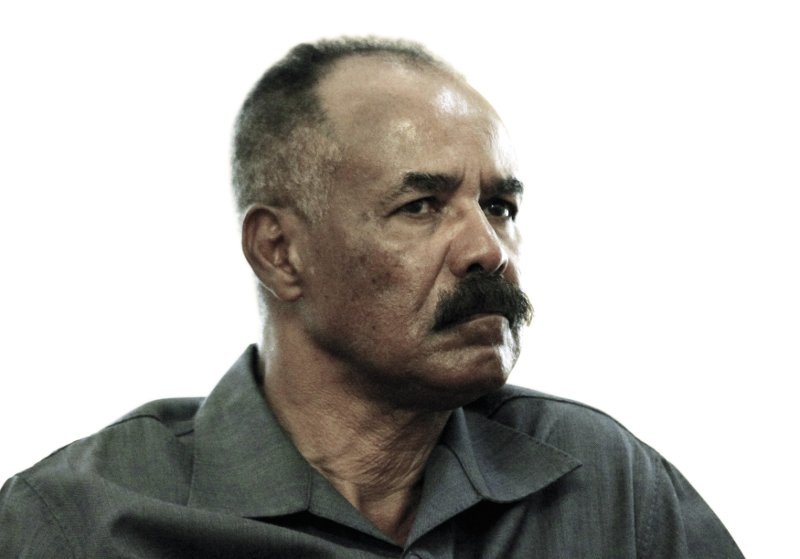
By Temesgen Assefa
October 4, 2026 (ENA)
Over the week, Ethiopia took decisive action against Eritrea by closing its embassy in Asmara and declaring 10 Eritrean diplomats’ persona non grata. This move, announced by the Ministry of Foreign Affairs, is a direct response to Eritrea's continued acts of hostility and belligerence against Ethiopia, which have posed a direct threat to Ethiopia's national security. The declaration of these diplomats as persona non grata, due to their involvement in activities breaching the Vienna Convention on Diplomatic Relations, highlights the serious nature of Eritrea's actions and Ethiopia's commitment to protecting its sovereignty.
The Ethiopian government's decision to close its embassy in Asmara and expel Eritrean diplomats reflects its resolve to address the ongoing challenges posed by Eritrea's aggressive foreign policy. Despite these measures, Ethiopia has reaffirmed its commitment to peaceful coexistence, regional stability, and integration, underscoring its desire for a stable and secure Horn of Africa.
The historical context of Eritrea's foreign policy, marked by militarization, territorial disputes, and proxy wars, has significantly contributed to the instability of the Horn of Africa.
Eritrea's Legacy of Instability on the Horn of Africa
Since separating in 1993, the Eritrean government has consistently pursued foreign and security policies that have contributed to the destabilization of the Horn of Africa. Over the decades, the ruling party has relied on heavy militarization, armed interventions, and proxy networks, resulting in a distinct pattern of regional conflict, political isolation, and persistent disregard for diplomatic norms. From direct military clashes with every neighboring country to strategic alliances with non-state armed groups, the post-independence trajectory of the nation has exerted a profound and enduring impact on the security landscape of the Horn of Africa and the Red Sea corridor.
It seems that Eritrea's path under Isaias Afwerki to statehood fostered a national security doctrine centered on military bullying and geopolitical assertiveness. While early independence was met with international hopes that Asmara would emerge as a stable partner, the government quickly engaged in territorial disputes across its borders.
In December 1995, Eritrean forces launched a military campaign against Yemen over the strategic Zukur-Hanish archipelago in the southern Red Sea. The crisis was eventually resolved through international arbitration under the Permanent Court of Arbitration in 1998.
This pattern of border friction escalated dramatically when Eritrean forces invaded Badme and surrounding Ethiopian territories in May 1998, sparking a full-scale war that lasted until 2000. Initiated by this act of Eritrean aggression, the conflict caused massive military casualties, displaced hundreds of thousands of civilians, and severely impacted the economies of both nations. The conflict has resulted in nearly two decades of militarized standoff.
Furthermore, in June 2008, long-standing border frictions along the northern Djiboutian border erupted into direct military clashes over the strategic Ras Doumeira peninsula and Doumeira Island, requiring the deployment of peacekeeping forces in 2010 to monitor the buffer zone until their withdrawal in 2017.
Beyond border skirmishes, the Eritrean leadership developed a broader regional strategy defined by proxy warfare and opposition support, aiming to project power and counter regional competitors. During the late 2000s, international monitoring revealed that Asmara was providing financial, political, and logistical backing to Somali insurgent factions fighting anti-insurgency forces and the Transitional Federal Government, including the Alliance for the Re-liberation of Somalia and Al-Shabaab. Designed primarily as a proxy counterweight against Ethiopia, these actions prompted the United Nations Security Council to pass Resolution 1907 in December 2009, imposing an international arms embargo, travel bans, and targeted asset freezes on Eritrea that remained active until late 2018.
In addition to its actions in Somalia, Eritrea had previously severed diplomatic ties with Khartoum in the mid-1990s and openly hosted the National Democratic Alliance opposition coalition. Concurrently, during the Second Congo War from 1998 to 2003, Eritrea was reportedly involved in the conflict.
Following the 2018 diplomatic rapprochement between Asmara and Addis Ababa, there was much hope that things would finally be resolved. However, as the adage goes, "old habits die hard," and the regime in Asmara has struggled to break free from its ingrained tendencies towards hostility. Despite the Pretoria Peace Agreement, the regime has reverted to its default mode of antagonism, reigniting tensions in the region. This regression to animosity raises questions about its sincerity in pursuing peace and underscores the need for sustained international engagement to encourage the regime to stay on the path of peace.
Internally, Eritrea's foreign policy is closely linked to its domestic governance model. The regime maintains an indefinite national service program, strict state control of the domestic economy, and severe limits on civil liberties and press freedoms. This domestic climate has fueled high per-capita rates of outward migration, placing substantial humanitarian and administrative demands on neighboring host nations, including Sudan, Ethiopia, and Djibouti. Furthermore, the systematic diversion of national resources toward defense and military readiness has severely restricted private-sector growth, infrastructure investment, and human capital development within the country.
The cumulative footprint of Eritrea's foreign interventions has hindered economic integration across the Intergovernmental Authority on Development bloc, interrupted much-needed trade with countries in the Horn, and heightened regional vulnerability to external geopolitical friction.
The Way Forward
Lasting stability in the region requires the transparent and legally binding settlement of disputed border sectors across the Horn, including outstanding points between Eritrea, Ethiopia, and Djibouti. At the same time, regional and international humanitarian entities must address the demographic impact of displacement while encouraging domestic governance reforms, such as scaling back indefinite national service, to foster economic stability and reduce cross-border refugee pressure. Only through verified commitments to non-interference and collective security can the countries of the Horn of Africa construct a stable and prosperous future for their populations.
According to data from the World Bank and the International Monetary Fund, Africa's broader economy continues to show strong momentum, with Sub-Saharan Africa expanding at around 4 percent annually. Within the continent, East Africa stands out as the fastest-growing sub-region, routinely outstripping global averages with growth rates between 5 and 6 percent, anchored by major regional players like Ethiopia. Yet, while neighboring economies capitalize on expanding infrastructure, agricultural modernization, and dynamic trade networks, Eritrea remains stubbornly anchored in decades-old militarized politics. The central government's systemic malfunction—marked by heavy defense spending, isolationism, and mandatory indefinite conscription—has stifled private sector growth, crippled domestic output, and resulted in severe, persistent poverty for its population.
By redirecting state resources away from regional destabilization and proxy conflicts toward domestic economic development, Eritrea could fundamentally alter its national trajectory. Unlocking its strategic Red Sea ports and integrating with the broader East African market, particularly through deep economic and logistical cooperation with Ethiopia—would be the only option for Asmara. Instead of remaining enticed by century-old rivalries and missing out on the massive economic boom reshaping the Horn of Africa, a peaceful and integrated Eritrea could leverage regional peace to build sustainable infrastructure, attract foreign investment, and secure a prosperous future for its people.


