Ethiopia Exercising Rights to Build Dams for Irrigation and Water Supply Purposes, Says Water Minister - ENA English


Ethiopia Exercising Rights to Build Dams for Irrigation and Water Supply Purposes, Says Water Minister
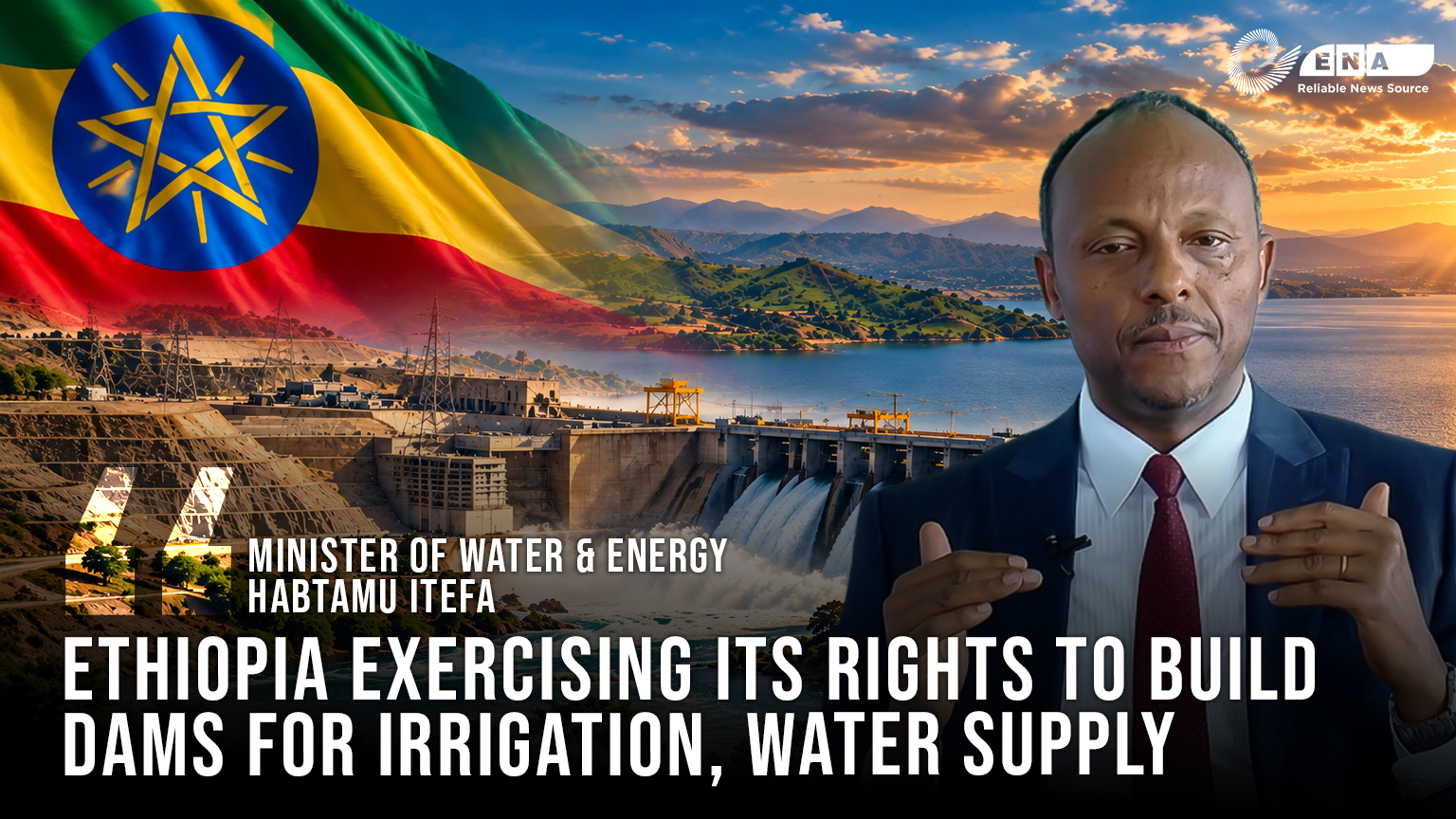
Addis Ababa, October 4, 2026 (ENA)—Ethiopia, consistent with its sovereign right and water policy as well as international laws, is completing a big dam on Magech River for irrigation and water supply purposes, Water and Energy Minister Habtamu Itefa told ENA.
“It is shameful to hear Egyptian politicians say that Ethiopia should get consent from them to build dams that do not have significant harm on the country,” he added.
Egyptian policymakers should revisit the history of the Aswan High Dam and consider whether Ethiopia was consulted before its construction.
“If so, they should have consulted Ethiopia when they built Aswan Dam. But they didn’t.”
Habtamu argued that the Nile cannot be treated as the exclusive preserve of downstream countries, stressing that Ethiopia, as an upstream riparian state, has the right to develop its water resources.
Egypt’s continued insistence on prior consent reflects an outdated approach to Nile governance and a lingering reliance on arrangements established during the colonial era, the Minister stressed.
“They say, ‘We belong to the Nile, the Nile belongs to us.’” the Minister said, adding that such a view overlooks the interests of Ethiopia’s population and the country’s contribution to the Nile system.
The Minister also rejected the argument that Ethiopia’s water-development projects amount to “abstraction” of Abay (Nile) water, saying the Grand Ethiopian Renaissance Dam (GERD) was primarily constructed for hydropower generation.
Megech is also an indirect tributary of the Nile that causes no significant harm on Egyptians.
“Ethiopia has the right to use irrigation as well,” he said, adding that the country would continue developing water infrastructure according to its national priorities.
He cited the ongoing development of the Magech project as an example of Ethiopia’s exercise of its sovereign development rights.
“Ethiopia is a sovereign country. We do have our system, we do have our policy, we do have our government,” Habtamu said.
At the same time, the Minister stressed that Ethiopia’s position does not amount to hostility toward downstream populations.
“We consider our brothers on the downstream side. Egyptians, and particularly Sudanese, are our brothers,” he said, adding that Ethiopia maintains close social, cultural and historical ties with Sudan and South Sudan.
Ethiopia’s approach is therefore based on development alongside consideration for downstream countries, he noted, rejecting the “colonial mentality” and “hydro-hegemony.”
The Minister also argued that opposition to Ethiopia's water-development projects has persisted for decades, including during different political periods in Ethiopia.
Egypt had opposed Ethiopian water projects as far back as the 1950s and 1960s and linked such opposition to instability surrounding earlier development initiatives. Those historical claims would require independent documentation beyond the Minister’s account.
Habtamu said Ethiopia’s response should be continued development rather than abandoning its water-development ambitions.
“As the Minister of Water and Energy, and as a citizen and a professional, the only thing we do is keep developing, keep moving.”
The Minister's remarks come amid Egyptian officials saying Ethiopia can’t build additional dam without their consent.
For instance, the Ministry of Water and Energy recalled the recent statement of Egyptian Minister of Water Resources and Irrigation suggesting that Ethiopians lack education, which is a manifestation of crude colonial mentality that defines Cairo’s policy in its relations with African states.
Ethiopia maintains that it has a sovereign right to develop its water resources under the principle of equitable and reasonable utilization. ENA reported on October 3 that Habtamu also criticized the historical legacy of the Aswan High Dam, saying it was constructed without Ethiopia’s consent.
The 1959 Nile Waters Agreement was concluded between Egypt and Sudan and provided for the allocation of Nile waters between the two countries, while Ethiopia was not a party to the agreement.
Ethiopia has repeatedly challenged the relevance of arrangements that exclude upstream Nile Basin states and has asserted its right to equitable and reasonable utilization of the river.
The remarks also follow Ethiopia’s announcement that it had established a national committee to assess economic losses and foregone development opportunities associated with more than 22 water projects that the government says were blocked or obstructed by Egypt.


