Damerjog-Dewele Pipeline Project Reflects Ethiopia’s Era of Renewal: Scholars - ENA English


Damerjog-Dewele Pipeline Project Reflects Ethiopia’s Era of Renewal: Scholars
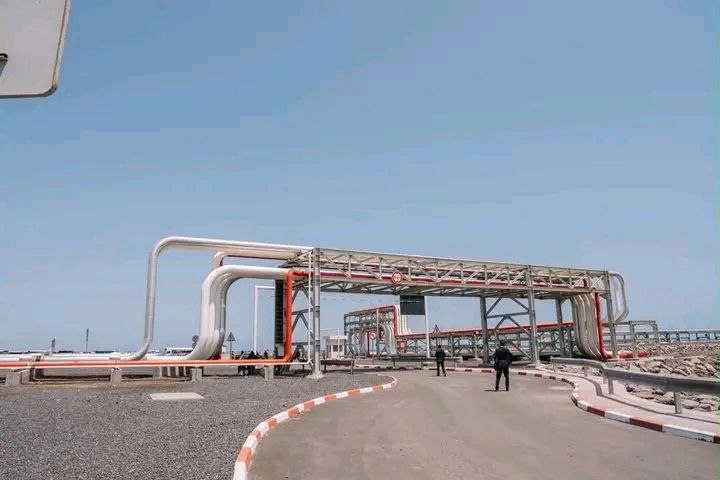
Addis Ababa, October 3, 2026 (ENA)— The Damerjog-Dewele Petroleum Products Pipeline Project will accelerate Ethiopia’s economic growth, strengthen fuel security and deepen economic ties between Ethiopia and Djibouti, scholars said.
The 120-kilometer petroleum products pipeline, which will connect Damerjog in Djibouti with Dewele in Ethiopia, is among the major infrastructure projects being undertaken to support Ethiopia’s economic transformation and improve the efficiency of fuel supply.
The construction of the project was recently launched by Prime Minister Abiy Ahmed, Djiboutian President Ismail Omar Guelleh and Dangote Group President Aliko Dangote.
The project is being implemented through a partnership between Ethiopian Investment Holdings and the Dangote Group.
During the launching ceremony, it was stated that the pipeline will have the capacity to store and transport more than one million cubic meters of refined petroleum products.
Professor Tassew Woldehanna, President of the Ethiopian Economics Association and a lecturer in the Department of Economics at Addis Ababa University, told ENA that the newly launched Ethiopia-Djibouti petroleum pipeline demonstrates Ethiopia’s growing commitment to strategic investment and economic infrastructure.
He said Ethiopia’s longstanding reliance on road transport to import petroleum products from Djibouti has posed challenges to maintaining a reliable and efficient national fuel supply.
The Damerjog-Dewele pipeline is therefore expected to help address these challenges by providing a dedicated infrastructure system for transporting petroleum products into Ethiopia, he said.
Professor Tassew also emphasized that the significance of an investment should be assessed not only by its contribution to economic growth but also by the employment and business opportunities it creates.
In this regard, he said, the pipeline project could generate economic opportunities while supporting activities across various sectors.
Economist Birhanu Alemu, for his part, said Ethiopia’s expanding infrastructure development and economic activities require the country to strengthen its petroleum storage and distribution capacity.
Given the growing scale of commercial and productive activities, increasing national fuel reserves is essential to ensuring the continuity of economic operations, he said.
From this perspective, the Damerjog-Dewele pipeline will play an important role in ensuring a more reliable and stable fuel supply and reducing disruptions associated with conventional fuel transportation, Birhanu noted.
He further explained that a dependable petroleum supply is critical to manufacturing industries, mechanized agriculture and the transport sector, all of which are essential to increasing productivity and supporting economic growth.
The scholars said major infrastructure projects being initiated and implemented by Ethiopia could contribute not only to the country’s economic transformation but also to broader regional development.
They cited the Damerjog-Dewele pipeline as an example of how infrastructure cooperation between neighboring countries can create shared economic benefits.
The project is also expected to strengthen economic interdependence between Ethiopia and Djibouti by improving the movement of strategic commodities and expanding opportunities for investment and trade.
According to the scholars, such joint infrastructure initiatives can further consolidate the longstanding relations between the two countries while contributing to regional economic integration.
Overall, they said the Damerjog-Dewele Petroleum Products Pipeline reflects Ethiopia’s broader development drive under its national vision of transforming infrastructure, strengthening productive capacity and creating the foundations for sustained economic growth.


