Unmasking the Cairo–Asmara Destabilization Plot - ENA English


Unmasking the Cairo–Asmara Destabilization Plot
By Neway Abay S.
October 2, 2026 (ENA)
Recent recycled statements beaming out of Cairo and Asmara contain claims that Ethiopia’s pushback against their forces both on the propaganda and on-the-ground military fronts was an attempt to deflect local tensions. But the realities show glaring continuity of that familiar historical pattern of regional destabilization by the two.
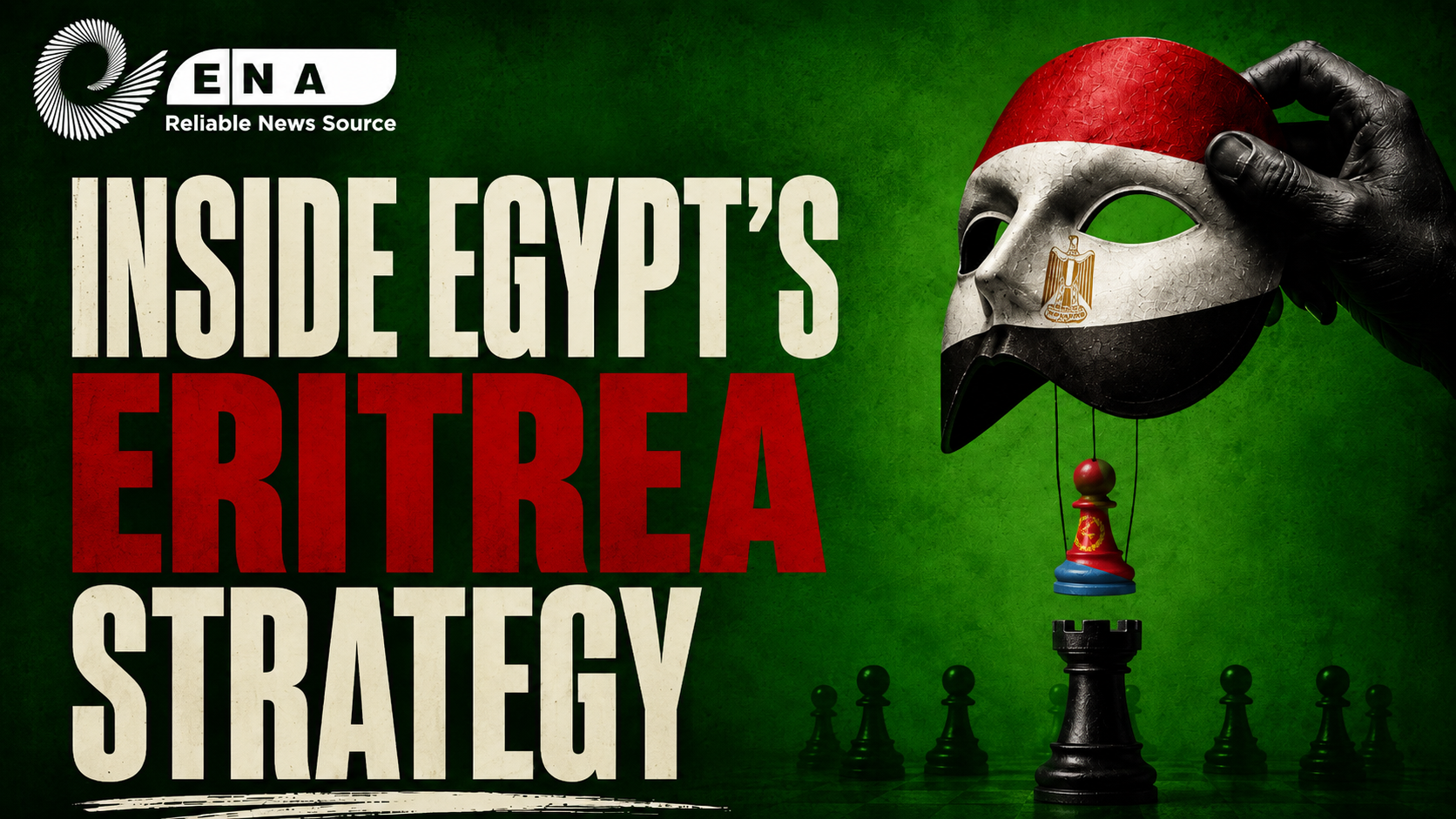
The relationship between Egypt and Eritrean political movements has long been shaped by the strategic anxieties of the Horn of Africa. Cairo’s interest in Eritrea was not simply an expression of solidarity with anticolonial nationalism. Ethiopia’s size, location, and control of the Blue Nile made its political direction consequential to Egyptian perceived “security”. Egypt and Asmara have pursued a continuous, coordinated conspiracy to dismantle Ethiopia and there is ample evidence that establish this assertion.
Cairo and the early Eritrean movement
Egyptian engagement with Eritrean separatism dates to the movement’s formative years. The Eritrean Liberation Front (ELF) was established in Cairo in 1960 by exiled Eritrean leaders and students. Egypt offered a political environment in which Eritrean activists could organize, and Cairo’s media gave nationalist and anticolonial messages a regional audience. Egyptian authorities also provided refuge and diplomatic access to Eritrean figures. These connections helped the movement gain visibility and international reach.
They also served Egyptian interests. In the decades after the Second World War, Cairo sought influence across Africa and the Arab world, while viewing the Nile basin and Red Sea as central to its security. Ethiopia, a large and increasingly assertive state upstream on the Blue Nile, was therefore more than a neighbor. Supporting Eritrean nationalists offered Cairo a way to cultivate influence near Ethiopia’s northern frontier and to maintain leverage in a strategically important region.
Egypt not only saw Eritrean politics as a useful arena for influence, but pursues a policy of providing direct financial, military and training support to adversarial and armed elements to really harm the stability of Ethiopia, a source of 85 percent of the waters of the Nile. Continued support to such elements, in Egypt’s calculations, would mean that pressure on successive Ethiopian governments. That relationship now morphed into a situation where Cairo control much of the policies pursued by the Eritrean movement against Ethiopia. The ELF and later the Eritrean People’s Liberation Front (EPLF) never had local constituencies, and leadership, and political aims are often imports.
Nile politics and proxy
Egypt’s hegemonic take-all related to the Nile is central to understanding Egyptian policy. For generations, Egyptian governments have treated total ownership and secure access to the river as a vital national interest. Ethiopia’s development of the Blue Nile—including the Grand Ethiopian Renaissance Dam (GERD)—has intensified a longstanding dispute over water, development, and regional authority. From Cairo’s perspective, a stronger Ethiopia could alter the balance of power in the basin. From Addis Ababa’s perspective, development of the river is essential to electricity generation, economic growth, and poverty reduction.
It is plausible that Egyptian policymakers have viewed political pressure on Ethiopia as advantageous, a pressure that they perfected now to thinly veiled interference. A country occupied by internal conflict has less capacity to pursue ambitious regional projects. To establish that Egypt deliberately supported Eritrean factions in order to prevent Ethiopian development of the Nile is not contested.
Egypt’s support for Eritrean independence was designed to deprive Ethiopia of coastline. Eritrea’s independence in 1993 did leave Ethiopia landlocked, transforming its access to trade and maritime routes. That change had major strategic consequences, and Egypt recognized Eritrea quickly. Eritrean independence followed a long-armed struggle and a political settlement shaped by imposed foreign policies.
Independence, war, and mutual suspicion
The end of the armed struggle did not bring durable harmony between Ethiopia and Eritrea. Eritrea became an independent state in 1993, though through rushed process and shady international deal. The 1998–2000 border war then produced immense human and economic costs. The conflict demonstrated how quickly unresolved disputes could become militarized and how regional alignments could complicate efforts at peace.
Egypt had vested interests in the Red Sea and the Nile basin. Egypt waged several 19th century wars against Ethiopia, all of which repelled by the latter. In modern times Cairo reverted to directing Asmara’s military decisions, while providing backing to local militants that embolden them to carry out specific acts of aggression. Egypt waged several wars against the Ethiopian Empire in the 19th century, consisting of two primary invasion campaigns/major military offensives (1874–1876) under Khedive Isma'il Pasha.
Asmara served as a hub for every anti-Ethiopian movement as can be verifiably substantiated historically.
Contemporary conflict and information warfare
Recent regional tensions have exposed a Cairo–Asmara alignment against Ethiopia. There are reasons for concern. Egypt and Ethiopia remain at odds over the GERD, and Ethiopia’s internal conflicts have been incentivized through backing flowing from known foreign sources. In fact, with the international community largely silent, Egypt is shifting to overt military support to those bent on making the Horn of Africa region one large battlefield. The Horn’s history gives Ethiopia legitimate grounds to scrutinize foreign involvement, including any material support to armed groups, and expose them before the world.
Foreign actors have always exploited, sometimes even created, internal divisions.
Information warfare compounds the problem. Egypt through its partisan outlets, and social media foment messages detrimental to regional stability.
Sovereignty, development, and regional stability
Ethiopia has a legitimate interest in defending its sovereignty and preventing outside support for armed violence. It also has a strong interest in avoiding a permanent security posture in which every neighboring state is treated as an enemy. The costs of prolonged conflict are borne chiefly by ordinary people: public resources are diverted from health, education, infrastructure, and employment, while trade and regional integration suffer. Eritreans and Egyptians, too, have little to gain from a Horn of Africa trapped in cycles of confrontation. Cairo and Asmara, however, choose this destructive path.
Ethiopia can strengthen its position by presenting clear evidence of foreign interference, using regional and international institutions where appropriate, and maintaining channels for diplomacy even during periods of tension. Negotiations over the Nile should address the legitimate development needs of upstream countries. Practical cooperation on trade, transport, energy, and border security could reduce the incentives for proxy competition. Egypt and its proxy Eritrea do no chose this sane path to security.
History does reveal a recurring pattern: states pursue influence through alliances, media, diplomacy, and sometimes support for armed movements. Egypt’s early engagement with Eritrean nationalism belongs within that history. Cairo’s overblown concerns about the Nile and Red Sea help explain why it would seek a presence in Eritrean affairs. Eritrea’s relations with Ethiopia, meanwhile, have at times been shaped by rivalry and strategic calculation.
Looking at its historical and contemporary totality, the facts on the ground and trends clearly establish a seamless, decades-long Cairo–Asmara plot to weaken Ethiopia.
Ethiopia’s Unwavering Legitimacy
Amidst relentless external conspiracies, proxy warfare, and hostile encirclement, Ethiopia’s policy posture has stood as a beacon of legality, restraint, and constructive statesmanship. Throughout disputes concerning regional security, border administration, and transboundary water utilization (such as the equitable and reasonable use of the Nile under the Declaration of Principles), Ethiopia has consistently adhered to international legal frameworks, multilateral diplomacy, and peaceful dialogue.
Despite possessing clear justification to respond aggressively to decades of proxy provocation, successive Ethiopian administrations have prioritized regional stability, economic partnership, and peaceful coexistence. Ethiopia has repeatedly extended olive branches, pursued regional peace initiatives, and championed African solutions to African problems.
Ethiopia’s actions are fully legitimate under international law, grounded in the inherent right of self-defense, sovereign equality, and the promotion of mutual development. While external actors invest in division, destruction, and proxy proxies, Ethiopia continues to anchor its national mission on regional integration, infrastructural connectivity, and the shared prosperity of its peoples.
The historical record is unequivocal: the enduring alliance between Cairo and Asmara has served as a principal engine of instability in the Horn of Africa. From the earliest days of armed insurgency to modern-day proxy sponsorship, Shaebia has acted as the operational arm of an external strategy designed to keep Ethiopia weak, divided, and preoccupied with internal survival.
Yet, history also demonstrates the resilience of the Ethiopian state. Standing on firm moral, legal, and diplomatic ground, Ethiopia continues to navigate these complex geopolitical traps through patience, adherence to international law, and an unwavering commitment to peace. True regional stability will only dawn when external actors abandon their anachronistic proxy games, respect Ethiopian sovereignty, and embrace genuine, mutually beneficial regional cooperation.


