Ethiopia Marching Toward Peaceful Formation of a New Government - ENA English


Ethiopia Marching Toward Peaceful Formation of a New Government
Staff Writer
October 1, 2026 (ENA)
From the ballot box to a new government, Ethiopia enters a defining chapter of its democratic journey
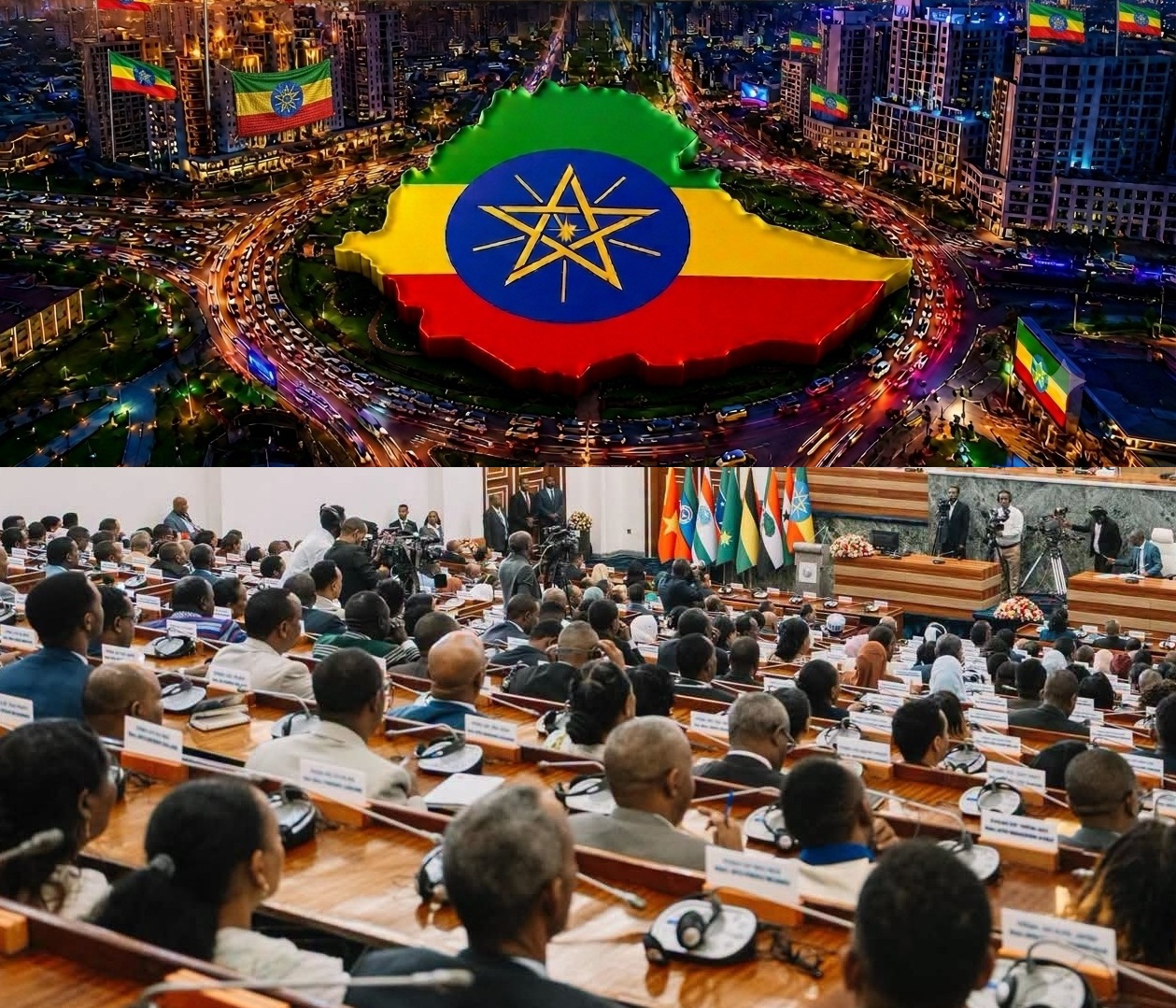
Ethiopia is moving into a decisive new chapter of its political journey, with the country’s federal government set to be formed following the conclusion of the 7th General Election and the establishment of newly elected regional and city councils.
The transition marks a critical moment for Africa’s second-most populous nation, not simply because a new administration is taking shape, but because the country is seeking to translate an enormous electoral exercise into functioning institutions, political representation and a renewed national mandate.
On October 5, 2026, Ethiopia is scheduled to inaugurate the newly elected House of People’s Representatives and formally establish the new federal government, completing the constitutional process that followed the June 1 general election.
The date represents more than the opening of a new parliamentary term. It is the point at which the ballot box gives way to governance, as elected representatives assume responsibility for translating electoral mandates into policies, laws and public institutions.
The 7th General Election was conducted on a scale rarely seen in Ethiopia’s history. More than 54 million citizens registered to vote, while 51.7 million cast ballots, according to the National Election Board of Ethiopia (NEBE). Forty-two political parties fielded 10,438 candidates, alongside 80 independent candidates, in an electoral process that extended across the country.
For Ethiopia, the significance of the moment lies not only in the numbers. It lies in what comes next.
From Ballots to Institutions
The election has now moved beyond campaigning and voting. Its results are being translated into institutional authority. The Prosperity Party secured 438 of the 501 House of Peoples’ Representatives seats for which results were announced, giving it the parliamentary majority required under Ethiopia’s constitutional system to form the federal executive.
The result gives the incoming government a clear parliamentary mandate. But the next chapter will ultimately be measured not by the size of the electoral victory, but by how that mandate is converted into effective governance. That responsibility comes at a consequential time.
Ethiopia is simultaneously navigating economic reform, national dialogue, peacebuilding, institutional reform, regional diplomacy and an ambitious development agenda. The new administration will therefore inherit not merely the authority to govern, but a broad set of expectations from citizens, businesses, political actors and international partners.
The transition from electioneering to governing will be the real test of the country's institutions.
Regional Governments Already Taking Shape
The federal transition is being preceded by developments at the regional and city levels.Regional councils have begun constituting their governments and electing their chief administrators, providing the institutional foundation for the next phase of governance.
In Addis Ababa, the city council unanimously reappointed Adanech Abiebie as mayor on September 30, giving her another term to lead the capital’s administration. The council cited infrastructure development, administrative reforms and citizen-focused services among the areas of her previous tenure.
The developments across the regions and the capital demonstrate that Ethiopia's post-election transition is unfolding through multiple layers of its federal structure rather than through a single event in Addis Ababa. This gradual process—from regional councils to the federal parliament—also underscores the constitutional architecture through which political authority is organized in the country.
A Constitutional Transfer of Political Authority
Ethiopia's Constitution places the House of People’s Representatives at the center of federal legislative authority and provides the constitutional basis for forming the executive following parliamentary elections. Article 56 provides that the political party or coalition holding a majority in the House forms and leads the federal executive. The election result has therefore established the parliamentary basis for the formation of the next government.
The significance of October 5 consequently extends beyond ceremony.
It represents the institutional point at which the outcome of the June election becomes a new governing arrangement. For a country with Ethiopia's political complexity, maintaining constitutional continuity during this transition carries particular importance.
The election attracted significant continental attention, with the African Union deploying an election observation mission led by former Kenyan President Uhuru Kenyatta. The AU subsequently commended the June 1 election, describing it as an important step in Ethiopia’s democratic evolution and recognizing the role of the National Election Board in administering the process.
But the AU’s engagement went beyond election monitoring.
As the host of the African Union headquarters and a country with a central diplomatic role on the continent, Ethiopia’s political developments carry significance well beyond its borders. As former President Kenyatta noted ahead of the vote, Ethiopia’s election held importance for the wider African continent. That continental attention now turns to what comes next: the peaceful translation of an electoral mandate into constitutional government.
With the new House of Peoples’ Representatives set to open and the federal government to be formed on October 5, Ethiopia is approaching a defining moment. One is that will demonstrate whether electoral competition can be followed by orderly constitutional governance, institutional continuity and a peaceful political transition.
Representation Beyond the Winning Party
The parliamentary majority gives the Prosperity Party the constitutional basis to form the federal government. At the same time, the presence of opposition representatives in federal and regional legislatures means that Ethiopia's political institutions will continue to contain competing political voices.
That matters because democracy does not end when the ballots are counted.
The post-election parliament becomes the arena in which competing priorities, interests and political perspectives are translated into legislative debate, scrutiny and public policy. For opposition parties, elected representatives and independent voices, the new parliamentary term provides an institutional platform through which they can represent their constituencies and engage in the country's political process.
For the governing party, the parliamentary majority brings the corresponding responsibility of translating its mandate into effective administration and public accountability.
The Bigger Test: Turning Political Transition into Peace
Perhaps the most important question for Ethiopia now is the new political cycle can help deepen peace and institutional stability. Ethiopia's political history has repeatedly demonstrated the cost of unresolved political disputes. The country's current national dialogue and reconciliation efforts are therefore taking place alongside the formation of the new government.
The government has repeatedly presented dialogue, reconciliation and constitutional institutions as important instruments for addressing national challenges. The National Dialogue process has also sought to gather views on longstanding political and social issues across the country.
The new government will therefore enter office with expectations extending well beyond economic management. Citizens will look to institutions to deliver security, justice, economic opportunity, public services and accountable governance. Political parties will be expected to compete through institutions rather than confrontation. And the international community will watch how Ethiopia's democratic institutions evolve during the new five-year political cycle.
A New Chapter, Not an Ending
The formation of a new government is often treated as the conclusion of an election. For Ethiopia, it is better understood as the beginning of the more demanding phase.The ballot has expressed a political choice. The councils are being organized. The federal parliament is preparing to open. The constitutional machinery is moving toward the installation of a new executive.
Now comes governance.
The coming political term will test whether electoral participation can be converted into stronger institutions; whether political competition can coexist with national dialogue; whether constitutional mechanisms can provide space for disagreement without returning the country to confrontation; and whether the enormous expectations generated by Ethiopia's development ambitions can be matched by institutional capacity.
Ethiopia is entering this new chapter with the political authority produced by its seventh general election and with institutions that must now carry that mandate into everyday governance. The country’s democratic journey, therefore, does not end with the announcement of results or the swearing-in of a new government.
It moves from the ballot box to the institution, from political competition to public responsibility, and from electoral mandate to the harder work of building peace, prosperity and accountable governance.
That is the next chapter Ethiopia is preparing to write.


