Beyond GERD: Ethiopia’s Next Move on the Nile - ENA English


Beyond GERD: Ethiopia’s Next Move on the Nile
Sept. 30, 2026 (ENA)
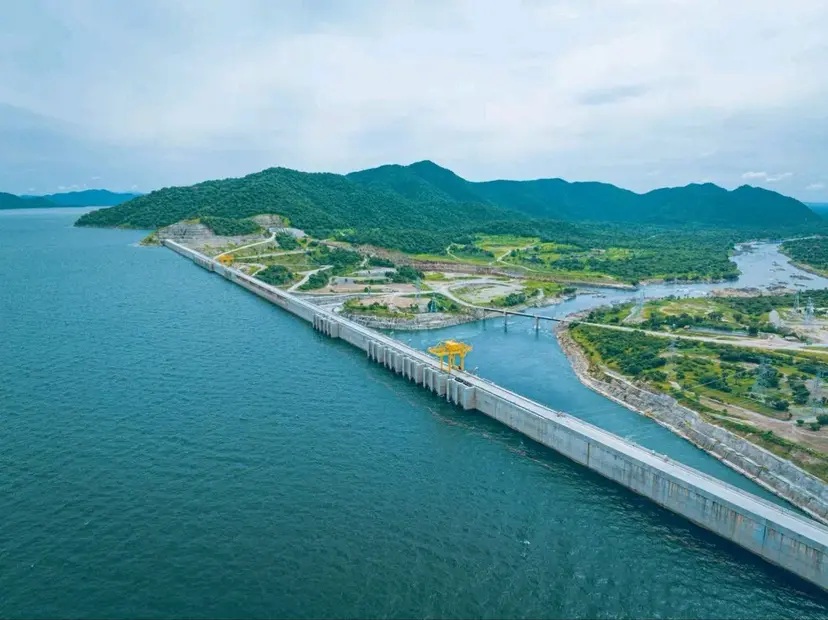
The successful completion and inauguration of the Grand Ethiopian Renaissance Dam (GERD) has demonstrated that Ethiopia possesses the engineering, institutional and financial capacity to undertake projects of historic scale. The achievement has also opened a broader question: What comes next for Ethiopia’s development of the Abay (Blue Nile) Basin?
GERD is more than a single hydropower project. With an installed capacity of 5,150 MW and a reservoir capacity of about 74 billion cubic metres, it represents one of Ethiopia’s largest infrastructure undertakings and a major expansion of the country’s capacity to develop its water and energy resources.
The experience accumulated through GERD—from engineering and project management to financing, institutional coordination and human-resource development, provides Ethiopia with a substantial knowledge base for considering additional water-resource projects.
The Abay Basin Has More Potential
GERD is not the only hydropower opportunity identified in the Ethiopian Blue Nile system.
An International Water Management Institute (IWMI) assessment found that more than 120 potential hydropower sites had been identified along the Ethiopian Blue Nile, while 26 were investigated in greater detail under the Abay River Basin Master Plan. The assessment also identified substantial potential for additional hydropower development, alongside irrigation schemes.
More recent research further points to the possibility of integrating hydropower generation with irrigation development. Research available through Addis Ababa University indicates that a four-project cascade that could generate up to about 38 TWh of annual electricity under a hydropower-focused scenario, while integrated irrigation development would require balancing electricity generation against water-use needs.
These findings do not mean that every identified project should automatically be constructed. Rather, they demonstrate that the Abay Basin contains a significant portfolio of technically identified opportunities that can be evaluated according to economic feasibility, environmental sustainability, downstream effects and Ethiopia’s long-term development priorities.
From One Mega Project to a Broader Development Strategy
For Ethiopia, the strategic significance of GERD therefore extends beyond electricity generation.
Additional carefully planned hydropower and irrigation infrastructure could contribute to electricity supply, agricultural productivity, food security, industrialization and regional power connectivity. Hydropower could also strengthen Ethiopia’s renewable-energy base and create additional opportunities for electricity exports.
The key lesson from GERD is that large national infrastructure projects require more than physical construction. They require long-term planning, institutional capacity, financing mechanisms, technical expertise, public participation and sustained national commitment.
Solomon Zena, Executive Director of the Policy Innovation Research Center (PIRC), told ENA recently that Ethiopia should build on the experience gained through GERD.
“The nation needs to move ahead and build more dams,” Solomon said, stressing that the successful completion of GERD demonstrated what Ethiopians could accomplish through unity and determination.
His argument reflects a broader development proposition: GERD should not necessarily be viewed as the conclusion of Ethiopia’s major water-infrastructure ambitions, but as a foundation from which future projects can be evaluated.
Development Rights and Shared Waters
The debate over additional dams, however, cannot be separated from the broader Nile Basin dispute.
Egypt has repeatedly opposed reports of additional Ethiopian dams. In August 2026, Egyptian Irrigation Minister Hani Sewilam said Egypt would not allow Ethiopia to build new dams on the Nile. Egyptian officials have also called for legally binding arrangements concerning the operation of GERD and Nile-water flows.
Ethiopia, for its part, maintains its right to develop its water resources for economic and social development while arguing that its projects can be pursued without causing significant harm to downstream countries.
This disagreement, particularly as tensions escalate over Egypt’s opposition to Ethiopia’s development projects, highlights a fundamental challenge in the Nile Basin: how the principle of equitable and reasonable utilization can be advanced in a way that respects the development rights of all riparian states. The issue should therefore be addressed through evidence, technical assessment and genuine cooperation—not through efforts to freeze development, particularly in the upstream countries of the basin.
Beyond GERD
The completion of GERD has changed the scale of what Ethiopia can realistically contemplate in terms of national infrastructure. The country now possesses experience from one of Africa’s largest hydropower projects, while the Abay Basin contains a much wider portfolio of historically identified hydropower and irrigation opportunities.
The next phase should consequently focus on careful, technically sound and economically viable development and dam infrastructures.
Additional dams should be considered project by project, based on hydrological data, economic returns, environmental and social impacts, irrigation requirements, climate resilience and Ethiopia’s aspiration for future development.
GERD has demonstrated Ethiopia’s capacity to build at an unprecedented scale. The larger question now is how that capacity can be translated into a long-term, integrated Abay Basin development strategy that expands clean energy, supports agriculture and industry, strengthens regional electricity integration and advances Ethiopia’s development objectives while engaging constructively with downstream countries.
The lesson of GERD is therefore not simply that Ethiopia can build a mega-dam. It is that Ethiopia has acquired the experience and institutional confidence to think beyond a single project and consider the next generation of transformative infrastructure.


