Meskel-Demera Captivates Global Visitors with Ethiopia’s Living Heritage - ENA English


Meskel-Demera Captivates Global Visitors with Ethiopia’s Living Heritage
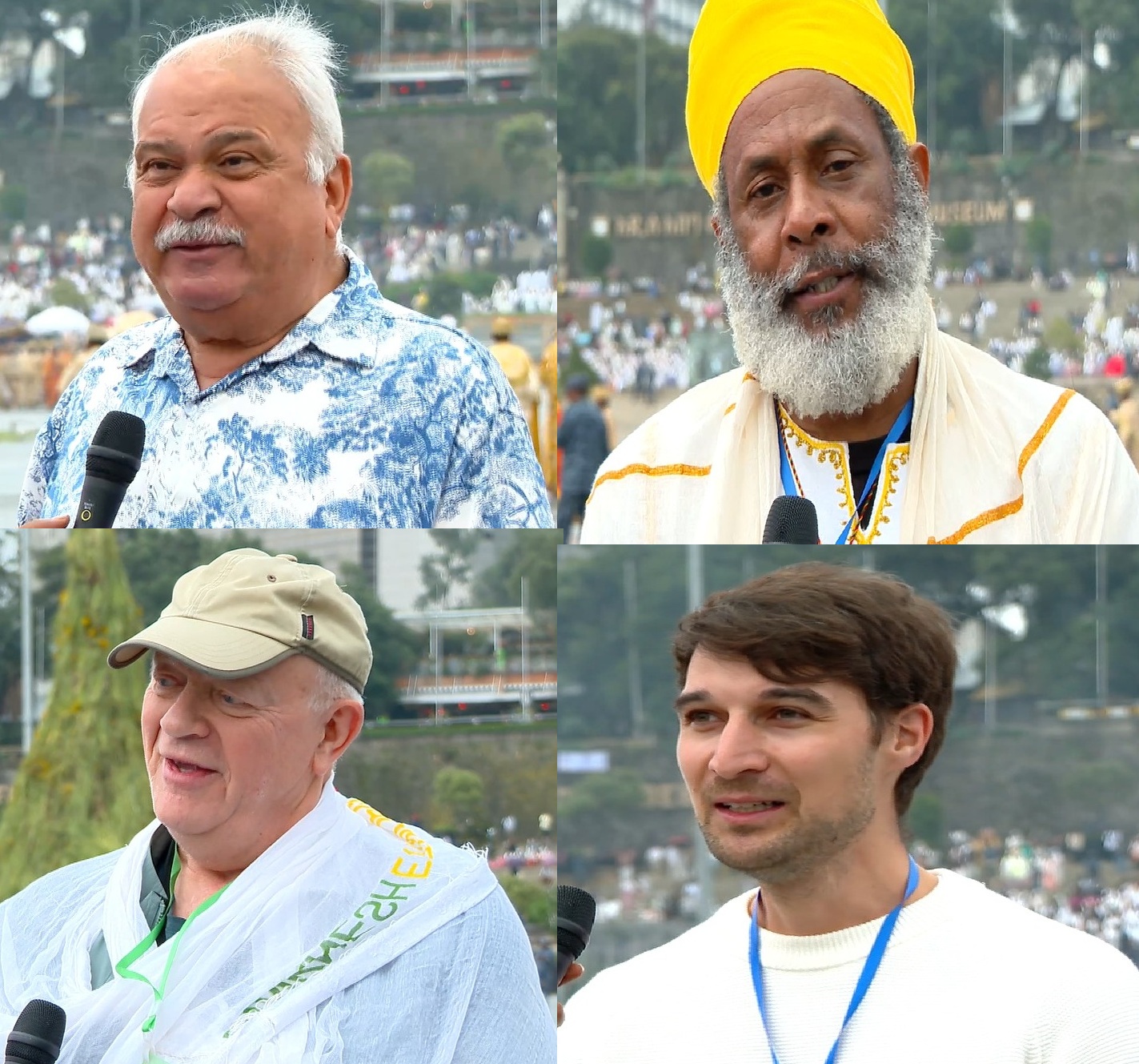
Addis Ababa, September 27, 2026 (ENA) —Ethiopia’s Meskel-Demera celebration has captivated international visitors with its striking blend of faith, culture, history and community.
The celebration gives visitors from around the world a rare firsthand glimpse into one of Ethiopia’s most distinctive and enduring religious traditions. For them who gathered in Addis Ababa to witness the festival, Meskel was more than a colorful public celebration. It was an opportunity to experience a centuries-old Christian tradition that remains deeply embedded in Ethiopian society.
Approached by ENA, visitors from Jordan, Jamaica, Norway, Germany and Croatia described Meskel as a unique and memorable experience, highlighting the vibrant ceremonies, spiritual atmosphere, warm hospitality and the remarkable participation of people from across society.
Michelle Akasheu, a visitor from Jordan, said he was immediately impressed by the warmth of the Ethiopian people and the spiritual atmosphere surrounding the celebration.
“I’m Christian, so I’m Catholic. A friend asked me to join him today to see this beautiful festival, which I really love,” Akasheu said.
He said attending Meskel gave him a rare opportunity to witness Ethiopia’s longstanding Christian tradition in a deeply communal setting.
“Christianity is very, very old in this country, and it is embedded in the spirit of the people here,” he said.
The participation of priests and the wider community, he added, made the celebration particularly distinctive.
Having previously visited the Vatican and attended other religious events, Akasheu said Meskel offered an experience closely connected to Ethiopia’s unique Christian heritage.
He also expressed interest in exploring the country beyond Addis Ababa, particularly its rock-hewn churches, monasteries and other historic sites.
“There is a lot to be seen here,” he said, encouraging greater international promotion of Ethiopia’s cultural and religious heritage.
For Jamaican visitor Njkita Nkruma Lindsay, who has lived in Ethiopia for about 19 years, Meskel carries a particularly deep spiritual and cultural meaning.
Lindsay, who described herself as an Orthodox Christian, said Ethiopia represents freedom and a sense of belonging for people of African descent whose ancestors were taken away during the transatlantic slave trade.
“For us, Ethiopia is the land of freedom — freedom in every way, religious freedom and physical freedom,” she said.
He said Meskel vividly reflects the enduring place of Christianity in Ethiopian cultural life and brings large numbers of people together in a shared celebration.
“Meskel is representing Christianity. It’s the finding of the True Cross,” Lindsay said.
What makes the festival especially distinctive, she added, is its nationwide character and the way it brings communities together through both faith and cultural tradition.
“In Ethiopia, celebrating Meskel is for every Christian,” she said.
Lindsay encouraged people from around the world to visit Ethiopia and experience the festival themselves.
For Norwegian tourist Jorulf Husbyn, Meskel was an unexpected highlight of his first visit to Ethiopia.
“We didn’t know it was a festival, so we wanted to stop in Ethiopia on our way to Southern Africa and explore the culture, geography and history. So this is our lucky day to come by this festival,” Husbyn said.
The unexpected encounter gave him a memorable introduction to Ethiopia’s cultural and religious traditions.
Husbyn said he was impressed by the colorful celebration, the people and the atmosphere surrounding the event, describing it as an opportunity to discover another dimension of Ethiopia’s history and culture.
As a Christian and Lutheran, he said witnessing Meskel was particularly meaningful.
“I’m very excited to be here, to see and explore the culture and this part of Christianity,” he said.
He also praised Ethiopia’s natural landscapes, history and hospitality, saying the country offers rich experiences for travelers interested in culture and heritage.
German visitor Andreas Schaible, who was in Ethiopia for the second time, said Meskel was his first experience of the festival and offered him another perspective on Ethiopian culture.
“It’s very interesting to see the differences between the culture in Germany and in Ethiopia,” Schaible said.
Having lived and worked in Addis Ababa, he said he had become increasingly interested in the country’s traditions and public celebrations.
“It’s very good for me to learn about the culture here in Ethiopia,” he said, emphasizing the value of understanding both cultural differences and similarities.
Schaible also pointed to Ethiopia’s traditions, food and coffee as some of the experiences that make the country distinctive as a tourist destination.
His family, he added, plans to visit Ethiopia in the future.
For Croatian visitor Branimir Akidžan, Meskel was not simply a new cultural experience but a return to a country with which he has a decades-long connection.
Akidžan lived in Ethiopia from 1966 to 1973 and attended St. Joseph’s School. He returned to the country with his wife to revisit its festivals, traditions and places that had remained important to him.
He praised Ethiopia’s people, landscapes and cultural heritage and encouraged visitors to venture beyond Addis Ababa to experience the country’s diverse communities and scenery.
From first-time visitors unexpectedly encountering the festival to those returning after decades, the international guests shared a common impression: Meskel offers an experience that goes beyond watching a religious ceremony.
It brings Ethiopia’s living heritage into the public space—where faith, history, culture and community converge around the Demera, creating a celebration that visitors can witness, experience and remember.
For international tourists, Meskel is therefore not simply a festival on Ethiopia’s calendar. It is a vivid gateway into the country’s enduring cultural and spiritual identity.


