Ethiopian Army's Emergence: A Strategic Insurance for Red Sea and Horn Region Security - ENA English


Ethiopian Army's Emergence: A Strategic Insurance for Red Sea and Horn Region Security
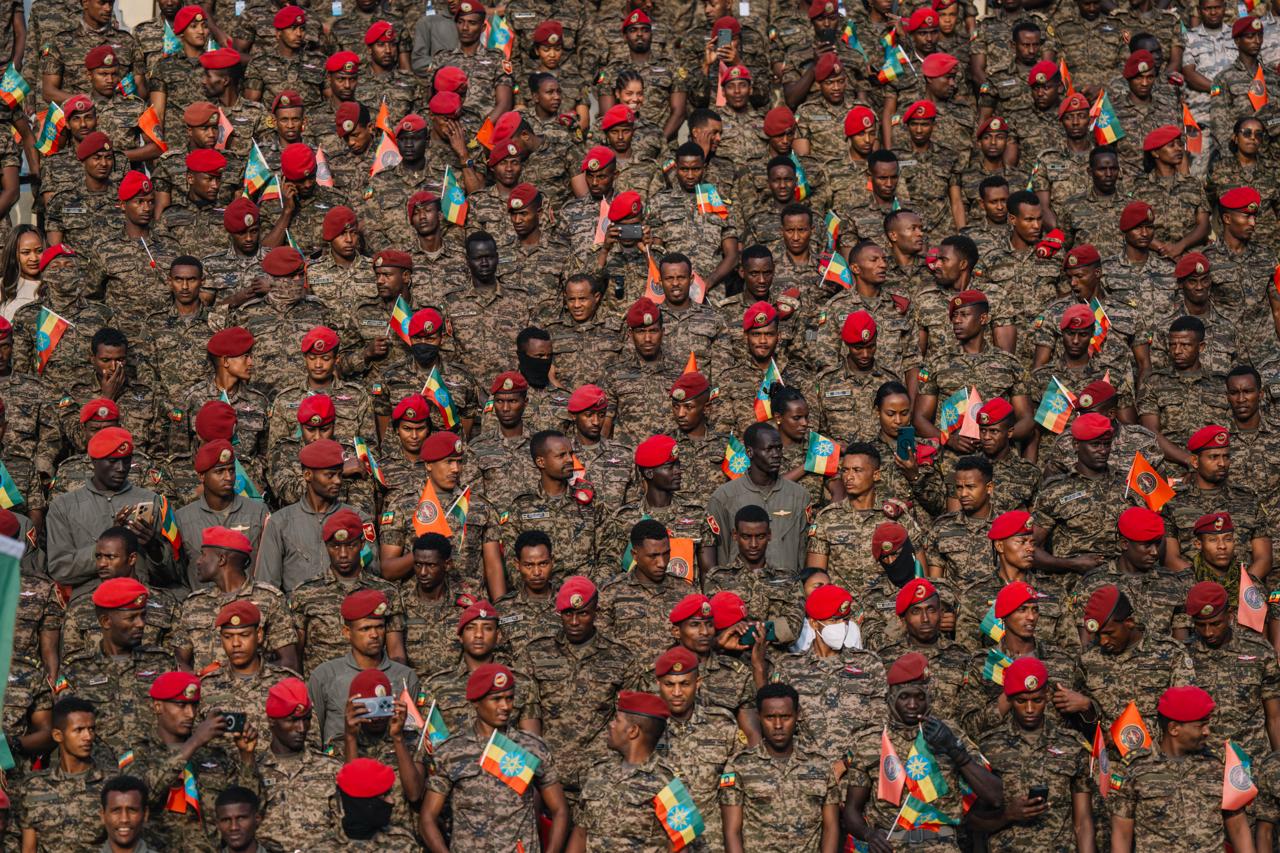
By Guillermo Patria
Sept. 24, 2026 (ENA)
Ethiopia is undertaking a broad transformation of its national defense system, seeking to build a military that is more professional, technologically advanced, operationally ready and increasingly capable of sustaining itself through domestic production.
The transformation reaches across the Ethiopian National Defense Force (ENDF), Air Force, Special Operations Command, defense industries, drone production, military research and education, artificial intelligence and the rebuilding of the country's maritime capability.
At its core is a strategic proposition: protecting Ethiopia's sovereignty and national interests requires not only soldiers and weapons, but also strong institutions, technology, industrial capacity and human capital capable of sustaining them.
ENDF Chief of General Staff Field Marshal Birhanu Jula has described the reform as a historic transformation aimed at strengthening the force's organizational structure, unity, professionalism, readiness and technological capacity. The objective is therefore not simply to increase military hardware, but to change the character and capabilities of the force.
A force adapted to modern warfare
The battlefield is changing rapidly. Traditional manpower and conventional weapons remain important, but military effectiveness increasingly depends on information, precision, communications, unmanned systems, artificial intelligence, cyber capabilities, electronic warfare and the ability to make decisions rapidly.
Ethiopia's reforms are increasingly responding to this reality.
In February 2026, Field Marshal Birhanu described the modernized ENDF in terms of quantity, quality and technology, stressing the need to adapt military capabilities to changing technologies and security threats.
The technological shift is also becoming institutional. In August 2026, the ENDF signed an agreement with the Ethiopian Artificial Intelligence Institute to explore AI applications in logistics, military training, cybersecurity, military healthcare, air operations and electronic warfare.
Yet technology alone does not create military strength. It must be matched by trained personnel, effective institutions and operational readiness. Ethiopia's reform therefore also emphasizes professional military education, specialized training, engineering and technical expertise.
Readiness at the center
The ultimate purpose of a defense force is its ability to respond when national interests are threatened.
Field Marshal Birhanu has repeatedly emphasized ENDF readiness amid what Ethiopia describes as a complex and changing security environment. In July 2026, he said reforms had strengthened the force's organizational structure and unity while maintaining a high level of readiness and introducing modern military technology.
The Special Operations Command represents another dimension of this approach, with military leadership presenting it as a highly capable force designed for rapid response and proactive action against emerging threats.
For Ethiopia, the broader objective is clear: national sovereignty must be protected by a force capable of detecting threats, mobilizing rapidly and responding effectively when national interests are at stake.
From buying weapons to building them
Perhaps the most important part of Ethiopia's defense transformation is taking place away from the battlefield—in factories, laboratories and engineering facilities.
Prime Minister Abiy Ahmed has increasingly linked defense manufacturing with economic resilience and technological self-reliance. He has said Ethiopia is developing domestic capabilities to manufacture unmanned aerial vehicles, armored military vehicles, heavy weapons, artillery and ammunition.
The significance goes beyond the products themselves. Defense manufacturing requires engineers, technicians, researchers, specialized machinery and reliable industrial systems, creating technological capabilities that can strengthen the wider economy.
The Homicho Ammunition Engineering Complex illustrates this trajectory. Its growing production capacity has enabled Ethiopia not only to supply domestic requirements but also to enter foreign markets, with the government reporting ammunition export contracts worth more than 30 million US dollars.
The direction is therefore shifting from simply acquiring finished products toward developing the capacity to produce, maintain and improve critical systems domestically.
The Air Force and the technology ecosystem
The Ethiopian Air Force provides perhaps the clearest example of the transformation.
The institution says it has moved from an analog operating environment toward the digital era while expanding aircraft maintenance, upgrading, spare-parts production and unmanned aviation.
The significance is that a modern Air Force requires an entire technological ecosystem—pilots, engineers, technicians, maintenance facilities, spare parts, research, communications and digital systems.
Ethiopia is increasingly seeking to develop these capabilities locally. The Air Force has reported increased production of components and spare parts while Ethiopian engineers and technicians take greater roles in aircraft maintenance, upgrading and unmanned systems.
The objective is therefore not simply to acquire aircraft from abroad, but to develop the knowledge required to operate, maintain, upgrade and eventually develop increasingly sophisticated systems.
This also explains the emphasis on human capital. Prime Minister Abiy has stressed that sophisticated aircraft alone cannot create an effective Air Force. Highly trained pilots, engineers, technicians, scientists and commanders are essential to converting technology into military capability.
Drones and artificial intelligence
Few developments demonstrate the technological shift more clearly than Ethiopia's growing drone industry.
The establishment of SkyWin Aeronautics Industries marked an important step in domestic UAV production. Drones bring together aviation, electronics, sensors, communications, software, data processing and increasingly artificial intelligence.
In June 2026, the Information Network Security Administration and the Ethiopian Air Force agreed to establish a Drone Technology Center dedicated to research, innovation and development in unmanned aerial systems.
The initiative connects defense requirements with research, laboratories, human-capital development and technology transfer—helping create a domestic technological chain from research and engineering to production and deployment.
AI represents the next layer of this transformation.
The ENDF's cooperation with the Ethiopian Artificial Intelligence Institute is intended to explore AI applications across logistics, training, cybersecurity, military healthcare, air operations and electronic warfare.
The broader significance is that Ethiopia's defense modernization is moving beyond hardware toward technologies that can improve how information is collected, processed and used.
Fourth-generation capability, fifth-generation ambition
Ethiopia's Air Force ambitions extend further.
In January 2026, Prime Minister Abiy said the Ethiopian Air Force had developed fourth-generation combat capability and set an objective of moving toward fifth-generation capability by 2030, alongside plans to double the country's combat-aircraft capacity.
These are stated government objectives rather than capabilities already fully achieved.
Nevertheless, they demonstrate the direction of Ethiopia's military planning: keeping defense capabilities aligned with rapidly evolving technologies while continuing to invest in the human expertise required to operate them.
The transformation therefore cannot be measured only by the number of aircraft acquired, but also by the country's ability to operate, maintain, upgrade and increasingly develop sophisticated systems.
Land, air and sea
Ethiopia's defense transformation also has a maritime dimension.
The country lost direct access to the Red Sea following Eritrea's independence, and the Ethiopian Navy was subsequently disbanded. Its reconstruction now forms part of the country's evolving national security architecture.
Vice Admiral Kindu Gezu, Commander-in-Chief of the Ethiopian Navy, has highlighted the changing security environment in the Red Sea and Gulf of Aden, including piracy, arms trafficking, irregular migration, insurgent networks and geopolitical competition.
For Ethiopia, maritime security has implications beyond naval operations. Trade routes, ports, energy supplies, commercial shipping and regional security are all connected to the wider maritime environment.
The Navy consequently adds another dimension to the defense transformation, with land, air, cyber and maritime capabilities increasingly forming part of one national security architecture.
Building strategic self-reliance
Taken together, these developments reveal the broader direction of Ethiopia's defense reform.
The ENDF is being reorganized and professionalized. Specialized forces are being developed around rapid response. The Air Force is expanding its digital, maintenance and engineering capabilities. Domestic drone production is emerging. Defense industries are producing ammunition, armored vehicles and other military equipment. AI is being explored for defense applications, while military universities and laboratories are becoming part of technological research and development. The Navy is rebuilding maritime capabilities.
Individually, each represents a military reform. Together, they point toward an effort to build strategic self-reliance.
A country cannot guarantee the sustainability of its defense capability if every critical component depends on external suppliers. Domestic production does not eliminate the need for international cooperation or foreign technology, but it can strengthen Ethiopia's ability to maintain essential capabilities, respond to emergencies and develop technologies suited to its own requirements.
That is the broader bargain emerging from Ethiopia's defense transformation.
The objective is not simply to possess modern weapons. It is to create a defense institution capable of using technology effectively, sustaining its equipment, developing its own technical expertise and responding rapidly when national interests are threatened.
The deeper story is therefore being written not only on military grounds, but also in aircraft workshops, drone factories, ammunition plants, laboratories, military academies and technology institutes.
The soldier remains at the center. But alongside the soldier stands an increasingly important network of pilots, engineers, scientists, technicians, programmers, researchers and manufacturers.
Together, they represent a changing conception of military power.
For Ethiopia, the emerging objective is a defense force that is professional in structure, ready in operation, technologically capable and increasingly self-reliant in production.
In an era when national security is shaped by technology as much as manpower, the ability to build and sustain that capability may become as important as the weapons themselves.
Ethiopia's defense transformation is therefore not simply about building a stronger army. It is about building the technological, industrial and human foundations that enable the country to defend its sovereignty and national interests with greater confidence and readiness.


