African Affairs DG Asserts Ethiopia’s Sovereign Right to Build Dams for Various Purposes - ENA English


African Affairs DG Asserts Ethiopia’s Sovereign Right to Build Dams for Various Purposes
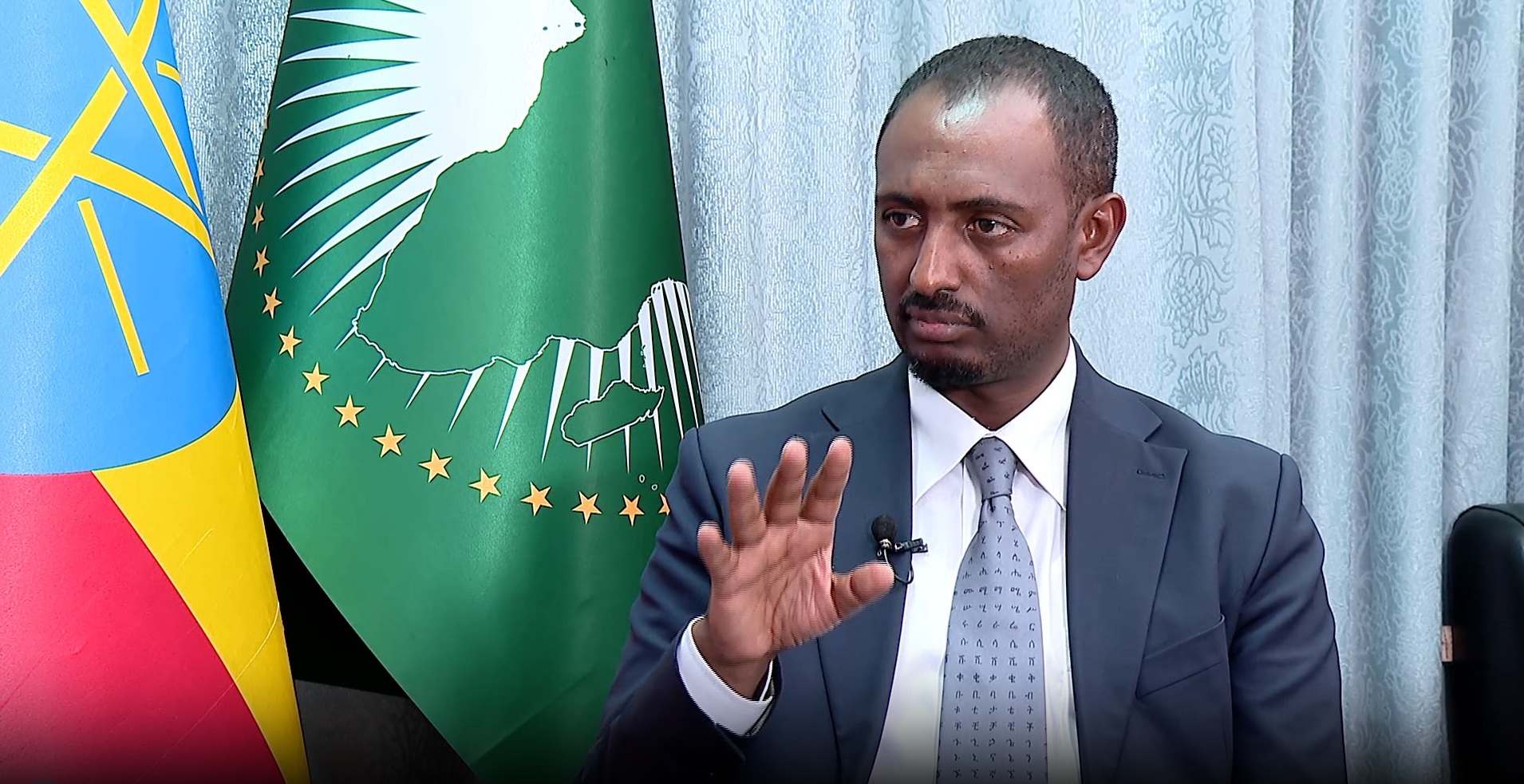
Addis Ababa, September 24, 2026 (ENA) — Ethiopia has the sovereign right to develop its water resources and construct dams for various purposes within its territory, Ambassador Zerihun Abebe, Director General for African Affairs at the Ministry of Foreign Affairs, said.
Speaking to ENA, Ambassador Zerihun emphasized that Ethiopia rejects Egypt’s attempt to exercise a monopolistic approach to the Nile waters. He stressed that Ethiopia's position is based on the principles of sovereignty and equality among states.
"Ethiopia has every right to construct dams, whether for irrigation, hydropower, domestic use, or industrial purposes, anywhere and at any time within its territory," he explained.
The Director General argued that Ethiopia is not required to obtain permission from another country to undertake development projects within its territory. He noted that Ethiopia's position is also informed by its interpretation of international law and the historical practice of water development by states along shared river systems.
To illustrate his point, Ambassador Zerihun cited examples from other parts of the world. He mentioned China’s development of dams along the Mekong, the United States’ management of rivers such as the Colorado and Rio Grande, and Turkey’s development of the Euphrates and Tigris river systems.
"No one can impede Ethiopia’s right to use its water resources for its development purposes," he asserted.
Ambassador Zerihun also criticized Egypt’s past unilateral water development activities, including the construction of the High Aswan Dam and diversion projects associated with Toshka. Ethiopia has previously raised similar concerns at the United Nations, arguing that Egypt’s projects were undertaken without consultation with upstream riparian states.
Furthermore, Ambassador Zerihun referred to Sudanese dams, including Roseires, Merowe, Jebel Aulia, and projects in the Setit and Atbara river systems, arguing that Ethiopia was not involved in their development. Against this backdrop, he said, Ethiopia rejects the argument that its own water development projects should be subject to approval by downstream countries.
Egypt has continued to argue that upstream projects should not be undertaken unilaterally because of their potential effects on downstream water security, while Ethiopia maintains that it has a sovereign right to use its water resources for development. The legal and diplomatic dispute also involves differing interpretations of earlier Nile agreements.
The 1959 Nile Waters Agreement is a bilateral accord between Egypt and Sudan, according to United Nations treaty records. Ethiopia has consistently rejected the agreement as a basis for determining its rights over the Nile waters.
Condemning calls for Ethiopia to seek permission from Cairo before undertaking water development projects, Ambassador Zerihun described such an approach as rooted in a colonial-era conception of relations among African states.
"We are living in a world where all states are equal," he underscored. "Ethiopia will continue to exercise its sovereign rights without interference."


